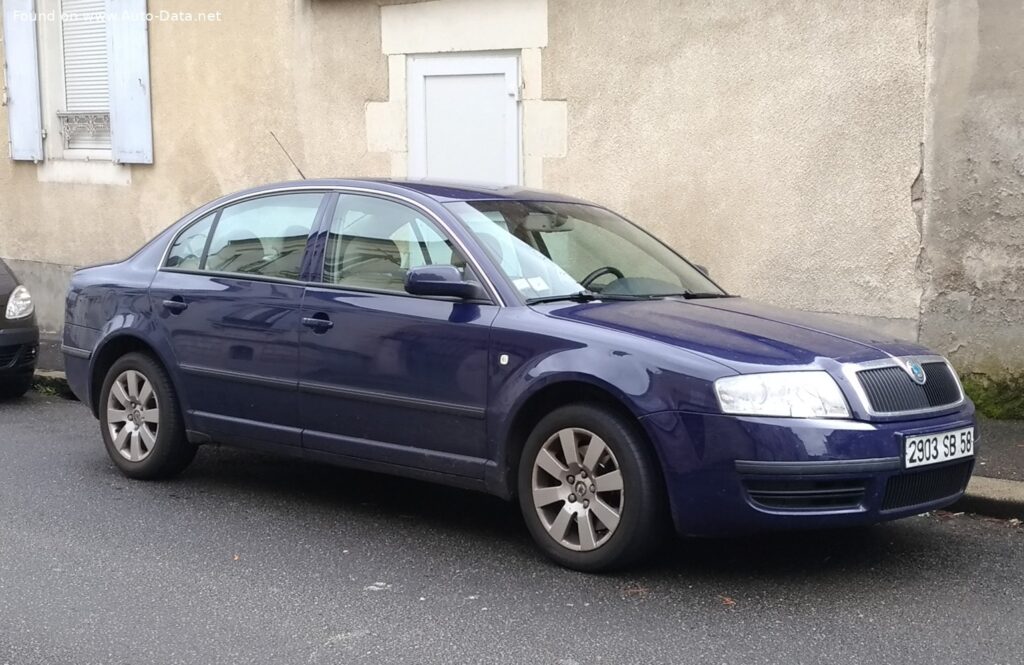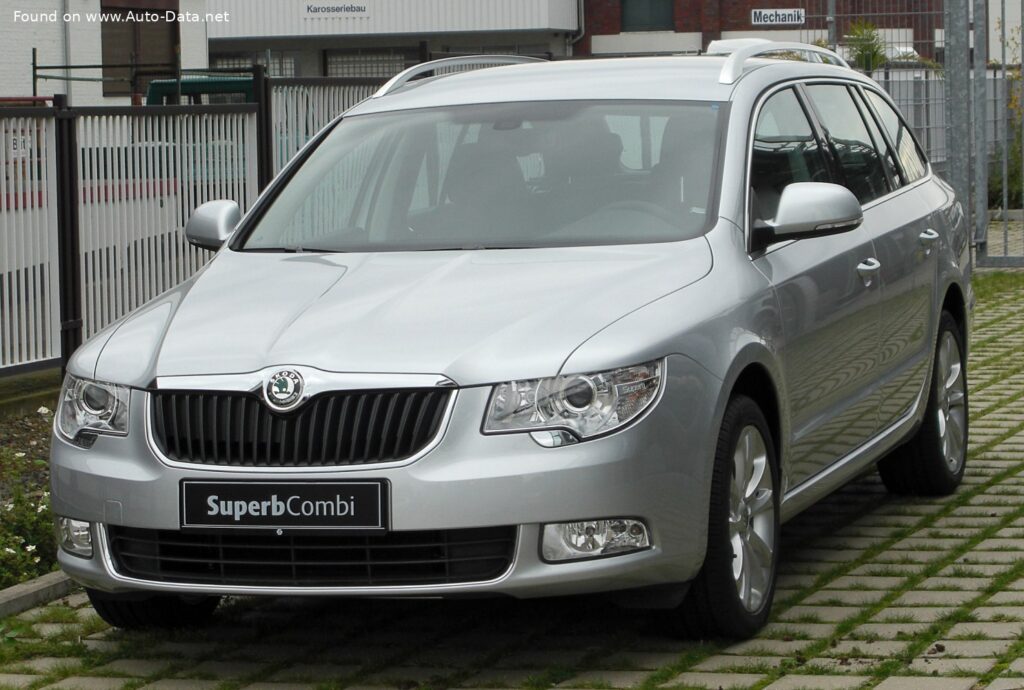
The Skoda Superb II Combi 1.4 TSI (123 Hp) represents a compelling blend of practicality, efficiency, and sophisticated engineering within the European D-segment. Launched in 2009 and produced until May 2013, this second-generation Superb in its Combi (station wagon) guise quickly established itself as a benchmark for interior space and value, a hallmark of the Skoda brand under the Volkswagen Group umbrella. While not directly sold in the United States, the Superb Combi carved a significant niche in European and other international markets, appealing to families and business users alike who prioritized expansive cargo capacity, passenger comfort, and economical operation, all wrapped in a robust and understated package.
The Skoda Superb II Combi: A European Mainstay
The Skoda Superb II Combi, particularly the 1.4 TSI (123 Hp) variant, embodied Skoda’s strategic positioning as a provider of intelligent, value-driven automotive solutions. Following the success of the first-generation Superb, which reintroduced the nameplate in 2001, the second generation, introduced in 2008 (with the Combi following in 2009), elevated the model’s presence. It moved away from its predecessor’s stretched Passat B5 platform to a modified version of the Volkswagen Group’s PQ46 platform, shared with the Passat B6/B7 and Skoda Octavia. This architecture allowed for a significant increase in interior room, especially for rear passengers, setting it apart from many direct competitors. The Combi body style further amplified its utility, offering cavernous cargo space that became a key selling point for a brand renowned for its “Simply Clever” solutions.
Market Positioning and Legacy
In its primary European market, the Skoda Superb II Combi competed against established players like the Ford Mondeo Estate, Opel Insignia Sports Tourer, and its Volkswagen Passat Variant sibling. However, the Superb consistently offered more interior volume, particularly rear legroom, often rivaling vehicles from a segment above. The 1.4 TSI engine option made it an accessible entry point into the Superb range, appealing to a broad demographic seeking a practical, well-built, and economical family vehicle. Its robust construction and sensible design ethos contributed to its reputation for reliability and low running costs, cementing its legacy as a highly rational and capable choice for discerning buyers.
Powertrain and Performance: The 1.4 TSI Heart of the Skoda Superb II Combi 1.4 TSI (123 Hp)
At the core of the Skoda Superb II Combi 1.4 TSI (123 Hp) lies a sophisticated and efficient turbocharged gasoline engine, a testament to Volkswagen Group’s engineering prowess. The 1.4-liter TSI (EA111 / CAXC) engine was a pioneering unit, showcasing how smaller displacement engines, combined with forced induction, could deliver performance comparable to larger, naturally aspirated units while significantly improving fuel economy and reducing emissions.
Engine Dynamics
This inline four-cylinder engine, with a displacement of 1390 cubic centimeters (84.82 cubic inches), features direct fuel injection and a turbocharger with an intercooler. These technologies work in concert to produce a respectable 123 horsepower at 5000 revolutions per minute. More critically for everyday driving, the engine delivers a robust 147.51 lb.-ft. of torque across a broad rev range, from a low 1500 rpm up to 4000 rpm. This wide torque band ensures responsive acceleration and flexible in-gear performance, making the Superb Combi feel agile and capable even when fully loaded. The engine’s transverse, front-mounted layout contributes to efficient packaging and front-wheel-drive architecture, a common and effective setup for vehicles in this class.
Driving Experience and Efficiency
Mated to a precise 6-speed manual transmission, the 1.4 TSI engine provides a balanced driving experience. The Superb II Combi 1.4 TSI (123 Hp) can accelerate from 0 to 60 mph in a reasonable 10.1 seconds, with a top speed of 123.65 mph. These figures underscore its capability as a practical family hauler rather than a performance-oriented machine. Where it truly shines is in its fuel efficiency. The combined fuel economy is rated at 34.1 US mpg, an impressive figure for a vehicle of its size and capacity, especially considering its production era. Urban driving yields approximately 26.1 US mpg, while extra-urban cruising can achieve up to 42 US mpg. Furthermore, the engine meets the stringent Euro 5 emission standard, reflecting its commitment to environmental responsibility. With a 15.85 US gallon fuel tank, the Superb Combi offers a substantial cruising range, enhancing its appeal for long-distance travel.
Design, Features, and Practicality
The design philosophy of the Skoda Superb II Combi was centered on maximizing utility and passenger comfort without sacrificing a sense of understated elegance. Its exterior lines were clean and purposeful, reflecting a mature and conservative aesthetic that resonated well with its target demographic.
Exterior and Interior Design
As a full-fledged station wagon (or “estate” in European parlance), the Superb II Combi offers five doors and seating for five occupants. Its generous dimensions, measuring 190.47 inches in length, 71.54 inches in width, and 59.45 inches in height, underpin its impressive interior volume. The long wheelbase of 108.7 inches is a direct contributor to the exceptional rear legroom, a feature that often surprised occupants accustomed to vehicles in the same segment. The interior design was ergonomic and functional, prioritizing ease of use and high-quality materials, consistent with Volkswagen Group standards. While specific features are not detailed, typical for its segment and era would include air conditioning, power windows, and a comprehensive infotainment system, all designed to enhance the driving and passenger experience.
Chassis, Suspension, and Safety
The Superb II Combi’s ride quality and handling were engineered for comfort and stability, crucial for a family-oriented vehicle. It features an independent McPherson strut suspension with coil springs and an anti-roll bar at the front, providing precise steering and good road holding. The rear utilizes an independent multi-link suspension system, which further enhances ride comfort and stability, particularly when the vehicle is loaded. Braking performance is handled by disc brakes on both the front and rear axles, complemented by an Anti-lock Braking System (ABS) as standard, ensuring confident stopping power. The electric power steering system, a rack and pinion type, offers light and precise control, making urban maneuvers and parking effortless despite the vehicle’s size. Standard tire sizes include 205/55 R16, with an option for 225/45 R17, mounted on 7.0J x 16-inch wheel rims, providing a good balance of grip and ride comfort.
Dimensions and Cargo Capacity
With a kerb weight of 3315.75 lbs. (1504 kg) and a maximum permissible weight of 4556.95 lbs. (2067 kg), the Superb Combi can carry a substantial load of 1241.2 lbs. (563 kg). This high payload capacity, combined with its expansive cargo area (a hallmark of the Combi body type), makes it an exceptionally practical vehicle for transporting luggage, groceries, or sports equipment. The minimum turning circle of 37.73 feet (11.5 meters) is commendable for a vehicle of its size, aiding maneuverability in tighter urban environments.
Technical Specifications: Skoda Superb II Combi 1.4 TSI (123 Hp)
| Brand | Skoda |
| Model | Superb |
| Generation | Superb II Combi |
| Type (Engine) | 1.4 TSI (123 Hp) |
| Start of production | 2009 year |
| End of production | May, 2013 year |
| Powertrain Architecture | Internal Combustion engine |
| Body type | Station wagon (estate) |
| Seats | 5 |
| Doors | 5 |
| Fuel consumption (economy) – urban | 9 l/100 km (26.1 US mpg) |
| Fuel consumption (economy) – extra urban | 5.6 l/100 km (42 US mpg) |
| Fuel consumption (economy) – combined | 6.9 l/100 km (34.1 US mpg) |
| Fuel Type | Petrol (Gasoline) |
| Acceleration 0 – 60 mph | 10.1 sec |
| Maximum speed | 199 km/h (123.65 mph) |
| Emission standard | Euro 5 |
| Weight-to-power ratio | 12.2 kg/Hp (81.8 Hp/tonne) |
| Weight-to-torque ratio | 7.5 kg/Nm (133 Nm/tonne) |
| Power | 123 Hp @ 5000 rpm |
| Power per liter | 88.5 Hp/l |
| Torque | 200 Nm (147.51 lb.-ft.) @ 1500-4000 rpm |
| Engine layout | Front, Transverse |
| Engine Model/Code | EA111 / CAXC |
| Engine displacement | 1390 cm3 (84.82 cu. in.) |
| Number of cylinders | 4 |
| Engine configuration | Inline |
| Fuel injection system | Direct injection |
| Engine aspiration | Turbocharger, Intercooler |
| Engine oil capacity | 3.6 l (3.8 US qt) |
| Engine oil specification | Not specified |
| Coolant | 7.7 l (8.14 US qt) |
| Kerb Weight | 1504 kg (3315.75 lbs.) |
| Max. weight | 2067 kg (4556.95 lbs.) |
| Max load | 563 kg (1241.2 lbs.) |
| Fuel tank capacity | 60 l (15.85 US gal) |
| Length | 4838 mm (190.47 in.) |
| Width | 1817 mm (71.54 in.) |
| Height | 1510 mm (59.45 in.) |
| Wheelbase | 2761 mm (108.7 in.) |
| Front track | 1545 mm (60.83 in.) |
| Rear (Back) track | 1517 mm (59.72 in.) |
| Minimum turning circle (turning diameter) | 11.5 m (37.73 ft.) |
| Drivetrain Architecture | Internal combustion engine drives the front wheels |
| Drive wheel | Front wheel drive |
| Number of gears and type of gearbox | 6 gears, manual transmission |
| Front suspension | Independent, McPherson with coil spring and anti-roll bar |
| Rear suspension | Independent multi-link suspension |
| Front brakes | Disc |
| Rear brakes | Disc |
| Assisting systems | ABS (Anti-lock braking system) |
| Steering type | Steering rack and pinion |
| Power steering | Electric Steering |
| Tires size | 205/55 R16; 225/45 R17 |
| Wheel rims size | 7.0J x 16 |