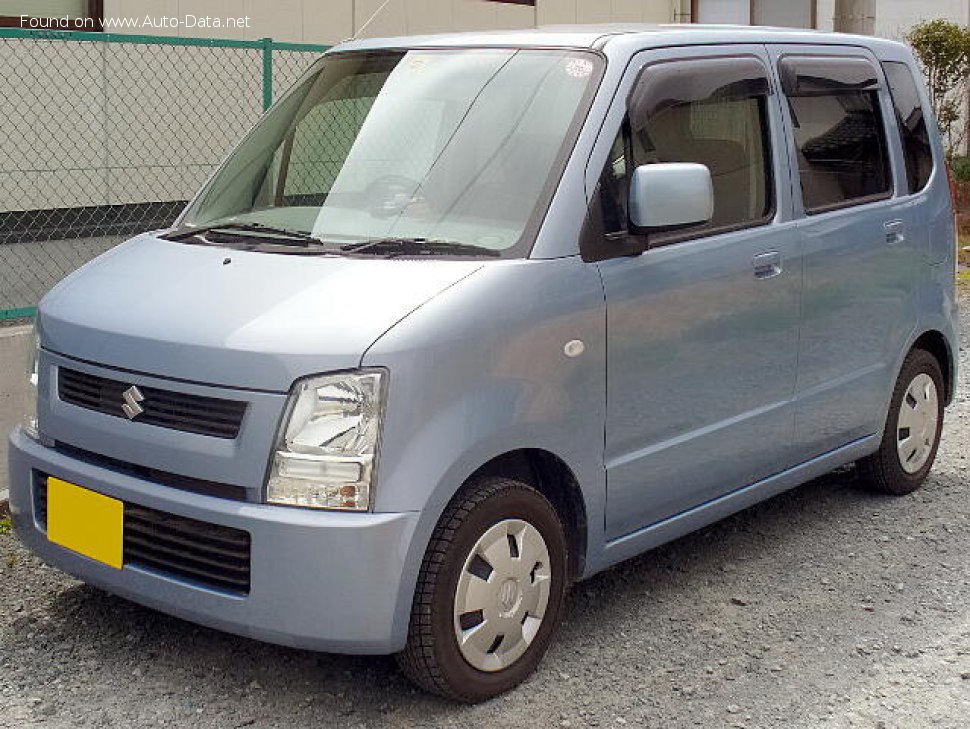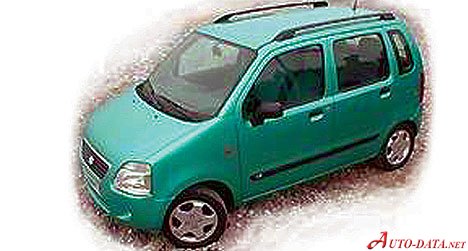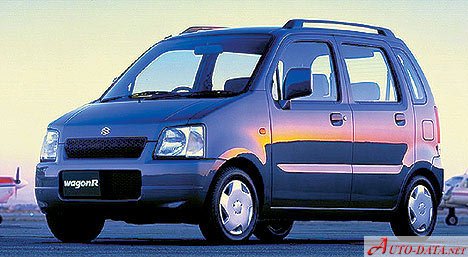
The Suzuki Wagon R+ II 1.0 i 12V (53 Hp), produced between 2001 and 2008, represents a quintessential example of a compact minivan designed for efficiency and practicality in markets where space and fuel economy are paramount. While not widely available in the United States, this second-generation Wagon R+ played a significant role in the European and Asian automotive landscapes, particularly appealing to urban dwellers and small families seeking maximum utility from a minimal footprint. Its design philosophy, often referred to as a “tallboy” or “microvan,” prioritized interior volume and ease of maneuverability in congested city environments, distinguishing it from the larger, more conventional minivans typically found in the North American market. This vehicle was a testament to Suzuki’s engineering prowess in creating highly functional and economical transportation solutions, embodying a blend of Japanese ingenuity and global market adaptability within the compact segment.
Engine and Performance of the Suzuki Wagon R+ II 1.0 i 12V (53 Hp)
At the heart of the Suzuki Wagon R+ II 1.0 i 12V (53 Hp) lies a meticulously engineered G10A internal combustion engine, a powerplant specifically designed to offer a balance of efficiency and adequate performance for its intended urban and suburban operating conditions. This inline three-cylinder engine, with a modest displacement of 993 cubic centimeters (approximately 1.0 liters or 60.6 cubic inches), utilized a DOHC (Double Overhead Camshaft) valvetrain with two valves per cylinder, totaling 12 valves. The naturally aspirated engine was fed by a multi-port manifold injection system, ensuring precise fuel delivery and optimal combustion efficiency. The engine’s layout, positioned transversely at the front, was a common choice for front-wheel-drive compacts, maximizing cabin space and simplifying the drivetrain architecture.
The G10A engine generated a peak power output of 53 horsepower at 5500 revolutions per minute, a figure that, while modest by typical US automotive standards, was entirely appropriate for a vehicle of its size and purpose. This power output translated to a power-per-liter ratio of 53.4 horsepower per liter, indicating a respectable level of volumetric efficiency for a non-turbocharged engine of its era. Torque, crucial for urban drivability and responsiveness, was delivered at 56.05 pound-feet (76 Newton-meters) at a relatively low 3300 rpm. This characteristic low-end torque was instrumental for brisk acceleration from a standstill and smooth driving in stop-and-go traffic, minimizing the need for constant gear changes and enhancing the overall urban driving experience.
Power was transmitted to the front wheels via a robust five-speed manual transmission, a choice that further underscored the vehicle’s focus on driver engagement and fuel economy. The front-wheel-drive architecture optimized interior space and simplified the drivetrain layout. This configuration, coupled with a kerb weight of 2237.69 pounds (1015 kg), resulted in a weight-to-power ratio of 19.2 kg/Hp (approximately 52.2 Hp/tonne), illustrating its lightweight construction and efficient use of power. The weight-to-torque ratio stood at 13.4 kg/Nm (74.9 Nm/tonne), further highlighting its ability to move its mass effectively with the available torque.
Performance metrics reflected its pragmatic design. The Suzuki Wagon R+ II 1.0 i 12V (53 Hp) could achieve a maximum speed of 82.02 miles per hour (132 km/h), which was more than sufficient for highway cruising, though its primary domain was clearly urban environments. Fuel economy was a strong suit and a key selling point in its target markets, with urban consumption rated at an impressive 29.4 US miles per gallon (8 liters per 100 km) and extra-urban consumption reaching an even more economical 39.2 US miles per gallon (6 liters per 100 km). These figures underscore the Wagon R+ II’s commitment to economical operation. The engine’s compression ratio of 9.5:1 was optimized for regular gasoline (petrol), further contributing to its cost-effectiveness. The engine oil capacity was 3.8 US quarts (3.6 liters), indicative of its compact and efficient design.
Design and Features: The Practicality of the Suzuki Wagon R+ II
The design philosophy of the Suzuki Wagon R+ II was centered around maximizing interior volume and versatility within a highly compact exterior, embodying the “tallboy” minivan concept that found widespread appeal in space-conscious markets. This five-door, five-seat minivan offered a surprisingly spacious and airy cabin despite its diminutive overall dimensions, making it an ideal choice for navigating narrow city streets and fitting into tight parking spaces. With an overall length of 137.8 inches (3500 mm), a width of 63.78 inches (1620 mm), and a notable height of 67.13 inches (1705 mm), the Wagon R+ II presented a distinctive, upright silhouette that immediately communicated its practical intentions. The tall stature not only contributed to generous headroom for all occupants but also facilitated easier ingress and egress, a significant comfort factor for daily use.
The wheelbase of 92.91 inches (2360 mm) provided a stable platform for a vehicle of its size, while the front track of 55.91 inches (1420 mm) and rear track of 54.53 inches (1385 mm) contributed to its nimble handling characteristics and urban maneuverability. These compact dimensions were a direct response to the demands of European and Asian markets, where urban density often dictates vehicle design, emphasizing agility and parking ease.
Interior flexibility was a hallmark of the Wagon R+ II’s design. The cargo area, or trunk space, was highly adaptable to various needs. With all seats in place, it offered a respectable 8.83 cubic feet (250 liters) of storage. However, by folding down the rear seats, the cargo capacity expanded significantly to a maximum of 21.01 cubic feet (595 liters), effectively transforming the vehicle into a capable hauler for groceries, luggage, or even small furniture items. This adaptability was a major draw for families and individuals who needed a car that could serve multiple purposes without being excessively large or cumbersome. The maximum load capacity was 881.85 pounds (400 kg), further underscoring its utility.
In terms of chassis and suspension, the Wagon R+ II employed a straightforward yet effective setup designed for comfort and durability in everyday driving conditions. The front suspension utilized a dependable spring strut system, known for its compact design and ability to effectively absorb road imperfections. The rear suspension featured coil springs, providing a good balance between ride comfort for passengers and adequate load-carrying capability. Braking performance was handled by ventilated