
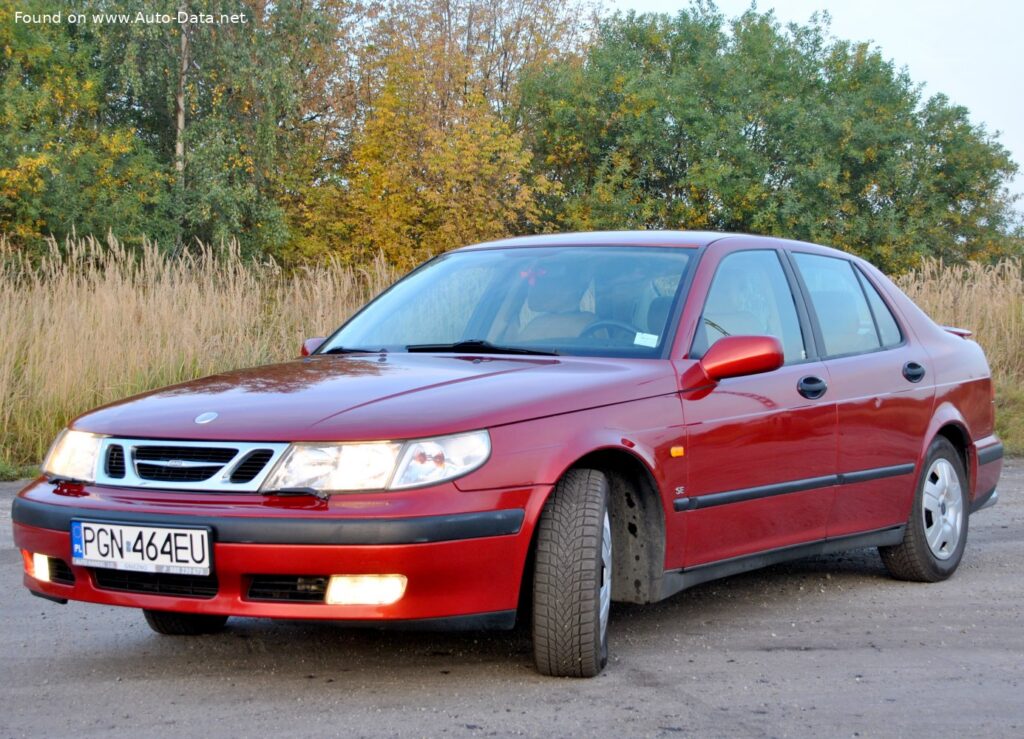
The Saab 9-5, a distinguished executive car from the Swedish automaker, represented a significant evolution in the brand’s design and engineering philosophy when it debuted. Specifically, the Saab 9-5 2.3 T (230 Hp) Automatic variant, produced from 1999 to 2001, stood out as a compelling blend of performance, safety, and idiosyncratic Scandinavian luxury. Positioned in a highly competitive segment, the 9-5 aimed to offer a thoughtful alternative to its German rivals, emphasizing real-world performance, ergonomic design, and a unique driving experience. This particular generation of the 9-5, known for its robust turbocharged engines and advanced safety features, solidified Saab’s reputation for innovation and commitment to driver well-being. It was marketed globally, finding a dedicated following in both European and North American markets, where its distinctive character and performance attributes were highly valued.
Engine and Performance of the Saab 9-5 2.3 T (230 Hp) Automatic
At the heart of the Saab 9-5 2.3 T (230 Hp) Automatic lies a potent and highly regarded turbocharged inline-four engine, designated as the B235R. This 2.3-liter (2290 cm3 or 139.74 cu. in.) powerplant was a testament to Saab’s long-standing expertise in turbocharging technology. Developing a formidable 230 horsepower at 5500 rpm, it delivered impressive acceleration and passing power, characteristics that defined Saab’s performance philosophy. More remarkably, the engine produced a substantial 258.15 lb.-ft. (350 Nm) of torque from a remarkably low 1900 rpm. This broad torque band ensured immediate responsiveness and effortless cruising, mitigating the typical lag associated with turbochargers of the era and providing a smooth, linear power delivery.
The engine’s configuration, a DOHC (Dual Overhead Camshaft) valvetrain with four valves per cylinder, facilitated efficient combustion and high volumetric efficiency. Fuel was delivered via a multi-port manifold injection system, precisely metering gasoline into the cylinders. With a compression ratio of 9.3:1, the engine was optimized for its turbocharger, which was the key component in achieving its significant power output per liter—an impressive 100.4 Hp/l. The engine’s front, transverse layout, coupled with a front-wheel-drive architecture, was typical for the segment and contributed to predictable handling characteristics.
Mated to this powerful engine was a 4-speed automatic transmission, designed to manage the engine’s torque effectively and provide a comfortable driving experience. While some enthusiasts might have preferred a manual option for ultimate control, the automatic gearbox was well-suited for the executive sedan’s intended purpose, offering smooth shifts and refined operation. Performance figures for the Saab 9-5 2.3 T (230 Hp) Automatic were quite respectable for its time and class: it could accelerate from 0 to 60 mph in a swift 6.9 seconds, with a top speed reaching 149.13 mph (240 km/h). The weight-to-power ratio stood at 6.7 kg/Hp (149.4 Hp/tonne), indicating a well-balanced power-to-weight characteristic that translated into confident on-road performance.
In terms of fuel economy, the 9-5 2.3 T delivered figures that were competitive for a turbocharged executive sedan of its vintage. Urban driving resulted in approximately 15.4 US mpg (15.3 l/100 km), while extra-urban cruising improved significantly to 28.7 US mpg (8.2 l/100 km). These figures demonstrated a reasonable balance between performance and efficiency, particularly for a vehicle designed to cover long distances comfortably and at speed. The 75-liter (19.81 US gal) fuel tank capacity further enhanced its long-distance touring capabilities, allowing for extended periods between refuels.
Design, Features, and Safety Innovations
The Saab 9-5 2.3 T (230 Hp) Automatic, a four-door sedan accommodating five occupants, exemplified Saab’s distinctive approach to automotive design. Its exterior was characterized by a sleek, aerodynamic profile that was both understated and immediately recognizable as a Saab. The design language, while evolving from previous Saab models, retained the brand’s commitment to functionality and safety, with a focus on clean lines and thoughtful proportions that contributed to its timeless appeal. The overall length of 189.17 inches (4805 mm) and width of 70.55 inches (1792 mm) provided a substantial road presence, characteristic of a premium executive sedan.
Inside, the 9-5 offered a cabin that was quintessentially Saab: driver-focused, ergonomically designed, and equipped with features aimed at enhancing comfort and safety. The “cockpit-like” feel was achieved through intuitive placement of controls and instrumentation, including the innovative “Night Panel” feature, which allowed the driver to extinguish all non-essential instrument lighting at night, reducing distraction. High-quality materials and meticulous craftsmanship were evident throughout the interior, creating a sophisticated and inviting atmosphere. Practicality was also a strong suit, with a generous trunk capacity of 17.66 cu. ft. (500 l), making it suitable for family travel or business excursions.
Saab’s reputation for pioneering safety was well-represented in the 9-5. The car featured a robust body structure designed to absorb impact forces effectively, protecting occupants. Standard safety equipment included ABS (Anti-lock Braking System), which was crucial for maintaining steering control during emergency braking. Beyond these fundamentals, Saab also integrated its innovative Active Head Restraints (SAHR), designed to reduce the risk of whiplash injuries in rear-end collisions. While specific airbag counts can vary by market and trim, the 9-5 was typically equipped with a comprehensive airbag system for its era, including front and side airbags, further bolstering occupant protection.
Underneath, the 9-5 employed a Spring Strut suspension system at both the front and rear, providing a balanced ride that combined comfort with capable handling. The braking system consisted of ventilated discs at the front and solid discs at the rear, ensuring strong and consistent stopping power. Steering was managed by a hydraulic rack and pinion system, offering direct feedback and a connected feel to the road. The vehicle rode on 215/55 R17 tires, mounted on 6.5J x 15 wheel rims, a combination chosen to optimize grip, ride comfort, and aesthetic appeal. The overall engineering package of the Saab 9-5 2.3 T (230 Hp) Automatic reflected a commitment to creating a secure, comfortable, and engaging driving experience.
The Enduring Appeal of the Saab 9-5 2.3 T (230 Hp) Automatic
The Saab 9-5 2.3 T (230 Hp) Automatic, produced between 1999 and 2001, holds a special place in the automotive landscape as a testament to Saab’s unique engineering prowess and design philosophy. It successfully carved out a niche for itself, appealing to discerning buyers who sought a blend of spirited performance, uncompromising safety, and distinctive Scandinavian style, rather than the conventional luxury offered by its German counterparts. Its powerful turbocharged engine, coupled with a comfortable and ergonomically advanced interior, provided a driving experience that was both engaging and remarkably refined for its era. The 9-5 embodied Saab’s commitment to innovation, from its advanced turbocharging technology to its pioneering safety features, making it more than just a car, but a statement of individuality and intelligent design. Even today, the first-generation 9-5, particularly the potent 2.3 T variant, is remembered fondly by enthusiasts and collectors for its robust build quality, unique character, and enduring appeal as a classic example of Swedish automotive engineering.
Technical Specifications
Below is a detailed breakdown of the technical specifications for the Saab 9-5 2.3 T (230 Hp) Automatic, providing a comprehensive overview of its mechanical and dimensional attributes.
| Parameter | Value |
|---|---|
| Brand | Saab |
| Model | 9-5 |
| Generation | 9-5 |
| Type (Engine) | 2.3 T (230 Hp) Automatic |
| Start of production | 1999 year |
| End of production | 2001 year |
| Powertrain Architecture | Internal Combustion engine |
| Body type | Sedan |
| Seats | 5 |
| Doors | 4 |
| Fuel consumption (economy) – urban | 15.4 US mpg (15.3 l/100 km) |
| Fuel consumption (economy) – extra urban | 28.7 US mpg (8.2 l/100 km) |
| Fuel Type | Petrol (Gasoline) |
| Acceleration 0 – 60 mph | 6.9 sec |
| Acceleration 0 – 62 mph (0-100 km/h) | 7.3 sec |
| Maximum speed | 149.13 mph (240 km/h) |
| Weight-to-power ratio | 6.7 kg/Hp, 149.4 Hp/tonne |
| Weight-to-torque ratio | 4.4 kg/Nm, 227.3 Nm/tonne |
| Power | 230 Hp @ 5500 rpm |
| Power per liter | 100.4 Hp/l |
| Torque | 258.15 lb.-ft. (350 Nm) @ 1900 rpm |
| Engine layout | Front, Transverse |
| Engine Model/Code | B235R |
| Engine displacement | 139.74 cu. in. (2290 cm3) |
| Number of cylinders | 4 |
| Engine configuration | Inline |
| Cylinder Bore | 3.54 in. (90 mm) |
| Piston Stroke | 3.54 in. (90 mm) |
| Compression ratio | 9.3:1 |
| Number of valves per cylinder | 4 |
| Fuel injection system | Multi-port manifold injection |
| Engine aspiration | Turbocharger |
| Valvetrain | DOHC |
| Engine oil capacity | 4.23 US qt (4 l) |
| Coolant | 7.82 US qt (7.4 l) |
| Kerb Weight | 3395.12 lbs. (1540 kg) |
| Max. weight | 4651.75 lbs. (2110 kg) |
| Max load | 1256.63 lbs. (570 kg) |
| Trunk (boot) space – maximum | 17.66 cu. ft. (500 l) |
| Fuel tank capacity | 19.81 US gal (75 l) |
| Length | 189.17 in. (4805 mm) |
| Width | 70.55 in. (1792 mm) |
| Height | 57.05 in. (1449 mm) |
| Wheelbase | 106.42 in. (2703 mm) |
| Front track | 59.92 in. (1522 mm) |
| Rear (Back) track | 59.92 in. (1522 mm) |
| Drivetrain Architecture | The Internal combustion engine (ICE) drives the front wheels of the vehicle. |
| Drive wheel | Front wheel drive |
| Number of gears and type of gearbox | 4 gears, automatic transmission |
| Front suspension | Spring Strut |
| Rear suspension | Spring Strut |
| Front brakes | Ventilated discs |
| Rear brakes | Disc |
| Assisting systems | ABS (Anti-lock braking system) |
| Steering type | Steering rack and pinion |
| Power steering | Hydraulic Steering |
| Tires size | 215/55 R17 |
| Wheel rims size | 6.5J x 15 |
