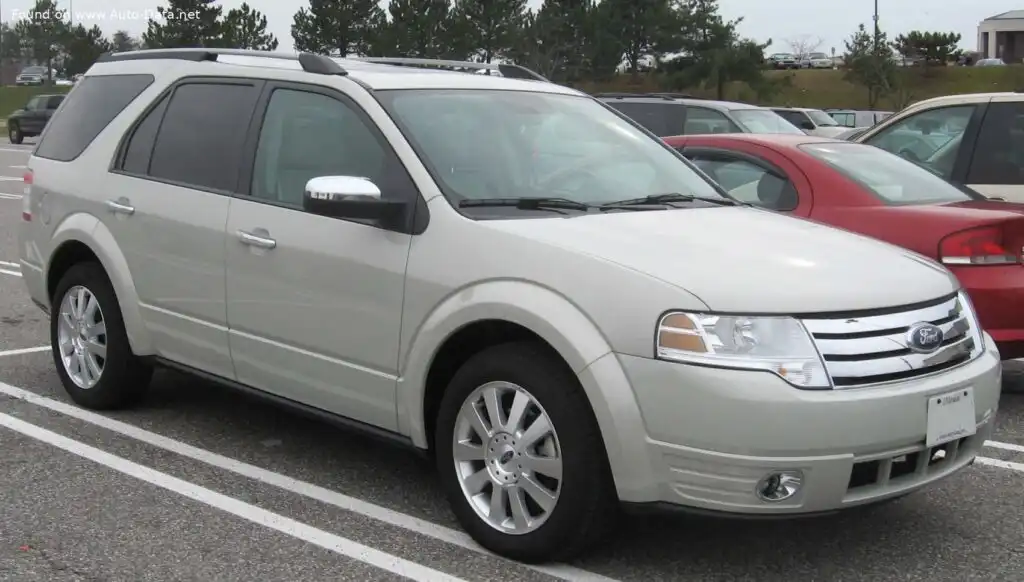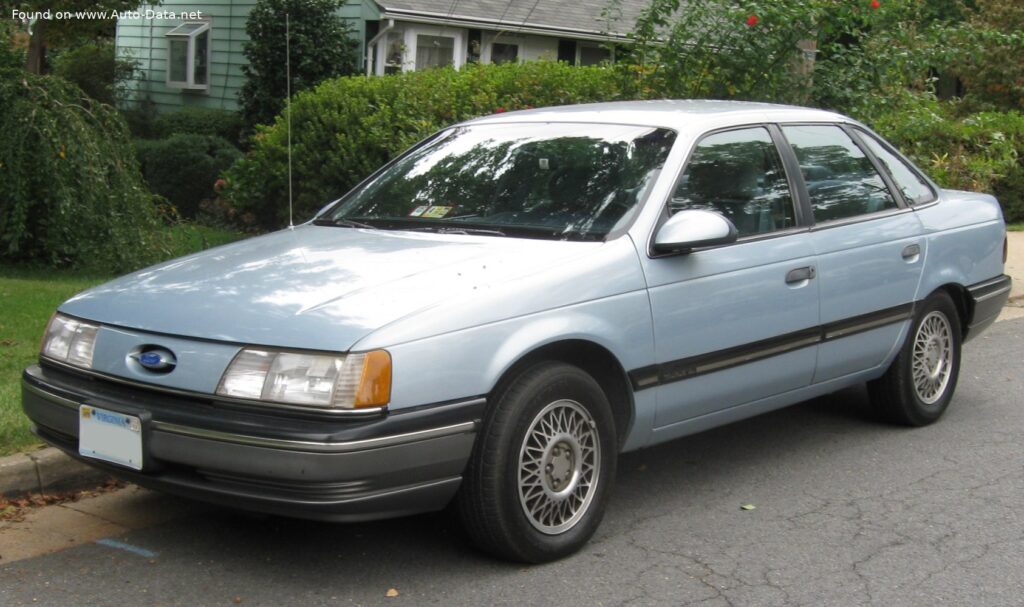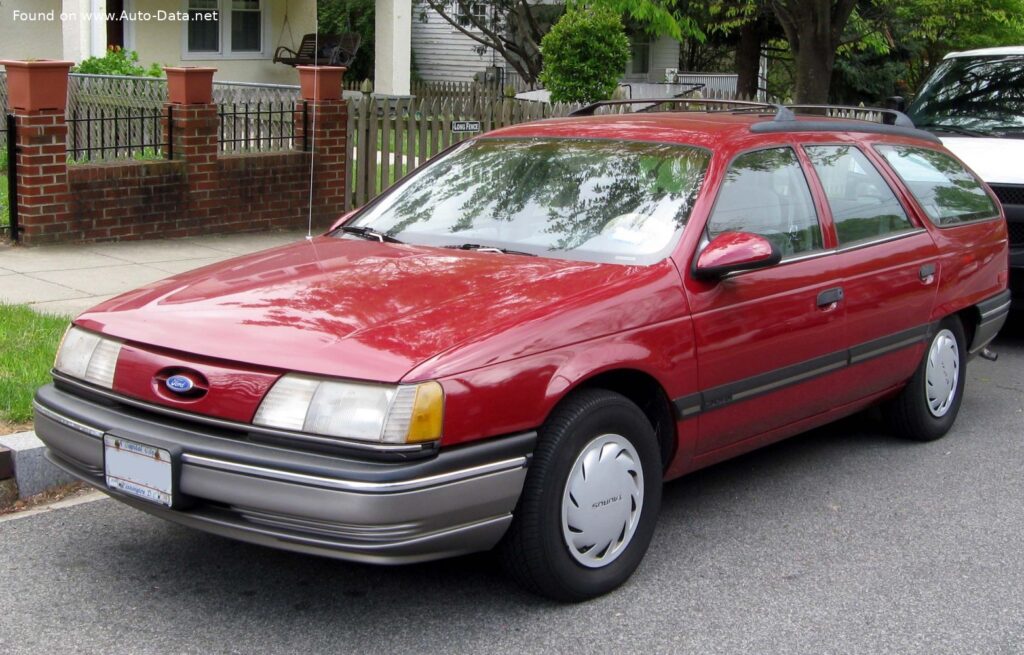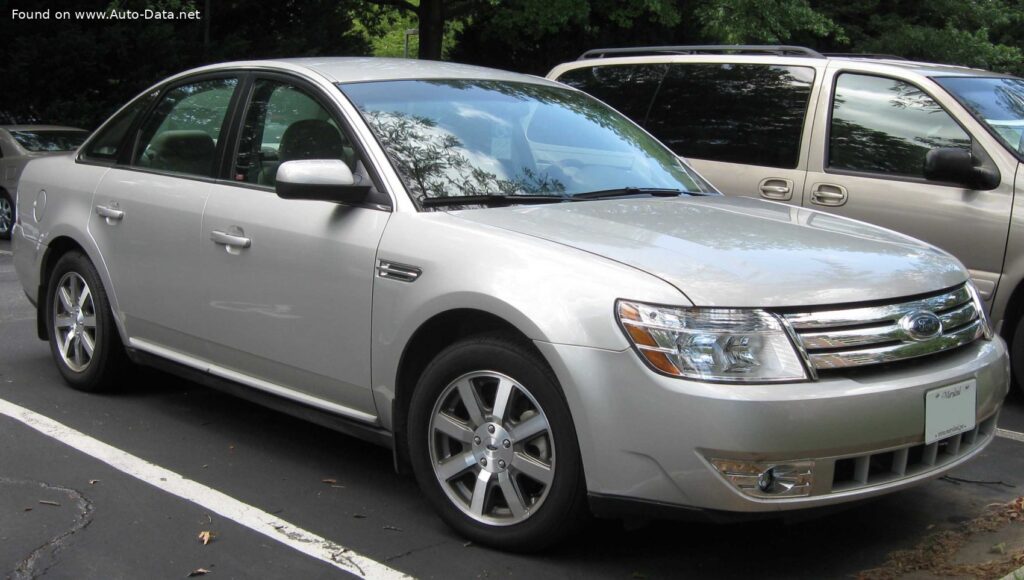
The 2007-2009 Ford Taurus V represented a pivotal, albeit brief, chapter in the storied history of one of America’s most recognizable sedans. Following a period where the Taurus nameplate was temporarily retired in favor of the Five Hundred, Ford reintroduced the Taurus badge for its fifth generation, aiming to recapture its previous market prominence. This iteration, particularly the Ford Taurus V 3.5 V6 24V (263 Hp) Automatic, positioned itself as a competitive full-size sedan in the North American market, catering to families and fleet buyers who sought a blend of spaciousness, reliable performance, and value. Built on the D3 platform, shared with other Ford, Lincoln, and Mercury vehicles, the Taurus V was a significant step up in size and refinement from previous generations, offering a more contemporary design and a modernized powertrain.
Engine and Performance: The Duratec 35 Powerplant in the Ford Taurus V
At the heart of the 2007-2009 Ford Taurus V was the formidable Duratec 35 engine, a 3.5-liter V6 unit designed to deliver a robust and smooth driving experience. This particular engine configuration, featuring a DOHC (Dual Overhead Camshaft) valvetrain and 24 valves (four per cylinder), was a testament to Ford’s commitment to modern engine technology. It produced a healthy 263 horsepower at 6250 rpm, providing ample power for both city driving and highway cruising. The engine’s naturally aspirated design, coupled with a multi-port manifold injection system, ensured reliable power delivery and a broad torque curve.
Peak torque for the Duratec 35 was an impressive 249.3 lb.-ft. (338 Nm) at 4500 rpm, which contributed significantly to the vehicle’s responsiveness and acceleration. This strong torque output, available at a relatively accessible engine speed, made the Ford Taurus V feel capable and confident in various driving conditions, whether merging onto a freeway or carrying a full complement of passengers and cargo. The engine’s compression ratio of 10.3:1 was optimized for regular gasoline, balancing performance with everyday practicality and fuel economy. With a maximum engine speed of 6700 rpm, the Duratec 35 was a rev-happy and refined powerplant, offering a compelling blend of power and sophistication for its class.
Power was efficiently managed by a 6-speed automatic transmission, a significant upgrade from the 4-speed automatics found in many of its predecessors and competitors. This advanced transmission allowed for smoother shifts, improved acceleration, and enhanced fuel efficiency across a wider range of driving speeds. The powertrain architecture exclusively drove the front wheels, a characteristic that defined the Taurus as a practical, everyday sedan. The combination of the powerful Duratec 35 engine and the sophisticated 6-speed automatic transmission gave the Ford Taurus V a weight-to-power ratio of 6.5 kg/Hp (155 Hp/tonne) and a weight-to-torque ratio of 5 kg/Nm (199.2 Nm/tonne), indicating a well-balanced performance profile for a vehicle of its size and intended purpose. These figures suggest that the Taurus V was not just a comfortable cruiser but also offered a spirited driving experience for its segment.
Design, Features, and Practicality of the Ford Taurus V
The fifth-generation Ford Taurus V embraced a design philosophy focused on spaciousness, comfort, and a commanding road presence. As a full-size sedan, its dimensions were generous, measuring 201.81 inches (5126 mm) in length, 74.49 inches (1892 mm) in width, and 61.5 inches (1562 mm) in height. This substantial footprint, combined with a long wheelbase of 112.91 inches (2868 mm), translated directly into an exceptionally roomy interior, particularly for rear-seat passengers, a key selling point for family and fleet use. The design featured a relatively tall greenhouse and a streamlined profile, contributing to a respectable drag coefficient (Cd) of 0.3, aiding in both fuel efficiency and reduced wind noise at highway speeds.
Inside, the Taurus V was configured to comfortably seat five occupants across two rows, with four doors providing easy access. The interior design prioritized ergonomics and functionality, offering a user-friendly layout for controls and instrumentation. One of its most impressive attributes was its cavernous trunk space, boasting a minimum volume of 21.19 cubic feet (600 liters). This class-leading cargo capacity made the Taurus V an ideal choice for long road trips, large grocery runs, or accommodating luggage for multiple passengers, reinforcing its role as a highly practical family sedan.
In terms of driver aids and safety, the Ford Taurus V included essential features for its era. An Anti-lock Braking System (ABS) was standard, providing enhanced control during emergency braking maneuvers. The steering system utilized a rack and pinion setup, offering precise and predictable handling for a vehicle of its size. The sedan rode on 18-inch wheel rims, shod with 225/55 R18 tires, a combination that provided a good balance of ride comfort and road holding. The braking system comprised ventilated discs at the front and solid discs at the rear, ensuring confident stopping power. With a minimum turning circle of 41.01 feet (12.5 meters), the Taurus V, despite its size, maintained reasonable maneuverability for urban environments.
The overall design of the Ford Taurus V 3.5 V6 24V (263 Hp) Automatic underscored its mission as a reliable, comfortable, and spacious American sedan. While its production run was brief, it laid important groundwork for subsequent iterations of the Taurus, demonstrating Ford’s commitment to offering a well-rounded and competitive product in the full-size sedan segment.
Technical Specifications
| Brand | Ford |
| Model | Taurus |
| Generation | Taurus V |
| Type (Engine) | 3.5 V6 24V (263 Hp) Automatic |
| Start of production | 2007 year |
| End of production | 2009 year |
| Powertrain Architecture | Internal Combustion engine |
| Body type | Sedan |
| Seats | 5 |
| Doors | 4 |
| Fuel Type | Petrol (Gasoline) |
| Weight-to-power ratio | 6.5 kg/Hp, 155 Hp/tonne |
| Weight-to-torque ratio | 5 kg/Nm, 199.2 Nm/tonne |
| Power | 263 Hp @ 6250 rpm. |
| Power per litre | 75.2 Hp/l |
| Torque | 338 Nm @ 4500 rpm. (249.3 lb.-ft. @ 4500 rpm.) |
| Maximum engine speed | 6700 rpm. |
| Engine Model/Code | Duratec 35 |
| Engine displacement | 3496 cm3 (213.34 cu. in.) |
| Number of cylinders | 6 |
| Engine configuration | V-engine |
| Cylinder Bore | 92.5 mm (3.64 in.) |
| Piston Stroke | 86.7 mm (3.41 in.) |
| Compression ratio | 10.3:1 |
| Number of valves per cylinder | 4 |
| Fuel injection system | Multi-port manifold injection |
| Engine aspiration | Naturally aspirated engine |
| Valvetrain | DOHC |
| Engine oil capacity | 5.2 l (5.49 US qt | 4.58 UK qt) |
| Coolant | 10.5 l (11.1 US qt | 9.24 UK qt) |
| Kerb Weight | 1697 kg (3741.24 lbs.) |
| Trunk (boot) space – minimum | 600 l (21.19 cu. ft.) |
| Fuel tank capacity | 76 l (20.08 US gal | 16.72 UK gal) |
| Length | 5126 mm (201.81 in.) |
| Width | 1892 mm (74.49 in.) |
| Height | 1562 mm (61.5 in.) |
| Wheelbase | 2868 mm (112.91 in.) |
| Front track | 1633 mm (64.29 in.) |
| Rear (Back) track | 1636 mm (64.41 in.) |
| Drag coefficient (Cd) | 0.3 |
| Minimum turning circle (turning diameter) | 12.5 m (41.01 ft.) |
| Drivetrain Architecture | The Internal combustion engine (ICE) drives the front wheels of the vehicle. |
| Drive wheel | Front wheel drive |
| Number of gears and type of gearbox | 6 gears, automatic transmission |
| Front brakes | Ventilated discs |
| Rear brakes | Disc |
| Assisting systems | ABS (Anti-lock braking system) |
| Steering type | Steering rack and pinion |
| Tires size | 225/55 R18 |
| Wheel rims size | 18 |