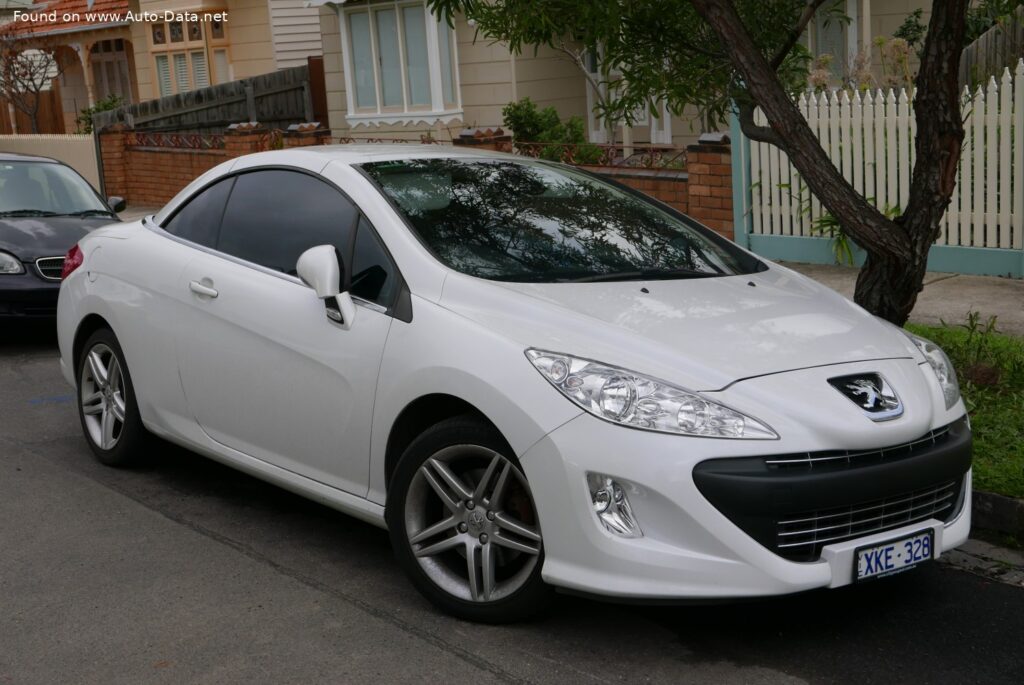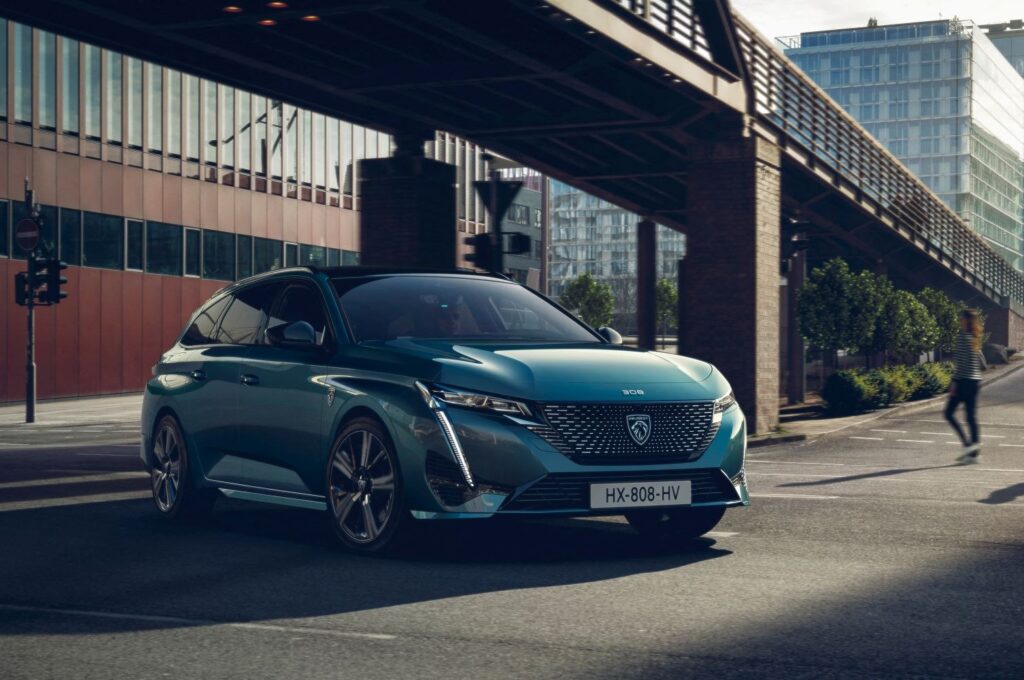
The Peugeot 308 SW III (Phase I, 2021) represents a significant evolution in the compact segment, particularly within the European market where station wagons, or estates as they are often known, maintain strong popularity. This iteration of the 308 SW, launched in September 2021, showcases Peugeot’s commitment to electrification, blending sophisticated design with advanced plug-in hybrid electric vehicle (PHEV) technology. Positioned as a versatile and efficient family vehicle, the 308 SW III offers a compelling package for consumers seeking a balance of practicality, performance, and environmental responsibility. While not directly available in the United States, its technical prowess and design language reflect broader trends in global automotive development, emphasizing fuel efficiency and reduced emissions without compromising on dynamic capability or cargo space. The specific variant, the 1.6 (180 Hp) Plug-in Hybrid e-EAT8, stands out as a prime example of modern powertrain integration, delivering a robust driving experience with impressive economy figures for its class.
Powertrain and Performance of the Peugeot 308 SW III (Phase I, 2021)
At the heart of the Peugeot 308 SW III (Phase I, 2021) 1.6 (180 Hp) Plug-in Hybrid e-EAT8 lies a highly integrated and efficient powertrain architecture. This PHEV system combines a 1.6-liter turbocharged inline-four petrol engine with an electric motor, strategically placed between the combustion engine and the transmission. The internal combustion engine (ICE), identified by the code DGX EP6FADTXHPE, boasts a displacement of 1598 cubic centimeters (97.52 cu. in.) and produces a respectable 150 horsepower at 6000 rpm, alongside 184.39 lb.-ft. of torque at a low 1750 rpm. This engine features direct injection, a turbocharger, an intercooler, and a DOHC valvetrain, ensuring optimal power delivery and efficiency while meeting the stringent Euro 6d emission standard, further enhanced by a particulate filter.
Complementing the petrol engine is a potent electric motor, contributing an additional 110 horsepower at 2500 rpm and a substantial 236.02 lb.-ft. of torque across a broad range from 500 to 2500 rpm. Together, this hybrid setup delivers a combined system output of 180 horsepower and an impressive 265.52 lb.-ft. of torque. This substantial torque is crucial for responsive acceleration and flexible driving dynamics. Power is channeled to the front wheels through an advanced 8-speed automatic e-EAT transmission, designed for smooth and efficient gear changes. The Drivetrain Architecture allows for seamless transitions between full electric, hybrid, and internal combustion modes, providing versatility for various driving conditions.
Performance figures for the 308 SW III PHEV are noteworthy for a family-oriented station wagon. It accelerates from 0 to 60 mph in an estimated 7.3 seconds, with 0 to 100 km/h achieved in 7.7 seconds. The maximum speed is rated at 139.81 mph (225 km/h), while in pure electric mode, the vehicle can reach speeds of up to 83.89 mph (135 km/h). These figures underscore the vehicle’s capability to offer both spirited driving and relaxed cruising. The weight-to-power ratio stands at 9.2 kg/Hp (108.5 Hp/tonne), and the weight-to-torque ratio is 4.6 kg/Nm (217 Nm/tonne), indicating a well-balanced power-to-weight characteristic for its segment.
One of the most compelling aspects of this PHEV is its exceptional fuel economy and electric range. The 12.4 kWh gross lithium-ion battery, conveniently located under the rear seats, provides an all-electric range of 39.77 to 42.25 miles (64-68 km) according to the WLTP cycle. This allows for significant daily commutes to be completed entirely on electric power, drastically reducing fuel consumption and emissions. Combined fuel consumption (WLTP) is an outstanding 1.1-1.2 liters per 100 km, translating to an estimated 213.8 – 196 US mpg. The CO2 emissions are remarkably low, ranging from 25-27 g/km (WLTP), highlighting its environmental credentials. Average energy consumption (WLTP) is reported between 14.8-15.2 kWh/100 km, or approximately 141-138 MPGe. These figures position the Peugeot 308 SW III PHEV as one of the most efficient vehicles in its class, offering substantial savings on running costs and a reduced carbon footprint.
Design and Features
The Peugeot 308 SW III (Phase I, 2021) distinguishes itself with a modern and assertive design language that embodies Peugeot’s contemporary aesthetic. As a station wagon (or estate), it prioritizes both style and practicality, offering a spacious and versatile interior within a sleek exterior. The vehicle measures 182.52 inches (4636 mm) in length, 72.91 inches (1852 mm) in width (excluding mirrors), and 56.85 inches (1444 mm) in height, with a wheelbase of 107.56 inches (2732 mm). These dimensions contribute to a balanced stance and a commanding road presence, while the low drag coefficient of 0.277 enhances aerodynamic efficiency.
The body features five doors and accommodates five occupants comfortably, making it an ideal choice for families. The design incorporates sharp lines, a bold front grille, and signature LED lighting (typical for modern Peugeot vehicles, though not explicitly detailed in the provided data) that give it a distinctive appearance. Inside, the focus is on ergonomic design and advanced technology. While specific interior features beyond seating capacity are not detailed, modern Peugeot vehicles typically feature the i-Cockpit, a unique driver-oriented layout with a small steering wheel, a head-up digital instrument cluster, and a central touchscreen infotainment system, all designed to enhance the driving experience and connectivity.
Practicality is a cornerstone of the station wagon body type, and the 308 SW III excels in this regard. It offers a generous trunk (boot) space of 19.35 cubic feet (548 liters) with the rear seats in place, expanding to an impressive 55.59 cubic feet (1574 liters) when the rear seats are folded down. This ample cargo volume ensures that the vehicle can easily accommodate luggage, groceries, or larger items for various lifestyle needs. The maximum load capacity is 1126.56 lbs (511 kg), and it boasts a permitted trailer load with brakes of 3196.7 lbs (1450 kg), further enhancing its utility.
Safety and driving dynamics are also key considerations. The vehicle is equipped with a robust suspension system, featuring independent McPherson struts at the front and a torsion beam at the rear, providing a comfortable ride and stable handling. Braking is handled by ventilated discs at the front and solid discs at the rear, supported by an Anti-lock Braking System (ABS) for enhanced stopping power and control. The electric power steering system, with a steering rack and pinion setup, offers precise and effortless maneuverability, evidenced by a minimum turning circle of 35.1 feet (10.7 meters). The standard tire sizes are 225/45 R17 or 225/40 R18, providing ample grip and contributing to the vehicle’s dynamic capabilities.
Technical Specifications
| Brand | Peugeot |
| Model | 308 |
| Generation | 308 SW III (Phase I, 2021) |
| Type (Engine) | 1.6 (180 Hp) Plug-in Hybrid e-EAT8 |
| Start of production | September, 2021 year |
| End of production | August, 2025 year |
| Powertrain Architecture | PHEV (Plug-in Hybrid Electric Vehicle) |
| Body type | Station wagon (estate) |
| Seats | 5 |
| Doors | 5 |
| Combined fuel consumption (WLTP) | 1.1-1.2 l/100 km (213.8 – 196 US mpg) |
| CO2 emissions (WLTP) | 25-27 g/km |
| Fuel consumption (economy) – combined (NEDC) | 1.4 l/100 km (168 US mpg) |
| CO2 emissions (NEDC) | 31 g/km |
| Fuel Type | Petrol / electricity |
| Acceleration 0 – 100 km/h | 7.7 sec |
| Acceleration 0 – 62 mph | 7.7 sec |
| Acceleration 0 – 60 mph (Calculated) | 7.3 sec |
| Maximum speed | 225 km/h (139.81 mph) |
| Emission standard | Euro 6d |
| Weight-to-power ratio | 9.2 kg/Hp (108.5 Hp/tonne) |
| Weight-to-torque ratio | 4.6 kg/Nm (217 Nm/tonne) |
| Gross battery capacity | 12.4 kWh |
| Battery technology | Lithium-ion (Li-Ion) |
| Battery location | Under the rear seats |
| All-electric range (WLTP) | 64-68 km (39.77 – 42.25 mi) |
| Average Energy consumption (WLTP) | 14.8-15.2 kWh/100 km (23.82 – 24.46 kWh/100 mi, 141 – 138 MPGe) |
| Max speed (electric) | 135 km/h (83.89 mph) |
| Electric motor power | 110 Hp @ 2500 rpm |
| Electric motor Torque | 320 Nm @ 500-2500 rpm (236.02 lb.-ft.) |
| Electric motor location | Between the combustion engine and the transmission |
| System power | 180 Hp |
| System torque | 360 Nm (265.52 lb.-ft.) |
| ICE Power | 150 Hp @ 6000 rpm |
| Power per liter | 93.9 Hp/l |
| ICE Torque | 250 Nm @ 1750 rpm (184.39 lb.-ft.) |
| Engine layout | Front, Transverse |
| Engine Model/Code | DGX EP6FADTXHPE |
| Engine displacement | 1598 cm3 (97.52 cu. in.) |
| Number of cylinders | 4 |
| Engine configuration | Inline |
| Cylinder Bore | 77 mm (3.03 in.) |
| Piston Stroke | 85.8 mm (3.38 in.) |
| Number of valves per cylinder | 4 |
| Fuel injection system | Direct injection |
| Engine aspiration | Turbocharger, Intercooler |
| Valvetrain | DOHC |
| Engine oil capacity | 4.25 l (4.49 US qt) |
| Engine systems | Particulate filter |
| Kerb Weight | 1659 kg (3657.47 lbs.) |
| Max. weight | 2170 kg (4784.03 lbs.) |
| Max load | 511 kg (1126.56 lbs.) |
| Trunk (boot) space – minimum | 548 l (19.35 cu. ft.) |
| Trunk (boot) space – maximum | 1574 l (55.59 cu. ft.) |
| Fuel tank capacity | 40 l (10.57 US gal) |
| Max. roof load | 85 kg (187.39 lbs.) |
| Permitted trailer load with brakes (12%) | 1450 kg (3196.7 lbs.) |
| Permitted trailer load without brakes | 750 kg (1653.47 lbs.) |
| Permitted towbar download | 70 kg (154.32 lbs.) |
| Length | 4636 mm (182.52 in.) |
| Width | 1852 mm (72.91 in.) |
| Width with mirrors folded | 1860 mm (73.23 in.) |
| Width including mirrors | 2062 mm (81.18 in.) |
| Height | 1444 mm (56.85 in.) |
| Wheelbase | 2732 mm (107.56 in.) |
| Front track | 1559 mm (61.38 in.) |
| Rear (Back) track | 1554 mm (61.18 in.) |
| Front overhang | 904 mm (35.59 in.) |
| Rear overhang | 1000 mm (39.37 in.) |
| Ride height (ground clearance) | 143 mm (5.63 in.) |
| Drag coefficient (Cd) | 0.277 |
| Minimum turning circle (turning diameter) | 10.7 m (35.1 ft.) |
| Drivetrain Architecture | ICE and electric motor drive front wheels; full electric or mixed mode |
| Drive wheel | Front wheel drive |
| Number of gears and type of gearbox | 8 gears, automatic transmission e-EAT |
| Front suspension | Coil spring, Independent type McPherson |
| Rear suspension | Torsion |
| Front brakes | Ventilated discs |
| Rear brakes | Disc |
| Assisting systems | ABS (Anti-lock braking system) |
| Steering type | Steering rack and pinion |
| Power steering | Electric Steering |
| Tires size | 225/45 R17; 225/40 R18 |