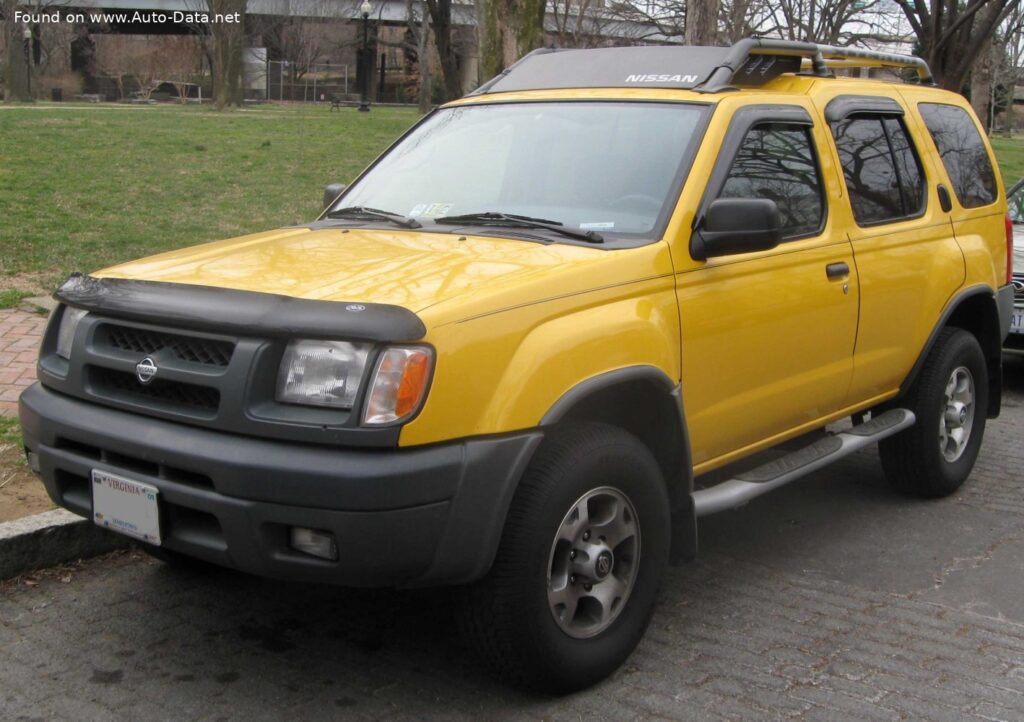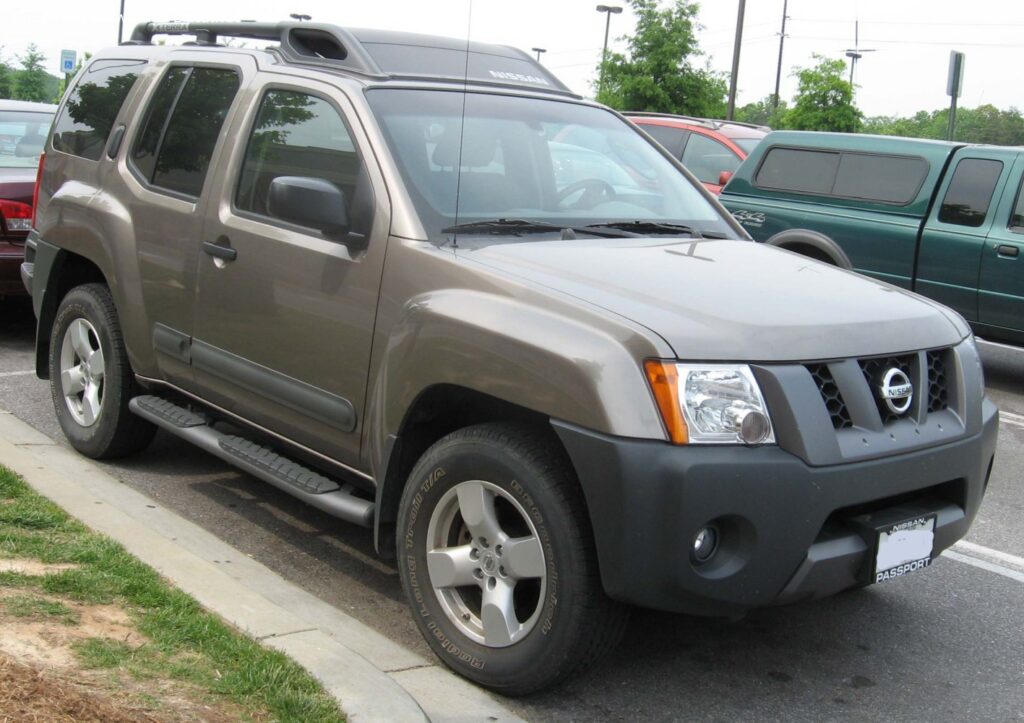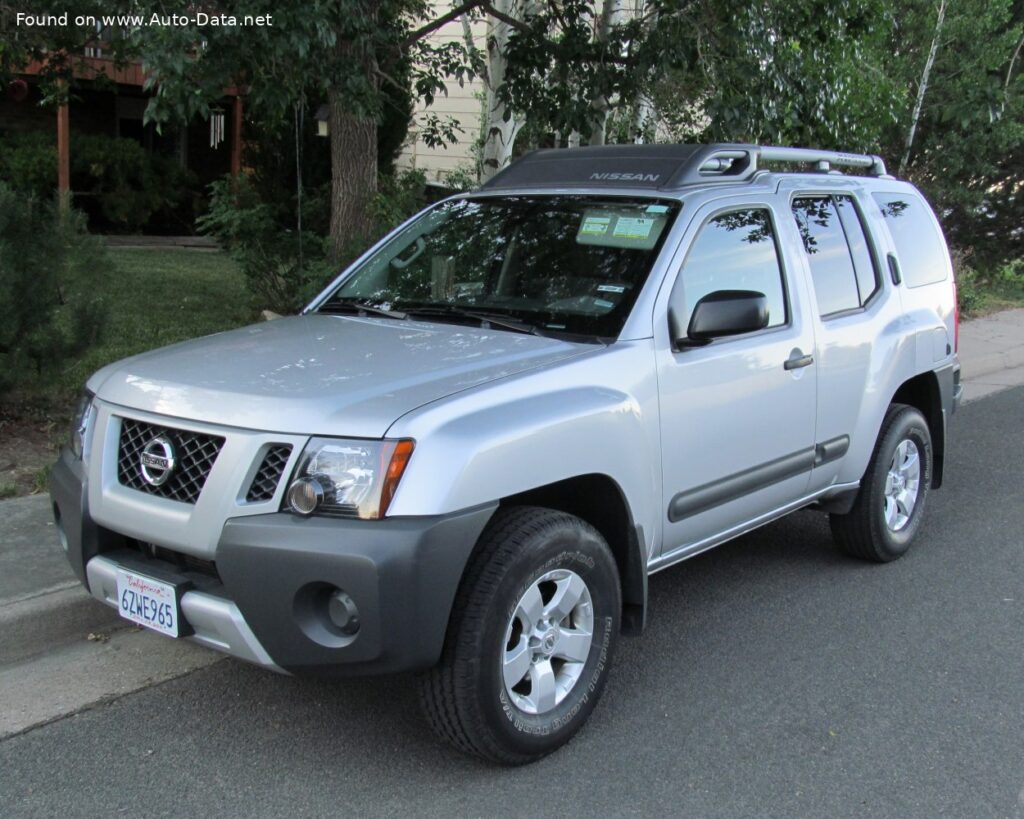
The Nissan Xterra II, particularly the facelifted 2008 model equipped with the 4.0 V6 (261 Hp) Automatic powertrain, represents a highly distinctive and purpose-built sport utility vehicle in the North American market. Launched as a rugged, body-on-frame SUV, the Xterra was designed to appeal to consumers seeking genuine off-road capability and utilitarian versatility, rather than the softer, car-like attributes of many contemporary crossovers. This second-generation Xterra, introduced in 2005 and refreshed in 2008, solidified its reputation as an adventure-ready machine, blending robust mechanicals with a no-frills, functional design ethos. Its enduring appeal lies in its straightforward approach to tackling challenging terrain and its practical suitability for active lifestyles, making the Nissan Xterra II (facelift 2008) 4.0 V6 (261 Hp) Automatic a notable entry in Nissan’s history of capable SUVs.
The Enduring Appeal of the Nissan Xterra II (facelift 2008) 4.0 V6 (261 Hp) Automatic
From its inception, the Nissan Xterra was engineered with a clear mission: to provide uncompromised utility and off-road prowess. The 2008 facelift brought subtle enhancements, primarily focusing on interior refinements and minor exterior tweaks, without altering the fundamental rugged character that defined the vehicle. This generation of Xterra, produced from 2008 to 2015, stood as a testament to Nissan’s commitment to traditional SUV values in an increasingly crossover-dominated landscape. Its robust construction and formidable powertrain made it a favorite among outdoor enthusiasts, distinguishing it from competitors that often prioritized on-road comfort over genuine trail capability. The {original_focus_keyword} variant, with its potent V6 engine and automatic transmission, offered a compelling blend of power, convenience, and durability.
Powertrain and Dynamic Performance
At the heart of the Nissan Xterra II (facelift 2008) 4.0 V6 (261 Hp) Automatic is Nissan’s highly regarded VQ40DE engine. This 4.0-liter V6, a naturally aspirated unit with a DOHC (Double Overhead Camshaft) valvetrain and multi-port manifold injection, delivers a robust 261 horsepower at 5600 rpm. Equally impressive is its torque output, peaking at 281.01 lb.-ft. (381 Nm) at 4000 rpm, providing ample pulling power essential for both acceleration and navigating challenging off-road conditions. With a bore of 3.76 inches (95.5 mm) and a stroke of 3.62 inches (92 mm), and a compression ratio of 9.7:1, the engine is designed for durability and efficient power delivery across a broad rev range. Its V-engine configuration, with 6 cylinders and 4 valves per cylinder, contributes to its smooth operation and reliability.
Power is channeled to the rear wheels via a 5-speed automatic transmission, a choice that underscores the Xterra’s focus on practicality and robust performance. While many SUVs of its era offered more gears, the 5-speed unit was known for its dependability and smooth shifts, perfectly complementing the engine’s torque curve for confident driving in various scenarios, including towing and off-road excursions. The Xterra’s powertrain architecture, featuring an internal combustion engine driving the rear wheels, provides a traditional and robust foundation, offering excellent traction and a sense of direct engagement with the road or trail. The vehicle’s weight-to-power ratio of 7.2 kg/Hp (138.7 Hp/tonne) and a weight-to-torque ratio of 4.9 kg/Nm (202.4 Nm/tonne) further illustrate its strong performance characteristics relative to its curb weight, which ranges from 4140.28 to 4149.1 lbs (1878-1882 kg).
Fuel efficiency for a vehicle of its capability and size is rated at a combined 18 US mpg (13.1 l/100 km). Urban driving yields 16 US mpg (14.7 l/100 km), while extra-urban conditions see an improved 22 US mpg (10.7 l/100 km). The Xterra also meets the LEV2-ULEV emission standard, reflecting Nissan’s commitment to environmental considerations within the context of a rugged SUV. The generous 21.13 US gallons (80 l) fuel tank capacity ensures a substantial range, reducing the need for frequent refueling during extended trips or remote adventures.
Robust Design and Functional Features
The design of the Nissan Xterra II (facelift 2008) is unmistakably utilitarian, characterized by its boxy profile, prominent roof rack, and pronounced wheel arches. As a 5-door, 5-seat SUV, it prioritizes interior space and functionality. Measuring 178.7 inches (4539 mm) in length, 72.8 inches (1849 mm) in width, and 74.88 inches (1902 mm) in height, with a wheelbase of 106.3 inches (2700 mm), the Xterra maintains a relatively compact footprint for an SUV of its capability, aiding maneuverability on tight trails. The ground clearance, ranging from 8.19 to 9.09 inches (208-231 mm), is substantial, allowing it to clear obstacles that would challenge many other vehicles.
Crucially for its off-road credentials, the Xterra boasts impressive approach, departure, and ramp-over angles. An approach angle of 30.5-32°, a departure angle of 27.3-28.8°, and a ramp-over angle of 22.9-24.6° ensure that it can climb steep inclines, descend difficult slopes, and traverse uneven terrain without scraping its undercarriage. The suspension system is equally robust, featuring a double wishbone setup with a transverse stabilizer at the front, and a rigid axle suspension with leaf springs and a transverse stabilizer at the rear. This combination provides durability, articulation, and the ability to handle heavy loads, including its permitted trailer load with brakes of 5000.08 lbs (2268 kg).
Braking performance is handled by ventilated discs on both the front and rear axles, complemented by an Anti-lock Braking System (ABS) for enhanced safety and control, particularly on slippery surfaces. Steering is managed by a hydraulic rack and pinion system, offering direct feedback and a robust feel, which is often preferred by off-road enthusiasts. The vehicle rides on 265/70 R16 tires mounted on 7J x 16 wheel rims, a practical and durable setup well-suited for a variety of driving conditions, from highway cruising to rugged trail use. Inside, the Xterra offers a versatile cargo area, with a minimum trunk space of 26.31 cu. ft. (745 l) that expands to a cavernous 65.69 cu. ft. (1860 l) with the rear seats folded, making it highly adaptable for carrying gear, camping equipment, or sporting goods.
Market Positioning and Legacy
During its production run, the Nissan Xterra II (facelift 2008) occupied a unique niche in the SUV market. Unlike many of its contemporaries that were transitioning towards more refined, car-based platforms, the Xterra remained steadfastly true to its body-on-frame roots. This dedication to traditional SUV engineering made it a compelling choice for buyers who genuinely needed a vehicle capable of serious off-road adventures, towing, and carrying substantial cargo without compromise. It stood out as a more affordable and less complex alternative to larger, more luxurious SUVs, yet still offered a high degree of capability.
Its “adventure-ready” image was not just marketing; it was baked into the Xterra’s DNA. Features like the integrated roof rack, capable suspension, and robust V6 engine made it a go-to vehicle for weekend warriors, campers, hikers, and anyone requiring a dependable platform for outdoor pursuits. The Xterra fostered a loyal following among enthusiasts who appreciated its no-nonsense attitude and mechanical simplicity, which often translated into reliability and ease of maintenance. Even after its discontinuation in 2015, the Xterra continues to be a sought-after vehicle in the used market, a testament to its enduring design, durability, and the practical value it offers to those who prioritize genuine utility and off-road capability above all else. Its legacy is one of rugged independence and a clear focus on delivering a true SUV experience.
Technical Specifications: Nissan Xterra II (facelift 2008) 4.0 V6 (261 Hp) Automatic
| Brand | Nissan |
| Model | Xterra |
| Generation | Xterra II (facelift 2008) |
| Type (Engine) | 4.0 V6 (261 Hp) Automatic |
| Start of production | 2008 year |
| End of production | 2015 year |
| Powertrain Architecture | Internal Combustion engine |
| Body type | SUV |
| Seats | 5 |
| Doors | 5 |
| Performance specs | |
| Fuel consumption (economy) – urban | 14.7 l/100 km, 16 US mpg, 19.2 UK mpg, 6.8 km/l |
| Fuel consumption (economy) – extra urban | 10.7 l/100 km, 22 US mpg, 26.4 UK mpg, 9.3 km/l |
| Fuel consumption (economy) – combined | 13.1 l/100 km, 18 US mpg, 21.6 UK mpg, 7.6 km/l |
| Fuel Type | Petrol (Gasoline) |
| Emission standard | LEV2-ULEV |
| Weight-to-power ratio | 7.2 kg/Hp, 138.7 Hp/tonne |
| Weight-to-torque ratio | 4.9 kg/Nm, 202.4 Nm/tonne |
| Engine specs | |
| Power | 261 Hp @ 5600 rpm. |
| Power per litre | 66 Hp/l |
| Torque | 381 Nm @ 4000 rpm., 281.01 lb.-ft. @ 4000 rpm. |
| Engine layout | Front, Longitudinal |
| Engine Model/Code | VQ40DE |
| Engine displacement | 3954 cm3, 241.29 cu. in. |
| Number of cylinders | 6 |
| Engine configuration | V-engine |
| Cylinder Bore | 95.5 mm, 3.76 in. |
| Piston Stroke | 92 mm, 3.62 in. |
| Compression ratio | 9.7:1 |
| Number of valves per cylinder | 4 |
| Fuel injection system | Multi-port manifold injection |
| Engine aspiration | Naturally aspirated engine |
| Valvetrain | DOHC |
| Engine oil capacity | 5.1 l, 5.39 US qt, 4.49 UK qt |
| Engine oil specification | Not specified |
| Coolant | 10.2 l, 10.78 US qt, 8.97 UK qt |
| Space, Volume and weights | |
| Kerb Weight | 1882-1878 kg, 4149.1 – 4140.28 lbs. |
| Trunk (boot) space – minimum | 745 l, 26.31 cu. ft. |
| Trunk (boot) space – maximum | 1860 l, 65.69 cu. ft. |
| Fuel tank capacity | 80 l, 21.13 US gal, 17.6 UK gal |
| Permitted trailer load with brakes (12%) | 2268 kg, 5000.08 lbs. |
| Dimensions | |
| Length | 4539 mm, 178.7 in. |
| Width | 1849 mm, 72.8 in. |
| Height | 1902 mm, 74.88 in. |
| Wheelbase | 2700 mm, 106.3 in. |
| Front track | 1570 mm, 61.81 in. |
| Rear (Back) track | 1570 mm, 61.81 in. |
| Ride height (ground clearance) | 208-231 mm, 8.19 – 9.09 in. |
| Approach angle | 30.5-32° |
| Departure angle | 27.3-28.8° |
| Ramp-over (brakeover) angle | 22.9-24.6° |
| Drivetrain, brakes and suspension specs | |
| Drivetrain Architecture | The Internal combustion engine (ICE) drives the rear wheels of the vehicle. |
| Drive wheel | Rear wheel drive |
| Number of gears and type of gearbox | 5 gears, automatic transmission |
| Front suspension | Double wishbone, Transverse stabilizer |
| Rear suspension | Rigid axle suspension, Transverse stabilizer, Leaf spring |
| Front brakes | Ventilated discs |
| Rear brakes | Ventilated discs |
| Assisting systems | ABS (Anti-lock braking system) |
| Steering type | Steering rack and pinion |
| Power steering | Hydraulic Steering |
| Tires size | 265/70 R16 |
| Wheel rims size | 7J x 16 |