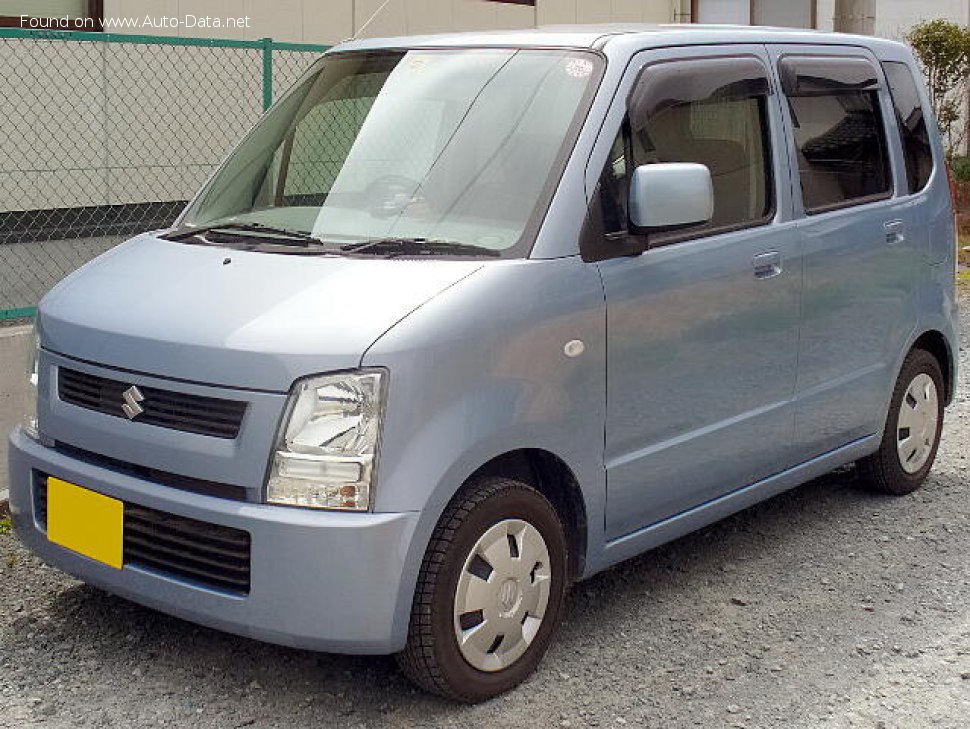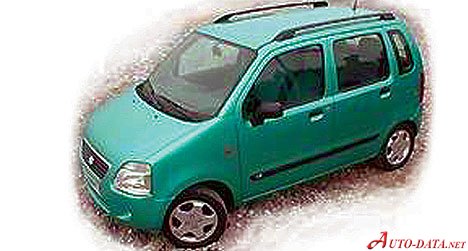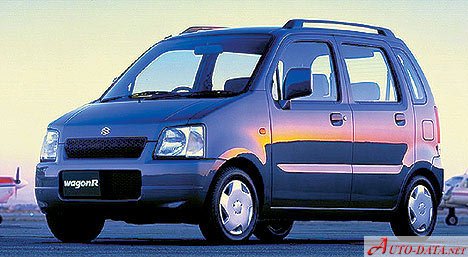
The Suzuki Wagon R+ II 1.0 i 16V Turbo (101 Hp) represents the second generation of Suzuki’s compact “tall wagon” model, a vehicle concept that originated in Japan’s kei car segment but was adapted for broader international markets, particularly in Europe and parts of Asia. Produced between 2000 and 2008, this iteration of the Wagon R+ aimed to combine the space efficiency and practicality of a small minivan with the agile footprint of a subcompact car. While not officially sold in the United States, its design ethos and engineering principles reflect a global trend towards maximizing interior volume within minimal exterior dimensions, making it a significant player in its primary markets for urban families and commuters seeking versatility and fuel economy.
Suzuki Wagon R+ II 1.0 i 16V Turbo (101 Hp): Engineering for Urban Versatility
The powertrain of the Suzuki Wagon R+ II 1.0 i 16V Turbo is a testament to efficient engineering, especially for its time. At its heart lies a diminutive yet potent 1.0-liter (997 cm³, or 60.84 cu. in.) inline four-cylinder engine. What sets this particular variant apart is the inclusion of a turbocharger, a feature that significantly boosts its performance beyond what its displacement might suggest. This DOHC (Double Overhead Camshaft) engine, with four valves per cylinder, delivers a respectable 101 horsepower at 6500 rpm. This power output, coupled with a compression ratio of 8.4:1 and a multi-port manifold injection system, ensures a responsive and spirited driving experience for a vehicle of its class.
Torque output is equally impressive for such a small engine, peaking at 87.03 lb.-ft. (118 Nm) at 4000 rpm. This robust torque delivery at mid-range RPMs is crucial for urban driving, providing ample acceleration from a standstill and flexibility in traffic. The engine’s layout is front, transverse, contributing to the vehicle’s compact packaging and front-wheel-drive architecture. Power is transmitted to the front wheels via a 4-speed automatic transmission, emphasizing ease of use and convenience in congested city environments. This combination allows the Wagon R+ II to achieve a top speed of 90.1 mph (145 km/h), making it capable of highway speeds, though its primary domain remains the city.
Fuel efficiency was a key consideration, and the 1.0L Turbo engine delivers commendable figures. In urban cycles, it achieves approximately 29.4 US mpg (8 liters per 100 km), while on extra-urban routes, it improves to an impressive 39.2 US mpg (6 liters per 100 km). These figures highlight its economical nature, appealing to cost-conscious buyers in its target markets. With a curb weight of just 1984.16 lbs (900 kg), the Wagon R+ II boasts an excellent weight-to-power ratio of 8.9 kg/Hp, or 112.2 Hp/tonne, and a weight-to-torque ratio of 7.6 kg/Nm, or 131.1 Nm/tonne. These metrics underscore its agile performance relative to its size and engine capacity.
Design and Practical Features
The Suzuki Wagon R+ II adopts a distinctive minivan body type, characterized by its tall, boxy profile and short overhangs. This design philosophy is central to its appeal, maximizing interior space and passenger comfort within a compact exterior footprint. Measuring 138.19 inches (3510 mm) in length, 63.78 inches (1620 mm) in width, and 65.75 inches (1670 mm) in height, the Wagon R+ II is remarkably maneuverable in tight urban settings. Its relatively long wheelbase of 92.91 inches (2360 mm) for its overall length contributes to a stable ride and generous cabin volume.
The vehicle features five doors, providing easy access to both front and rear seating, and comfortably accommodates five occupants. The elevated seating position, a hallmark of its “tall wagon” design, offers excellent visibility for the driver and an airy cabin feel for all passengers. Practicality extends to its cargo capabilities, with a minimum trunk space of 8.83 cu. ft. (250 liters). This can be significantly expanded to a maximum of 21.01 cu. ft. (595 liters) by folding the rear seats, demonstrating its versatility for carrying luggage, groceries, or larger items. The maximum load capacity stands at 936.96 lbs (425 kg), further enhancing its utility.
Underneath, the Wagon R+ II is equipped with a robust and functional chassis designed for everyday driving. The front suspension employs a spring strut system, while the rear utilizes coil springs, a combination that provides a balance of comfort and predictable handling. Stopping power is managed by ventilated disc brakes at the front and traditional drum brakes at the rear, a common setup for compact vehicles of this era, offering reliable performance. Steering is handled by a rack and pinion system, known for its direct feel and responsiveness, crucial for navigating congested city streets. The vehicle rides on 14-inch wheel rims, fitted with 165/60 R14 tires, which provide a good balance of grip and ride comfort for its intended use.
The design of the Wagon R+ II, while not overtly stylish by modern standards, prioritizes function and utility. Its unpretentious exterior belies a thoughtfully designed interior aimed at maximizing every inch of available space. For markets where space is at a premium and fuel efficiency is paramount, the Suzuki Wagon R+ II 1.0 i 16V Turbo offered a compelling package, blending spirited performance with remarkable practicality and economy.
Technical Specifications: Suzuki Wagon R+ II 1.0 i 16V Turbo (101 Hp)
| Brand | Suzuki |
| Model | Wagon R+ |
| Generation | Wagon R+ II |
| Type (Engine) | 1.0 i 16V Turbo (101 Hp) |
| Start of Production | 2000 year |
| End of Production | 2008 year |
| Powertrain Architecture | Internal Combustion engine |
| Body Type | Minivan |
| Seats | 5 |
| Doors | 5 |
| Fuel Consumption (Urban) | 29.4 US mpg (8 l/100 km) |
| Fuel Consumption (Extra Urban) | 39.2 US mpg (6 l/100 km) |
| Fuel Type | Petrol (Gasoline) |
| Maximum Speed | 90.1 mph (145 km/h) |
| Weight-to-Power Ratio | 8.9 kg/Hp, 112.2 Hp/tonne |
| Weight-to-Torque Ratio | 7.6 kg/Nm, 131.1 Nm/tonne |
| Power | 101 Hp @ 6500 rpm |
| Power per Liter | 101.3 Hp/l |
| Torque | 87.03 lb.-ft. (118 Nm) @ 4000 rpm |
| Engine Layout | Front, Transverse |
| Engine Displacement | 60.84 cu. in. (997 cm³) |
| Number of Cylinders | 4 |
| Engine Configuration | Inline |
| Cylinder Bore | 2.68 in. (68 mm) |
| Piston Stroke | 2.7 in. (68.6 mm) |
| Compression Ratio | 8.4:1 |
| Number of Valves per Cylinder | 4 |
| Fuel Injection System | Multi-port manifold injection |
| Engine Aspiration | Turbocharger |
| Valvetrain | DOHC |
| Kerb Weight | 1984.16 lbs (900 kg) |
| Max. Weight | 2921.12 lbs (1325 kg) |
| Max Load | 936.96 lbs (425 kg) |
| Trunk (Boot) Space – Minimum | 8.83 cu. ft. (250 l) |
| Trunk (Boot) Space – Maximum | 21.01 cu. ft. (595 l) |
| Fuel Tank Capacity | 10.83 US gal (41 l) |
| Length | 138.19 in. (3510 mm) |
| Width | 63.78 in. (1620 mm) |
| Height | 65.75 in. (1670 mm) |
| Wheelbase | 92.91 in. (2360 mm) |
| Front Track | 55.12 in. (1400 mm) |
| Rear (Back) Track | 54.53 in. (1385 mm) |
| Drivetrain Architecture | Front-wheel drive (ICE drives front wheels) |
| Drive Wheel | Front wheel drive |
| Number of Gears and Gearbox Type | 4 gears, automatic transmission |
| Front Suspension | Spring Strut |
| Rear Suspension | Coil spring |
| Front Brakes | Ventilated discs |
| Rear Brakes | Drum |
| Steering Type | Steering rack and pinion |
| Tires Size | 165/60 R14 |
| Wheel Rims Size | 14 |