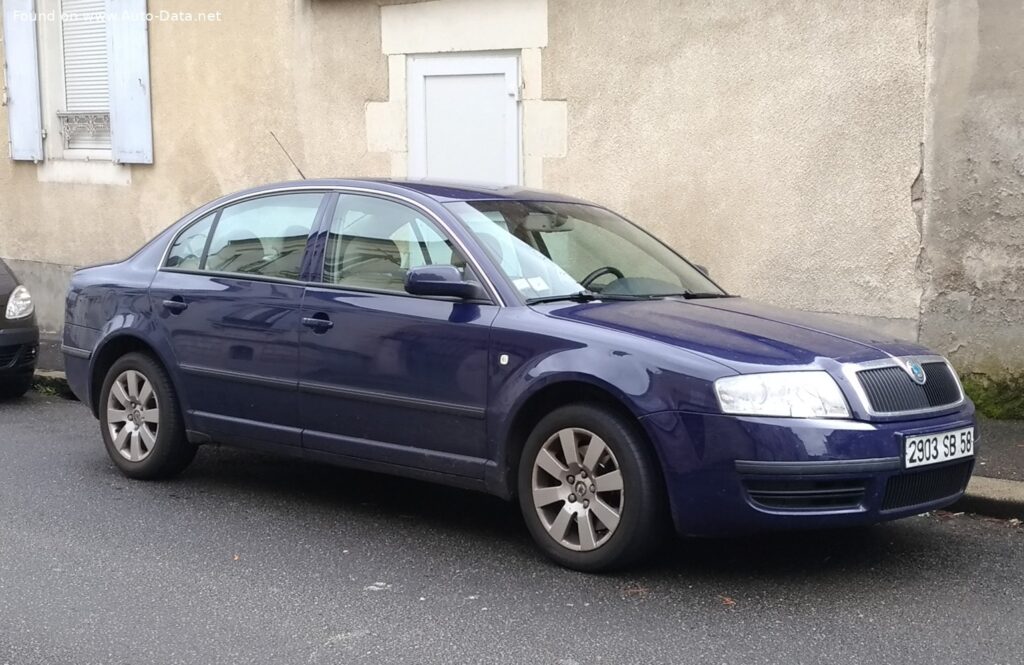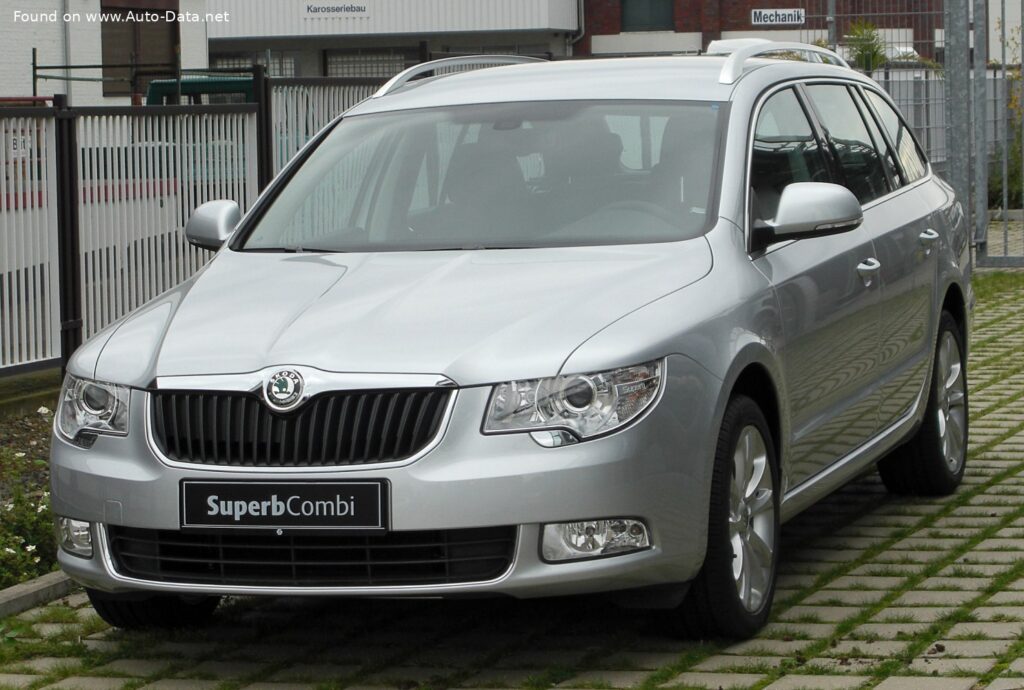
The Skoda Superb II Combi 2.0 TDI (170 Hp), produced between 2009 and 2013, represents a pivotal offering from the Czech automaker, firmly establishing its presence in the competitive European D-segment. This particular generation of the Superb, known internally as the B6, built upon the success of its predecessor by offering enhanced refinement, cutting-edge technology for its era, and an unparalleled commitment to practicality. While Skoda models were not officially imported into the United States during this period, the Superb Combi earned a formidable reputation across Europe and other international markets as a compelling alternative to more premium German rivals, delivering exceptional value without compromising on quality or sophisticated engineering. The “Combi” designation, synonymous with “station wagon” or “estate” in US English, underscored its primary design philosophy: maximum utility and passenger comfort within an elegant, understated package. The 2.0 TDI variant, with its robust 170 horsepower engine, was a particularly popular choice, blending strong performance with the renowned fuel efficiency expected of modern diesel powertrains, a critical factor for European consumers.
The Skoda Superb II Combi: A European D-Segment Contender
The second-generation Skoda Superb, launched in 2008, marked a significant leap forward for the brand, embodying Skoda’s philosophy of “Simply Clever” design and engineering. The Combi, or station wagon variant, introduced in 2009, further amplified the Superb’s appeal by addressing the burgeoning demand for highly versatile and spacious family vehicles. Positioned as a large family car or executive cruiser, the Superb II Combi distinguished itself with its expansive interior, cavernous cargo capacity, and a sophisticated ride quality that often belied its more accessible price point. Its understated yet elegant styling, characterized by clean lines and a commanding presence, allowed it to blend seamlessly into both urban and highway environments across Europe. The Skoda Superb II Combi 2.0 TDI (170 Hp) model, specifically, was a cornerstone of the lineup, offering a potent blend of performance and economy that resonated deeply with drivers covering long distances, a common requirement in the European market.
This generation of the Superb was built on the Volkswagen Group’s A6 (PQ46) platform, shared with other successful models like the Volkswagen Passat B6. This shared architecture provided a solid foundation for its engineering, allowing Skoda to leverage proven components and technologies while injecting its distinct brand identity. The Superb II Combi was lauded for its thoughtful features, robust build quality, and a driving experience that prioritized comfort and stability. Its development focused on maximizing interior space, particularly for rear passengers, and providing a versatile cargo area, making it an ideal choice for families and professionals alike who required ample room for both occupants and luggage.
Powertrain and Performance of the Skoda Superb II Combi 2.0 TDI (170 Hp)
At the heart of the Skoda Superb II Combi 2.0 TDI (170 Hp) lies a highly regarded diesel engine, the EA189 / CBBB code, a four-cylinder inline unit that exemplified the efficiency and torque characteristics for which TDI engines are celebrated. This powerplant delivered a robust 170 horsepower, providing ample motivation for the spacious station wagon. The engine’s configuration, with four valves per cylinder and a Double Overhead Camshaft (DOHC) valvetrain, ensured optimal airflow and combustion efficiency. Fuel delivery was managed by a sophisticated Commonrail diesel injection system, which precisely atomizes fuel for cleaner and more efficient combustion, contributing to both power output and reduced emissions. Further enhancing performance and efficiency, the engine was equipped with a turbocharger and intercooler, ensuring a consistent supply of dense, cool air to the combustion chambers, particularly at higher engine speeds.
Mated to a precise 6-speed manual transmission, this powertrain delivered a remarkably engaging driving experience, allowing the driver to fully exploit the engine’s strong torque curve. The manual gearbox was praised for its smooth shifts and well-chosen ratios, optimizing both acceleration and highway cruising economy. The Superb II Combi 2.0 TDI (170 Hp) was capable of reaching a maximum speed of 222 km/h, which translates to approximately 137.94 mph, a commendable figure for a family-oriented station wagon. This performance was achieved while maintaining impressive fuel economy, a testament to the advanced engineering of the TDI unit. The engine oil capacity stood at 4.3 liters (4.54 US quarts), while the cooling system required 8.4 liters (8.88 US quarts) of coolant, indicating robust thermal management designed for sustained performance.
Engine Architecture and Efficiency
The EA189 engine family, of which the CBBB is a part, was a cornerstone of the Volkswagen Group’s diesel offerings during this period. Its inline-four configuration, combined with DOHC architecture, provided a compact and efficient package. The common rail injection system was instrumental in achieving the delicate balance between power and environmental performance. Unlike older pump-injector systems, common rail technology allows for multiple, precise injections per combustion cycle, leading to smoother operation, reduced noise, and improved fuel efficiency. The turbocharger, specifically designed for this displacement, spooled up quickly to minimize turbo lag, providing immediate power delivery when needed. This combination made the Skoda Superb II Combi 2.0 TDI (170 Hp) a highly capable vehicle for a wide range of driving conditions, from urban commuting to high-speed autobahn travel.
Design, Utility, and Driving Dynamics
The design of the Skoda Superb II Combi was a masterclass in functional elegance. Its station wagon body type, with five doors and five seats, was inherently practical. Measuring 190.47 inches in length, 71.54 inches in width, and 59.45 inches in height, the Superb Combi commanded a substantial road presence, yet its proportions were well-balanced and aesthetically pleasing. The generous dimensions translated directly into an exceptionally spacious interior, particularly for rear passengers, who benefited from limousine-like legroom. This emphasis on passenger comfort was a key differentiator in its segment.
Utility was a hallmark of the Superb Combi. The trunk (boot) space was vast, offering a minimum of 633 liters (22.35 cubic feet) with all seats in place, expanding to a colossal 1865 liters (65.86 cubic feet) when the rear seats were folded down. This class-leading cargo volume made it an ideal vehicle for large families, outdoor enthusiasts, or anyone requiring significant carrying capacity. The fuel tank capacity of 60 liters (15.85 US gallons) ensured a considerable driving range, further enhancing its suitability for long-distance travel. The vehicle’s overall design prioritized ease of use, with a low loading sill and a wide aperture for the tailgate, simplifying the loading and unloading of bulky items.
Chassis and Safety Systems
The driving dynamics of the Superb II Combi were characterized by a comfortable and composed ride, thanks to its well-engineered suspension system. The front suspension featured an independent McPherson strut setup with coil springs and an anti-roll bar, providing precise steering response and good body control. At the rear, an independent multi-link spring suspension with a stabilizer ensured excellent road holding and passenger comfort, even over uneven surfaces. This sophisticated suspension architecture contributed significantly to the vehicle’s stable handling and refined ride quality.
Safety was also a paramount concern for Skoda. The Superb II Combi was equipped with a robust braking system, featuring ventilated discs at the front and solid discs at the rear, providing strong and consistent stopping power. An Anti-lock Braking System (ABS) was standard, preventing wheel lock-up during hard braking and allowing the driver to maintain steering control. The steering system utilized a rack and pinion setup, offering direct and predictable steering feedback. The drivetrain architecture was front-wheel drive, with the internal combustion engine powering the front wheels, a common and efficient layout for this class of vehicle, offering predictable handling and good traction in varied conditions.
Technical Specifications: Skoda Superb II Combi 2.0 TDI (170 Hp)
| General Information | |
| Brand | Skoda |
| Model | Superb |
| Generation | Superb II Combi |
| Type (Engine) | 2.0 TDI (170 Hp) |
| Start of production | 2009 year |
| End of production | 2013 year |
| Powertrain Architecture | Internal Combustion engine |
| Body type | Station wagon (estate) |
| Seats | 5 |
| Doors | 5 |
| Performance Specs | |
| Fuel Type | Diesel |
| Maximum speed | 137.94 mph (222 km/h) |
| Engine Specs | |
| Power | 170 Hp |
| Engine Model/Code | EA189 / CBBB |
| Number of cylinders | 4 |
| Engine configuration | Inline |
| Number of valves per cylinder | 4 |
| Fuel injection system | Diesel Commonrail |
| Engine aspiration | Turbocharger, Intercooler |
| Valvetrain | DOHC |
| Engine oil capacity | 4.54 US qt (4.3 l) |
| Coolant | 8.88 US qt (8.4 l) |
| Space, Volume and Weights | |
| Trunk (boot) space – minimum | 22.35 cu. ft. (633 l) |
| Trunk (boot) space – maximum | 65.86 cu. ft. (1865 l) |
| Fuel tank capacity | 15.85 US gal (60 l) |
| Dimensions | |
| Length | 190.47 in. (4838 mm) |
| Width | 71.54 in. (1817 mm) |
| Height | 59.45 in. (1510 mm) |
| Drivetrain, Brakes and Suspension Specs | |
| Drivetrain Architecture | The Internal combustion engine (ICE) drives the front wheels of the vehicle. |
| Drive wheel | Front wheel drive |
| Number of gears and type of gearbox | 6 gears, manual transmission |
| Front suspension | Independent, type McPherson with coil spring and anti-roll bar |
| Rear suspension | Independent multi-link spring suspension with stabilizer |
| Front brakes | Ventilated discs |
| Rear brakes | Disc |
| Assisting systems | ABS (Anti-lock braking system) |
| Steering type | Steering rack and pinion |