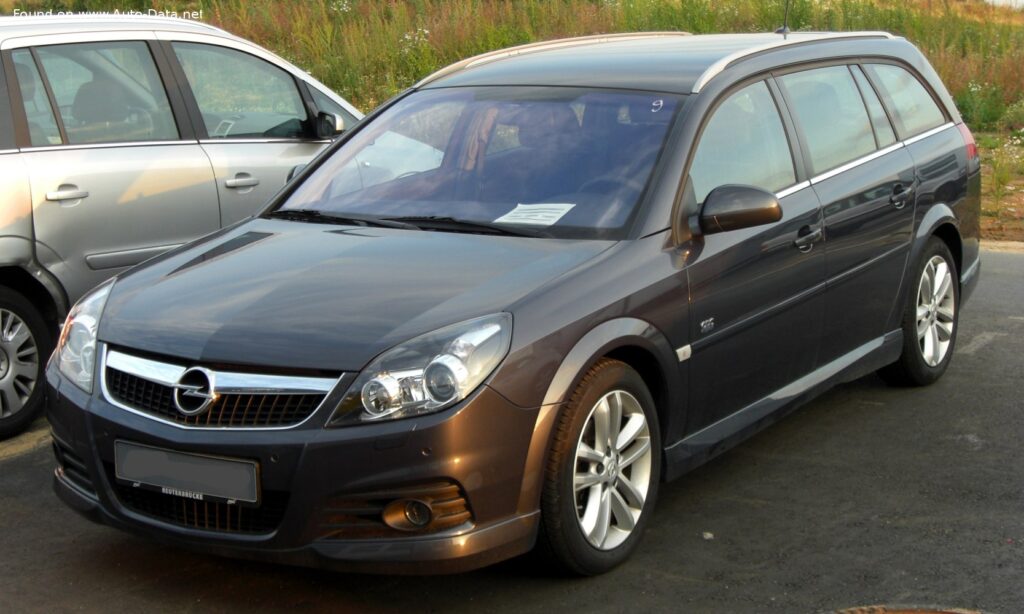
The Opel Vectra C Caravan, particularly the facelifted model introduced in 2005, represents a significant offering in the highly competitive European mid-size segment. As a versatile and practical station wagon, it catered to families and business users who demanded a blend of comfort, space, and efficient performance. The specific variant, the Opel Vectra C Caravan (facelift 2005) 1.9 CDTI (150 Hp), stood out for its robust diesel powertrain, which was a cornerstone of its appeal in markets where fuel efficiency and torque were highly valued. Produced from 2005 until August 2008, this generation of the Vectra Caravan built upon its predecessor’s reputation, offering enhanced refinement, updated styling, and improved technology, firmly establishing its role as a reliable workhorse and a comfortable long-distance cruiser.
Powertrain and Performance of the Opel Vectra C Caravan (facelift 2005)
At the heart of the Opel Vectra C Caravan (facelift 2005) 1.9 CDTI (150 Hp) lies a sophisticated diesel engine, code-named Z19DTH, designed for both spirited performance and economical operation. This 1.9-liter (1910 cm3 or 116.56 cu. in.) inline-four cylinder engine is a prime example of advanced diesel technology for its era. It features a Double Overhead Camshaft (DOHC) valvetrain with 4 valves per cylinder, ensuring optimal airflow for combustion. The engine’s architecture, with a bore of 82 mm (3.23 in.) and a piston stroke of 90.4 mm (3.56 in.), provided a balance of torque delivery and high-end power.
Power output for this variant is a respectable 150 horsepower, achieved at 4000 revolutions per minute (rpm). This translates to a power-per-liter rating of 78.5 Hp/l, indicative of a highly efficient engine design. More critically for a vehicle of this type, the engine generates a substantial 320 Nm (236.02 lb.-ft.) of torque, available at a low 2000 rpm. This low-end torque is crucial for effortless acceleration, especially when carrying passengers or cargo, and contributes significantly to the vehicle’s driving dynamics. The engine’s layout is front, transverse, driving the front wheels through a precise 6-speed manual transmission, offering engaging control for the driver.
Performance figures underscore the engine’s capability. The Opel Vectra C Caravan (facelift 2005) 1.9 CDTI can accelerate from 0 to 60 mph in an estimated 9.8 seconds, with 0 to 100 km/h achieved in 10.3 seconds. Its maximum speed is rated at 210 km/h (130.49 mph), making it capable of comfortable cruising on European highways. The vehicle’s weight-to-power ratio stands at 10.8 kg/Hp (92.3 Hp/tonne), while the weight-to-torque ratio is 5.1 kg/Nm (196.9 Nm/tonne), both pointing to a well-balanced power delivery for its size and segment.
Fuel efficiency was a key selling point for this diesel model. The combined fuel economy is an impressive 6.1 liters per 100 kilometers, translating to approximately 38.6 US mpg or 46.3 UK mpg. In urban driving, it consumes 7.8 l/100 km (30.2 US mpg), while on the open road, it achieves an excellent 5.1 l/100 km (46.1 US mpg). These figures highlight the advantages of its Diesel Commonrail fuel injection system and the efficiency gains from its turbocharger and intercooler, which optimize air intake for better combustion. The engine’s compression ratio of 17.5:1 is typical for a performance-oriented diesel, contributing to its strong torque output. With a 60-liter (15.85 US gal) fuel tank, the Vectra C Caravan offered a substantial cruising range, a crucial attribute for its target market.
Design, Ergonomics, and Safety of the Opel Vectra C Caravan (facelift 2005)
The Opel Vectra C Caravan (facelift 2005) embodies a practical yet sophisticated design, characteristic of European station wagons of its era. Its body type, a 5-door station wagon (often referred to as an “estate” in Europe), prioritizes interior volume and cargo capacity without sacrificing passenger comfort. The facelift in 2005 brought subtle but effective aesthetic updates, including revised front and rear fascias, contributing to a more contemporary and assertive appearance. With a length of 4839 mm (190.51 in.), a width of 1798 mm (70.79 in.), and a height of 1500 mm (59.06 in.), the Vectra Caravan presented a substantial and commanding presence on the road. The generous wheelbase of 2830 mm (111.42 in.) was instrumental in providing ample interior space for five occupants.
Ergonomically, the Vectra C Caravan was designed with driver and passenger comfort in mind. The five-seat configuration offered comfortable seating for adults, and the focus on materials and layout within the cabin reflected Opel’s commitment to quality for its segment. The true highlight, however, was its cargo versatility. The trunk (boot) space starts at an impressive 530 liters (18.72 cu. ft.) with all seats in place, expanding dramatically to a cavernous 1850 liters (65.33 cu. ft.) when the rear seats are folded down. This expansive and flexible cargo area made it an ideal choice for hauling luggage, sports equipment, or larger items, underscoring its utility as a family or business vehicle.
Safety features were a priority for the Vectra C Caravan, in line with European automotive standards of the mid-2000s. The vehicle came equipped with an Anti-lock Braking System (ABS) as standard, enhancing control during emergency braking. The braking system itself comprised ventilated discs at the front and solid discs at the rear, providing effective stopping power for a vehicle of its size and weight. The kerb weight of 1625 kg (3582.51 lbs.) and a maximum permissible weight of 2160 kg (4761.98 lbs.), allowing for a maximum load of 535 kg (1179.47 lbs.), speak to its robust construction and load-carrying capability.
Suspension components were engineered to provide a comfortable ride while maintaining stable handling. The front suspension utilized a spring strut design, a common and effective setup for front-wheel-drive vehicles. The rear suspension featured a multi-link design, incorporating several levers and rods, which offered a good balance between ride comfort and dynamic stability, particularly important for a station wagon that might frequently carry heavy loads. Steering was managed by a responsive rack-and-pinion system. The vehicle rode on 195/65 R15 tires mounted on 6.5J x 15-inch wheel rims, providing a comfortable ride and adequate grip for everyday driving conditions.
Technical Specifications: Opel Vectra C Caravan (facelift 2005) 1.9 CDTI (150 Hp)
| Brand | Opel |
| Model | Vectra |
| Generation | Vectra C Caravan (facelift 2005) |
| Type (Engine) | 1.9 CDTI (150 Hp) |
| Start of Production | 2005 year |
| End of Production | August, 2008 year |
| Powertrain Architecture | Internal Combustion engine |
| Body type | Station wagon (estate) |
| Seats | 5 |
| Doors | 5 |
| Fuel consumption (economy) – urban | 7.8 l/100 km (30.2 US mpg) |
| Fuel consumption (economy) – extra urban | 5.1 l/100 km (46.1 US mpg) |
| Fuel consumption (economy) – combined | 6.1 l/100 km (38.6 US mpg) |
| Fuel Type | Diesel |
| Acceleration 0 – 60 mph | 9.8 sec |
| Acceleration 0 – 100 km/h | 10.3 sec |
| Maximum speed | 210 km/h (130.49 mph) |
| Weight-to-power ratio | 10.8 kg/Hp (92.3 Hp/tonne) |
| Weight-to-torque ratio | 5.1 kg/Nm (196.9 Nm/tonne) |
| Power | 150 Hp @ 4000 rpm |
| Power per liter | 78.5 Hp/l |
| Torque | 320 Nm @ 2000 rpm (236.02 lb.-ft. @ 2000 rpm) |
| Engine layout | Front, Transverse |
| Engine Model/Code | Z19DTH |
| Engine displacement | 1910 cm3 (116.56 cu. in.) |
| Number of cylinders | 4 |
| Engine configuration | Inline |
| Cylinder Bore | 82 mm (3.23 in.) |
| Piston Stroke | 90.4 mm (3.56 in.) |
| Compression ratio | 17.5:1 |
| Number of valves per cylinder | 4 |
| Fuel injection system | Diesel Commonrail |
| Engine aspiration | Turbocharger, Intercooler |
| Valvetrain | DOHC |
| Engine oil capacity | 4.3 l (4.54 US qt) |
| Coolant | 7 l (7.4 US qt) |
| Kerb Weight | 1625 kg (3582.51 lbs.) |
| Max. weight | 2160 kg (4761.98 lbs.) |
| Max load | 535 kg (1179.47 lbs.) |
| Trunk (boot) space – minimum | 530 l (18.72 cu. ft.) |
| Trunk (boot) space – maximum | 1850 l (65.33 cu. ft.) |
| Fuel tank capacity | 60 l (15.85 US gal) |
| Length | 4839 mm (190.51 in.) |
| Width | 1798 mm (70.79 in.) |
| Height | 1500 mm (59.06 in.) |
| Wheelbase | 2830 mm (111.42 in.) |
| Front track | 1536 mm (60.47 in.) |
| Rear (Back) track | 1525 mm (60.04 in.) |
| Drivetrain Architecture | The Internal combustion engine (ICE) drives the front wheels of the vehicle. |
| Drive wheel | Front wheel drive |
| Number of gears and type of gearbox | 6 gears, manual transmission |
| Front suspension | Spring Strut |
| Rear suspension | Several levers and rods |
| Front brakes | Ventilated discs |
| Rear brakes | Disc |
| Assisting systems | ABS (Anti-lock braking system) |
| Steering type | Steering rack and pinion |
| Tires size | 195/65 R15 |
| Wheel rims size | 6.5J x 15 |