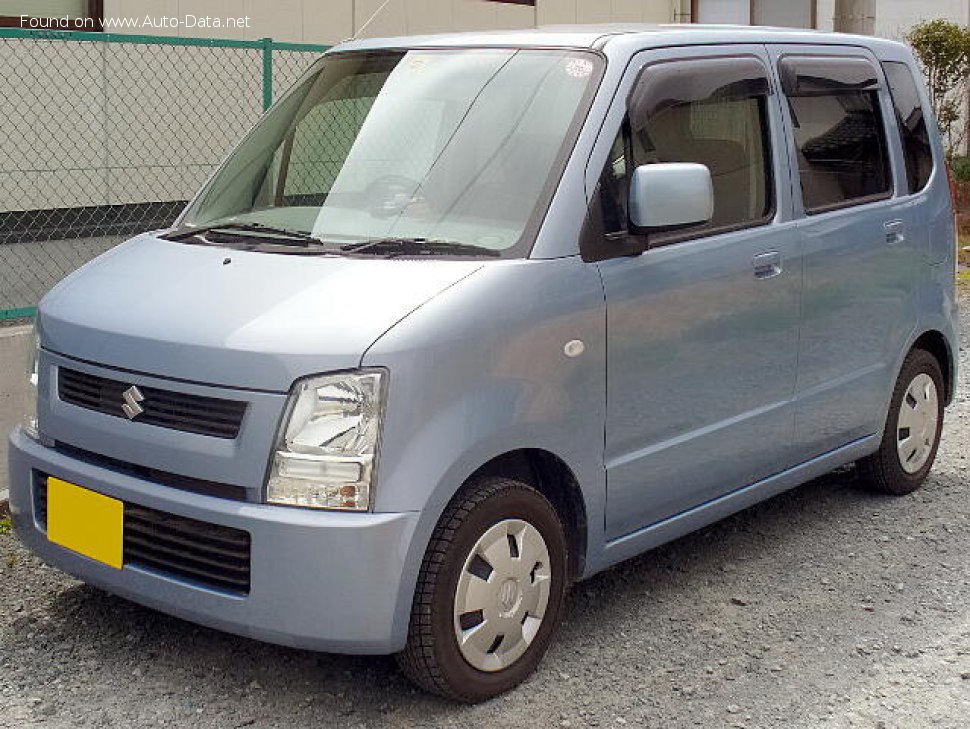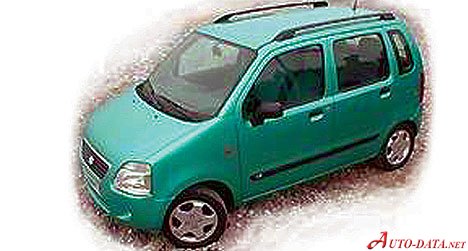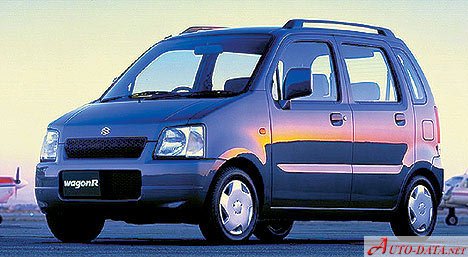
The Suzuki Wagon R+ II 1.3 DDiS (70 Hp) represented a significant evolution in the compact minivan segment, particularly for European and Asian markets where space efficiency and fuel economy are paramount. Launched in 2004 as the second generation of the Wagon R+ model line, this vehicle built upon the original’s success by offering enhanced refinement, improved safety features, and a highly efficient diesel powertrain. While not a familiar sight on American roads, the Wagon R+ II was a testament to Suzuki’s ability to create practical, economical, and surprisingly versatile vehicles tailored for densely populated urban environments and regions with high fuel costs. Its design philosophy centered around maximizing interior volume within a minimal exterior footprint, making it an ideal choice for families and individuals prioritizing utility and low running costs in its primary markets. The production run from 2004 to 2008 solidified its position as a competitive offering in the burgeoning compact people-mover category, offering an alternative to traditional hatchbacks with its elevated driving position and flexible cargo solutions.
Engineering and Performance of the Suzuki Wagon R+ II 1.3 DDiS (70 Hp)
At the core of the Suzuki Wagon R+ II 1.3 DDiS (70 Hp) was its highly efficient and surprisingly responsive 1.3-liter DDiS diesel engine. This powertrain, a testament to Suzuki’s collaborative engineering prowess, provided an optimal blend of power, torque, and outstanding fuel economy, which was a critical factor for its target demographic. The engine, identified by the code Z13DT, was a modern common rail direct injection unit. This sophisticated diesel system was augmented by a turbocharger and an intercooler, technologies typically found in larger, more expensive vehicles, but here applied to enhance the performance and efficiency of a compact car.
The relatively small 1248 cm3 (76.16 cu. in.) displacement engine produced a respectable 70 horsepower at 4000 rpm. More impressively, it delivered a robust 125.39 lb.-ft. of torque at a low 1750 rpm. This characteristic low-end torque was crucial for the Wagon R+ II, providing excellent drivability in city traffic, effortless starts from a standstill, and a responsive feel without needing to constantly rev the engine high. The engine’s inline four-cylinder configuration, with four valves per cylinder and an 18:1 compression ratio, further contributed to its smooth operation and efficient combustion, making it a highly refined unit for its class.
Performance figures for the Suzuki Wagon R+ II 1.3 DDiS (70 Hp) underscored its practical, urban-focused design. The vehicle could accelerate from 0 to 60 mph in 14.3 seconds, with a top speed of 96.31 mph. While these figures might not suggest a sports car, they were perfectly adequate for the Wagon R+ II’s intended use. The focus was not on raw speed but on economical and reliable transportation. The vehicle’s weight-to-power ratio stood at 14.6 kg per horsepower, indicating an efficient use of its modest power output. Paired with a smooth-shifting 5-speed manual transmission, the front-wheel-drive architecture ensured predictable handling and minimal power loss, further enhancing its overall efficiency.
Perhaps the most compelling aspect of the 1.3 DDiS engine was its fuel economy. The Wagon R+ II achieved an impressive 35.6 US mpg in urban driving conditions and an even more remarkable 53.5 US mpg on the extra-urban cycle. These figures were exceptional for the mid-2000s, making it an incredibly cost-effective vehicle to run, especially in markets where diesel fuel was readily available and often more affordable. With a fuel tank capacity of 10.3 US gallons, drivers could expect a considerable range between fill-ups, adding to its appeal as a practical daily driver.
Design and Features: The Practicality of the Suzuki Wagon R+ II
The Suzuki Wagon R+ II maintained its distinctive tall-boy minivan silhouette, a design philosophy that unapologetically prioritized interior volume and practicality within a minimal exterior footprint. This “kei car” inspired design, though slightly upsized for the European and other international markets, was central to its appeal. Measuring just 137.8 inches in length, 62.99 inches in width, and 65.35 inches in height, the Wagon R+ II was exceptionally maneuverable in congested urban environments, effortlessly navigating narrow streets and tight parking spaces where larger vehicles struggled. Its relatively short wheelbase of 92.91 inches contributed to a tight turning radius, further enhancing its agility.
Inside, the five-door, five-seat configuration offered surprising versatility, a hallmark of compact minivans. The elevated seating position provided excellent visibility for all occupants, a significant benefit for city driving and parking. The generous headroom, thanks to its tall design, ensured comfort even for taller passengers, belying the car’s compact exterior. Cargo capacity was a significant selling point, offering a practical solution for various needs. With the rear seats in place, the trunk provided a respectable 7.7 cubic feet of space. However, when the rear seats were folded down, this expanded to an impressive 44.14 cubic feet, transforming the compact minivan into a capable hauler for groceries, luggage, or even small pieces of furniture. This flexibility made the Wagon R+ II an ideal choice for small families or individuals who frequently needed to transport diverse loads.
Safety features for the 2004-2008 era included an Anti-lock Braking System (ABS), which was a crucial active safety component, enhancing control during emergency braking by preventing wheel lock-up. The braking system itself comprised ventilated discs at the front and solid disc brakes at the rear, a competent setup for a vehicle of this weight and performance. The steering system utilized a precise rack and pinion setup, providing direct feedback and ease of control. The suspension system, featuring spring struts at the front and coil springs at the rear, was tuned to provide a comfortable ride while maintaining stability, crucial for a vehicle with a relatively high center of gravity.
The interior design was functional and straightforward, prioritizing ergonomics and ease of use. While specific luxury features might have varied by market and trim level, the Wagon R+ II focused on providing essential amenities in a durable and easy-to-maintain package. The dashboard layout was logical, with controls intuitively placed for the driver. The overall construction reflected Suzuki’s reputation for reliability, ensuring the vehicle could withstand the rigors of daily use. From its robust chassis to its practical interior, every aspect of the Wagon R+ II was engineered to maximize utility and provide a hassle-free ownership experience.
Technical Specifications of the Suzuki Wagon R+ II 1.3 DDiS (70 Hp)
Below is a detailed breakdown of the technical specifications for the Suzuki Wagon R+ II 1.3 DDiS (70 Hp), offering a comprehensive look at its engineering and dimensions.
| Brand | Suzuki |
| Model | Wagon R+ |
| Generation | Wagon R+ II |
| Type (Engine) | 1.3 DDiS (70 Hp) |
| Start of production | 2004 year |
| End of production | 2008 year |
| Powertrain Architecture | Internal Combustion engine |
| Body type | Minivan |
| Seats | 5 |
| Doors | 5 |
| Fuel consumption (urban) | 35.6 US mpg |
| Fuel consumption (extra urban) | 53.5 US mpg |
| Fuel Type | Diesel |
| Acceleration 0 – 60 mph | 14.3 sec |
| Maximum speed | 96.31 mph |
| Weight-to-power ratio | 14.6 kg/Hp |
| Weight-to-torque ratio | 6 kg/Nm |
| Power | 70 Hp @ 4000 rpm |
| Power per liter | 56.1 Hp/l |
| Torque | 125.39 lb.-ft. @ 1750 rpm |
| Engine layout | Front, Transverse |
| Engine Model/Code | Z13DT |
| Engine displacement | 76.16 cu. in. |
| Number of cylinders | 4 |
| Engine configuration | Inline |
| Cylinder Bore | 2.74 in. |
| Piston Stroke | 3.23 in. |
| Compression ratio | 18:1 |
| Number of valves per cylinder | 4 |
| Fuel injection system | Diesel Commonrail |
| Engine aspiration | Turbocharger, Intercooler |
| Engine oil capacity | 3.38 US qt |
| Coolant | 5.6 US qt |
| Kerb Weight | 2248.72 lbs. |
| Max. weight | 3306.93 lbs. |
| Max load | 1058.22 lbs. |
| Trunk (boot) space – minimum | 7.7 cu. ft. |
| Trunk (boot) space – maximum | 44.14 cu. ft. |
| Fuel tank capacity | 10.3 US gal |
| Length | 137.8 in. |
| Width | 62.99 in. |
| Height | 65.35 in. |
| Wheelbase | 92.91 in. |
| Front track | 55.91 in. |
| Rear (Back) track | 54.53 in. |
| Drivetrain Architecture | Front-wheel drive |
| Drive wheel | Front wheel drive |
| Number of gears and type of gearbox | 5 gears, manual transmission |
| Front suspension | Spring Strut |
| Rear suspension | Coil spring |
| Front brakes | Ventilated discs |
| Rear brakes | Disc |
| Assisting systems | ABS (Anti-lock braking system) |
| Steering type | Steering rack and pinion |
| Tires size | 165/60 R14 |
| Wheel rims size | 14 |