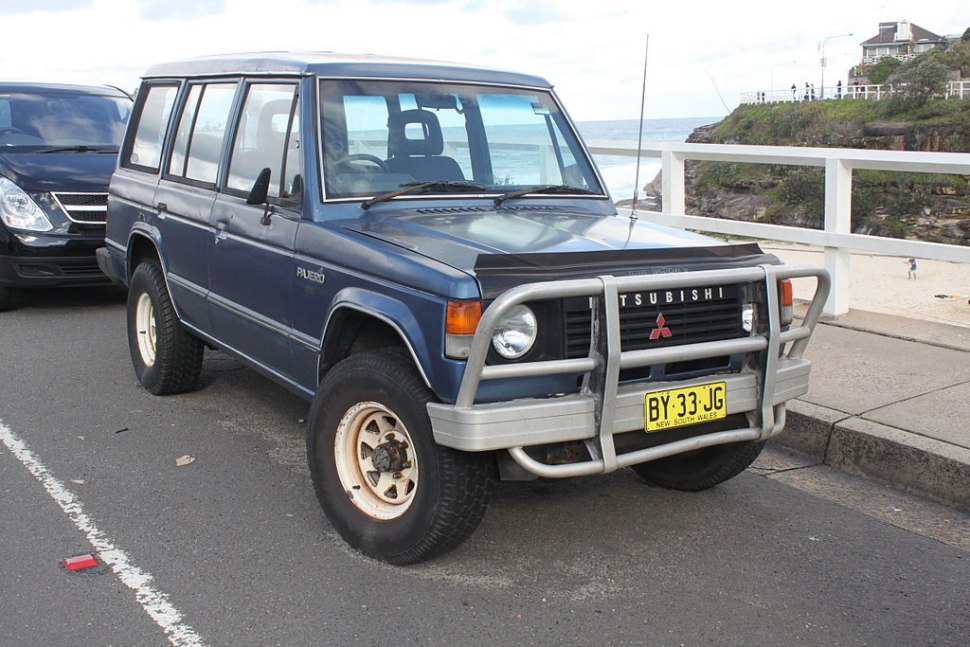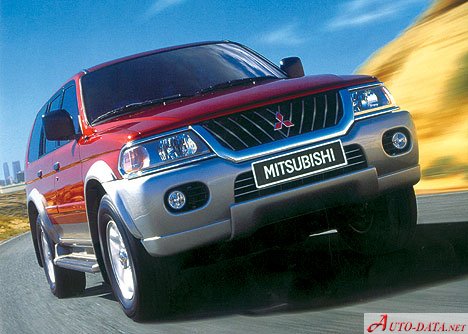
The Mitsubishi Pajero Sport I (K90) 2.5 TD (99 Hp) represents a significant chapter in the Japanese automaker’s legacy of producing robust and highly capable off-road vehicles. Launched in 1998 and continuing production through 2004, this first-generation Pajero Sport, known as the Challenger in some markets and Montero Sport in others (though not the specific 2.5 TD variant in North America), was engineered to combine the rugged durability of the full-size Pajero with a more accessible and family-friendly package. Positioned as a mid-size SUV, it carved out a strong niche in emerging markets and regions where challenging terrain and demanding conditions were commonplace, particularly across Europe, Asia, and Australia. Unlike its more luxurious, road-biased SUV counterparts emerging at the turn of the millennium, the Pajero Sport I (K90) 2.5 TD (99 Hp) remained true to its utilitarian roots, emphasizing mechanical resilience, all-wheel-drive prowess, and practical versatility over outright speed or opulent interiors. Its design philosophy was firmly rooted in providing reliable transportation and off-road capability for a diverse range of users, from families needing spacious transport to adventurers seeking dependable trail performance. This particular 2.5 TD variant, with its efficient diesel engine, was especially popular in markets where diesel fuel was prevalent and fuel economy, combined with torque for heavy-duty use, was highly valued.
The Mitsubishi Pajero Sport I (K90) 2.5 TD (99 Hp): A Global Off-Road Stalwart
The first-generation Mitsubishi Pajero Sport (K90 chassis code) emerged at a time when the SUV market was rapidly diversifying. While many manufacturers were pivoting towards more car-like, unibody crossovers, Mitsubishi maintained its commitment to traditional, body-on-frame construction for the Pajero Sport, ensuring a high degree of durability and off-road capability. This strategic choice allowed the vehicle to excel in environments where its unibody competitors might struggle, making it a preferred choice for those who genuinely required a vehicle capable of tackling rough terrain, towing, or carrying significant loads. The 2.5 TD (99 Hp) variant, specifically, became a workhorse, embodying the spirit of adventure and reliability that Mitsubishi’s Pajero lineage was renowned for. Its market presence was primarily outside the North American continent, where its diesel powertrain and robust build resonated with consumers seeking a practical and enduring SUV for both daily driving and more arduous journeys. The vehicle’s enduring appeal in these markets underscores its fundamental fitness for purpose and its reputation for being a dependable companion, regardless of the challenges presented by the road—or lack thereof.
Powertrain and Performance Dynamics
At the heart of the Mitsubishi Pajero Sport I (K90) 2.5 TD (99 Hp) lies a robust and proven 2.5-liter turbocharged diesel engine. This inline four-cylinder unit, featuring an Overhead Camshaft (OHC) valvetrain and a precombustion chamber injection system, was designed for durability and consistent performance under varied conditions. With an engine displacement of 2477 cubic centimeters (151.16 cu. in.), it produced a respectable 99 horsepower at 4200 rpm, which, while not a figure that would suggest blistering acceleration, was perfectly adequate for its intended utility. More crucially for an off-road vehicle, the engine delivered a substantial 240 Nm (177.01 lb.-ft.) of torque, peaking at a low 2000 rpm. This low-end torque was instrumental in providing the necessary pulling power for climbing steep inclines, navigating challenging terrain, and hauling heavy loads, making it a highly capable performer in its class.
The powertrain architecture featured a front, longitudinal engine layout, optimizing weight distribution and allowing for the integration of a rugged all-wheel-drive (4×4) system. Power was transmitted through a durable 5-speed manual transmission, offering the driver precise control over gear selection, which is often preferred for off-road driving and towing. Performance figures reflect the vehicle’s focus on utility rather than outright speed: acceleration from 0 to 60 mph was achieved in 17.6 seconds, with a maximum speed of 90.1 mph. These figures are characteristic of a vehicle built for endurance and capability rather than high-speed cruising. Fuel economy for the 2.5 TD was commendable for an SUV of its size and era, with an urban consumption rate of 21.4 US mpg and an extra-urban (highway) rating of 24.8 US mpg. This efficiency, combined with a generous 19.55 US gallon fuel tank capacity, provided a significant cruising range, a vital attribute for long journeys in remote areas. The engine’s high compression ratio of 21:1 further emphasized its diesel characteristics, contributing to its torque output and fuel efficiency.
Design, Utility, and Features of the Mitsubishi Pajero Sport I (K90)
The Mitsubishi Pajero Sport I (K90) 2.5 TD (99 Hp) adopted a classic off-road vehicle body type, characterized by its sturdy and purposeful design. With five doors and seating for five occupants, it offered a practical and spacious cabin suitable for families or groups. Its dimensions—181.5 inches in length, 69.88 inches in width, and 68.31 inches in height—provided a commanding road presence and ample interior volume without being overly cumbersome. The 107.28-inch wheelbase contributed to both ride comfort and stability, particularly off-road. The vehicle’s design aesthetic was straightforward and functional, prioritizing visibility, ground clearance, and protection against the elements, rather than aerodynamic sleekness.
Inside, the focus was on durability and practicality. While not luxurious by modern standards, the interior was designed to withstand the rigors of heavy use, featuring robust materials and straightforward controls. Storage was a key consideration, with a minimum trunk space of 17.66 cubic feet, expandable to an impressive 60.74 cubic feet with the rear seats folded, allowing for significant cargo capacity for luggage, outdoor gear, or supplies. This versatility made it an ideal choice for camping, road trips, or as a utility vehicle. The vehicle’s kerb weight of 4343.11 pounds underscored its solid construction, contributing to its stability and towing capacity, with a maximum load capacity of 1190.5 pounds.
Mechanically, the Pajero Sport I (K90) was equipped to handle challenging environments. Its front suspension utilized a torsion bar setup, known for its robustness and ability to cope with varied loads and rough terrain, while the rear featured coil springs, providing a balance of comfort and load-bearing capability. Braking was handled by disc brakes on both the front and rear axles, a significant safety feature for a vehicle of its size and weight, especially when traversing steep descents or operating under heavy loads. An Anti-lock Braking System (ABS) was included as an assisting system, enhancing control during emergency braking. Hydraulic steering provided direct and predictable feedback, crucial for off-road maneuvering. The vehicle rode on 235/70R15 tires, a common size for SUVs of its era, offering a good balance of on-road comfort and off-road traction. Overall, the design and features of the Mitsubishi Pajero Sport I (K90) 2.5 TD (99 Hp) highlighted its commitment to delivering a dependable, versatile, and capable off-road experience that resonated strongly with its global market.
Technical Specifications of the Mitsubishi Pajero Sport I (K90) 2.5 TD (99 Hp)
| Brand | Mitsubishi |
| Model | Pajero Sport |
| Generation | Pajero Sport I (K90) |
| Type (Engine) | 2.5 TD (99 Hp) |
| Start of production | 1998 year |
| End of production | 2004 year |
| Powertrain Architecture | Internal Combustion engine |
| Body type | Off-road vehicle |
| Seats | 5 |
| Doors | 5 |
| Fuel consumption (economy) – urban | 21.4 US mpg |
| Fuel consumption (economy) – extra urban | 24.8 US mpg |
| Fuel Type | Diesel |
| Acceleration 0 – 60 mph | 17.6 sec |
| Maximum speed | 90.1 mph |
| Weight-to-power ratio | 19.9 kg/Hp, 50.3 Hp/tonne |
| Weight-to-torque ratio | 8.2 kg/Nm, 121.8 Nm/tonne |
| Power | 99 Hp @ 4200 rpm. |
| Power per liter | 40 Hp/l |
| Torque | 177.01 lb.-ft. @ 2000 rpm. |
| Engine layout | Front, Longitudinal |
| Engine displacement | 151.16 cu. in. |
| Number of cylinders | 4 |
| Engine configuration | Inline |
| Cylinder Bore | 3.59 in. |
| Piston Stroke | 3.74 in. |
| Compression ratio | 21:1 |
| Number of valves per cylinder | 2 |
| Fuel injection system | Precombustion chamber injection |
| Engine aspiration | Turbocharger |
| Valvetrain | OHC |
| Kerb Weight | 4343.11 lbs. |
| Max. weight | 5533.6 lbs. |
| Max load | 1190.5 lbs. |
| Trunk (boot) space – minimum | 17.66 cu. ft. |
| Trunk (boot) space – maximum | 60.74 cu. ft. |
| Fuel tank capacity | 19.55 US gal |
| Length | 181.5 in. |
| Width | 69.88 in. |
| Height | 68.31 in. |
| Wheelbase | 107.28 in. |
| Front track | 57.68 in. |
| Rear (Back) track | 58.27 in. |
| Drive wheel | All wheel drive (4×4) |
| Number of gears and type of gearbox | 5 gears, manual transmission |
| Front suspension | Torsion |
| Rear suspension | Coil spring |
| Front brakes | Disc |
| Rear brakes | Disc |
| Assisting systems | ABS (Anti-lock braking system) |
| Power steering | Hydraulic Steering |
| Tires size | 235/70R15 |