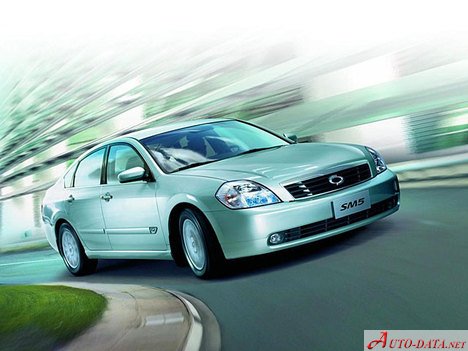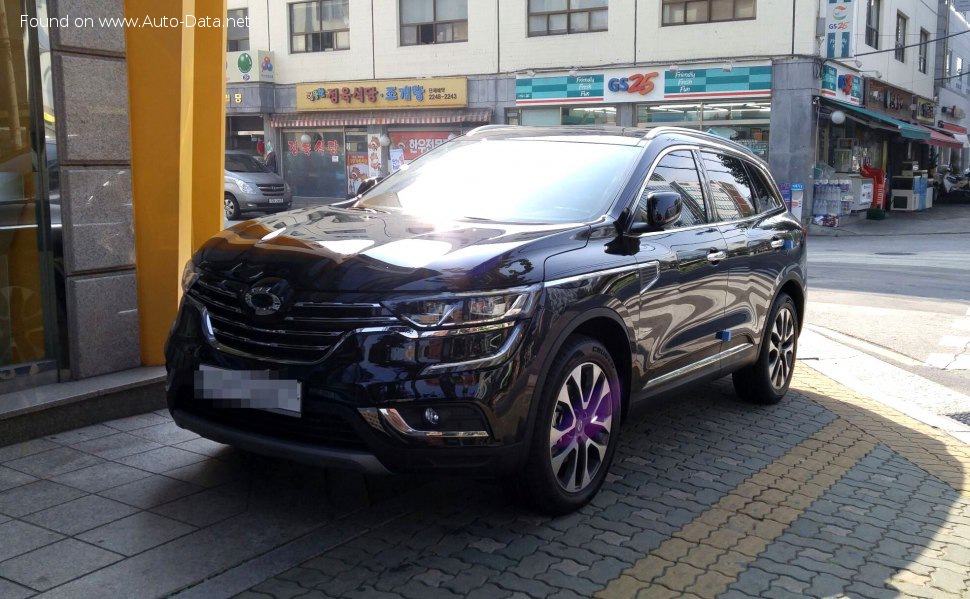
The Renault Samsung QM6 2.0 dCi (177 Hp) CVT, first introduced in 2016, represents a significant offering in the highly competitive mid-size SUV segment, primarily targeting the South Korean and select Asian markets. As a product of the Renault Samsung Motors joint venture, this vehicle often shares its fundamental architecture with global Renault models, most notably the second-generation Renault Koleos. Positioned as a versatile and practical family vehicle, the QM6 emphasizes a blend of robust design, modern technology, and efficient diesel powertrain options, catering to consumers seeking comfort, utility, and refined driving dynamics in an urban and extra-urban environment. Its introduction marked a strategic move to bolster Renault Samsung’s presence in the lucrative SUV category, offering a compelling package that balances performance with fuel economy, a crucial consideration in its primary operational regions.
Powertrain and Performance of the Renault Samsung QM6
At the heart of the Renault Samsung QM6 2.0 dCi (177 Hp) CVT lies a sophisticated diesel powertrain designed for both efficiency and responsive performance. The vehicle is equipped with a 2.0-liter (1995 cm3 or 121.74 cu. in.) M9R inline-four cylinder diesel engine, featuring a modern common rail direct fuel injection system and a turbocharger with an intercooler. This advanced setup allows the engine to produce a robust 177 horsepower at 3750 revolutions per minute, delivering a power-per-liter output of 88.7 Hp/l. More impressively, the engine generates a substantial 380 Nm of torque (equivalent to 280.27 lb.-ft.) across a broad and accessible rev range, specifically between 2000 and 2750 rpm. This torque profile is particularly beneficial for an SUV, providing strong acceleration from a standstill and ample passing power, even when the vehicle is fully loaded.
Power is efficiently transferred to the front wheels via an automatic Continuously Variable Transmission (CVT). This type of gearbox is renowned for its smooth, stepless acceleration, optimizing engine speed for the best balance of performance and fuel economy. The drivetrain architecture, which sees the internal combustion engine driving the front wheels, contributes to a lighter overall vehicle weight and typically offers better fuel efficiency compared to all-wheel-drive counterparts, a desirable trait for urban-focused SUVs. The QM6’s weight-to-power ratio stands at 9.3 kg/Hp (or 107.6 Hp/tonne), while its weight-to-torque ratio is 4.3 kg/Nm (or 231 Nm/tonne), indicating a well-balanced power-to-weight characteristic for its class.
Fuel economy figures for the Renault Samsung QM6 2.0 dCi (177 Hp) CVT are commendable for a vehicle of its size and capability. In urban driving conditions, it achieves approximately 8.1 liters per 100 kilometers, translating to an estimated 29 US miles per gallon. On the extra-urban cycle, efficiency improves to 7.3 l/100 km, or about 32.2 US mpg. The combined fuel consumption is rated at 7.8 l/100 km, which equates to roughly 30.2 US mpg. These figures underscore the effectiveness of the diesel engine and CVT combination in delivering economical operation. Furthermore, with CO2 emissions of 148 g/km, the QM6 demonstrates a responsible environmental footprint within its segment, aligning with increasingly stringent global emissions standards.
Design, Features, and Dynamics of the Renault Samsung QM6
The Renault Samsung QM6 presents a contemporary and assertive exterior design, embodying the characteristics expected of a modern mid-size SUV. With a body type defined as an SUV, it features five doors and accommodates five occupants, offering practical access and comfortable seating for families. Its dimensions contribute to a commanding road presence and a spacious interior: a length of 4675 mm (184.06 inches), a width of 1845 mm (72.64 inches), and a height of 1710 mm (67.32 inches). The generous wheelbase of 2705 mm (106.5 inches) is instrumental in providing ample passenger legroom and a stable ride, while the front track of 1595 mm (62.8 inches) and rear track of 1590 mm (62.6 inches) ensure a broad stance and confident handling.
Underneath its stylish exterior, the QM6 is engineered with a focus on ride comfort and dynamic stability. The suspension system features an independent McPherson strut setup at the front, a common and effective design for passenger vehicles that balances comfort with precise steering response. At the rear, an independent multi-link suspension system is employed, which is generally favored for its ability to provide superior ride quality and better wheel control over varying road surfaces, enhancing both comfort for rear passengers and overall vehicle stability. This combination ensures that the QM6 handles well, whether navigating city streets or cruising on highways.
Braking performance is handled by ventilated disc brakes on both the front and rear axles. Ventilated discs are superior to solid discs in heat dissipation, providing more consistent and reliable stopping power, especially under heavy use or repeated braking. An Anti-lock Braking System (ABS) is standard, enhancing safety by preventing wheel lock-up during emergency braking, allowing the driver to maintain steering control. The steering system is a rack and pinion type, known for its direct feel and responsiveness, contributing to an engaging driving experience. The QM6 is available with tire sizes 225/65 R17 102H or 225/60 R18 100H, mounted on 17-inch or 18-inch wheel rims respectively, offering a choice that balances ride comfort with aesthetic appeal and grip levels.
With a kerb weight of 1645 kg (3626.6 lbs.), the Renault Samsung QM6 is a substantial vehicle, yet its well-engineered chassis and powertrain ensure that it feels agile and composed. The interior is designed to be user-friendly, with attention paid to ergonomics and material quality suitable for its market segment. While specific infotainment and connectivity features are not detailed in the provided data, as a modern SUV launched in 2016, it would typically include a range of contemporary amenities to enhance the driving and passenger experience, reflecting the technological expectations of its target audience. The QM6’s overall package underscores its role as a practical, comfortable, and efficient mid-size SUV tailored for the discerning consumer in its primary markets.
Technical Specifications
| Brand | Renault Samsung |
| Model | QM6 |
| Generation | QM6 |
| Type (Engine) | 2.0 dCi (177 Hp) CVT |
| Start of production | 2016 year |
| Powertrain Architecture | Internal Combustion engine |
| Body type | SUV |
| Seats | 5 |
| Doors | 5 |
| Fuel consumption (economy) – urban | 8.1 l/100 km (29 US mpg) |
| Fuel consumption (economy) – extra urban | 7.3 l/100 km (32.2 US mpg) |
| Fuel consumption (economy) – combined | 7.8 l/100 km (30.2 US mpg) |
| CO2 emissions | 148 g/km |
| Fuel Type | Diesel |
| Weight-to-power ratio | 9.3 kg/Hp (107.6 Hp/tonne) |
| Weight-to-torque ratio | 4.3 kg/Nm (231 Nm/tonne) |
| Power | 177 Hp @ 3750 rpm. |
| Power per litre | 88.7 Hp/l |
| Torque | 380 Nm @ 2000-2750 rpm (280.27 lb.-ft.) |
| Engine layout | Front, Transverse |
| Engine Model/Code | M9R |
| Engine displacement | 1995 cm3 (121.74 cu. in.) |
| Number of cylinders | 4 |
| Engine configuration | Inline |
| Fuel injection system | Diesel Commonrail |
| Engine aspiration | Turbocharger, Intercooler |
| Engine oil capacity | 7.4 l (7.82 US qt) |
| Kerb Weight | 1645 kg (3626.6 lbs.) |
| Length | 4675 mm (184.06 in.) |
| Width | 1845 mm (72.64 in.) |
| Height | 1710 mm (67.32 in.) |
| Wheelbase | 2705 mm (106.5 in.) |
| Front track | 1595 mm (62.8 in.) |
| Rear (Back) track | 1590 mm (62.6 in.) |
| Drivetrain Architecture | The Internal combustion engine (ICE) drives the front wheels of the vehicle. |
| Drive wheel | Front wheel drive |
| Number of gears and type of gearbox | automatic transmission CVT |
| Front suspension | Independent type McPherson |
| Rear suspension | Independent multi-link suspension |
| Front brakes | Ventilated discs |
| Rear brakes | Ventilated discs |
| Assisting systems | ABS (Anti-lock braking system) |
| Steering type | Steering rack and pinion |
| Tires size | 225/65 R17 102H; 225/60 R18 100H |
| Wheel rims size | 17; 18 |