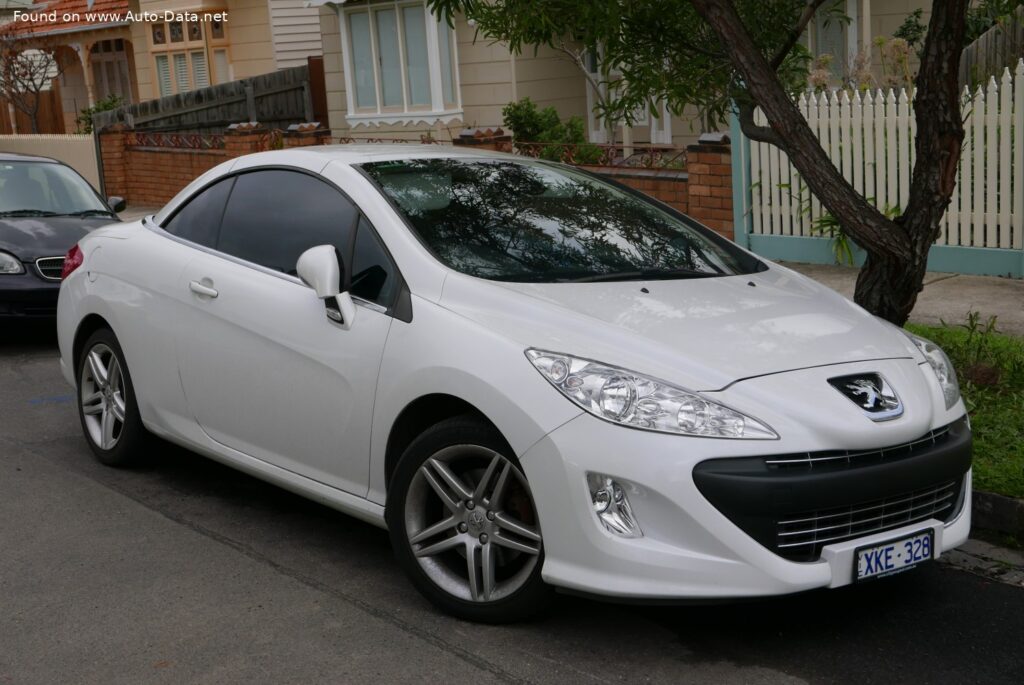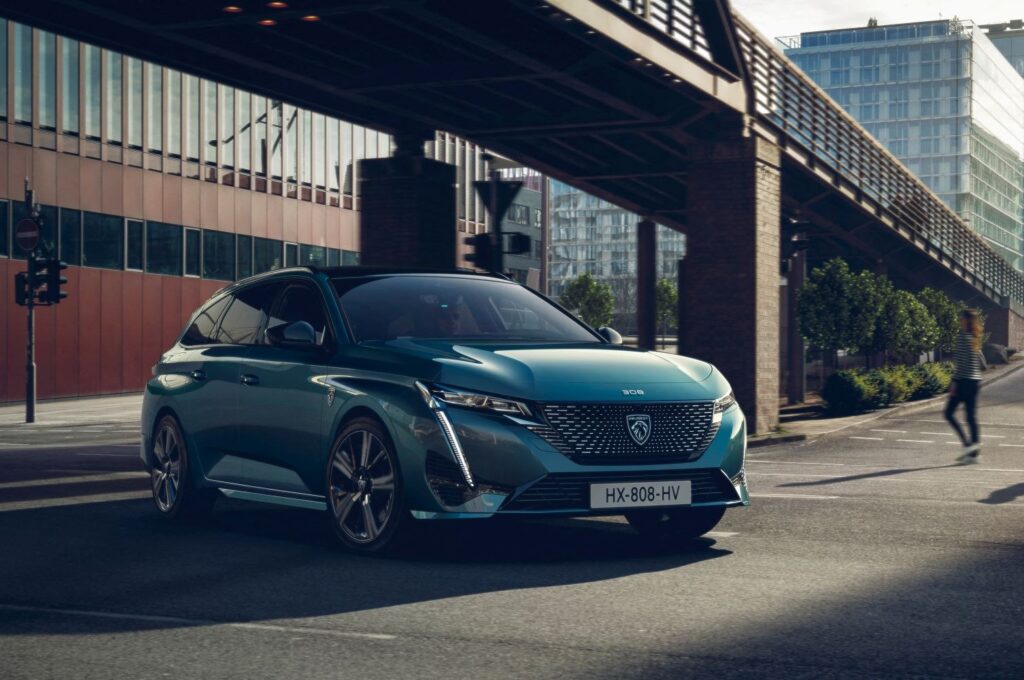
The Peugeot 308 SW III (Phase I, 2021) e-308 54 kWh (156 Hp) represents a significant stride in the European automotive market, particularly within the burgeoning segment of electric compact station wagons. Launched with production commencing in July 2023 and slated through August 2025, this third-generation 308 SW, in its Phase I iteration, marks Peugeot’s commitment to electrification without compromising practicality or distinctive design. As a battery electric vehicle (BEV), the e-308 SW is not directly offered in the United States, but its specifications and market positioning provide valuable insight into the global direction of electric vehicle development. In its primary European markets, this model is designed to cater to families and individuals seeking a versatile, environmentally conscious, and stylish vehicle for both urban commutes and longer journeys. It skillfully combines the traditional advantages of a station wagon – ample cargo space and passenger comfort – with the cutting-edge technology and zero-emission benefits of an all-electric powertrain. The choice of a station wagon body type for an electric vehicle underscores a broader trend towards offering diverse electric options beyond SUVs and sedans, addressing a wider array of consumer needs and preferences in a continent where estates remain highly popular. This particular variant, with its 54 kWh battery and 156 horsepower, positions itself as a compelling option for those prioritizing efficiency, a respectable electric range, and a refined driving experience within the competitive compact segment.
Powertrain and Performance of the Peugeot 308 SW III (Phase I, 2021) e-308 54 kWh (156 Hp)
At the heart of the Peugeot 308 SW III (Phase I, 2021) e-308 54 kWh (156 Hp) lies an advanced Battery Electric Vehicle (BEV) architecture, engineered for a balance of efficiency and accessible performance. The sole electric motor is strategically placed on the front axle, adopting a transverse configuration, and is of a synchronous type. This motor delivers a robust 156 horsepower (Hp) and a substantial 199.14 lb.-ft. of torque, providing immediate and smooth acceleration characteristic of electric powertrains. Power is transmitted to the front wheels via a single-gear automatic transmission, simplifying the driving experience and optimizing energy delivery. This setup allows the e-308 SW to accelerate from 0 to 60 mph in a respectable 9.5 seconds, making it agile enough for daily driving scenarios and confident highway merges. The vehicle’s top speed is electronically limited to 105.63 mph, a practical ceiling for a car designed with efficiency and urban/suburban use in mind.
The energy source for this electric station wagon is a 54 kWh gross capacity Lithium-ion battery, intelligently integrated below the floor to optimize weight distribution and maintain a low center of gravity. This placement not only enhances driving dynamics but also ensures that the battery pack does not encroach upon the vehicle’s generous interior or cargo space. The e-308 SW boasts an impressive all-electric range, rated between 244.2 and 254.76 miles on the WLTP cycle, making it suitable for a wide range of journeys without frequent charging stops. Its average energy consumption is remarkably efficient, achieving 25.27 kWh per 100 miles, which translates to an estimated 133 MPGe (Miles Per Gallon equivalent) – a testament to its optimized electric powertrain and aerodynamic design. The vehicle’s weight-to-power ratio stands at 11 kg/Hp (approximately 24.25 lbs/Hp), while the weight-to-torque ratio is 6.4 kg/Nm (approximately 14.11 lbs/Nm), indicating a well-engineered balance that contributes to both performance and efficiency. This holistic approach to powertrain design ensures that the e-308 SW delivers a compelling electric driving experience that is both dynamic and economical.
Design, Practicality, and Features of the Peugeot 308 SW III (Phase I, 2021) e-308
The design philosophy of the Peugeot 308 SW III (Phase I, 2021) e-308 54 kWh (156 Hp) seamlessly blends Peugeot’s contemporary aesthetic with the inherent practicality of a station wagon. This 5-door, 5-seat estate body type is characterized by sleek lines, a dynamic profile, and Peugeot’s distinctive lighting signatures, creating a visually appealing vehicle that stands out in its segment. Despite its electric powertrain, the e-308 SW retains the elegant proportions of its internal combustion engine counterparts, emphasizing sophistication and modernism.
Dimensions play a crucial role in its practicality. The vehicle measures 182.52 inches in length, 72.91 inches in width (excluding mirrors, extending to 81.18 inches with mirrors), and 56.77 inches in height. A substantial wheelbase of 107.56 inches contributes significantly to interior spaciousness and ride comfort, providing ample legroom for all five occupants. The compact turning circle of 35.1 feet enhances maneuverability in urban environments, making parking and navigating tight spaces less challenging. The e-308 SW is designed with a focus on maximizing utility; its trunk (boot) space offers a generous 19.35 cubic feet with all seats in place, expanding dramatically to 55.59 cubic feet when the rear seats are folded down. This impressive cargo capacity makes it exceptionally versatile for family trips, hauling luggage, or transporting larger items, further cementing its appeal as a practical daily driver. Additionally, a maximum roof load of 176.37 lbs allows for the carriage of bicycles, roof boxes, or other recreational equipment, extending its utility even further.
The driving dynamics and safety features of the e-308 SW are meticulously engineered. It features an independent McPherson strut front suspension combined with a torsion beam rear suspension, a setup that provides a comfortable ride while maintaining composed handling. Stopping power is assured by ventilated disc brakes at the front and solid disc brakes at the rear, complemented by an Anti-lock Braking System (ABS) for enhanced safety during emergency braking. The electric power steering system, utilizing a rack and pinion setup, offers precise control and light effort at low speeds, making it easy to maneuver. The vehicle is equipped with 215/45 R18 93V tires on 18-inch wheel rims, providing a good balance of grip, comfort, and aesthetic appeal. While specific infotainment and advanced driver-assistance systems are not detailed in the provided data, a modern Peugeot of this generation would typically include a comprehensive suite of connectivity features, digital instrumentation, and active safety technologies, underscoring its contemporary appeal and commitment to driver and passenger well-being.
Technical Specifications
| Brand | Peugeot |
| Model | 308 |
| Generation | 308 SW III (Phase I, 2021) |
| Type (Engine) | e-308 54 kWh (156 Hp) |
| Start of production | July, 2023 year |
| End of production | August, 2025 year |
| Powertrain Architecture | BEV (Electric Vehicle) |
| Body type | Station wagon (estate) |
| Seats | 5 |
| Doors | 5 |
| Fuel Type | Electricity |
| Acceleration 0 – 60 mph (Calculated) | 9.5 sec |
| Maximum speed | 105.63 mph (170 km/h) |
| Weight-to-power ratio | 11 kg/Hp (24.25 lbs/Hp) |
| Weight-to-torque ratio | 6.4 kg/Nm (14.11 lbs/Nm) |
| Gross battery capacity | 54 kWh |
| Battery technology | Lithium-ion (Li-Ion) |
| Battery location | Below the floor |
| All-electric range (WLTP) | 244.2 – 254.76 mi (393-410 km) |
| Average Energy consumption (WLTP) | 25.27 kWh/100 mi (15.7 kWh/100 km, 133 MPGe, 4 mi/kWh) |
| Electric motor power | 156 Hp |
| Electric motor Torque | 199.14 lb.-ft. (270 Nm) |
| Electric motor location | Front axle, Transverse |
| Electric motor type | Synchronous |
| System power | 156 Hp |
| System torque | 199.14 lb.-ft. (270 Nm) |
| Kerb Weight | 3783.13 – 3911 lbs. (1716-1774 kg) |
| Max. weight | 4850.17 lbs. (2200 kg) |
| Max load | 939.17 – 1067.04 lbs. (426-484 kg) |
| Trunk (boot) space – minimum | 19.35 cu. ft. (548 l) |
| Trunk (boot) space – maximum | 55.59 cu. ft. (1574 l) |
| Max. roof load | 176.37 lbs. (80 kg) |
| Length | 182.52 in. (4636 mm) |
| Width | 72.91 in. (1852 mm) |
| Width with mirrors folded | 73.23 in. (1860 mm) |
| Width including mirrors | 81.18 in. (2062 mm) |
| Height | 56.77 in. (1442 mm) |
| Wheelbase | 107.56 in. (2732 mm) |
| Front track | 61.38 in. (1559 mm) |
| Rear (Back) track | 61.18 in. (1554 mm) |
| Front overhang | 35.59 in. (904 mm) |
| Rear overhang | 39.37 in. (1000 mm) |
| Minimum turning circle (turning diameter) | 35.1 ft. (10.7 m) |
| Drivetrain Architecture | One electric motor drives the front wheels. |
| Drive wheel | Front wheel drive |
| Number of gears and type of gearbox | 1 gear, automatic transmission |
| Front suspension | Coil spring, Independent type McPherson |
| Rear suspension | Torsion |
| Front brakes | Ventilated discs |
| Rear brakes | Disc |
| Assisting systems | ABS (Anti-lock braking system) |
| Steering type | Steering rack and pinion |
| Power steering | Electric Steering |
| Tires size | 215/45 R18 93V |
| Wheel rims size | 18 |