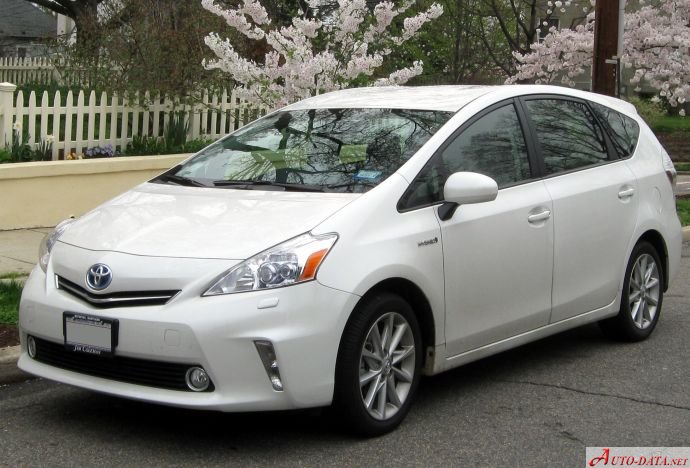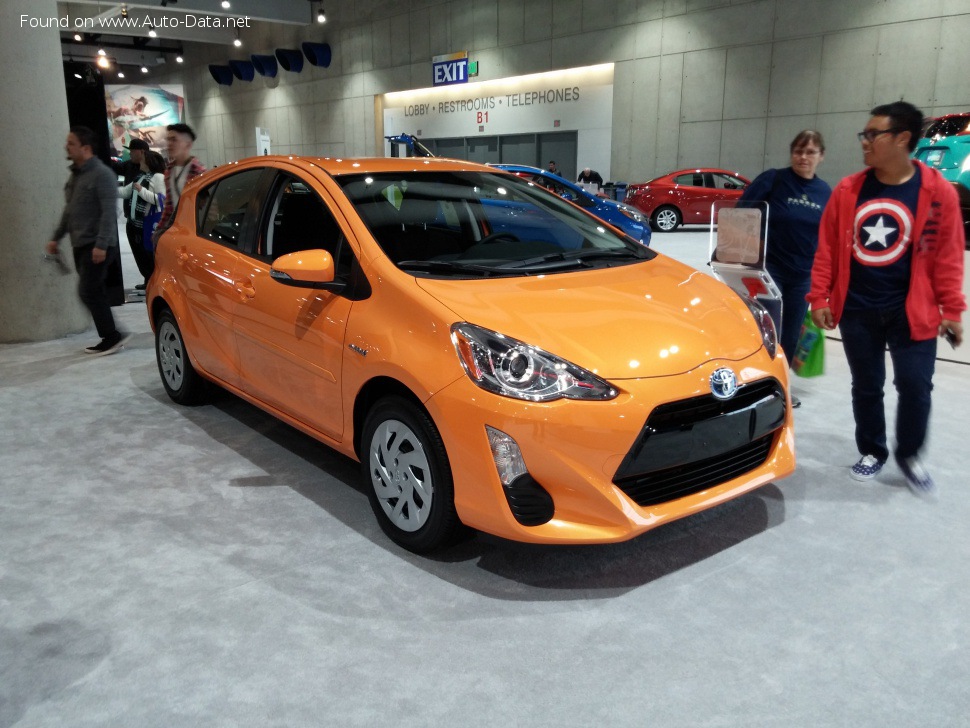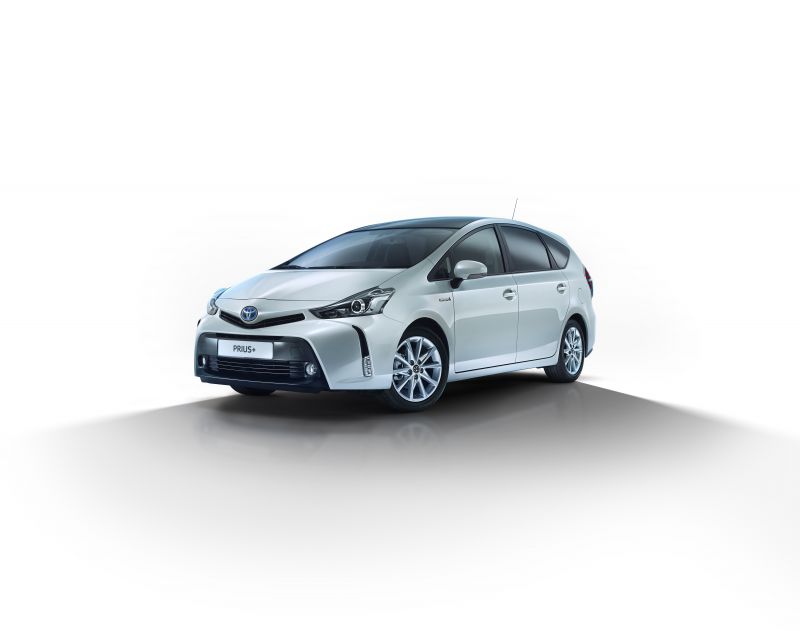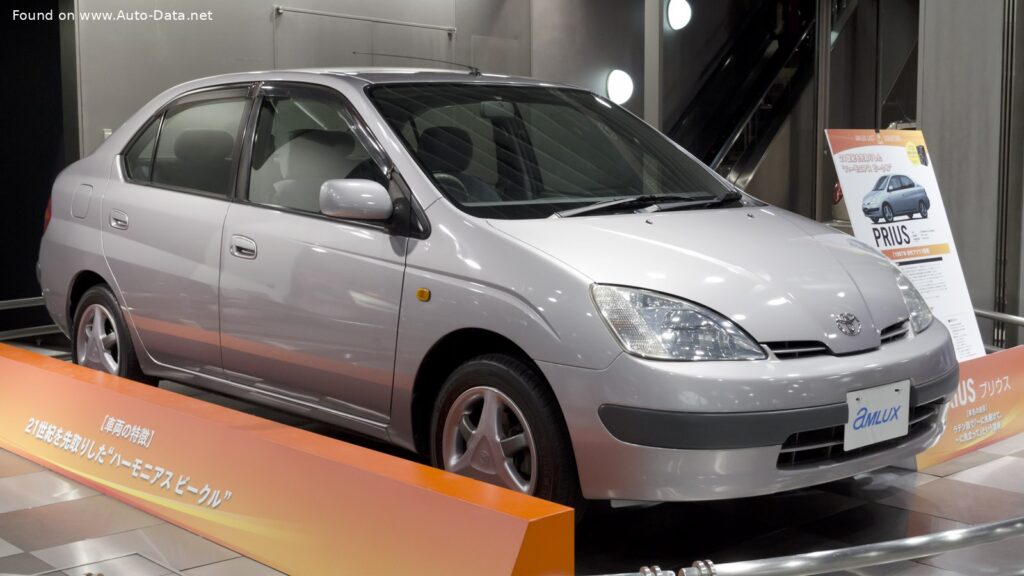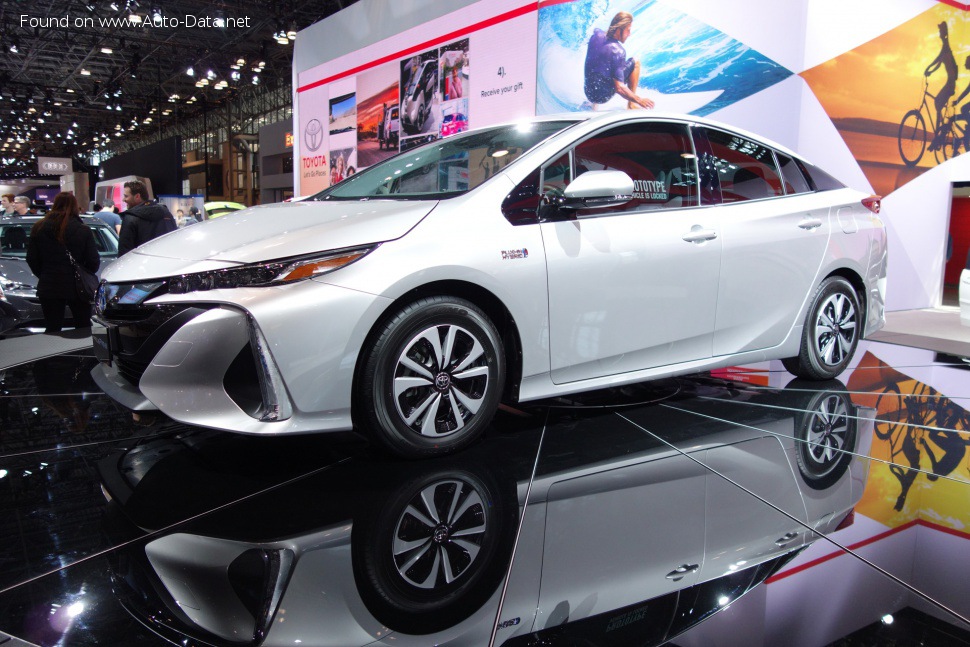
The Toyota Prius IV (XW50, facelift 2018) Prime 1.8 (122 Hp) Plug-in Hybrid e-CVT represents a significant evolution in Toyota’s pioneering hybrid lineage, solidifying its position as a global leader in fuel-efficient and environmentally conscious automotive technology. As part of the fourth generation (XW50) of the iconic Prius, this particular variant, produced from 2017 to 2022, received a crucial facelift in 2018, enhancing its aesthetic appeal and refining its already advanced plug-in hybrid electric vehicle (PHEV) architecture. The Prius Prime distinguishes itself within the hybrid landscape by offering a substantial all-electric range, catering to drivers seeking to minimize their carbon footprint and reduce reliance on gasoline for shorter commutes. Its liftback body style, characterized by five doors and four seats, combines practicality with a distinctive aerodynamic design, making it a compelling choice in the compact to mid-size eco-conscious vehicle segment across various international markets, including a strong presence in the United States.
Engineering and Performance of the Toyota Prius IV (XW50, facelift 2018) Prime
At the heart of the Toyota Prius IV (XW50, facelift 2018) Prime lies a sophisticated plug-in hybrid powertrain, meticulously engineered for optimal efficiency and performance. The system integrates a 1.8-liter (1798 cm3 or 109.72 cubic inches) 2ZR-FXE inline four-cylinder internal combustion engine (ICE). This naturally aspirated engine features a DOHC (Double Overhead Camshaft) valvetrain with VVT-i (Variable Valve Timing with intelligence), and a multi-port manifold injection system, optimized for the Atkinson cycle to maximize fuel economy. It produces a robust 98 horsepower and 104.73 lb.-ft. of torque at 3600 rpm, complemented by a high compression ratio of 13.04:1. The engine oil capacity is 4.2 liters, and the coolant capacity is 6 liters, ensuring efficient thermal management.
The ICE is seamlessly integrated with two synchronous electric motors. The primary electric motor delivers 72 horsepower and a substantial 120.22 lb.-ft. of torque, while a secondary motor contributes 31 horsepower and 29.5 lb.-ft. of torque. This dual-motor setup, integrated into the electronically controlled Continuously Variable Transmission (e-CVT), allows for versatile power delivery. The combined system output for the Prius Prime is 122 horsepower and 104.73 lb.-ft. of system torque at 3600 rpm. Power is delivered to the front wheels, with the drivetrain architecture allowing the vehicle to operate in full electric mode, hybrid mode, or a combination of both, dynamically managed for efficiency.
Energy for the electric motors is stored in a 7.2 kWh gross capacity Lithium-ion (Li-Ion) battery pack, operating at 351.5 volts. Strategically located behind the back wall of the passenger cabin, this battery enables the Prius Prime to achieve a significant all-electric driving range, a key differentiator for plug-in hybrids. In terms of performance, the Prius Prime demonstrates respectable acceleration for its class, achieving 0-60 mph in an estimated 10.5 seconds and 0-62 mph (0-100 km/h) in 11.1 seconds. Its maximum speed is electronically limited to 100.66 mph (162 km/h). This blend of power and efficiency results in an impressive CO2 emissions figure of just 22 g/km, meeting the stringent Euro 6 emission standard, underscoring its commitment to environmental performance. The vehicle’s weight-to-power ratio stands at 13.2 kg/Hp (76 Hp/tonne), and its weight-to-torque ratio is 11.3 kg/Nm (88.5 Nm/tonne), reflecting its optimized hybrid design.
Design and Features of the Toyota Prius IV (XW50, facelift 2018)
The design of the Toyota Prius IV (XW50, facelift 2018) Prime is an exercise in aerodynamic efficiency and modern aesthetics, reflecting its forward-thinking powertrain. The distinctive liftback body style, with its five doors and seating for four occupants, is not only visually striking but also highly functional. The 2018 facelift brought subtle yet impactful refinements, sharpening the lines and further enhancing its futuristic appeal while maintaining the core aerodynamic profile that contributes to its impressive fuel economy.
Dimensionally, the Prius Prime measures 182.87 inches in length, 69.29 inches in width, and 57.87 inches in height, with a generous wheelbase of 106.3 inches. These dimensions contribute to a stable ride and a surprisingly spacious cabin for its class. The front track is 60.24 inches, and the rear track is 60.83 inches, providing a balanced stance. Despite the battery’s placement, the vehicle offers a minimum trunk space of 12.5 cubic feet (354 liters), which is adequate for daily use, though slightly less than non-PHEV Prius models due to the larger battery pack. The fuel tank capacity is 11.36 US gallons, allowing for extended range when combining gasoline and electric power.
Underneath, the Prius Prime features an independent McPherson strut front suspension with coil springs and an anti-roll bar, providing a comfortable and controlled ride. The rear utilizes a torsion beam suspension, a compact and efficient design choice. Braking performance is handled by ventilated discs at the front and solid discs at the rear, complemented by an Anti-lock Braking System (ABS) for enhanced safety and stability. The steering system is a rack and pinion type with electric power steering, offering light and precise control, evidenced by a minimum turning circle of 33.46 feet. The vehicle is fitted with 195/65 R15 tires mounted on 6.0J x 15-inch wheel rims, a choice that prioritizes low rolling resistance for maximum efficiency. The ground clearance of 4.84 inches is suitable for urban and highway driving. The curb weight ranges from 3538.42 to 3582.51 lbs., with a maximum permissible weight of 4089.57 lbs. and a maximum load capacity between 507.06 and 551.16 lbs., ensuring practical utility for passengers and cargo. The advanced plug-in hybrid technology, coupled with thoughtful design and essential safety features, positions the Prius Prime as a highly efficient and responsible choice for modern drivers.
Technical Specifications
| Brand | Toyota |
| Model | Prius |
| Generation | Prius IV (XW50, facelift 2018) |
| Type (Engine) | Prime 1.8 (122 Hp) Plug-in Hybrid e-CVT |
| Start of production | 2017 year |
| End of production | 2022 year |
| Powertrain Architecture | PHEV (Plug-in Hybrid Electric Vehicle) |
| Body type | Liftback |
| Seats | 4 |
| Doors | 5 |
| CO2 emissions | 22 g/km |
| Fuel Type | Petrol / electricity |
| Acceleration 0 – 62 mph (0 – 100 km/h) | 11.1 sec |
| Acceleration 0 – 60 mph (Calculated) | 10.5 sec |
| Maximum speed | 100.66 mph (162 km/h) |
| Emission standard | Euro 6 |
| Weight-to-power ratio | 13.2 kg/Hp, 76 Hp/tonne |
| Weight-to-torque ratio | 11.3 kg/Nm, 88.5 Nm/tonne |
| Gross battery capacity | 7.2 kWh |
| Battery voltage | 351.5 V |
| Battery technology | Lithium-ion (Li-Ion) |
| Battery location | Behind the back wall of the passenger cabin |
| Electric motor 1 power | 72 Hp |
| Electric motor 1 Torque | 120.22 lb.-ft. (163 Nm) |
| Electric motor 1 location | Integrated into the transmission |
| Electric motor 1 type | Synchronous |
| Electric motor 2 power | 31 Hp |
| Electric motor 2 Torque | 29.5 lb.-ft. (40 Nm) |
| Electric motor 2 type | Synchronous |
| System power | 122 Hp |
| System torque | 104.73 lb.-ft. (142 Nm) @ 3600 rpm |
| ICE Power | 98 Hp |
| ICE Power per liter | 54.5 Hp/l |
| ICE Torque | 104.73 lb.-ft. (142 Nm) @ 3600 rpm |
| Engine layout | Front, Transverse |
| Engine Model/Code | 2ZR-FXE |
| Engine displacement | 1.8 l (1798 cm3, 109.72 cu. in.) |
| Number of cylinders | 4 |
| Engine configuration | Inline |
| Compression ratio | 13.04:1 |
| Number of valves per cylinder | 4 |
| Fuel injection system | Multi-port manifold injection |
| Engine aspiration | Naturally aspirated engine |
| Valvetrain | DOHC, VVT-i |
| Engine oil capacity | 4.2 l (4.44 US qt) |
| Coolant | 6 l (6.34 US qt) |
| Kerb Weight | 3538.42 – 3582.51 lbs. (1605-1625 kg) |
| Max. weight | 4089.57 lbs. (1855 kg) |
| Max load | 507.06 – 551.16 lbs. (230-250 kg) |
| Trunk (boot) space – minimum | 12.5 cu. ft. (354 l) |
| Fuel tank capacity | 11.36 US gal (43 l) |
| Length | 182.87 in. (4645 mm) |
| Width | 69.29 in. (1760 mm) |
| Height | 57.87 in. (1470 mm) |
| Wheelbase | 106.3 in. (2700 mm) |
| Front track | 60.24 in. (1530 mm) |
| Rear (Back) track | 60.83 in. (1545 mm) |
| Front overhang | 38.39 in. (975 mm) |
| Rear overhang | 38.19 in. (970 mm) |
| Ride height (ground clearance) | 4.84 in. (123 mm) |
| Minimum turning circle (turning diameter) | 33.46 ft. (10.2 m) |
| Drivetrain Architecture | ICE and electric motor drive front wheels; full electric or mixed mode. |
| Drive wheel | Front wheel drive |
| Number of gears and type of gearbox | automatic transmission e-CVT |
| Front suspension | Independent, type McPherson with coil spring and anti-roll bar |
| Rear suspension | Torsion |
| Front brakes | Ventilated discs |
| Rear brakes | Disc |
| Assisting systems | ABS (Anti-lock braking system) |
| Steering type | Steering rack and pinion |
| Power steering | Electric Steering |
| Tires size | 195/65 R15 |
| Wheel rims size | 6.0J x 15 |