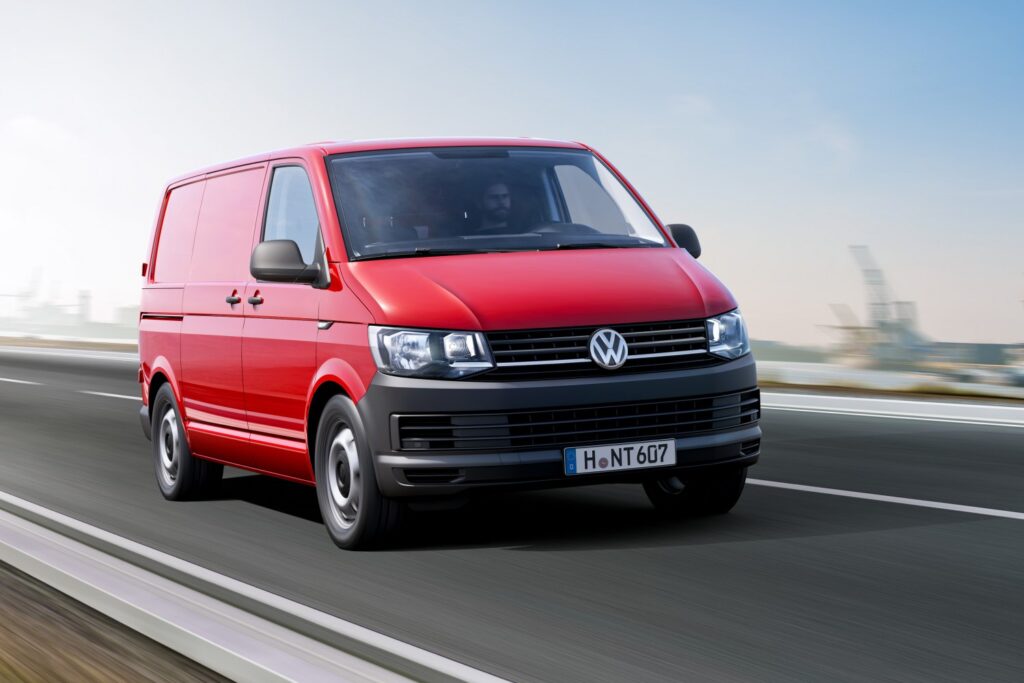
The Volkswagen Transporter, a name synonymous with versatility and robust utility across global markets, particularly in Europe, entered its sixth generation (T6) in 2015, continuing a storied lineage that began with the iconic Type 2. This specific variant, the Volkswagen Transporter (T6) Panel Van 2.0 TDI (180 Hp) L1H2, represents a highly capable and efficient workhorse designed for demanding commercial applications. Produced for a concise period between 2015 and 2016, this model showcases Volkswagen’s commitment to refining its commercial vehicle offerings with advanced powertrain technology, enhanced practicality, and improved driving dynamics, building upon decades of success in the light commercial vehicle segment. While not a common sight in the United States market, where larger, often body-on-frame vans dominate, the T6 Transporter is a cornerstone of European commerce, appreciated for its compact footprint, impressive cargo capacity, and car-like driving experience. The L1H2 designation signifies its specific configuration: L1 for the standard or short wheelbase and H2 for the high roof, optimizing it for volumetric cargo without an excessively long vehicle footprint.
Engine and Performance: The Volkswagen Transporter (T6) Panel Van 2.0 TDI (180 Hp) L1H2
At the heart of the Volkswagen Transporter (T6) Panel Van 2.0 TDI (180 Hp) L1H2 lies a sophisticated 2.0-liter (1968 cm³) inline-four EA189 / CFCA diesel engine, engineered to deliver a compelling blend of power, torque, and fuel efficiency. This powerplant generates a substantial 180 horsepower at 4000 rpm, making it one of the more potent options available in its class. More critically for a commercial vehicle, it produces an impressive 295.02 lb.-ft. (400 Nm) of torque, available across a broad and usable rev range from 1500 to 2500 rpm. This low-end torque is crucial for hauling heavy loads, navigating urban environments, and ensuring confident acceleration even when fully laden.
The engine’s robust performance is achieved through a BiTurbo aspiration system combined with an intercooler, which significantly boosts air intake and combustion efficiency. The diesel common rail fuel injection system precisely meters fuel, contributing to both power output and its commendable fuel economy. With four valves per cylinder and a DOHC (Double Overhead Camshaft) valvetrain, the engine is designed for optimal airflow and efficiency. The compression ratio stands at 16.5:1, typical for a modern diesel, ensuring efficient combustion. Despite its power, the 2.0 TDI adheres to the Euro 5 emission standard, reflecting Volkswagen’s efforts to balance performance with environmental responsibility, a critical factor in European markets. Furthermore, the inclusion of a Start & Stop System and a Particulate filter underscores its focus on reducing emissions and improving fuel economy in varied driving conditions.
Performance figures for this panel van are notably agile for its segment. It accelerates from 0 to 60 mph in approximately 9.5 seconds, and 0 to 62 mph (100 km/h) in 10 seconds, reaching a maximum speed of 114.33 mph (184 km/h). These figures are remarkable for a commercial vehicle, allowing it to keep pace with passenger cars on highways and making it suitable for long-distance deliveries. The power-to-weight ratio is a respectable 103.1 Hp per tonne (9.7 kg/Hp), while the torque-to-weight ratio is 229.1 Nm per tonne (4.4 kg/Nm), indicating strong pulling power relative to its mass. Fuel economy is also a highlight, with combined figures ranging from 32.2 to 33.6 US mpg (7.0-7.3 l/100 km), demonstrating its cost-effectiveness for businesses. Urban consumption ranges from 26.4 to 27.4 US mpg, while extra-urban driving can achieve 36.8 to 38.6 US mpg, reflecting the engine’s efficiency in different driving cycles.
Design and Features: Practicality Meets Volkswagen Engineering
The Volkswagen Transporter (T6) Panel Van 2.0 TDI (180 Hp) L1H2 is fundamentally a purpose-built commercial vehicle, and its design reflects this priority, focusing on maximum utility and durability. As an L1H2 configuration, it combines a standard wheelbase (L1) with a high roof (H2), providing a significant 236.61 cubic feet (6700 liters) of cargo space. This generous volume, coupled with a maximum payload capacity ranging from 2323.67 to 2506.66 lbs (1054-1137 kg), makes it an ideal choice for a wide array of trades and delivery services. The van features 4-5 doors, typically including a sliding side door for easy access to the cargo area, and 2-3 seats in the cabin, allowing for a driver and one or two passengers.
Dimensions are crucial for a commercial vehicle operating in diverse environments. The L1H2 measures 193.07 inches (4904 mm) in length, 74.96 inches (1904 mm) in width (or 90.43 inches / 2297 mm including mirrors), and stands tall at 85.71 inches (2177 mm). Its wheelbase is 118.11 inches (3000 mm), contributing to a stable ride and ample interior volume. Despite its size, the Transporter maintains a minimum turning circle of 39.04 feet (11.9 m), making it surprisingly maneuverable in tight urban settings. Ground clearance of 7.91 inches (201 mm) is also adequate for navigating varied terrain, while approach, departure, and ramp-over angles (21.2°, 16.2°, and 13.7° respectively) ensure it can handle inclines and loading ramps without issue.
The Transporter’s chassis and suspension are engineered for resilience and load-carrying. It features an independent McPherson type front suspension with coil springs and an anti-roll bar, providing responsive handling and comfort. The rear also utilizes an independent coil spring setup with wishbones and a transverse stabilizer, which is less common for commercial vans and contributes to its car-like ride quality and improved traction under load. Braking is handled by ventilated discs both front (308×29.5 mm) and rear (294×22 mm), complemented by an Anti-lock Braking System (ABS) for enhanced safety and control during emergency stops. The steering system is a hydraulic rack and pinion, offering direct feedback and reliable performance. Standard tire sizes include 215/65 R16, with an option for 235/55 R17, mounted on 6.5J x 16 or 7J x 17 wheel rims, respectively.
Market Context and Legacy
The Volkswagen Transporter series holds an almost legendary status, particularly in Europe, where it has been a staple of commercial fleets and a popular choice for conversions into camper vans for decades. The T6 generation, though short-lived in its initial production run for this specific variant, continued this legacy, representing a significant evolution in refinement, technology, and efficiency over its predecessors. Unlike the larger, more truck-like commercial vans often favored in the North American market, the Transporter’s design ethos prioritizes a balance of compact exterior dimensions with substantial interior volume, making it highly suitable for navigating narrower European streets and dense urban environments.
Its front-wheel-drive powertrain architecture, combined with a 6-speed manual transmission, is optimized for efficient power delivery and ease of driving. The decision to employ front-wheel drive (FWD) for this model offers several advantages, including a lower load floor for easier cargo access and improved traction in certain conditions, as the weight of the engine and transmission is directly over the drive wheels. This setup, along with its independent suspension all around, contributes to the Transporter’s reputation for offering a more car-like driving experience than many of its commercial rivals, reducing driver fatigue on long hauls. Its robust construction and high maximum gross weight of up to 7054.79 lbs (3200 kg) ensure it can handle demanding work, while its impressive towing capacity of 5511.56 lbs (2500 kg) with brakes further extends its utility.
The Transporter’s enduring appeal lies in its adaptability. It serves as everything from a basic panel van for tradespeople to a specialized mobile workshop, a shuttle bus, or a comfortable family camper. The L1H2 configuration, in particular, maximizes the utility for businesses requiring ample vertical space for cargo or equipment, without the added length that can complicate urban navigation and parking. Its fuel tank capacity of 21.13 US gallons (80 liters) provides an excellent range, minimizing downtime for refueling, which is a critical consideration for commercial operators. The T6 generation specifically introduced a host of technological upgrades and safety enhancements, further solidifying its position as a benchmark in the light commercial vehicle segment, continuing Volkswagen’s tradition of building reliable, efficient, and highly versatile vehicles for the global workforce.
Technical Specifications
| Brand | Volkswagen |
| Model | Transporter |
| Generation | Transporter (T6) Panel Van |
| Type (Engine) | 2.0 TDI (180 Hp) L1H2 |
| Start of production | 2015 year |
| End of production | 2016 year |
| Powertrain Architecture | Internal Combustion engine |
| Body type | Van |
| Seats | 2-3 |
| Doors | 4-5 |
| Fuel consumption (economy) – urban (NEDC) | 8.6-8.9 l/100 km (27.4 – 26.4 US mpg) |
| Fuel consumption (economy) – extra urban (NEDC) | 6.1-6.4 l/100 km (38.6 – 36.8 US mpg) |
| Fuel consumption (economy) – combined (NEDC) | 7-7.3 l/100 km (33.6 – 32.2 US mpg) |
| CO2 emissions (NEDC) | 184-192 g/km |
| Fuel Type | Diesel |
| Acceleration 0 – 60 mph | 9.5 sec |
| Acceleration 0 – 100 km/h (0 – 62 mph) | 10 sec |
| Maximum speed | 114.33 mph (184 km/h) |
| Emission standard | Euro 5 |
| Weight-to-power ratio | 9.7 kg/Hp, 103.1 Hp/tonne |
| Weight-to-torque ratio | 4.4 kg/Nm, 229.1 Nm/tonne |
| Power | 180 Hp @ 4000 rpm |
| Power per liter | 91.5 Hp/l |
| Torque | 295.02 lb.-ft. @ 1500-2500 rpm (400 Nm) |
| Engine layout | Front, Transverse |
| Engine Model/Code | EA189 / CFCA |
| Engine displacement | 1968 cm³ (120.09 cu. in. / 2.0 l) |
| Number of cylinders | 4 |
| Engine configuration | Inline |
| Cylinder Bore | 3.19 in. (81 mm) |
| Piston Stroke | 3.76 in. (95.5 mm) |
| Compression ratio | 16.5:1 |
| Number of valves per cylinder | 4 |
| Fuel injection system | Diesel Commonrail |
| Engine aspiration | BiTurbo, Intercooler |
| Valvetrain | DOHC |
| Engine oil capacity | 7.4 US qt (7 l) |
| Engine systems | Start & Stop System, Particulate filter |
| Kerb Weight | 3849.27 – 4548.14 lbs (1746-2063 kg) |
| Max. weight | 6172.94 – 7054.79 lbs (2800-3200 kg) |
| Max load | 2323.67 – 2506.66 lbs (1054-1137 kg) |
| Trunk (boot) space – maximum | 236.61 cu. ft. (6700 l) |
| Fuel tank capacity | 21.13 US gal (80 l) |
| Max. roof load | 220.46 lbs (100 kg) |
| Permitted trailer load with brakes (12%) | 5511.56 lbs (2500 kg) |
| Permitted trailer load without brakes | 1653.47 lbs (750 kg) |
| Permitted towbar download | 220.46 lbs (100 kg) |
| Length | 193.07 in. (4904 mm) |
| Width | 74.96 in. (1904 mm) |
| Width including mirrors | 90.43 in. (2297 mm) |
| Height | 85.71 in. (2177 mm) |
| Wheelbase | 118.11 in. (3000 mm) |
| Front overhang | 35.75 in. (908 mm) |
| Rear overhang | 39.09 in. (993 mm) |
| Ride height (ground clearance) | 7.91 in. (201 mm) |
| Minimum turning circle (turning diameter) | 39.04 ft. (11.9 m) |
| Approach angle | 21.2° |
| Departure angle | 16.2° |
| Ramp-over (brakeover) angle | 13.7° |
| Drivetrain Architecture | Front wheel drive. Internal Combustion engine. |
| Drive wheel | Front wheel drive |
| Number of gears and type of gearbox | 6 gears, manual transmission |
| Front suspension | Independent, type McPherson with coil spring and anti-roll bar |
| Rear suspension | Independent coil spring, Wishbone, Transverse stabilizer |
| Front brakes | Ventilated discs, 308×29.5 mm |
| Rear brakes | Ventilated discs, 294×22 mm |
| Assisting systems | ABS (Anti-lock braking system) |
| Steering type | Steering rack and pinion |
| Power steering | Hydraulic Steering |
| Tires size | 215/65 R16; 235/55 R17 |
| Wheel rims size | 6.5J x 16; 7J x 17 |