
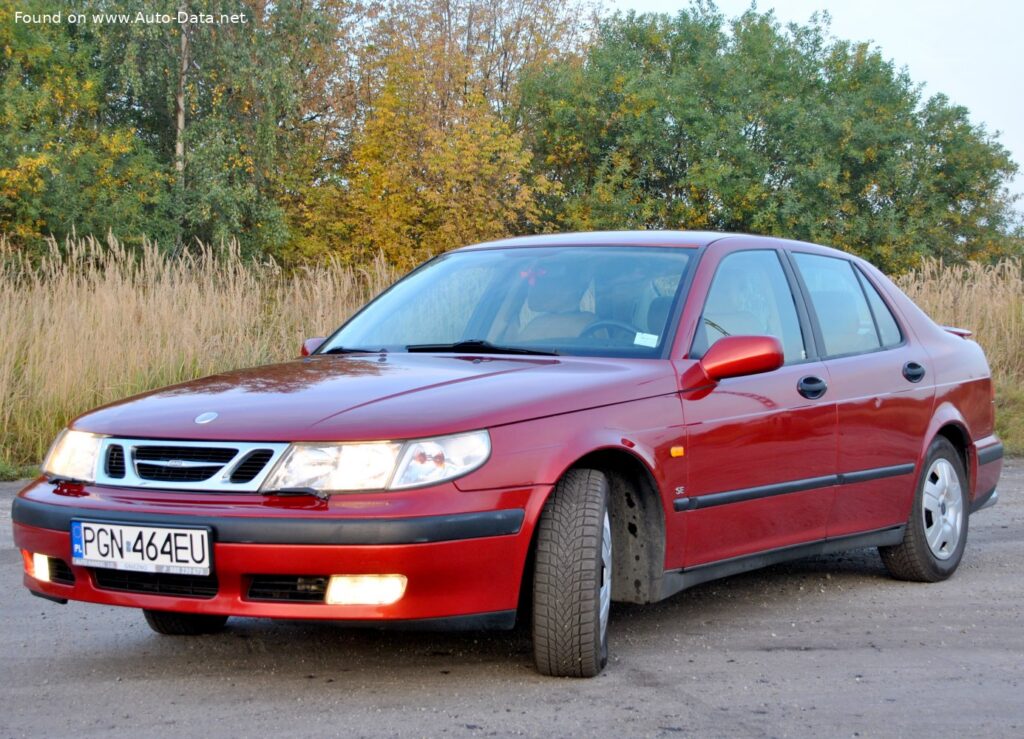
The Saab 9-5, specifically the 3.0 i V6 24V (200 Hp) variant produced between 1998 and 2001, represented a significant chapter in the history of the distinctive Swedish automaker. As the flagship model that succeeded the venerable Saab 9000, the 9-5 was engineered to compete in the competitive executive sedan segment, primarily in Europe and North America. This generation of the 9-5 embodied Saab’s core values: a unique blend of aviation-inspired design, advanced safety features, and a driver-focused, engaging driving experience. While not a volume seller on par with its German rivals, the Saab 9-5 carved out a niche for discerning buyers who appreciated its unconventional approach to luxury and performance, underpinned by robust engineering and a distinctive character that set it apart from the mainstream. Its introduction marked a pivotal moment for the brand, showcasing its vision for the future while retaining the idiosyncratic charm that Saab aficionados cherished.
The Legacy of the Saab 9-5 3.0 i V6 24V (200 Hp)
The first-generation Saab 9-5, launched in 1997, was an ambitious project designed to modernize Saab’s product portfolio and reaffirm its commitment to innovation. The 3.0 i V6 24V (200 Hp) model, produced from 1998 to 2001, stood out as a premium offering within the lineup, providing a blend of refined power and traditional Saab comfort. This era was characterized by Saab’s unique position in the automotive landscape, often described as an “independent thinker” among car manufacturers. The 9-5 was more than just a car; it was a statement of individuality, emphasizing thoughtful design, advanced ergonomics, and a relentless focus on real-world safety. Its primary market included regions where buyers valued engineering integrity and subtle luxury over overt status symbols, making it a compelling alternative to established premium brands. The development of the 9-5 also saw the brand leveraging its General Motors ownership, sharing some underlying platforms while maintaining a distinct Saab identity in terms of design, powertrain, and interior philosophy.
Saab’s aviation heritage was subtly woven into the 9-5’s design and functionality. From the driver-centric cockpit layout to the “Night Panel” feature (which allowed drivers to dim all non-essential instrument lighting for reduced distraction during night driving), the 9-5 reflected an engineering philosophy rooted in aircraft design principles. The emphasis on occupant protection was paramount, with Saab consistently pushing the boundaries of passive and active safety long before it became a widespread industry standard. The 3.0 i V6 24V (200 Hp) variant, with its potent engine and sophisticated chassis, aimed to deliver a driving experience that was both comfortable for long journeys and engaging on winding roads, staying true to Saab’s performance credentials.
Powertrain and Performance: The 3.0-Liter V6
At the heart of the 1998-2001 Saab 9-5 3.0 i V6 24V (200 Hp) model lay a sophisticated 3.0-liter V6 engine, identified by the engine code B308i. This powertrain architecture featured a front, transverse engine layout, driving the front wheels, a common configuration for executive sedans prioritizing interior space and efficient packaging. Unlike many of Saab’s signature four-cylinder engines, which were renowned for their turbocharging prowess, this V6 brought a different character to the 9-5 lineup. While the data indicates a “Turbocharger” for this specific V6, it’s important to note this was Saab’s unique “asymmetric turbo” system, a groundbreaking design for its time. In this configuration, exhaust gases from only three of the six cylinders were routed through a low-pressure turbocharger, providing a broad torque curve and minimizing turbo lag, enhancing drivability.
The engine produced a robust 200 horsepower at 5000 revolutions per minute (rpm), translating to a power-per-liter output of 67.5 Hp/l. More impressively, it generated 228.64 lb.-ft. of torque at a remarkably low 2100 rpm. This low-end torque was a hallmark of Saab engineering, ensuring strong acceleration and effortless cruising, even with a full load. The power was managed by a 4-speed automatic transmission, a common offering in premium cars of that era, designed for smooth shifts and comfortable driving. Performance figures were competitive for its class, with the sedan accelerating from 0 to 60 mph in a swift 7.6 seconds and achieving a maximum speed of 146.02 mph (235 km/h). These metrics underscored the 3.0 i V6’s capability as a potent long-distance cruiser and a capable performer in everyday driving scenarios.
Fuel economy for the 3.0 i V6 24V was rated at 14.4 US mpg (16.3 l/100 km) in urban driving conditions and a more respectable 29.4 US mpg (8 l/100 km) on
