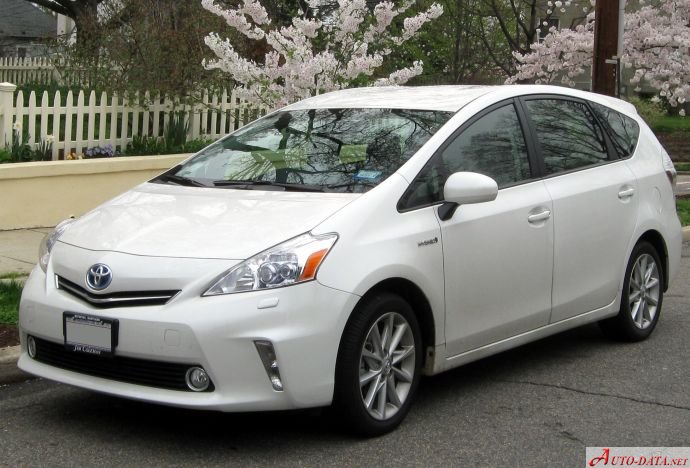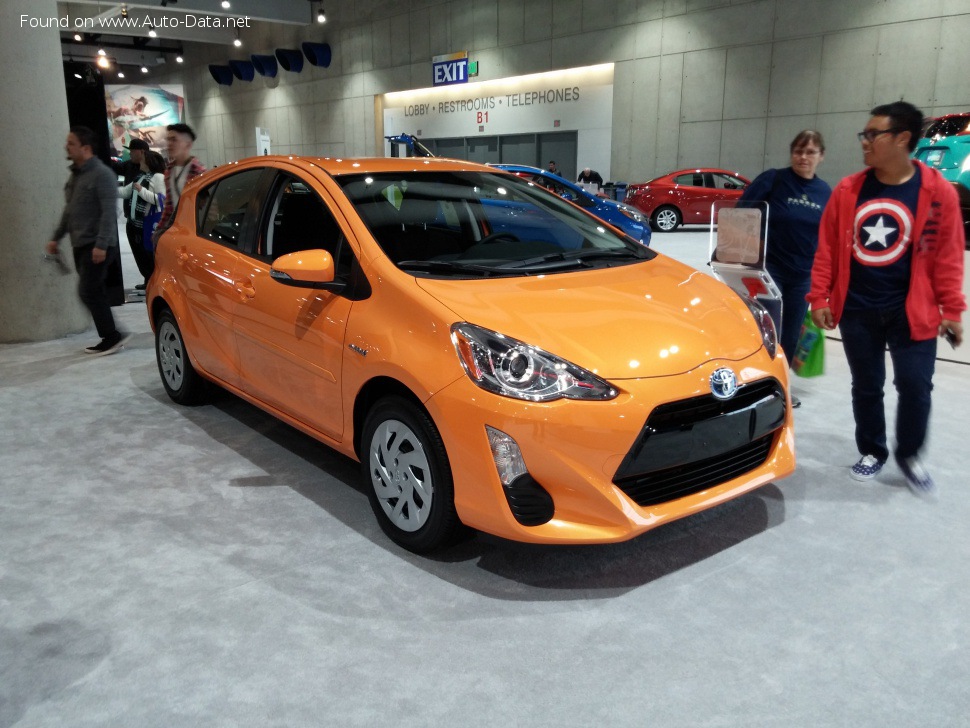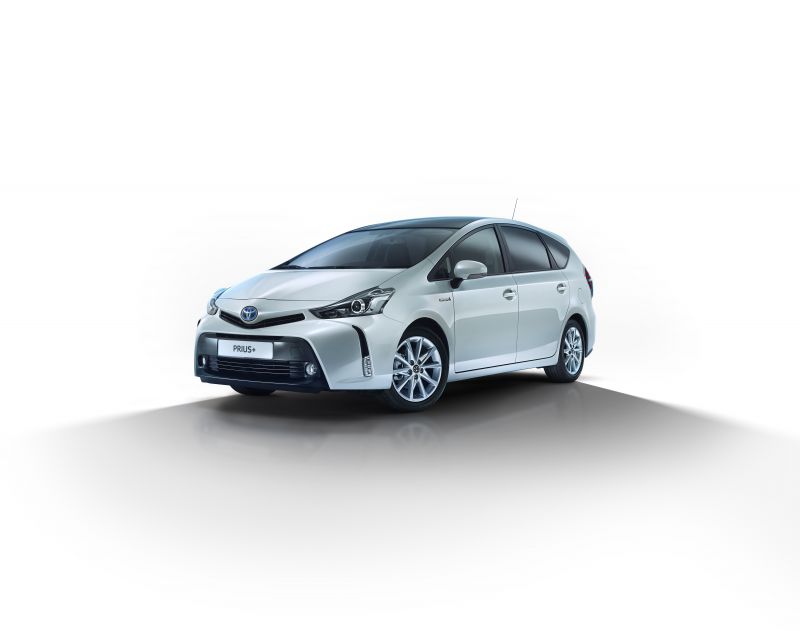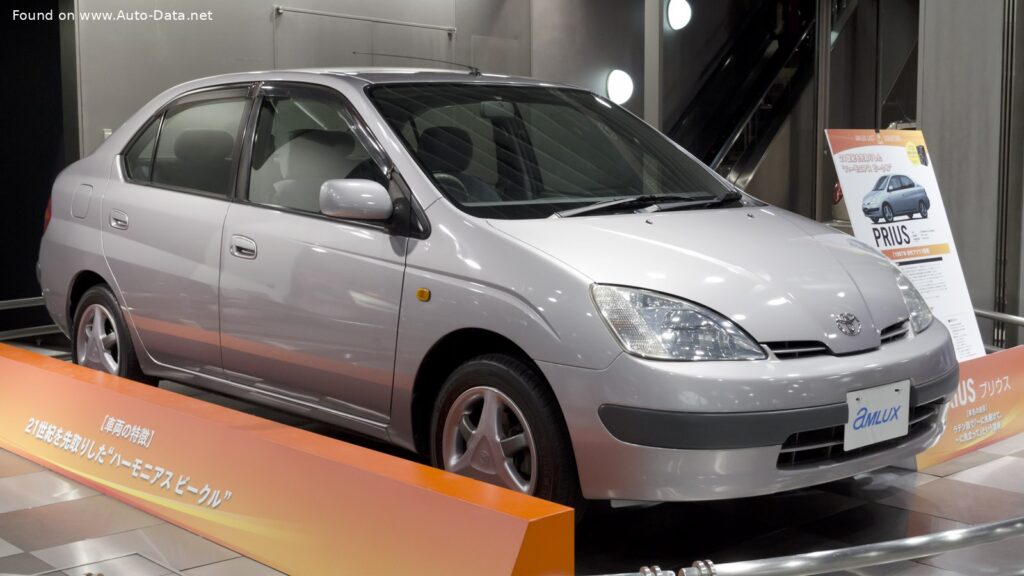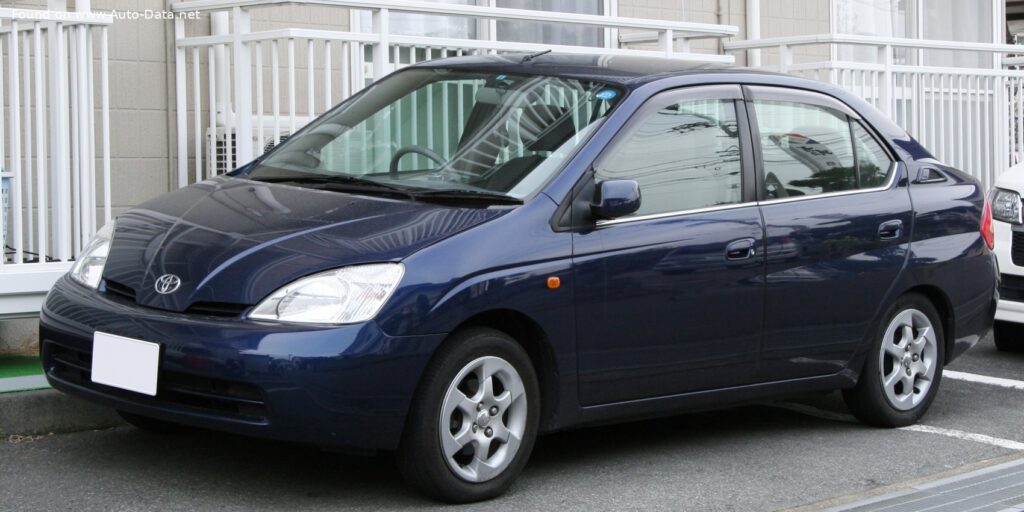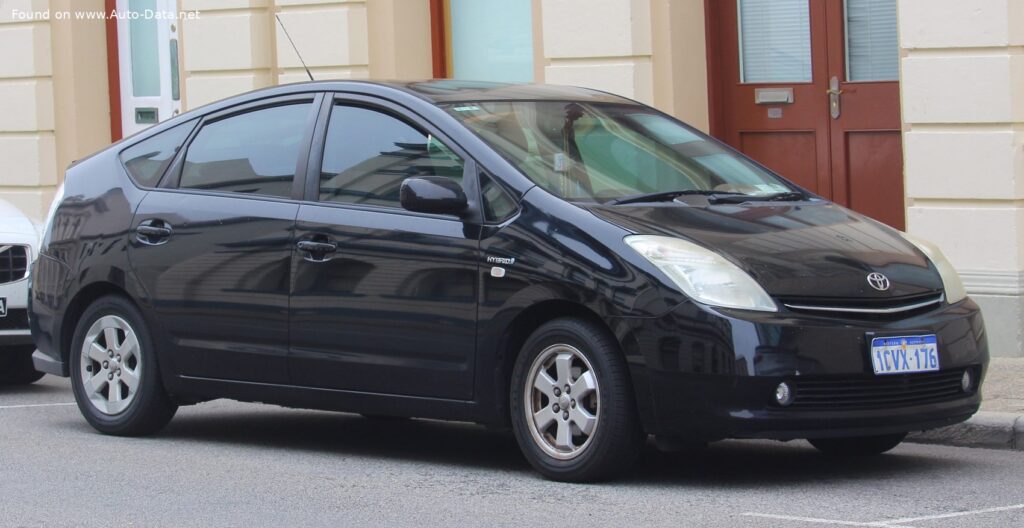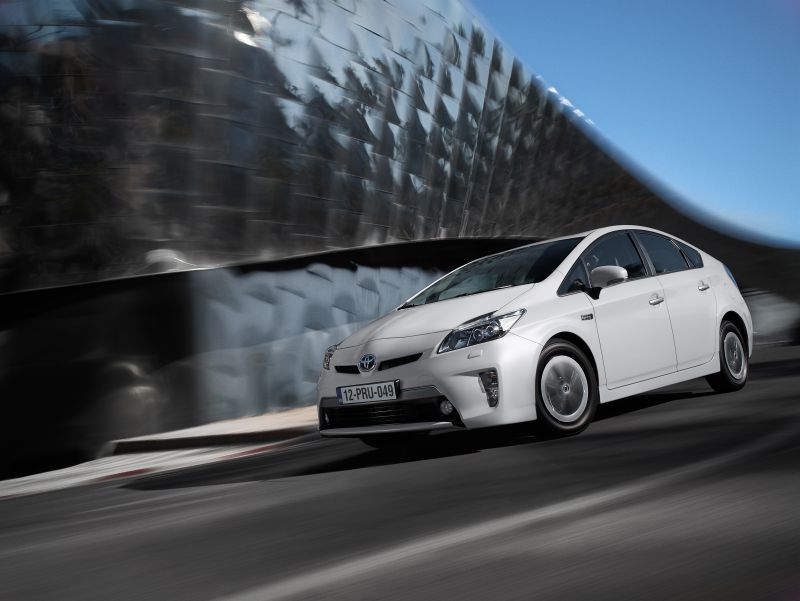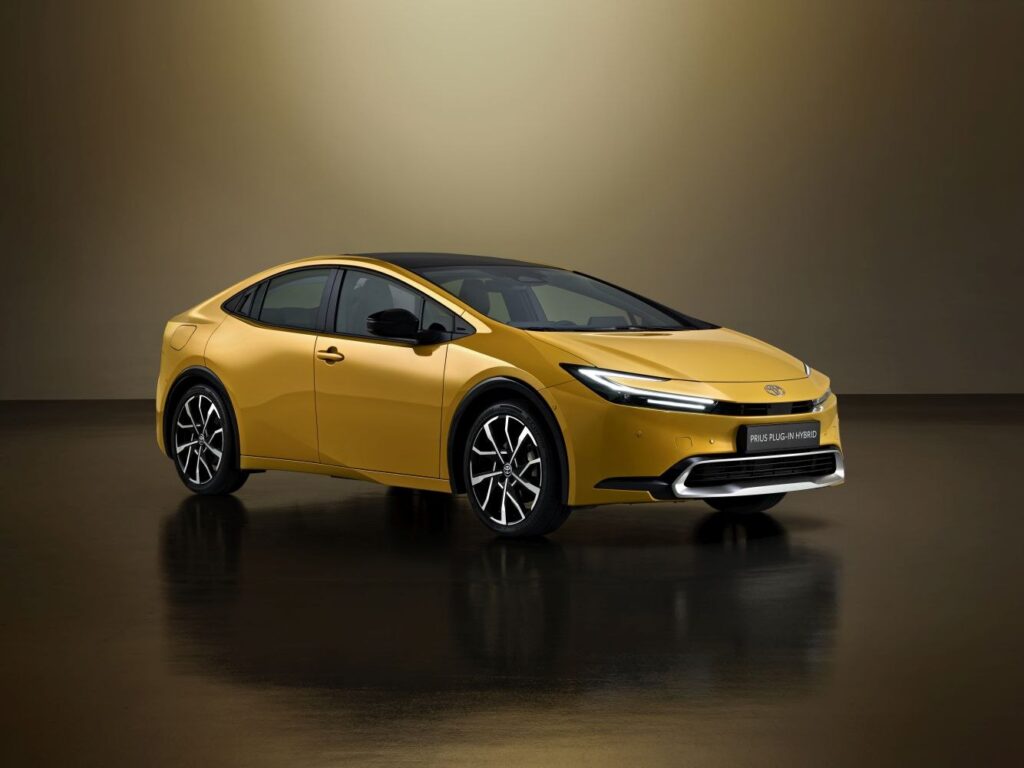
The Toyota Prius V (XW60) 1.8 (140 Hp) Hybrid E-Four e-CVT represents the latest evolution of Toyota’s iconic hybrid vehicle, pushing the boundaries of efficiency, practicality, and all-weather capability. Launched in January 2023, this iteration of the Prius, specifically the XW60 generation, continues to solidify its position as a global leader in sustainable mobility. While the “Prius V” designation might be less familiar in the North American market, this model is a key player in its primary markets, particularly in regions where advanced hybrid technology and all-wheel-drive versatility are highly valued. As a modern Full Hybrid Electric Vehicle (FHEV), it integrates a sophisticated powertrain with a distinctive liftback body style, catering to drivers who demand both exceptional fuel economy and a practical, comfortable driving experience.
The Toyota Prius V (XW60) 1.8 (140 Hp) Hybrid E-Four e-CVT: A New Era of Hybrid Efficiency
The Toyota Prius V (XW60) 1.8 (140 Hp) Hybrid E-Four e-CVT is engineered around a cutting-edge Full Hybrid Electric Vehicle (FHEV) powertrain architecture, designed to deliver an optimal balance of power, efficiency, and environmental responsibility. At its heart lies a 1.8-liter (1797 cm3 or 109.66 cu. in.) 2ZR-FXE inline four-cylinder internal combustion engine. This naturally aspirated unit features a multi-port manifold injection system and Toyota’s renowned VVT (Variable Valve Timing) technology, producing a respectable 98 horsepower at 5200 rpm and 104.73 lb.-ft. of torque at 3600 rpm. With a bore of 3.17 inches (80.5 mm) and a stroke of 3.48 inches (88.3 mm), this engine is optimized for thermal efficiency, a hallmark of Toyota’s hybrid philosophy.
Complementing the gasoline engine are two potent electric motors, forming the sophisticated E-Four all-wheel-drive system. The primary electric motor (model 1VM), integrated into the e-CVT transmission, provides 95 horsepower and a substantial 136.45 lb.-ft. of torque, primarily driving the front wheels. A second electric motor (model 1WM), transversely mounted on the rear axle, contributes an additional 41 horsepower and 61.96 lb.-ft. of torque, enabling the E-Four system. Both electric motors are synchronous types, known for their efficiency and responsive power delivery. The intelligent integration of these components results in a robust total system output of 140 horsepower, ensuring confident acceleration and seamless power transitions. The all-wheel-drive (4×4) architecture allows the vehicle to operate in full electric mode, gasoline-only mode, or a combination of both, adapting dynamically to driving conditions for maximum efficiency and traction.
Power is managed by an electronic Continuously Variable Transmission (e-CVT), a system perfected by Toyota to deliver smooth, stepless acceleration and optimize the interplay between the internal combustion engine and electric motors. This transmission is crucial for achieving the vehicle’s outstanding fuel economy figures. The FHEV system is powered by a modern Lithium-ion (Li-Ion) battery, which offers excellent energy density and contributes to the vehicle’s overall efficiency and responsive electric-only driving capabilities. The inclusion of a Start & Stop System further enhances fuel savings by shutting down the engine during idle periods, particularly in urban environments. The combined powertrain architecture ensures that the Toyota Prius V (XW60) 1.8 (140 Hp) Hybrid E-Four e-CVT stands as a benchmark for fuel efficiency, boasting a combined WLTC fuel consumption of 3.2 liters per 100 kilometers, which translates to an impressive 73.5 US miles per gallon. Urban driving yields 3.6 l/100 km (65.3 US mpg), while extra-urban cruising can achieve as low as 2.8 l/100 km (84 US mpg), making it an exceptionally economical choice for a wide range of driving scenarios.
Design and Features of the Toyota Prius V (XW60)
The Toyota Prius V (XW60) 1.8 (140 Hp) Hybrid E-Four e-CVT embraces a sleek and modern liftback body type, offering a blend of aerodynamic efficiency and practical utility. With 5 doors and seating for 5 occupants, it provides versatile space for passengers and cargo alike. The vehicle’s dimensions are carefully calibrated for urban maneuverability and highway stability: it measures 181.1 inches (4600 mm) in length, 70.08 inches (1780 mm) in width, and 55.91 inches (1420 mm) in height. A generous wheelbase of 108.27 inches (2750 mm) contributes to a comfortable ride and stable handling, while the relatively low ride height of 5.71 inches (145 mm) enhances its aerodynamic profile and contributes to a lower center of gravity.
The chassis and suspension systems are designed to deliver a refined and engaging driving experience. The front suspension features an independent McPherson strut setup with coil springs and an anti-roll bar, providing responsive steering and excellent ride comfort. At the rear, a double wishbone suspension with a transverse stabilizer ensures superior handling dynamics and stability, particularly when navigating varied road surfaces or carrying a full load. Braking performance is handled by ventilated discs at the front and solid discs at the rear, complemented by an Anti-lock Braking System (ABS) for enhanced safety during emergency stops. The steering system is a precise rack and pinion type, augmented by electric power steering, which offers light effort at low speeds for easy parking and greater feedback at higher speeds for confident highway driving. The vehicle’s minimum turning circle of 34.78 feet (10.6 meters) underscores its agility in tight urban environments.
The Toyota Prius V (XW60) is equipped with 195/60 R17 tires mounted on 6.5J x 17-inch wheel rims, providing a balance of grip, comfort, and rolling resistance optimized for fuel efficiency. The curb weight of 3130.56 lbs (1420 kg) reflects the lightweight materials and efficient structural design, contributing to its impressive weight-to-power ratio of 10.1 kg/Hp. With a maximum permissible weight of 3736.84 lbs (1695 kg) and a maximum load capacity of 606.27 lbs (275 kg), the Prius V is well-suited for daily commuting and weekend excursions. A 11.36 US gallon (43 liter) fuel tank provides ample range, further enhancing its long-distance touring capabilities, minimizing stops at the pump thanks to its exceptional fuel economy. Overall, the design and features of the Toyota Prius V (XW60) underscore its commitment to advanced technology, driver comfort, and environmental stewardship, making it a compelling choice in the modern automotive landscape.
Technical Specifications: Toyota Prius V (XW60) 1.8 (140 Hp) Hybrid E-Four e-CVT
| Brand | Toyota |
| Model | Prius |
| Generation | Prius V (XW60) |
| Type (Engine) | 1.8 (140 Hp) Hybrid E-Four e-CVT |
| Start of production | January, 2023 year |
| Powertrain Architecture | FHEV (Full Hybrid Electric Vehicle) |
| Body type | Liftback |
| Seats | 5 |
| Doors | 5 |
| Fuel consumption (economy) – urban (WLTC) | 3.6 l/100 km (65.3 US mpg) |
| Fuel consumption (economy) – extra urban (WLTC) | 2.8 l/100 km (84 US mpg) |
| Fuel consumption (economy) – combined (WLTC) | 3.2 l/100 km (73.5 US mpg) |
| Fuel Type | Petrol (Gasoline) |
| Weight-to-power ratio | 10.1 kg/Hp, 98.6 Hp/tonne |
| Weight-to-torque ratio | 10 kg/Nm, 100 Nm/tonne |
| Battery technology | Lithium-ion (Li-Ion) |
| Electric motor 1 power | 95 Hp |
| Electric motor 1 Torque | 185 Nm (136.45 lb.-ft.) |
| Electric motor 1 model/code | 1VM |
| Electric motor 1 location | Integrated into the transmission |
| Electric motor 1 type | Synchronous |
| Electric motor 2 power | 41 Hp |
| Electric motor 2 Torque | 84 Nm (61.96 lb.-ft.) |
| Electric motor 2 model/code | 1WM |
| Electric motor 2 location | Rear axle, Transverse |
| Electric motor 2 type | Synchronous |
| System power | 140 Hp |
| Internal combustion engine Power | 98 Hp @ 5200 rpm. |
| Power per liter | 54.5 Hp/l |
| Torque | 142 Nm @ 3600 rpm. (104.73 lb.-ft. @ 3600 rpm.) |
| Engine layout | Front, Transverse |
| Engine Model/Code | 2ZR-FXE |
| Engine displacement | 1797 cm3 (109.66 cu. in.) |
| Number of cylinders | 4 |
| Engine configuration | Inline |
| Cylinder Bore | 80.5 mm (3.17 in.) |
| Piston Stroke | 88.3 mm (3.48 in.) |
| Number of valves per cylinder | 4 |
| Fuel injection system | Multi-port manifold injection |
| Engine aspiration | Naturally aspirated engine |
| Valvetrain | VVT |
| Engine oil capacity | 4.2 l (4.44 US qt) |
| Coolant | 5.5 l (5.81 US qt) |
| Engine systems | Start & Stop System |
| Kerb Weight | 1420 kg (3130.56 lbs.) |
| Max. weight | 1695 kg (3736.84 lbs.) |
| Max load | 275 kg (606.27 lbs.) |
| Fuel tank capacity | 43 l (11.36 US gal) |
| Length | 4600 mm (181.1 in.) |
| Width | 1780 mm (70.08 in.) |
| Height | 1420 mm (55.91 in.) |
| Wheelbase | 2750 mm (108.27 in.) |
| Front track | 1560 mm (61.42 in.) |
| Rear (Back) track | 1570 mm (61.81 in.) |
| Ride height (ground clearance) | 145 mm (5.71 in.) |
| Minimum turning circle (turning diameter) | 10.6 m (34.78 ft.) |
| Drivetrain Architecture | ICE drives front wheels, one electric motor drives front wheels, one electric motor drives rear wheels. Ability for full electric or mixed mode. |
| Drive wheel | All wheel drive (4×4) |
| Number of gears and type of gearbox | automatic transmission e-CVT |
| Front suspension | Independent, type McPherson with coil spring and anti-roll bar |
| Rear suspension | Double wishbone, Transverse stabilizer |
| Front brakes | Ventilated discs |
| Rear brakes | Disc |
| Assisting systems | ABS (Anti-lock braking system) |
| Steering type | Steering rack and pinion |
| Power steering | Electric Steering |
| Tires size | 195/60 R17 |
| Wheel rims size | 6.5J x 17 |