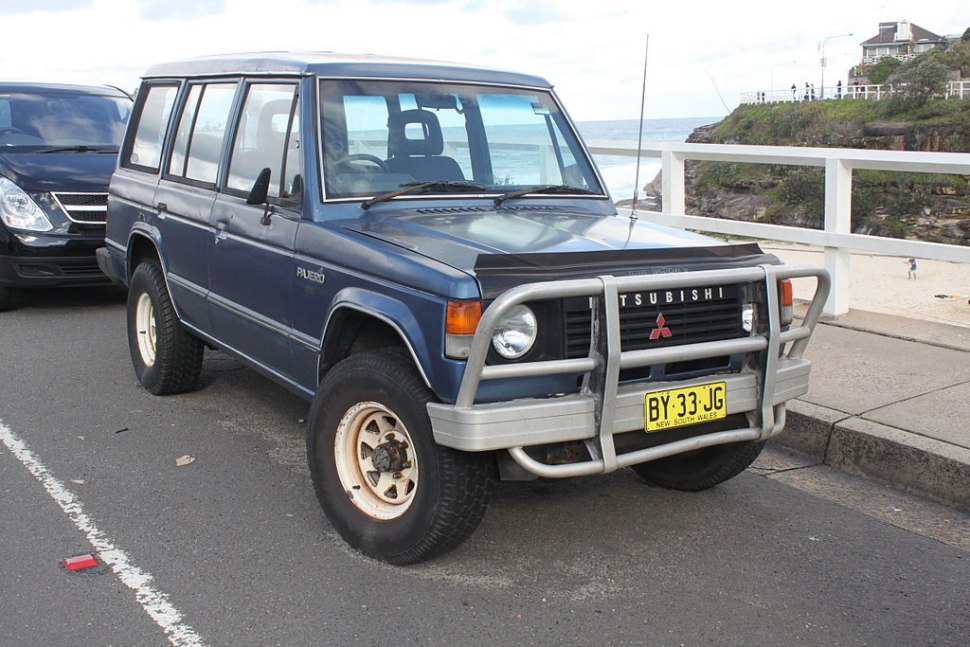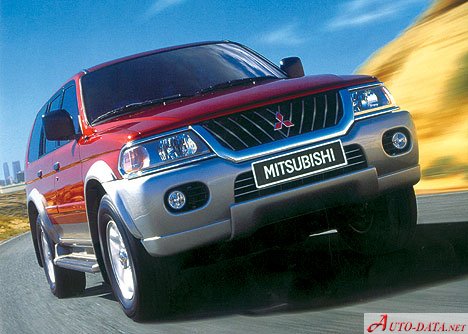
The Mitsubishi Pajero Sport I (K90) 3.0 i V6 24V (177 Hp) Automatic represents a significant offering from the Japanese automaker in the burgeoning SUV segment of the late 1990s and early 2000s. Launched in 1998 and produced until 2008, this first-generation Pajero Sport, known as the Montero Sport in North America, Challenger in Australia, and Shogun Sport in the UK, carved out a niche as a robust, body-on-frame off-road vehicle designed to balance daily utility with genuine all-terrain capability. Positioned below the larger, more luxurious Pajero/Montero, the Mitsubishi Pajero Sport I (K90) 3.0 i V6 24V (177 Hp) Automatic provided a more accessible entry into Mitsubishi’s SUV lineup, appealing to families and adventurers alike who sought reliability and durability. Its long production run underscores its fundamental soundness and enduring appeal in various global markets, embodying a blend of practicality and rugged performance that characterized many vehicles of its era.
Engineering and Performance of the Mitsubishi Pajero Sport I (K90)
At the heart of the Mitsubishi Pajero Sport I (K90) 3.0 i V6 24V (177 Hp) Automatic lies a naturally aspirated 3.0-liter V6 engine, a powertrain choice indicative of the era’s preference for smooth power delivery and proven reliability. This specific variant, designated with 24 valves, produced a respectable 177 horsepower at 5000 revolutions per minute (rpm), making it a capable performer for both on-road cruising and demanding off-road excursions. The engine’s displacement of 2972 cubic centimeters, or approximately 181.36 cubic inches, was achieved through a cylinder bore of 91.1 mm (3.59 inches) and a piston stroke of 76 mm (2.99 inches), configured in a V-engine layout. This design, coupled with a compression ratio of 9:1 and a multi-port manifold injection fuel system, ensured efficient combustion and a broad power band.
Torque output for this V6 engine stood at 255 Newton-meters (Nm) at 4500 rpm, which translates to approximately 188.08 pound-feet (lb-ft). This generous torque figure, available at a relatively accessible engine speed, was crucial for the Pajero Sport’s intended use, providing ample pulling power for towing and climbing steep grades. Power was delivered to an all-wheel-drive (4×4) system via a conventional 4-speed automatic transmission, a configuration chosen for its durability and ease of use in diverse driving conditions. While modern transmissions boast more gears, the 4-speed automatic of the K90 generation was well-suited to the engine’s characteristics, offering predictable shifts and robust performance.
In terms of raw performance, the Pajero Sport I (K90) 3.0 i V6 24V was capable of accelerating from 0 to 60 miles per hour in an estimated 13.7 seconds, with 0 to 100 kilometers per hour taking 14.4 seconds. Its maximum speed was approximately 108.74 mph (175 km/h). These figures, while not indicative of a sports car, were competitive for a mid-sized, body-on-frame SUV of its time, reflecting its focus on utility and ruggedness over outright speed. The vehicle’s weight-to-power ratio of 11 kg/Hp (or 91.2 Hp per tonne) and a weight-to-torque ratio of 7.6 kg/Nm (or 131.4 Nm per tonne) further illustrate its balanced engineering for its intended purpose.
Fuel economy, a common consideration for SUVs, presented typical figures for a V6-powered, all-wheel-drive vehicle of its era. In urban driving conditions, the Pajero Sport consumed approximately 16.3 liters per 100 kilometers, equating to about 14.4 US miles per gallon. On the extra-urban cycle, efficiency improved to 10.3 liters per 100 kilometers, or roughly 22.8 US mpg. These figures, while modest by today’s standards, were par for the course for a robust, gasoline-fueled SUV designed for both pavement and primitive trails.
Design, Features, and Capability
The Mitsubishi Pajero Sport I (K90) adopted a classic off-road vehicle body type, characterized by its sturdy, five-door, five-seat configuration. Its design ethos prioritized functionality and durability, presenting a somewhat boxy, yet purposeful, aesthetic that resonated with buyers seeking a dependable and spacious SUV. With an overall length of 4610 mm (181.5 inches), a width of 1775 mm (69.88 inches), and a height of 1735 mm (68.31 inches), the Pajero Sport offered a commanding presence on the road and ample interior space. The wheelbase, measuring 2725 mm (107.28 inches), contributed to both stable on-road handling and effective off-road articulation.
Inside, the five-seat cabin provided comfortable accommodation for occupants, while the cargo area was remarkably versatile. The trunk (boot) space ranged from a minimum of 500 liters (17.66 cubic feet) with all seats in place, expanding significantly to a maximum of 1720 liters (60.74 cubic feet) when the rear seats were folded, making it highly practical for hauling luggage, sports equipment, or supplies for extended trips. This adaptability was a key selling point for families and adventurers.
Underneath its robust exterior, the Pajero Sport I (K90) featured a capable drivetrain and suspension setup optimized for varied terrain. The all-wheel-drive (4×4) system was fundamental to its off-road credentials, providing enhanced traction and control in challenging conditions. The front suspension utilized a double wishbone design, known for its ability to absorb impacts and maintain tire contact on uneven surfaces, contributing to both ride comfort and handling precision. At the rear, coil springs were employed, offering a good balance between load-carrying capacity and suspension compliance.
Braking performance was handled by ventilated discs at the front and disc brakes at the rear, a configuration offering reliable stopping power