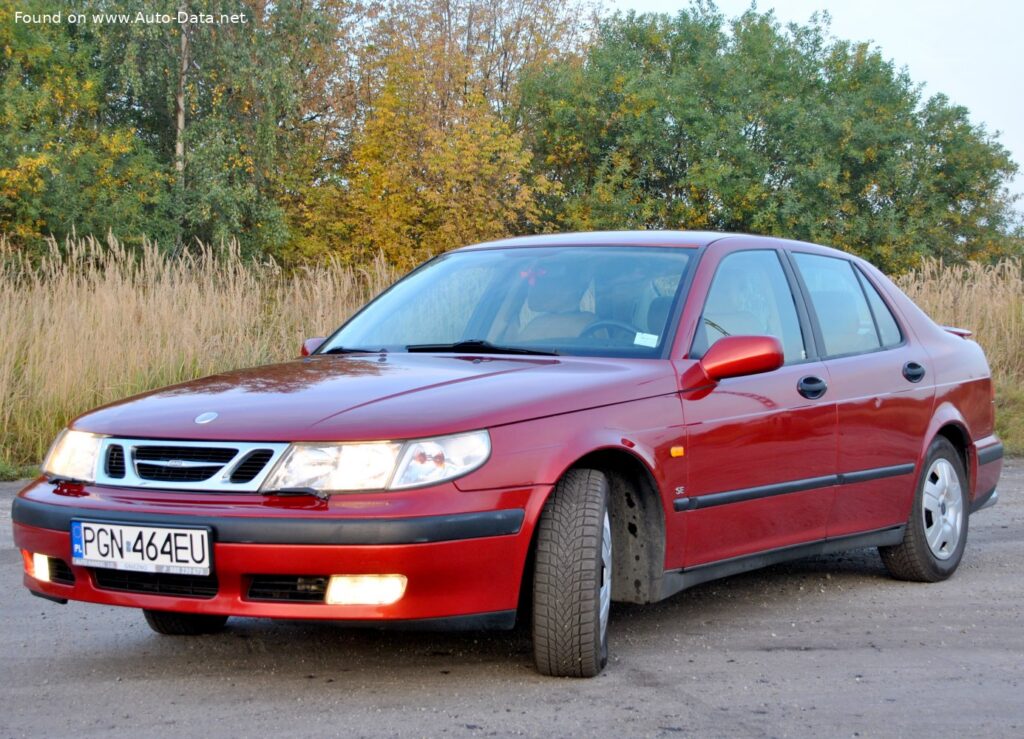
The Saab 9-5, particularly the {original_title} variant from the facelifted 2001 generation, represented a distinctive offering in the premium mid-size sedan segment during its production run from 2002 to 2005. Manufactured by the iconic Swedish automaker, Saab, the 9-5 was renowned for its unique blend of Scandinavian design, advanced safety features, and a driving experience that prioritized comfort and intelligent ergonomics. While the 9-5 was available with various gasoline engines globally, the 2.2 TDi (120 Hp) Automatic model, specifically, was a key player in the European market, catering to a demand for fuel-efficient yet capable executive sedans. This particular diesel variant highlighted Saab’s commitment to providing competitive powertrain options, emphasizing practicality and lower running costs without compromising the brand’s core values of innovation and safety. For consumers seeking an alternative to the more conventional German or Japanese luxury vehicles, the Saab 9-5 offered a unique proposition, embodying a quirky yet sophisticated charm that set it apart.
Engine and Performance: The {original_title}
At the heart of the {original_title} lies a robust 2.2-liter (2172 cm3 or 132.54 cu. in.) D223L inline-four diesel engine. This powertrain was engineered with a common rail fuel injection system and augmented by a turbocharger with an intercooler, technologies designed to maximize both power delivery and fuel efficiency. The engine produced a respectable 120 horsepower at 4300 rpm, which for its era and displacement, provided adequate motivation for the mid-size sedan. More significantly, the engine generated a substantial 206.52 lb.-ft. of torque at a low 1500 rpm. This broad torque band was instrumental in providing strong low-end acceleration and flexible everyday driving characteristics, a hallmark of well-engineered diesel engines.
Power was delivered to the front wheels via a 4-speed automatic transmission, a common setup for many vehicles in this segment at the time. While not the most advanced transmission in terms of gear count by today’s standards, it was tuned to provide smooth shifts and a comfortable driving experience, aligning with the 9-5’s executive cruiser persona. The vehicle’s performance figures reflect its focus on comfortable touring rather than outright sportiness. It achieved a 0-60 mph acceleration in a calculated 12.4 seconds, with a maximum speed of 121.17 mph. These numbers positioned the 2.2 TDi as a competent performer for highway cruising and daily commuting within its European context.
Fuel economy was a significant selling point for this diesel variant, especially in markets where diesel fuel was prevalent and favored for its efficiency. The {original_title} boasted impressive fuel consumption figures: an urban economy of 23.8 US mpg, an extra-urban (highway) economy of 39.9 US mpg, and a combined cycle rating of 35.1 US mpg. These figures were excellent for a sedan of its size and weight (kerb weight of 3527.4 lbs.) in the early 2000s, making it an economically sensible choice for long-distance drivers and those conscious of running costs. The powertrain architecture, with its front, transverse engine layout and front-wheel drive, contributed to a balanced weight distribution and predictable handling, further enhancing its suitability as a comfortable and efficient family or executive vehicle.
Design and Features: Scandinavian Sophistication
The Saab 9-5 (facelift 2001) retained the brand’s distinctive design language, characterized by clean lines, a purposeful stance, and an aerodynamic profile influenced by Saab’s aviation heritage. The facelift introduced subtle enhancements to the front fascia, including revised headlights, grille, and bumper, giving it a fresher, more contemporary look while preserving its unique identity. As a 4-door sedan, the 9-5 offered seating for five, designed with a focus on occupant comfort and safety, which were paramount to Saab’s philosophy.
Inside, the cabin of the 9-5 was a testament to ergonomic design and thoughtful functionality. Saab interiors were known for their logical layout and high-quality materials, and the 9-5 was no exception. Features like the “Night Panel” function, which allowed drivers to dim all non-essential instrument lights at night to reduce distraction, underscored Saab’s innovative approach to driver well-being. The seats were designed for long-distance comfort, offering excellent support. Practicality was also a strong suit, with a generous trunk space of 17.66 cu. ft., making it capable of accommodating significant luggage for family trips or business travel.
Safety and Chassis Engineering
Saab’s unwavering commitment to safety was evident throughout the 9-5. While detailed specific safety features beyond ABS (Anti-lock Braking System) are not listed in the provided data, Saab vehicles of this era were typically equipped with a comprehensive suite of passive and active safety systems. This included a robust body structure engineered to withstand significant impacts, multiple airbags, and Saab’s innovative active head restraints (SAHR), designed to reduce the risk of whiplash injuries in rear-end collisions. The inclusion of ABS as standard further enhanced braking control in emergency situations.
The chassis of the 9-5 was designed to provide a comfortable and stable ride. It featured a spring strut suspension system at both the front and rear, a setup that offered a good balance between ride compliance and handling stability. The steering system utilized a hydraulic rack and pinion setup, providing direct feedback to the driver, which was characteristic of cars from this period. Braking performance was assured by ventilated discs at the front and solid discs at the rear, a capable combination for stopping a vehicle of its size. Standard tire size was 205/65 R15 on 15-inch wheel rims, providing a comfortable ride and adequate grip for everyday driving conditions. Overall, the {original_title} combined a distinctive design with a strong emphasis on occupant safety, comfort, and practical utility, making it a compelling choice in its market segment.
Technical Specifications
| Brand | Saab |
| Model | 9-5 |
| Generation | 9-5 (facelift 2001) |
| Type (Engine) | 2.2 TDi (120 Hp) Automatic |
| Start of production | 2002 year |
| End of production | 2005 year |
| Powertrain Architecture | Internal Combustion engine |
| Body type | Sedan |
| Seats | 5 |
| Doors | 4 |
| Fuel consumption (economy) – urban | 9.9 l/100 km (23.8 US mpg) |
| Fuel consumption (economy) – extra urban | 5.9 l/100 km (39.9 US mpg) |
| Fuel consumption (economy) – combined | 6.7 l/100 km (35.1 US mpg) |
| Fuel Type | Diesel |
| Acceleration 0 – 60 mph | 12.4 sec |
| Maximum speed | 195 km/h (121.17 mph) |
| Weight-to-power ratio | 13.3 kg/Hp (75 Hp/tonne) |
| Weight-to-torque ratio | 5.7 kg/Nm (175 Nm/tonne) |
| Power | 120 Hp @ 4300 rpm |
| Power per liter | 55.2 Hp/l |
| Torque | 280 Nm @ 1500 rpm (206.52 lb.-ft. @ 1500 rpm) |
| Engine layout | Front, Transverse |
| Engine Model/Code | D223L |
| Engine displacement | 2172 cm3 (2.2 liters / 132.54 cu. in.) |
| Number of cylinders | 4 |
| Engine configuration | Inline |
| Cylinder Bore | 84 mm (3.31 in.) |
| Piston Stroke | 98 mm (3.86 in.) |
| Compression ratio | 19.5:1 |
| Number of valves per cylinder | 4 |
| Fuel injection system | Diesel Commonrail |
| Engine aspiration | Turbocharger, Intercooler |
| Valvetrain | OHC |
| Engine oil capacity | 5.5 l (5.81 US qt) |
| Coolant | 7.2 l (7.61 US qt) |
| Kerb Weight | 1600 kg (3527.4 lbs.) |
| Max. weight | 2090 kg (4607.66 lbs.) |
| Max load | 490 kg (1080.27 lbs.) |
| Trunk (boot) space – minimum | 500 l (17.66 cu. ft.) |
| Fuel tank capacity | 70 l (18.49 US gal) |
| Length | 4810 mm (189.37 in.) |
| Width | 1790 mm (70.47 in.) |
| Height | 1450 mm (57.09 in.) |
| Wheelbase | 2705 mm (106.5 in.) |
| Front track | 1520 mm (59.84 in.) |
| Rear (Back) track | 1520 mm (59.84 in.) |
| Drivetrain Architecture | The Internal combustion engine (ICE) drives the front wheels of the vehicle. |
| Drive wheel | Front wheel drive |
| Number of gears and type of gearbox | 4 gears, automatic transmission |
| Front suspension | Spring Strut |
| Rear suspension | Spring Strut |
| Front brakes | Ventilated discs |
| Rear brakes | Disc |
| Assisting systems | ABS (Anti-lock braking system) |
| Steering type | Steering rack and pinion |
| Power steering | Hydraulic Steering |
| Tires size | 205/65 R15 |
| Wheel rims size | 15 |