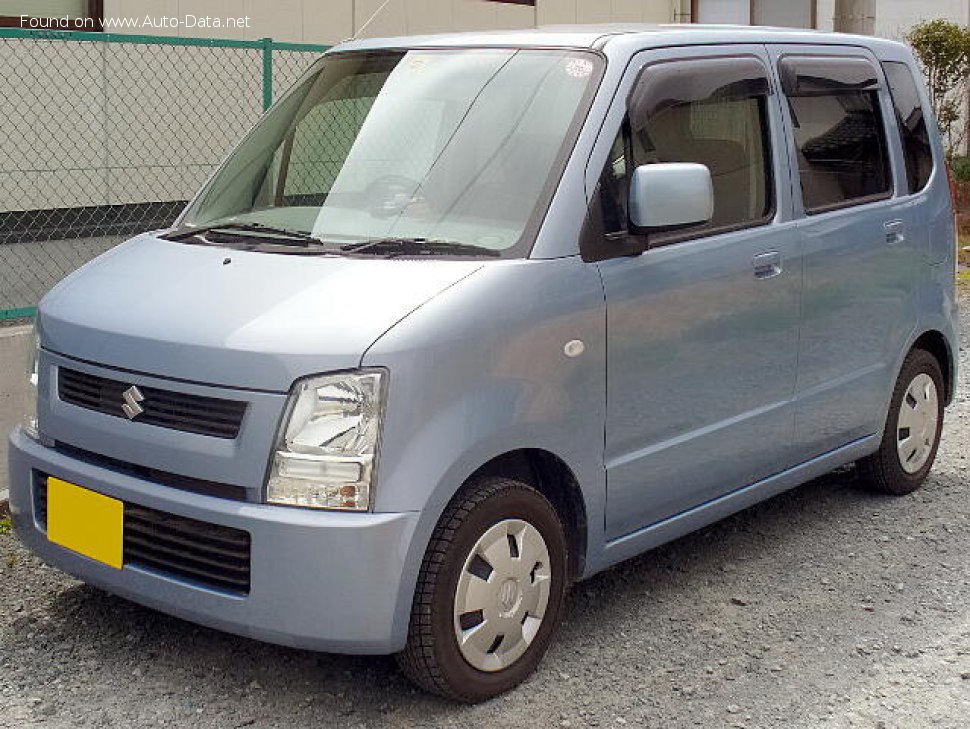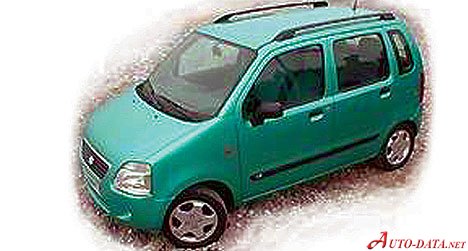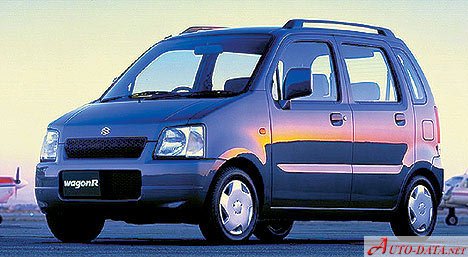
The Suzuki Wagon R+ II 1.3 i 16V (93 Hp) 4WD represents a significant offering in the compact minivan segment, primarily targeting European and Asian markets where space efficiency, urban maneuverability, and modest running costs are paramount. Launched in 2004 as the second generation of the Wagon R+, this model built upon the success of its predecessor by offering an enhanced package of practicality, improved performance, and a surprising all-wheel-drive capability. Unlike many vehicles of its size, the Wagon R+ II distinguished itself with a taller, boxier silhouette, maximizing interior volume within a minimal footprint. Produced until 2008, this particular variant, equipped with the 1.3-liter, 16-valve engine and a 4WD system, aimed to provide a versatile and reliable solution for families and individuals navigating varied driving conditions, from congested city streets to light rural tracks.
Engineering and Performance of the Suzuki Wagon R+ II
At the heart of the Suzuki Wagon R+ II 1.3 i 16V (93 Hp) 4WD lies the M13A engine, a robust and well-regarded 1.3-liter inline-four gasoline unit. This naturally aspirated powerplant features a Double Overhead Camshaft (DOHC) valvetrain with four valves per cylinder, a configuration that enhances breathing efficiency and allows for a more responsive power delivery. With a displacement of 1328 cubic centimeters (81.04 cu. in.), the engine produces a respectable 93 horsepower at 6000 rpm, delivering a power-per-liter ratio of 70 Hp/l. Torque output stands at 87.03 lb.-ft. (118 Nm) at 4100 rpm, providing adequate pulling power for its intended use and vehicle class.
The M13A engine is positioned transversely at the front of the vehicle, optimizing space utilization within the compact engine bay. Fuel is supplied via a multi-port manifold injection system, ensuring precise fuel delivery and contributing to the engine’s efficiency. A compression ratio of 9.5:1 is employed, balancing performance with the ability to run on standard gasoline fuel. The engine’s lubrication system requires 4.1 liters (4.33 US qt) of engine oil, while the cooling system holds 5.6 liters (5.92 US qt) of coolant, indicating a well-engineered thermal management setup for consistent performance.
Performance figures for the Suzuki Wagon R+ II 1.3 i 16V (93 Hp) 4WD underscore its practical, rather than outright sporty, orientation. Acceleration from 0 to 60 mph is achieved in a measured 12.6 seconds, with a 0-100 km/h sprint taking 13.3 seconds. The vehicle’s top speed is rated at 96.31 mph (155 km/h). These figures are commendable for a compact, all-wheel-drive minivan designed primarily for urban and suburban commuting, where quick bursts of speed are less critical than overall drivability and fuel economy. The power-to-weight ratio of 10.9 kg/Hp (92.1 Hp/tonne) and a torque-to-weight ratio of 8.6 kg/Nm (116.8 Nm/tonne) further highlight its balanced engineering for utility.
Fuel efficiency was a key selling point for the Wagon R+ II. In urban driving conditions, the vehicle achieves an economy of 27.4 US mpg (8.6 l/100 km). On extra-urban cycles, this improves significantly to 41.3 US mpg (5.7 l/100 km), demonstrating its capability for economical longer journeys. The 41-liter (10.83 US gal) fuel tank capacity provides a reasonable cruising range between fill-ups. A key distinguishing feature of this particular variant is its full-time All-Wheel Drive (4×4) system, paired with a smooth-shifting 5-speed manual transmission. This drivetrain configuration offers enhanced traction and stability, particularly beneficial in adverse weather conditions or on unpaved roads, a significant advantage over its front-wheel-drive counterparts and a rarity in its size class, making it a highly versatile choice for European and Asian consumers.
Design and Features of the Suzuki Wagon R+ II
The design philosophy of the Suzuki Wagon R+ II is unequivocally centered on maximizing interior space and practicality within a compact exterior. Classified as a minivan, or often referred to as a “tall wagon” or “microvan” in various markets, its distinctive boxy silhouette is a direct consequence of this design imperative. Measuring a modest 137.8 inches (3500 mm) in length, 62.99 inches (1600 mm) in width, and 65.35 inches (1660 mm) in height, the Wagon R+ II is ideally suited for navigating congested city environments and tight parking spaces, a common challenge in its primary markets.
Despite its compact dimensions, the vehicle’s tall stature and efficient packaging translate into a surprisingly spacious interior. It offers seating for five occupants across two rows, with five doors providing convenient access for passengers and cargo. The generous headroom, a direct benefit of its elevated roofline, contributes significantly to passenger comfort, especially on longer journeys. The high seating position also affords the driver an excellent command view of the road, enhancing safety and ease of driving.
Cargo versatility is a hallmark of the Wagon R+ II. The trunk space, even with all seats in use, provides a respectable 7.7 cubic feet (218 liters) for luggage or groceries. When the rear seats are folded down, the cargo capacity expands dramatically to an impressive 44.14 cubic feet (1250 liters), transforming the vehicle into a highly capable hauler for larger items, making it ideal for small businesses or families requiring flexible load-carrying options. This adaptability underscores its utility-focused design.
The vehicle’s chassis and suspension components are engineered for a balance of comfort and predictable handling. It features a Spring Strut front suspension and a Coil spring rear suspension, a setup commonly found in compact vehicles of its era, designed to absorb road imperfections effectively. The steering system employs a rack and pinion type, offering direct and responsive feedback for urban driving. Braking performance is handled by ventilated discs at the front and solid discs at the rear, complemented by an Anti-lock Braking System (ABS) for enhanced safety during emergency stops. The inclusion of ABS was an important safety feature for vehicles in this segment during the mid-2000s, providing better control under hard braking. The Wagon R+ II rides on 14-inch wheels fitted with 165/60 R14 tires, a sensible choice that prioritizes ride comfort and cost-effective tire replacement over aggressive performance, aligning with its role as a practical, everyday vehicle.
Technical Specifications: Suzuki Wagon R+ II 1.3 i 16V (93 Hp) 4WD
| Brand | Suzuki |
| Model | Wagon R+ |
| Generation | Wagon R+ II |
| Type (Engine) | 1.3 i 16V (93 Hp) 4WD |
| Start of production | 2004 year |
| End of production | 2008 year |
| Powertrain Architecture | Internal Combustion engine |
| Body type | Minivan |
| Seats | 5 |
| Doors | 5 |
| Fuel consumption (economy) – urban | 8.6 l/100 km (27.4 US mpg) |
| Fuel consumption (economy) – extra urban | 5.7 l/100 km (41.3 US mpg) |
| Fuel Type | Petrol (Gasoline) |
| Acceleration 0 – 60 mph | 12.6 sec |
| Acceleration 0 – 100 km/h | 13.3 sec |
| Maximum speed | 155 km/h (96.31 mph) |
| Weight-to-power ratio | 10.9 kg/Hp (92.1 Hp/tonne) |
| Weight-to-torque ratio | 8.6 kg/Nm (116.8 Nm/tonne) |
| Power | 93 Hp @ 6000 rpm |
| Power per litre | 70 Hp/l |
| Torque | 118 Nm @ 4100 rpm (87.03 lb.-ft. @ 4100 rpm) |
| Engine layout | Front, Transverse |
| Engine Model/Code | M13A |
| Engine displacement | 1328 cm3 (81.04 cu. in.) |
| Number of cylinders | 4 |
| Engine configuration | Inline |
| Cylinder Bore | 78 mm (3.07 in.) |
| Piston Stroke | 69.5 mm (2.74 in.) |
| Compression ratio | 9.5:1 |
| Number of valves per cylinder | 4 |
| Fuel injection system | Multi-port manifold injection |
| Engine aspiration | Naturally aspirated engine |
| Valvetrain | DOHC |
| Engine oil capacity | 4.1 l (4.33 US qt) |
| Coolant | 5.6 l (5.92 US qt) |
| Kerb Weight | 1010 kg (2226.67 lbs.) |
| Max. weight | 1470 kg (3240.8 lbs.) |
| Max load | 460 kg (1014.13 lbs.) |
| Trunk (boot) space – minimum | 218 l (7.7 cu. ft.) |
| Trunk (boot) space – maximum | 1250 l (44.14 cu. ft.) |
| Fuel tank capacity | 41 l (10.83 US gal) |
| Length | 3500 mm (137.8 in.) |
| Width | 1600 mm (62.99 in.) |
| Height | 1660 mm (65.35 in.) |
| Wheelbase | 2360 mm (92.91 in.) |
| Front track | 1420 mm (55.91 in.) |
| Rear (Back) track | 1385 mm (54.53 in.) |
| Drive wheel | All wheel drive (4×4) |
| Number of gears and type of gearbox | 5 gears, manual transmission |
| Front suspension | Spring Strut |
| Rear suspension | Coil spring |
| Front brakes | Ventilated discs |
| Rear brakes | Disc |
| Assisting systems | ABS (Anti-lock braking system) |
| Steering type | Steering rack and pinion |
| Tires size | 165/60 R14 |
| Wheel rims size | 14 |