The Mitsubishi Pajero Sport III 2.4 DI-D (181 Hp) 4WD Automatic represents a significant evolution in the brand’s mid-size SUV lineup, particularly for markets outside North America. Launched in 2016 and produced until 2019, this third-generation model, known in various regions as the Montero Sport, Shogun Sport, or Challenger, cemented Mitsubishi’s reputation for building robust, capable, and versatile vehicles. Designed primarily for the Asian, Australian, Middle Eastern, and European markets, where demand for rugged, body-on-frame SUVs with substantial off-road prowess remains strong, the Mitsubishi Pajero Sport III 2.4 DI-D (181 Hp) 4WD Automatic successfully blended traditional utility with modern styling and advanced features. It carved out a niche as a family-friendly seven-seater SUV that could confidently tackle both urban commutes and challenging off-road expeditions, serving as a more refined, yet equally capable, alternative to its pickup truck sibling, the L200/Triton, with which it shares its underlying platform.
Engineering and Performance: The Mitsubishi Pajero Sport III Powertrain
At the heart of the Mitsubishi Pajero Sport III 2.4 DI-D (181 Hp) 4WD Automatic lies its highly efficient and robust 2.4-liter DI-D (Direct Injection Diesel) engine. Codenamed 4N15, this inline four-cylinder powerplant is a testament to Mitsubishi’s expertise in diesel engine technology, delivering a compelling blend of power, torque, and fuel economy. With a displacement of 2442 cubic centimeters (approximately 149.02 cubic inches), the engine is equipped with a sophisticated Commonrail fuel injection system and a turbocharger with an intercooler, ensuring optimal air-fuel mixture and enhanced performance across the rev range. This configuration allows the engine to produce a respectable 181 horsepower at 3500 rpm, translating to a power-per-liter output of 74.1 Hp/l, a commendable figure for a diesel SUV of its class. More critically for an SUV designed for hauling and off-road excursions, the engine generates a formidable 317.15 lb.-ft. of torque, available at a relatively low 2500 rpm. This broad torque band is crucial for effortless acceleration, confident overtaking, and superior towing capabilities, making the Mitsubishi Pajero Sport III a highly practical vehicle for diverse applications.
The powertrain is further optimized by an advanced 8-speed automatic transmission, a significant upgrade that enhances both driving refinement and efficiency. This gearbox ensures smooth and timely gear changes, maximizing the engine’s power delivery while contributing to improved fuel economy. The Mitsubishi Pajero Sport III’s formidable performance is not limited to its engine output; its all-wheel-drive (4×4) architecture is a cornerstone of its off-road credibility. While specific details on the 4WD system (e.g., Super Select II) are not provided in the raw data, the inclusion of 4WD confirms its capability. The vehicle’s performance specifications indicate a top speed of 111.85 mph (180 km/h), demonstrating its ability to maintain highway speeds with ease. Furthermore, the engine’s compliance with Euro 2, Euro 4, and Euro 5 emission standards highlights its adaptability to varying global environmental regulations during its production run, underscoring Mitsubishi’s commitment to cleaner diesel technology. The weight-to-power ratio of 11.3 kg/Hp (88.7 Hp/tonne) and a weight-to-torque ratio of 4.7 kg/Nm (210.8 Nm/tonne) further illustrate the efficient balance between its mass and the power available to propel it, ensuring a responsive and capable driving experience.
Design and Features of the Mitsubishi Pajero Sport III
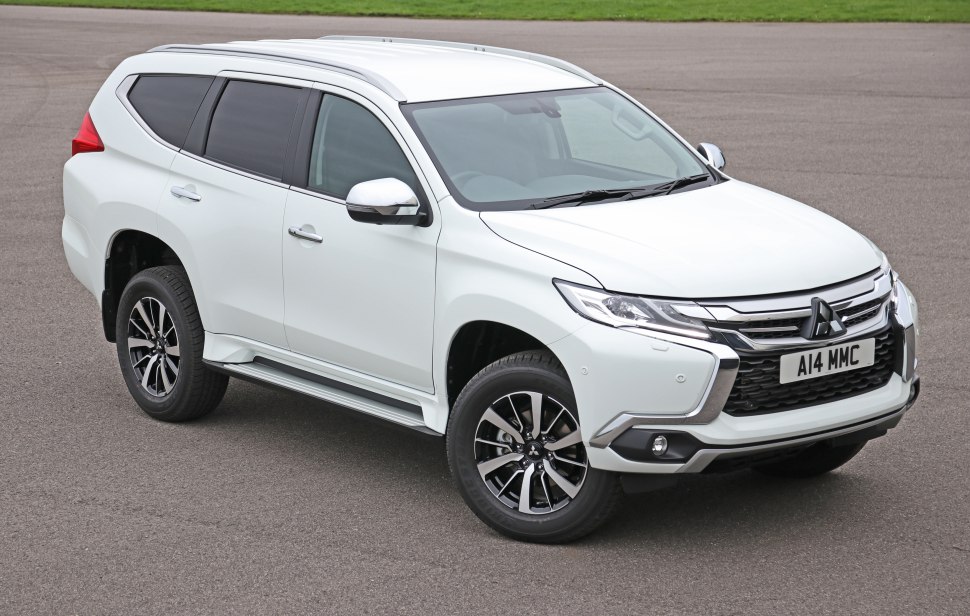
The third-generation Mitsubishi Pajero Sport, available from 2016 to 2019, presented a striking departure from its predecessors in terms of design, adopting Mitsubishi’s contemporary “Dynamic Shield” front fascia. This design language bestowed upon the SUV a bold, assertive, and modern aesthetic, characterized by distinctive chrome accents, slim headlights, and a prominent grille. As a five-door SUV, the Mitsubishi Pajero Sport III offers a commanding road presence, measuring 188.39 inches in length, 71.46 inches in width, and between 70.87 to 71.06 inches in height. These dimensions contribute to a spacious interior, capable of accommodating up to seven occupants across three rows, making it an ideal choice for larger families or those requiring flexible cargo and passenger configurations. The generous 110.24-inch wheelbase provides stability and contributes to a comfortable ride, while the substantial 8.58-inch ground clearance, coupled with impressive approach (30.0°), departure (24.2°), and ramp-over (23.1°) angles, underlines its inherent off-road capability, distinguishing it from many car-based crossovers.
Inside, the Mitsubishi Pajero Sport III aimed to elevate the driving and passenger experience with a focus on comfort, convenience, and safety. While the raw data doesn’t detail specific interior amenities, typical features for this era and segment would include modern infotainment systems, automatic climate control, and higher-quality materials than previous generations, reflecting a move towards a more premium feel. Practicality is a key aspect, with a fuel tank capacity of 17.96 US gallons (68 liters) providing a considerable range for long journeys. The kerb weight, ranging from 4497.43 to 4519.48 pounds, indicates a sturdy, robust construction, while a maximum gross weight of 5974.53 pounds highlights its payload capacity, further reinforcing its utility. Safety was a significant consideration, with the inclusion of an Anti-lock Braking System (ABS) as a standard assisting system. The vehicle’s suspension system features a double wishbone setup at the front and an independent multi-link suspension at the rear, a sophisticated arrangement that balances on-road comfort with off-road articulation. Braking performance is handled by ventilated discs on both the front and rear axles, ensuring strong and consistent stopping power. The adoption of electric power steering and a rack-and-pinion steering type contributes to lighter steering effort at low speeds and better feedback at higher speeds, enhancing maneuverability and driving dynamics. The vehicle rides on 265/60 R18 tires mounted on 7.5J x 18 wheel rims, providing a good balance between on-road grip and off-road durability.
Technical Specifications: Mitsubishi Pajero Sport III 2.4 DI-D (181 Hp) 4WD Automatic
Below is a comprehensive table detailing the technical specifications of the Mitsubishi Pajero Sport III 2.4 DI-D (181 Hp) 4WD Automatic, providing a clear overview of its engineering and design parameters.