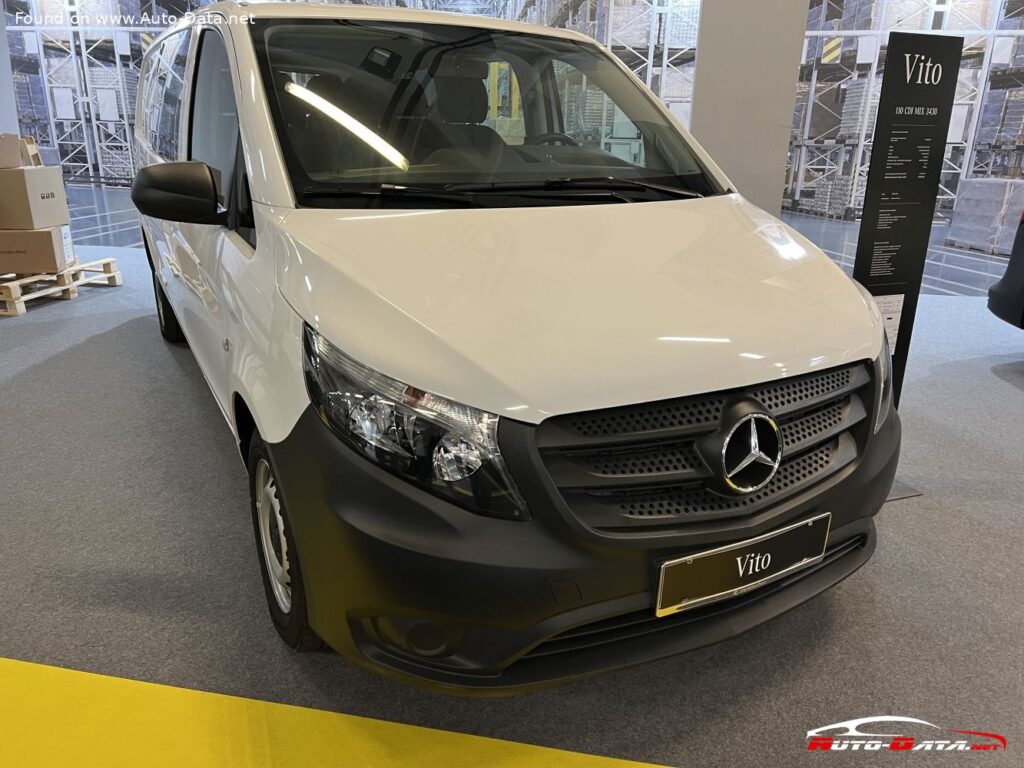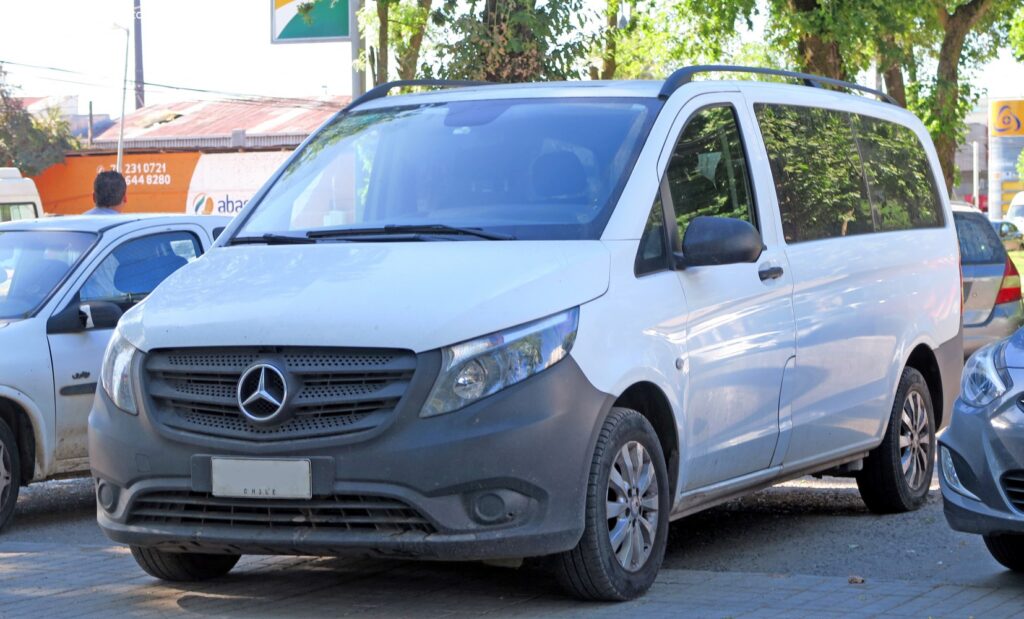
The Mercedes-Benz Vito, a prominent name in the commercial vehicle segment globally, saw its third generation, the W447, introduced in 2014. This particular variant, the Mercedes-Benz Vito (W447) Tourer Long 116 CDI (163 Hp) Automatic, represents the passenger-focused iteration of the versatile platform, designed to offer a blend of comfort, utility, and Mercedes-Benz’s renowned engineering prowess. Primarily targeting the European and international markets where such multi-purpose vehicles are highly valued for business and family transportation, the W447 Tourer Long quickly established itself as a robust and efficient solution for moving up to nine occupants. Produced from October 2014 to February 2019, this model was a significant upgrade, embodying modern diesel technology, enhanced safety features, and a more refined driving experience compared to its predecessors. While not a common sight on American roads in its passenger van configuration, its underpinnings and technological advancements reflect the global standards of the automotive industry, applying principles of efficiency and durability that resonate across all markets.
Engineering and Performance of the Mercedes-Benz Vito (W447) Tourer Long 116 CDI (163 Hp) Automatic
At the heart of the Mercedes-Benz Vito (W447) Tourer Long 116 CDI (163 Hp) Automatic lies a meticulously engineered powertrain designed for both robust performance and impressive fuel efficiency. This model is equipped with Mercedes-Benz’s well-regarded OM651 DE22LA engine, an inline four-cylinder diesel unit positioned longitudinally at the front. With an engine displacement of 2143 cubic centimeters, or approximately 2.1 liters (130.77 cu. in.), this powerplant generates a formidable 163 horsepower at 3800 revolutions per minute. The power output per liter stands at a respectable 76.1 Hp/l, indicating a highly optimized combustion process for its class.
Torque delivery is a significant highlight of this diesel engine, producing a substantial 380 Newton-meters (280.27 lb.-ft.) across a broad and usable rev range, specifically from 1400 to 2400 rpm. This wide torque band is crucial for a vehicle of this type, ensuring strong acceleration from a standstill, effortless cruising, and ample pulling power, whether fully loaded with passengers or towing a trailer. The engine’s aspiration system features a turbocharger complemented by an intercooler, which significantly enhances power output and efficiency by compressing and cooling the intake air. Fuel delivery is managed by a sophisticated Diesel Commonrail injection system, known for its precision in fuel atomization and combustion, contributing to both performance and reduced emissions. Further supporting its environmental credentials, the engine incorporates a particulate filter and adheres to the stringent Euro 6c emission standard, a key requirement in its primary European market.
Power is channeled to the rear wheels via a sophisticated 7-speed G-TRONIC PLUS automatic transmission. This advanced gearbox is celebrated for its smooth and precise shifts, optimizing power delivery and maximizing fuel economy. The rear-wheel-drive architecture is a classic choice for vans, providing superior traction under heavy loads and a robust platform for commercial use. The vehicle’s weight-to-power ratio is 11.8 kilograms per horsepower (84.9 Hp/tonne), and its weight-to-torque ratio is 5.1 kg/Nm (197.9 Nm/tonne), figures that underscore its capability to handle significant loads relative to its power output. These ratios contribute to a driving experience that feels confident and composed, even when the vehicle is operating near its maximum capacity.
Fuel economy figures for the Vito Tourer Long 116 CDI are commendable for a vehicle of its size and capability. In urban driving conditions, it achieves 6.9 liters per 100 kilometers (34.1 US mpg). On extra-urban cycles, this improves to 6.4 l/100 km (36.8 US mpg). The combined fuel consumption is rated at 6.6 l/100 km (35.6 US mpg), translating to an impressive 15.2 kilometers per liter. With CO2 emissions of 174 g/km, the Vito Tourer demonstrates a strong commitment to environmental responsibility, a critical factor for fleet operators and environmentally conscious buyers in its target markets. The fuel tank capacity of 57 liters (15.06 US gallons) combined with an 11.5-liter (3.04 US gallons) AdBlue tank ensures a practical operating range, reducing the frequency of refueling stops.
Design, Features, and Practicality
The Mercedes-Benz Vito (W447) Tourer Long is designed first and foremost for functionality and passenger comfort, presenting a modern and purposeful aesthetic characteristic of Mercedes-Benz’s commercial vehicle lineup. As a van body type, it features 4 or 5 doors and is configured to accommodate up to 9 seats, making it an ideal choice for shuttle services, large families, or businesses requiring efficient people transport. Its “Long” designation is reflected in its generous dimensions: a length of 5140 millimeters (202.36 inches), a width of 1928 mm (75.91 inches), and a height ranging from 1890 to 1910 mm (74.41 to 75.2 inches), providing ample interior space for both passengers and their luggage.
The exterior design of the W447 Vito Tourer is characterized by clean lines and a functional yet elegant profile, integrating the signature Mercedes-Benz grille and headlights that give it a sophisticated appearance, distinguishing it from more utilitarian commercial vans. The large windows ensure excellent visibility for all occupants, enhancing the overall travel experience. Despite its size, the vehicle boasts a minimum turning circle of 12.9 meters (42.32 feet), which is impressive for a long-wheelbase van and aids in maneuverability in urban environments and tight parking spaces.
Inside, the focus is on practicality and passenger comfort. The flexible seating arrangements allow for various configurations to suit different needs, whether prioritizing maximum passenger capacity or a balance between passengers and cargo. Even with all nine seats in place, the minimum trunk (boot) space is a substantial 990 liters (34.96 cu. ft.), ensuring sufficient room for luggage, groceries, or equipment. When seats are removed or folded, this capacity can be significantly expanded, further highlighting its versatility.
Safety and robustness are integral to the Vito Tourer’s design. The chassis is built to withstand rigorous use, and the suspension system is tuned for a comfortable yet stable ride. The front suspension features an independent McPherson type setup with coil springs and an anti-roll bar, providing responsive handling and absorbing road imperfections effectively. Disc brakes are employed on both the front and rear axles, ensuring strong and consistent stopping power. An Anti-lock Braking System (ABS) is a standard assisting system, enhancing braking control and preventing wheel lock-up during emergency stops. The vehicle’s substantial Kerb Weight, ranging from 1920 to 1947 kg (4232.88 – 4292.4 lbs.), and a maximum permissible weight of 3200 kg (7054.79 lbs.) underline its sturdy construction and load-carrying capability. Furthermore, the Vito Tourer Long is capable of towing a permitted trailer load with brakes (12%) of up to 2000 kg (4409.25 lbs.) and without brakes of 750 kg (1653.47 lbs.), expanding its utility for various applications. The maximum roof load capacity of 150 kg (330.69 lbs.) adds another layer of versatility for transporting specialized equipment or luggage carriers. The choice of tire sizes, 195/65 R16C 100 T or 205/65 R16C 101H, mounted on 6.5J x 16 wheel rims, provides a balance of load capacity, durability, and ride comfort, suitable for both long-distance travel and daily commercial operations.
Technical Specifications
| Brand | Mercedes-Benz |
| Model | Vito |
| Generation | Vito (W447) Tourer Long |
| Type (Engine) | 116 CDI (163 Hp) Automatic |
| Start of production | October, 2014 year |
| End of production | February, 2019 year |
| Powertrain Architecture | Internal Combustion engine |
| Body type | Van |
| Seats | 9 |
| Doors | 4/5 |
| Fuel consumption (economy) – urban | 6.9 l/100 km (34.1 US mpg) |
| Fuel consumption (economy) – extra urban | 6.4 l/100 km (36.8 US mpg) |
| Fuel consumption (economy) – combined | 6.6 l/100 km (35.6 US mpg) |
| CO2 emissions | 174 g/km |
| Fuel Type | Diesel |
| Emission standard | Euro 6c |
| Weight-to-power ratio | 11.8 kg/Hp (84.9 Hp/tonne) |
| Weight-to-torque ratio | 5.1 kg/Nm (197.9 Nm/tonne) |
| Power | 163 Hp @ 3800 rpm. |
| Power per litre | 76.1 Hp/l |
| Torque | 380 Nm @ 1400-2400 rpm. (280.27 lb.-ft.) |
| Engine layout | Front, Longitudinal |
| Engine Model/Code | OM651 DE22LA |
| Engine displacement | 2143 cm3 (2.1 Liters / 130.77 cu. in.) |
| Number of cylinders | 4 |
| Engine configuration | Inline |
| Cylinder Bore | 83 mm (3.27 in.) |
| Piston Stroke | 99 mm (3.9 in.) |
| Compression ratio | 16.2:1 |
| Number of valves per cylinder | 4 |
| Fuel injection system | Diesel Commonrail |
| Engine aspiration | Turbocharger, Intercooler |
| Engine oil capacity | 10.5 l (11.1 US qt) |
| Coolant | 10.4 l (10.99 US qt) |
| Engine systems | Particulate filter |
| Kerb Weight | 1920-1947 kg (4232.88 – 4292.4 lbs.) |
| Max. weight | 3200 kg (7054.79 lbs.) |
| Max load | 1253-1280 kg (2762.39 – 2821.92 lbs.) |
| Trunk (boot) space – minimum | 990 l (34.96 cu. ft.) |
| Fuel tank capacity | 57 l (15.06 US gal) |
| AdBlue tank | 11.5 l (3.04 US gal) |
| Max. roof load | 150 kg (330.69 lbs.) |
| Permitted trailer load with brakes (12%) | 2000 kg (4409.25 lbs.) |
| Permitted trailer load without brakes | 750 kg (1653.47 lbs.) |
| Length | 5140 mm (202.36 in.) |
| Width | 1928 mm (75.91 in.) |
| Height | 1890-1910 mm (74.41 – 75.2 in.) |
| Minimum turning circle (turning diameter) | 12.9 m (42.32 ft.) |
| Drivetrain Architecture | Internal combustion engine drives the rear wheels. |
| Drive wheel | Rear wheel drive |
| Number of gears and type of gearbox | 7 gears, automatic transmission G-TRONIC PLUS |
| Front suspension | Independent, type McPherson with coil spring and anti-roll bar |
| Front brakes | Disc |
| Rear brakes | Disc |
| Assisting systems | ABS (Anti-lock braking system) |
| Tires size | 195/65 R16C 100 T; 205/65 R16C 101H |
| Wheel rims size | 6.5J x 16 |