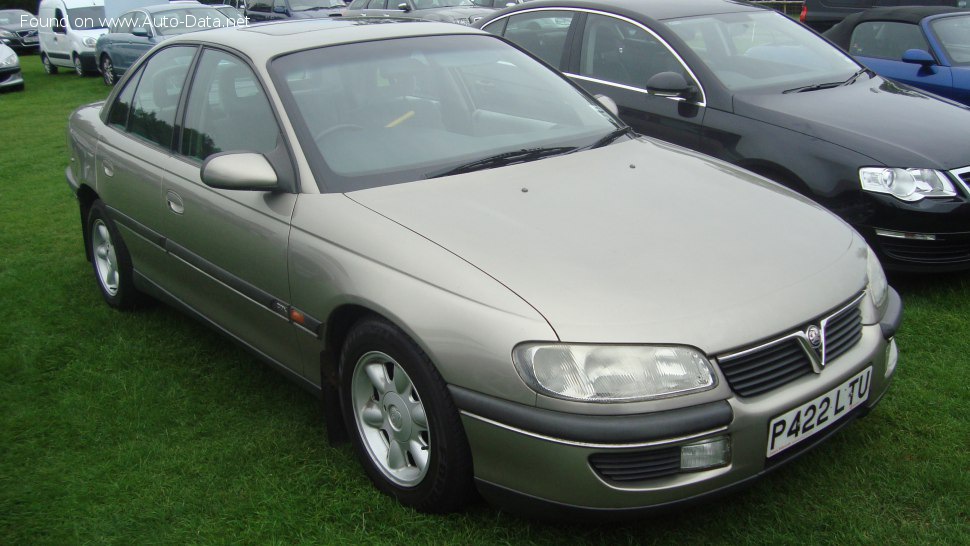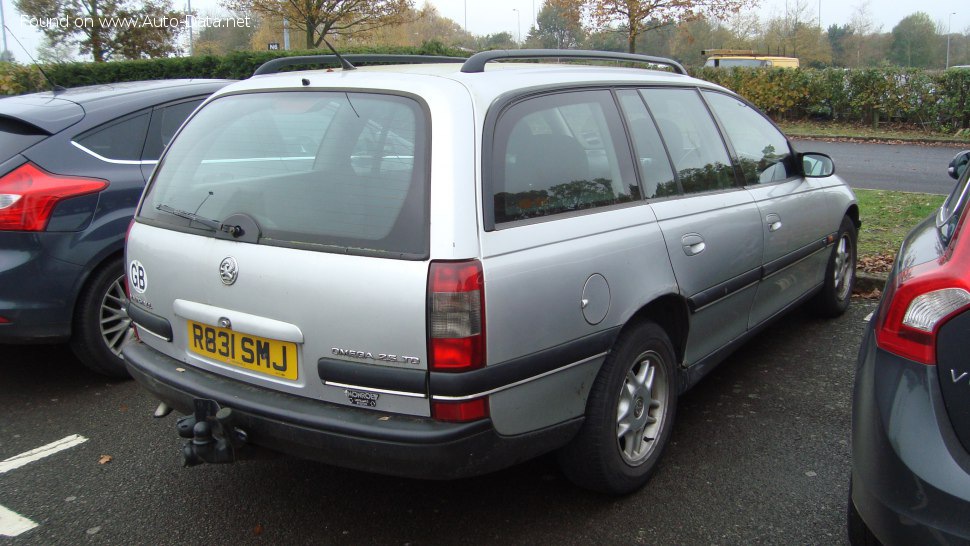
The Vauxhall Omega Estate B 2.2i (144 Hp) represents a significant chapter in the history of Vauxhall, General Motors’ British subsidiary, serving as a robust and capacious executive family car in its primary European market. Produced between 1999 and 2000, this particular iteration of the Omega B generation combined a practical station wagon body style with a refined four-cylinder engine, designed to offer a balance of performance, economy, and load-carrying capability. Unlike many models offered by GM’s other brands, the Omega was not officially sold in the United States, making it a distinctly European proposition. It was known for its comfortable ride, generous interior space, and a traditional rear-wheel-drive powertrain architecture, a characteristic that was becoming less common in its segment during the late 1990s as front-wheel-drive platforms gained popularity for packaging efficiency.
Engine and Performance Characteristics of the Vauxhall Omega Estate B 2.2i (144 Hp)
At the heart of the 1999-2000 Vauxhall Omega Estate B 2.2i (144 Hp) lies its 2.2-liter (2198 cm3 or 134.13 cu. in.) inline-four gasoline engine, designated with the model code Y22XE. This naturally aspirated unit was engineered for smooth power delivery and reasonable fuel efficiency, aligning with the Omega’s role as a long-distance cruiser and family hauler. The engine features a Double Overhead Camshaft (DOHC) valvetrain with four valves per cylinder, a configuration that was standard for achieving optimal breathing and power output in modern internal combustion engines of the era. Fuel delivery was managed by a multi-port manifold injection system, ensuring precise fuel metering and combustion efficiency.
The powertrain architecture is a classic front, longitudinal engine layout, driving the rear wheels. This traditional setup was favored by many for its balanced weight distribution and predictable handling characteristics, particularly when carrying heavy loads or towing. The engine produces a respectable 144 horsepower at 5400 rpm, translating to a power-per-liter output of 65.5 HP/l, which was competitive for a non-turbocharged engine of its size. Torque, a crucial factor for a vehicle designed to carry passengers and cargo, peaks at 151.2 lb.-ft. (205 Nm) at a relatively accessible 4000 rpm. This provides ample pulling power for everyday driving, highway overtaking, and managing the vehicle’s substantial dimensions and potential payload.
Power is channeled to the rear wheels via a 5-speed manual transmission, offering direct driver engagement and allowing for optimal use of the engine’s torque band. The 10:1 compression ratio further contributes to the engine’s efficiency and responsiveness. With an engine oil capacity of 4.76 US quarts and a coolant capacity of 9.93 US quarts, the Omega’s powertrain was designed for reliability and ease of maintenance, reflecting its practical, workhorse nature. While not built for outright performance, the 2.2i engine provided the Vauxhall Omega Estate B with adequate propulsion for its intended purpose, offering a comfortable and confident driving experience across varied conditions prevalent in its European market.
Design and Features of the Vauxhall Omega Estate B
The Vauxhall Omega Estate B, in its 2.2i (144 Hp) guise, embodies a design philosophy centered on practicality, comfort, and understated elegance. As a station wagon (known as an “estate” in European markets), its primary appeal lay in its exceptional versatility and cargo capacity. The vehicle measures 189.72 inches in length, 70.31 inches in width (or 77.17 inches including mirrors), and stands 60.83 inches tall, riding on a substantial 107.48-inch wheelbase. These dimensions contribute to a spacious cabin capable of comfortably seating five occupants across two rows.
The design of the Omega B, while perhaps not revolutionary, was refined and aerodynamic for its time, boasting a drag coefficient (Cd) of 0.32. This figure was quite respectable for a large family wagon, contributing to better fuel economy and reduced wind noise at higher speeds. The exterior aesthetics were characterized by smooth lines and a conservative profile, aiming for broad appeal rather than dramatic flair. The large glass area provided excellent visibility, a key safety and convenience feature for a family vehicle.
Inside, the Omega Estate B was configured for maximum utility. The trunk space is particularly noteworthy, offering a minimum of 19.07 cubic feet (540 liters) with all seats in place. When the rear seats are folded down, this expands dramatically to an impressive 63.57 cubic feet (1800 liters), making it capable of hauling substantial amounts of luggage, sports equipment, or even furniture. The fuel tank capacity of 19.81 US gallons (75 liters) ensured a long cruising range, a valuable attribute for continental European travel.
Suspension-wise, the Omega featured an independent McPherson strut setup with coil springs and an anti-roll bar at the front, complemented by an independent multi-link suspension at the rear. This combination was chosen to provide a supple ride quality, effectively absorbing road imperfections, while also maintaining stability and control, particularly crucial for a vehicle that could carry heavy loads. Braking performance was handled by ventilated discs at the front and solid discs at the rear, augmented by an Anti-lock Braking System (ABS) as a standard or widely available safety feature, enhancing control during emergency braking maneuvers. The vehicle rode on 195/65 R15 tires mounted on 6.5J x 15 wheel rims, a practical setup balancing comfort, grip, and replacement cost. Additional practical features included a permitted roof load of 220.46 pounds (100 kg) and a towbar download limit of 165.35 pounds (75 kg), further underscoring its utility as a versatile family and utility vehicle.
The Vauxhall Omega Estate B 2.2i (144 Hp) Legacy and Market Position
The Vauxhall Omega Estate B 2.2i (144 Hp) occupied a distinct niche in the European automotive landscape, serving as Vauxhall’s flagship executive and large family car. In an era where many manufacturers were transitioning to front-wheel-drive platforms for packaging and cost advantages, the Omega maintained its traditional rear-wheel-drive architecture, appealing to buyers who appreciated its inherent balance, robust feel, and often, its towing capabilities. It was a direct competitor to models like the Ford Scorpio, and, in terms of spaciousness and comfort, offered a compelling alternative to premium German estates from BMW and Mercedes-Benz, often at a more accessible price point.
The Omega B generation, launched in 1994, built upon the success of its predecessor, the Carlton (Opel Rekord in mainland Europe), becoming a staple on British roads. The 2.2i engine, introduced towards the end of the Omega B’s production run (1999-2000), offered a more modern and efficient four-cylinder option compared to the larger V6 engines also available in the range. This made the 2.2i a popular choice for fleet buyers and private customers seeking a blend of performance and lower running costs. Its reputation was built on reliability, spaciousness, and a comfortable, if not overtly sporty, driving experience. The substantial trunk capacity, ranging from 19.07 cubic feet to an expansive 63.57 cubic feet, cemented its status as an ideal vehicle for families, tradespeople, or anyone requiring significant cargo volume.
While the Omega never achieved the same global recognition as some of its German counterparts due to its limited market availability, it carved out a solid reputation in the UK and mainland Europe (where it was sold as the Opel Omega). Its robust construction, conventional mechanicals, and emphasis on passenger comfort and cargo utility made it a dependable choice. The Omega B ultimately ceased production in 2003, marking the end of an era for GM’s large rear-wheel-drive executive sedan and estate in Europe. Today, the Vauxhall Omega Estate B 2.2i (144 Hp) is remembered as a practical, well-engineered, and comfortable workhorse that capably served its market, offering a blend of traditional engineering and contemporary features for its time.
Technical Specifications
| Brand | Vauxhall |
| Model | Omega |
| Generation | Omega Estate B |
| Type (Engine) | 2.2i (144 Hp) |
| Start of production | 1999 year |
| End of production | 2000 year |
| Powertrain Architecture | Internal Combustion engine |
| Body type | Station wagon (estate) |
| Seats | 5 |
| Doors | 5 |
| Fuel Type | Petrol (Gasoline) |
| Power | 144 Hp @ 5400 rpm. |
| Power per liter | 65.5 Hp/l |
| Torque | 151.2 lb.-ft. @ 4000 rpm. (205 Nm) |
| Engine layout | Front, Longitudinal |
| Engine Model/Code | Y22XE |
| Engine displacement | 2.2 l (2198 cm3 / 134.13 cu. in.) |
| Number of cylinders | 4 |
| Engine configuration | Inline |
| Compression ratio | 10:1 |
| Number of valves per cylinder | 4 |
| Fuel injection system | Multi-port manifold injection |
| Engine aspiration | Naturally aspirated engine |
| Valvetrain | DOHC |
| Engine oil capacity | 4.76 US qt (4.5 l) |
| Coolant | 9.93 US qt (9.4 l) |
| Trunk (boot) space – minimum | 19.07 cu. ft. (540 l) |
| Trunk (boot) space – maximum | 63.57 cu. ft. (1800 l) |
| Fuel tank capacity | 19.81 US gal (75 l) |
| Max. roof load | 220.46 lbs. (100 kg) |
| Permitted towbar download | 165.35 lbs. (75 kg) |
| Length | 189.72 in. (4819 mm) |
| Width | 70.31 in. (1786 mm) |
| Width including mirrors | 77.17 in. (1960 mm) |
| Height | 60.83 in. (1545 mm) |
| Wheelbase | 107.48 in. (2730 mm) |
| Front track | 59.61 in. (1514 mm) |
| Rear (Back) track | 60.16 in. (1528 mm) |
| Rear overhang | 46.06 in. (1170 mm) |
| Drag coefficient (Cd) | 0.32 |
| Minimum turning circle (turning diameter) | 33.46 ft. (10.2 m) |
| Drivetrain Architecture | The Internal combustion engine (ICE) drives the rear wheels of the vehicle. |
| Drive wheel | Rear wheel drive |
| Number of gears and type of gearbox | 5 gears, manual transmission |
| Front suspension | Independent, type McPherson with coil spring and anti-roll bar |
| Rear suspension | Independent multi-link suspension |
| Front brakes | Ventilated discs |
| Rear brakes | Disc |
| Assisting systems | ABS (Anti-lock braking system) |
| Tires size | 195/65 R15 |
| Wheel rims size | 6.5J x 15 |