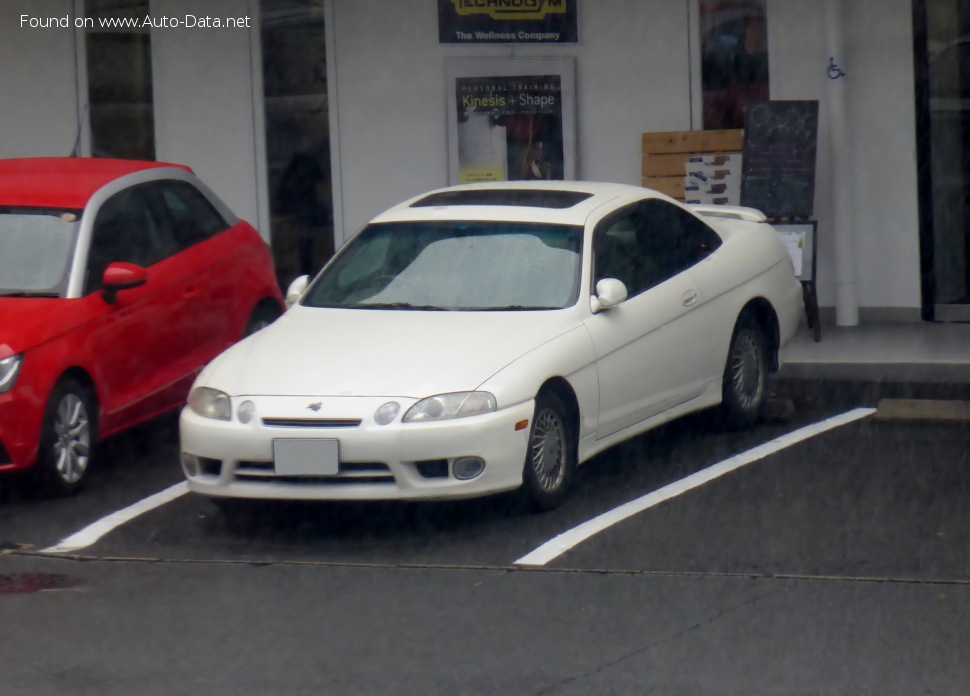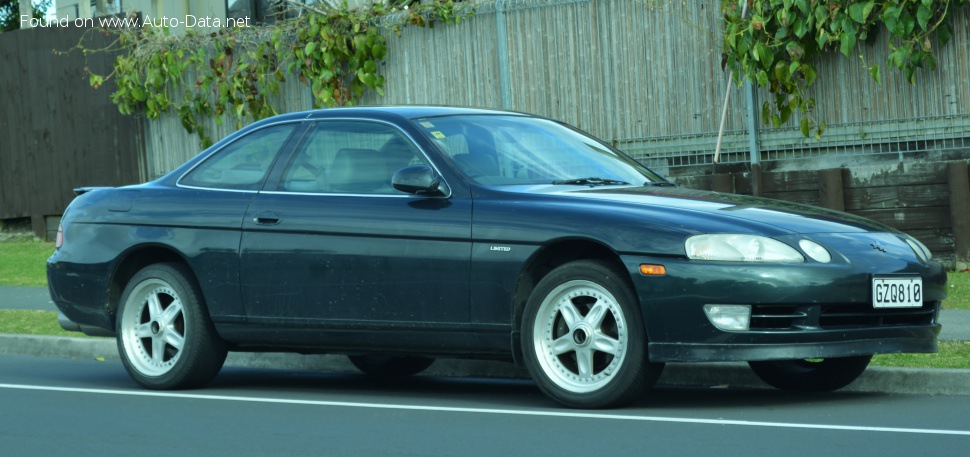
The third-generation Toyota Soarer III 4.0i GPS (245 Hp), produced from 1991 to 1995, represented a pinnacle of Japanese automotive engineering and luxury for its era. Primarily developed for the Japanese Domestic Market (JDM), this sophisticated grand tourer shared its platform and many mechanical components with the first-generation Lexus SC 400, which was sold in North America and other international markets. The Soarer III, particularly in its 4.0i GPS configuration, was designed to compete with high-end European luxury coupes, offering a compelling blend of powerful performance, refined comfort, and advanced technology. Its introduction marked a significant step for Toyota in establishing its luxury credentials beyond the sedate sedans and into the premium sports coupe segment, laying the groundwork for the global success of the Lexus brand.
Engine & Performance: The Heart of the Toyota Soarer III
At the core of the Toyota Soarer III 4.0i GPS (245 Hp) lies a truly remarkable powertrain for its time: a 4.0-liter (3969 cm³, or 242.2 cu. in.) naturally aspirated V8 engine. This engine, internally known as the 1UZ-FE, was a cornerstone of Toyota’s luxury lineup and is widely regarded for its exceptional smoothness, reliability, and robust design. With an engine layout of front, longitudinal configuration, the V8 featured a DOHC (Double Overhead Camshaft) valvetrain with four valves per cylinder, totaling 32 valves. This advanced setup allowed for optimal airflow and combustion efficiency, contributing to its impressive power delivery.
The 1UZ-FE engine in the Soarer III 4.0i GPS produced a healthy 245 horsepower (Hp) at 5400 rpm, translating to a power per liter output of 61.7 Hp/l. More crucially for a grand tourer, it delivered a substantial 350 Nm (258.15 lb.-ft.) of torque at a relatively accessible 4400 rpm. This ample torque ensured effortless acceleration and strong passing power, characteristic of a premium luxury coupe. The engine’s high compression ratio of 10:1 further enhanced its efficiency and responsiveness, while the multi-port manifold injection system precisely managed fuel delivery for optimal performance and economy. Despite its powerful V8, the engine was designed for smooth, refined operation, contributing significantly to the vehicle’s luxury appeal.
Power was channeled to the rear wheels via a sophisticated 4-speed automatic transmission, a common and well-regarded setup for luxury vehicles of this era, prioritizing smooth shifts and comfortable cruising over aggressive sportiness. This drivetrain architecture, with the internal combustion engine driving the rear wheels, provided a balanced feel and predictable handling dynamics. Weighing in at a kerb weight of 3615.58 lbs (1640 kg), the Soarer III 4.0i GPS boasted a respectable weight-to-power ratio of 6.7 kg/Hp (149.4 Hp/tonne) and a weight-to-torque ratio of 4.7 kg/Nm (213.4 Nm/tonne). While not a lightweight sports car, these figures indicate a capable performer for its segment.
In terms of fuel economy, the Toyota Soarer III 4.0i GPS recorded a combined consumption of 10.6 l/100 km, which translates to approximately 22.2 US mpg. For a V8-powered luxury coupe from the early 1990s, this was a competitive figure, reflecting Toyota’s commitment to efficiency even in its performance-oriented models. The substantial 20.61 US gallon (78 liter) fuel tank capacity ensured a generous cruising range, making the Soarer an ideal vehicle for long-distance journeys.
Design & Features: The Elegant Toyota Soarer III Coupe
The design of the Toyota Soarer III was a radical departure from its predecessors, adopting a sleek, aerodynamic, and distinctly modern aesthetic that resonated with the burgeoning luxury market of the early 1990s. As a two-door coupe with seating for five, its proportions were grand and elegant, measuring 191.34 inches (4860 mm) in length, 70.47 inches (1790 mm) in width, and 52.76 inches (1340 mm) in height. The long wheelbase of 105.91 inches (2690 mm) contributed to both its graceful profile and a stable, comfortable ride, while the wide front and rear tracks (59.84 in / 1520 mm and 60.04 in / 1525 mm, respectively) hinted at its capable handling.
Beyond its striking exterior, the Soarer III was engineered for a premium driving experience. The suspension system featured a double wishbone setup at the front, a sophisticated design typically found in high-performance and luxury vehicles, providing precise control and excellent ride quality. The rear employed a coil spring suspension, further enhancing comfort and stability. This advanced suspension architecture was crucial in delivering the smooth, composed ride expected of a luxury grand tourer, effectively absorbing road imperfections while maintaining composure during more spirited driving.
Safety and driver assistance systems, while not as ubiquitous as in modern vehicles, were present and advanced for the era. The Soarer III was equipped with ventilated disc brakes on both the front and rear axles, offering robust stopping power and resistance to fade. This was complemented by an ABS (Anti-lock Braking System), a critical safety feature that prevented wheel lock-up during hard braking, allowing the driver to maintain steering control. The steering system was a responsive rack and pinion type, augmented by hydraulic power steering, ensuring ease of maneuverability at low speeds and a connected feel at higher velocities. The vehicle rode on 215/60 R15 tires, a size chosen to balance ride comfort with adequate grip for its performance capabilities.
Inside, while specific details are not provided, the Soarer III, being the basis for the Lexus SC 400, would have featured a luxurious and technologically forward-thinking cabin for its time. Expect high-quality materials, ergonomic design, and a host of power-operated amenities. The five-seat configuration, though typically a 2+2 arrangement in coupes, offered surprising practicality. The emphasis was on creating a serene and comfortable environment, ideal for long journeys, reflecting its grand touring aspirations.
Technical Specifications
| Brand | Toyota |
| Model | Soarer |
| Generation | Soarer III |
| Type (Engine) | 4.0i GPS (245 Hp) |
| Start of production | 1991 year |
| End of production | 1995 year |
| Powertrain Architecture | Internal Combustion engine |
| Body type | Coupe |
| Seats | 5 |
| Doors | 2 |
| Fuel consumption (economy) – combined | 10.6 l/100 km (22.2 US mpg | 26.6 UK mpg | 9.4 km/l) |
| Fuel Type | Petrol (Gasoline) |
| Weight-to-power ratio | 6.7 kg/Hp (149.4 Hp/tonne) |
| Weight-to-torque ratio | 4.7 kg/Nm (213.4 Nm/tonne) |
| Power | 245 Hp @ 5400 rpm. |
| Power per litre | 61.7 Hp/l |
| Torque | 350 Nm @ 4400 rpm (258.15 lb.-ft. @ 4400 rpm) |
| Engine layout | Front, Longitudinal |
| Engine displacement | 3969 cm³ (242.2 cu. in.) |
| Number of cylinders | 8 |
| Engine configuration | V-engine |
| Cylinder Bore | 87.5 mm (3.44 in.) |
| Piston Stroke | 82.5 mm (3.25 in.) |
| Compression ratio | 10:1 |
| Number of valves per cylinder | 4 |
| Fuel injection system | Multi-port manifold injection |
| Engine aspiration | Naturally aspirated engine |
| Valvetrain | DOHC |
| Kerb Weight | 1640 kg (3615.58 lbs) |
| Max. weight | 1915 kg (4221.85 lbs) |
| Max load | 275 kg (606.27 lbs) |
| Fuel tank capacity | 78 l (20.61 US gal | 17.16 UK gal) |
| Length | 4860 mm (191.34 in.) |
| Width | 1790 mm (70.47 in.) |
| Height | 1340 mm (52.76 in.) |
| Wheelbase | 2690 mm (105.91 in.) |
| Front track | 1520 mm (59.84 in.) |
| Rear (Back) track | 1525 mm (60.04 in.) |
| Drivetrain Architecture | The Internal combustion engine (ICE) drives the rear wheels of the vehicle. |
| Drive wheel | Rear wheel drive |
| Number of gears and type of gearbox | 4 gears, automatic transmission |
| Front suspension | Double wishbone |
| Rear suspension | Coil spring |
| Front brakes | Ventilated discs |
| Rear brakes | Ventilated discs |
| Assisting systems | ABS (Anti-lock braking system) |
| Steering type | Steering rack and pinion |
| Power steering | Hydraulic Steering |
| Tires size | 215/60 R15 |