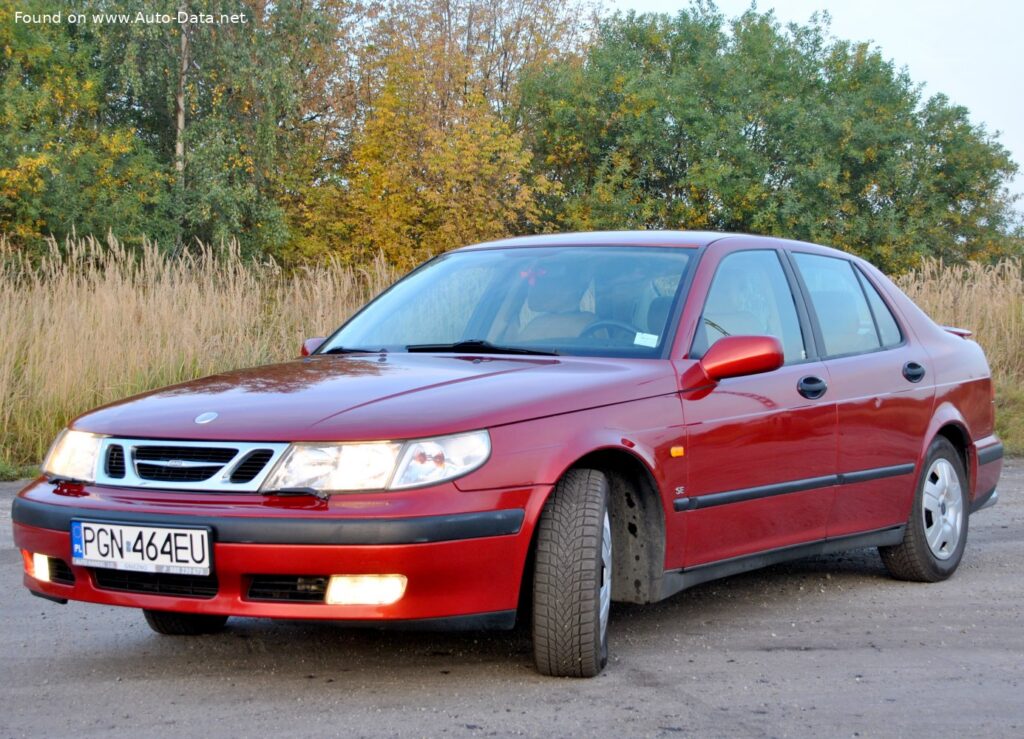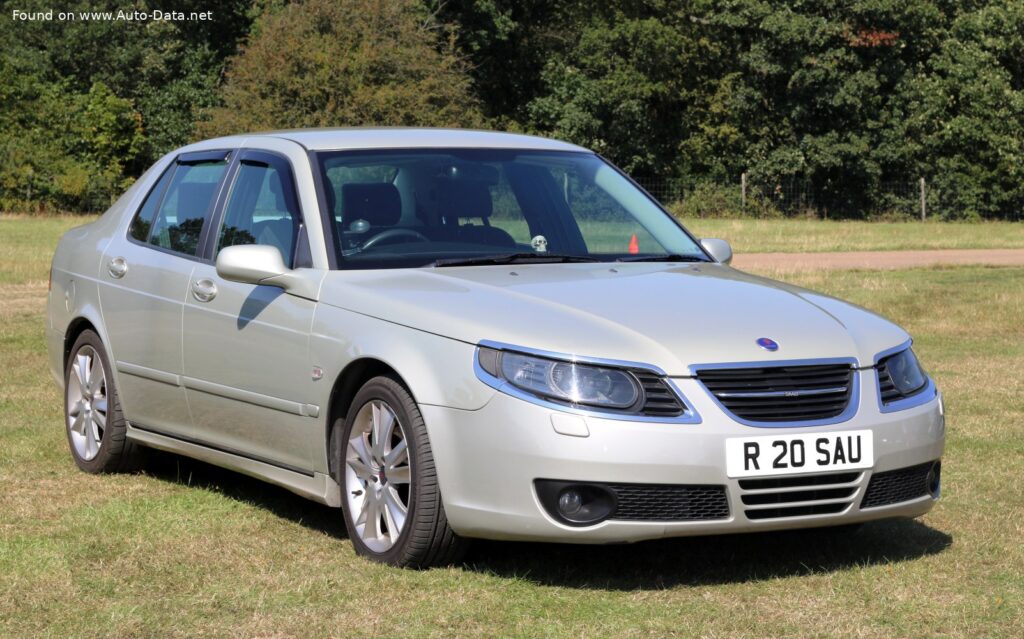
The Saab 9-5, particularly the facelifted model introduced in 2005, represented a distinctive contender in the executive sedan segment, offering a compelling blend of Scandinavian design, robust engineering, and a unique driving experience. This particular iteration, the Saab 9-5 (facelift 2005) 2.0t (150 Hp) Sentronic, was a testament to Saab’s long-standing commitment to turbocharged powertrains and driver-focused ergonomics. Produced from 2005 to 2009, this generation of the 9-5 continued to carve out a niche for itself in the European and select global markets, standing as an alternative to more conventional German and Japanese luxury offerings. While not as ubiquitous in the North American market as its European counterparts, the 9-5 maintained a loyal following, celebrated for its individuality and advanced safety features for its time. The 2005 facelift introduced subtle yet significant revisions to its exterior styling, interior appointments, and technical specifications, aiming to keep the model competitive and fresh.
Engine & Performance: The Turbocharged Heart of the Saab 9-5
At the core of the Saab 9-5 2.0t (150 Hp) Sentronic lies a meticulously engineered powertrain, epitomizing Saab’s expertise in forced induction. The vehicle is propelled by a 2.0-liter (1985 cm³ or 121.13 cu. in.) inline four-cylinder engine, designated by the internal code B205E. This unit is characterized by its DOHC (Double Overhead Camshaft) valvetrain and multi-port manifold injection system, ensuring precise fuel delivery and optimal combustion. Crucially, the engine benefits from a turbocharger and intercooler, a hallmark of Saab engineering, which allows this relatively modest displacement to produce a respectable 150 horsepower at 5500 rpm. This power output translates to a specific power rating of 75.6 Hp per liter, a commendable figure for a production sedan of its era.
However, it is the torque delivery that truly defines the driving character of this 9-5 variant. The engine generates a robust 240 Nm (177.01 lb.-ft.) of torque, available across a broad and accessible rev range from 1800 to 3500 rpm. This low-end torque characteristic is a direct benefit of the turbocharging system, providing strong, immediate acceleration from low speeds and excellent passing power without the need to rev the engine excessively. This contributes to a relaxed yet confident driving experience, particularly suited for highway cruising and effortless urban navigation. Power is efficiently transmitted to the front wheels via a 5-speed Sentronic automatic transmission. The Sentronic system offers the convenience of an automatic with the option for manual gear selection, allowing drivers to engage more actively with the powertrain when desired. While not a performance-focused sports sedan, the 9-5 2.0t (150 Hp) Sentronic offers adequate acceleration, achieving 0 to 60 mph in approximately 11 seconds, and a top speed of 130.49 mph (210 km/h). These figures position it firmly within the executive sedan segment, prioritizing smooth power delivery and comfortable cruising over raw speed.
In terms of efficiency and environmental considerations, the 9-5 2.0t (150 Hp) Sentronic delivered competitive, though not class-leading, figures for its time. The combined fuel economy is rated at 22.8 US mpg (10.3 l/100 km), with urban consumption at 15.8 US mpg (14.9 l/100 km) and extra-urban at 30.9 US mpg (7.6 l/100 km). CO2 emissions stand at 244 g/km, adhering to the Euro 4 emission standard, which was the prevailing benchmark during its production years. This balance of performance and efficiency underscored Saab’s pragmatic approach to engineering, offering a sophisticated driving experience with reasonable running costs for a turbocharged luxury vehicle.
Design & Features: Scandinavian Form and Function
The 2005 facelift of the Saab 9-5 retained the vehicle’s distinctive Scandinavian design ethos while introducing refinements that enhanced its contemporary appeal. The body style is a classic 4-door sedan, accommodating five occupants comfortably. Measuring 190.39 inches (4836 mm) in length, 70.55 inches (1792 mm) in width, and 57.01 inches (1448 mm) in height, the 9-5 projected a substantial yet understated presence. Its wheelbase of 106.42 inches (2703 mm) contributed to a stable ride and generous interior space, particularly for rear passengers.
The exterior design, often described as aircraft-inspired, featured clean lines, a distinctive grille, and signature “ice block” headlamps that were characteristic of the facelifted model. The front overhang of 40.59 inches (1031 mm) and a rear overhang of 43.39 inches (1102 mm) gave the sedan a balanced profile. The interior of the 9-5 was a testament to Saab’s ergonomic philosophy, prioritizing driver control and comfort. Features like the “Night Panel,” which allowed drivers to dim all non-essential dashboard lights for reduced distraction during night driving, exemplified Saab’s unique approach to user interface design. The trunk space was a practical 17.66 cu. ft. (500 liters), offering ample room for luggage, further enhancing its suitability as a family or executive vehicle.
Underneath its refined exterior, the 9-5 incorporated a robust chassis and suspension system designed for both comfort and confident handling. The front suspension utilized an independent McPherson strut design with a transverse stabilizer, while the rear featured an independent multi-link setup, also with a transverse stabilizer. This combination provided a compliant ride quality without sacrificing body control. Braking performance was handled by 308 mm ventilated discs at the front and 286 mm solid discs at the rear, augmented by an Anti-lock Braking System (ABS) as standard, ensuring strong and stable stopping power. The hydraulic power steering, a rack and pinion system, offered precise feedback and made maneuvering the sizable sedan surprisingly agile, with a minimum turning circle of 35.43 feet (10.8 m). The vehicle was typically fitted with 215/55 R16 or optional 225/45 R17 tires, mounted on 6.5J x 16 or 7J x 17 wheel rims, respectively, contributing to both aesthetics and roadholding capabilities.
The Enduring Appeal of the Saab 9-5
The Saab 9-5 (facelift 2005) 2.0t (150 Hp) Sentronic holds a significant place in the brand’s history, representing the culmination of Saab’s unique blend of innovation, safety, and distinctive design. In a market often dominated by more conservative designs, the 9-5 offered a refreshing alternative for buyers seeking individuality and a focus on practical, intelligent engineering. Its role in the European and specific global markets was that of a mid-size luxury sedan that defied convention, appealing to those who valued substance over ostentation.
The brand’s legacy of pioneering safety features, such as the active head restraints and advanced crash structures, was evident in the 9-5, providing a strong sense of security for its occupants. Its robust build quality and a powertrain honed over decades of turbocharging expertise ensured a durable and engaging driving experience. Even after its production ceased in 2009, this generation of the 9-5 continues to be appreciated by enthusiasts and connoisseurs who value its unique heritage and the blend of comfort, safety, and performance it offered. The 9-5 remained a beacon of Saab’s commitment to creating cars that were truly different, embodying a spirit of independent thought and engineering ingenuity that continues to resonate with its admirers today.
Technical Specifications
| Brand | Saab |
| Model | 9-5 |
| Generation | 9-5 (facelift 2005) |
| Type (Engine) | 2.0t (150 Hp) Sentronic |
| Start of production | 2005 year |
| End of production | 2009 year |
| Powertrain Architecture | Internal Combustion engine |
| Body type | Sedan |
| Seats | 5 |
| Doors | 4 |
| Fuel consumption (economy) – urban (NEDC) | 14.9 l/100 km (15.8 US mpg) |
| Fuel consumption (economy) – extra urban (NEDC) | 7.6 l/100 km (30.9 US mpg) |
| Fuel consumption (economy) – combined (NEDC) | 10.3 l/100 km (22.8 US mpg) |
| CO2 emissions (NEDC) | 244 g/km |
| Fuel Type | Petrol (Gasoline) |
| Acceleration 0 – 60 mph | 11 sec |
| Maximum speed | 210 km/h (130.49 mph) |
| Emission standard | Euro 4 |
| Power | 150 Hp @ 5500 rpm. |
| Power per liter | 75.6 Hp/l |
| Torque | 240 Nm @ 1800-3500 rpm (177.01 lb.-ft.) |
| Engine layout | Front, Transverse |
| Engine Model/Code | B205E |
| Engine displacement | 1985 cm³ (121.13 cu. in.) |
| Number of cylinders | 4 |
| Engine configuration | Inline |
| Cylinder Bore | 90 mm (3.54 in.) |
| Piston Stroke | 78 mm (3.07 in.) |
| Number of valves per cylinder | 4 |
| Fuel injection system | Multi-port manifold injection |
| Engine aspiration | Turbocharger, Intercooler |
| Valvetrain | DOHC |
| Engine oil capacity | 4 l (4.23 US qt) |
| Coolant | 7.4 l (7.82 US qt) |
| Trunk (boot) space – minimum | 500 l (17.66 cu. ft.) |
| Fuel tank capacity | 75 l (19.81 US gal) |
| Max. roof load | 100 kg (220.46 lbs.) |
| Permitted trailer load with brakes (12%) | 1800 kg (3968.32 lbs.) |
| Permitted trailer load without brakes | 750 kg (1653.47 lbs.) |
| Length | 4836 mm (190.39 in.) |
| Width | 1792 mm (70.55 in.) |
| Width including mirrors | 2070 mm (81.5 in.) |
| Height | 1448 mm (57.01 in.) |
| Wheelbase | 2703 mm (106.42 in.) |
| Front track | 1522 mm (59.92 in.) |
| Rear (Back) track | 1528 mm (60.16 in.) |
| Front overhang | 1031 mm (40.59 in.) |
| Rear overhang | 1102 mm (43.39 in.) |
| Minimum turning circle (turning diameter) | 10.8 m (35.43 ft.) |
| Drivetrain Architecture | Front wheel drive |
| Drive wheel | Front wheel drive |
| Number of gears and type of gearbox | 5 gears, automatic transmission Sentronic |
| Front suspension | Independent type McPherson, Transverse stabilizer |
| Rear suspension | Independent multi-link suspension, Transverse stabilizer |
| Front brakes | Ventilated discs, 308 mm |
| Rear brakes | Disc, 286 mm |
| Assisting systems | ABS (Anti-lock braking system) |
| Steering type | Steering rack and pinion |
| Power steering | Hydraulic Steering |
| Tires size | 215/55 R16; 225/45 R17 |
| Wheel rims size | 6.5J x 16; 7J x 17 |