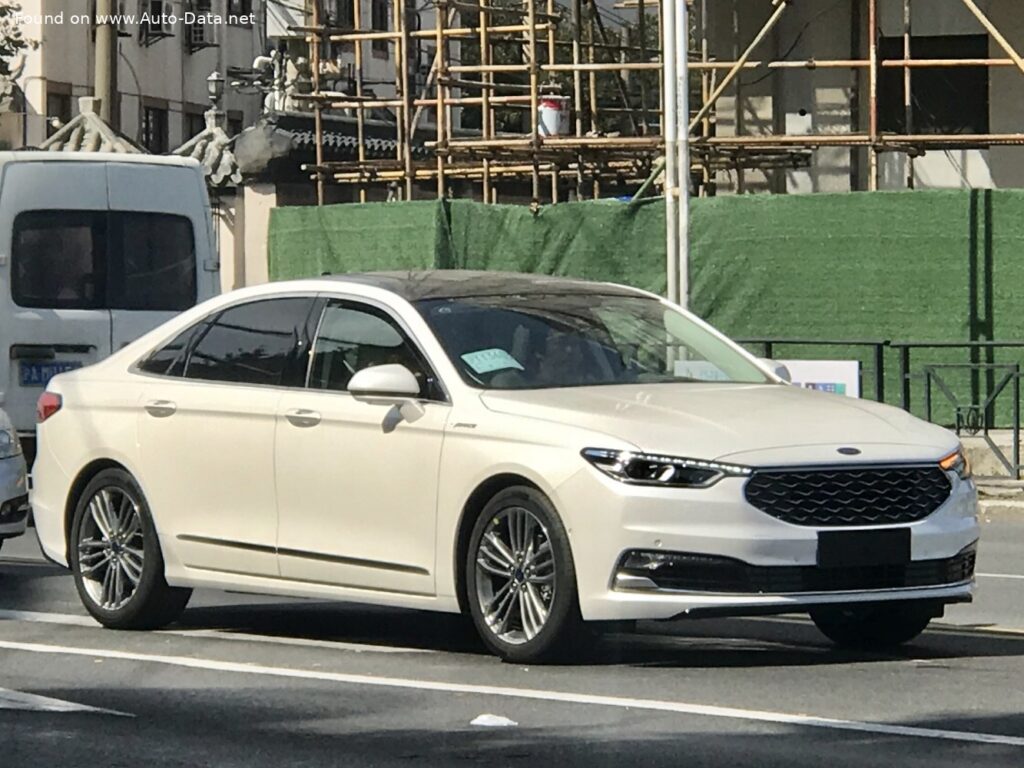
The Ford Taurus, a nameplate long synonymous with American automotive history, took on a distinct identity in various global markets, notably with the Ford Taurus VII (China, facelift 2019). This particular iteration, produced from August 2019 to March 2022, was specifically engineered and marketed for the discerning Chinese executive sedan segment. Unlike its American predecessors, which concluded production in 2019, this Chinese-market Taurus represented a sophisticated, full-size sedan designed to meet the unique preferences and demands of Asian consumers. It was positioned as a premium offering, emphasizing spaciousness, comfort, and advanced technology, rather than the more mainstream family sedan role often associated with the Taurus in North America. The facelift introduced in 2019 brought updated styling cues and technological enhancements, ensuring its competitiveness in a rapidly evolving market dominated by both domestic and international luxury brands. This generation of the Taurus was a testament to Ford’s strategic approach to regional markets, adapting a globally recognized nameplate to cater to specific local requirements, particularly focusing on rear passenger comfort and a refined driving experience suitable for chauffeur-driven or executive use.
Powertrain and Performance of the Ford Taurus VII (China, facelift 2019)
Under the hood, the Ford Taurus VII (China, facelift 2019) was powered by a robust 2.0-liter EcoBoost 245 engine, a sophisticated inline four-cylinder powerplant designed for both spirited performance and respectable efficiency. This engine, designated with the EcoBoost moniker, is a hallmark of Ford’s modern powertrain philosophy, combining turbocharging and direct fuel injection to extract significant power from a relatively small displacement. The 1999 cubic centimeter (121.99 cubic inch) engine delivered a peak output of 245 horsepower at 5500 revolutions per minute, providing ample motivation for the large sedan. Complementing this power was a substantial 287.65 pound-feet of torque, available across a broad and accessible rev range from 2500 to 3500 rpm. This wide torque band ensured responsive acceleration and strong passing power, crucial for both urban commuting and highway cruising.
The engine’s advanced architecture included a twin-scroll turbocharger paired with an intercooler, optimizing air intake and combustion efficiency. Each of its four cylinders featured four valves, facilitating superior gas flow and contributing to the engine’s impressive power per liter figure of 122.6 horsepower. Fuel delivery was managed by a precise direct injection system, further enhancing fuel atomization and combustion efficiency. The powertrain was mated to a smooth and responsive 8-speed automatic transmission, which expertly managed power delivery to the front wheels. This front-wheel-drive configuration, combined with the refined automatic gearbox, offered a balanced blend of efficiency and driving ease.
Performance figures for the Ford Taurus VII (China, facelift 2019) underscored its capability as a dynamic executive sedan. It accelerated from 0 to 60 miles per hour in a brisk 8.1 seconds, a commendable time for a vehicle of its size and class. The top speed was rated at 141.67 miles per hour (228 km/h), ensuring confident highway performance. Despite its substantial power output, the vehicle demonstrated commendable fuel economy, with a combined rating of 31.4 to 32.7 US miles per gallon (7.2-7.5 liters per 100 km). This efficiency was aided by modern engine technologies, including a Start & Stop system, which automatically shuts off the engine when the vehicle is stationary to conserve fuel and reduce emissions. Adherence to the China VI emission standard further highlighted Ford’s commitment to environmental responsibility in this key market.
Design, Features, and Executive Appeal
The Ford Taurus VII (China, facelift 2019) was meticulously crafted as a four-door, five-seat sedan, embodying a sense of gravitas and sophistication befitting its target market. Its exterior dimensions were generous, emphasizing its full-size executive status: a substantial length of 197.56 inches (5018 mm), a width of 74.17 inches (1884 mm), and a height of 59.29 inches (1506 mm). A particularly noteworthy aspect was its elongated wheelbase of 116.1 inches (2949 mm). This extended wheelbase was a deliberate design choice, significantly contributing to an exceptionally spacious and comfortable cabin, especially for rear-seat passengers—a critical attribute in the Chinese executive sedan market where chauffeur-driven transport is common.
The 2019 facelift brought a refreshed aesthetic, typically involving updated front and rear fascias, new lighting signatures, and revised wheel designs, all aimed at maintaining a contemporary and upscale appearance. The design language likely featured elegant lines, a prominent grille, and refined chrome accents, projecting an image of understated luxury and professionalism. Inside, the focus was undoubtedly on comfort and refinement. The five-seat configuration provided ample space for occupants, with materials and finishes chosen to convey a premium feel. The generous trunk space, ranging from 16.28 to 18.72 cubic feet (461-530 liters), offered practical utility for luggage or business travel, further enhancing its appeal as a versatile executive vehicle.
Beyond its dimensions and aesthetics, the Taurus VII integrated a range of features designed to enhance driving dynamics, safety, and occupant comfort. The suspension system was engineered for a smooth and composed ride, crucial for long journeys and urban commuting. It featured an independent McPherson strut setup at the front and a sophisticated independent multi-link suspension at the rear. This combination effectively absorbed road imperfections while maintaining stable handling. Stopping power was provided by ventilated disc brakes at the front and solid disc brakes at the rear, complemented by an Anti-lock Braking System (ABS) for enhanced safety during emergency braking maneuvers. The steering system utilized an electric power steering rack and pinion setup, offering precise control and effortless maneuverability, particularly in crowded city environments. The vehicle was equipped with tire sizes ranging from 245/50 R18 to 245/45 R19, mounted on corresponding 18-inch or 19-inch wheel rims, providing a balance of grip, ride comfort, and visual appeal. These carefully selected features underscored the Ford Taurus VII (China, facelift 2019)’s positioning as a well-rounded and compelling offering in its competitive market segment.
Technical Specifications
| Brand | Ford |
| Model | Taurus |
| Generation | Taurus VII (China, facelift 2019) |
| Engine Type | 2.0 EcoBoost 245 (245 Hp) Automatic |
| Start of Production | August, 2019 |
| End of Production | March, 2022 |
| Powertrain Architecture | Internal Combustion engine |
| Body type | Sedan |
| Seats | 5 |
| Doors | 4 |
| Fuel Consumption (Combined) | 32.7 – 31.4 US mpg (7.2-7.5 l/100 km) |
| Fuel Type | Petrol (Gasoline) |
| Acceleration 0 – 60 mph | 8.1 sec |
| Acceleration 0 – 62 mph (0-100 km/h) | 8.5 sec |
| Maximum Speed | 141.67 mph (228 km/h) |
| Emission Standard | China VI |
| Power | 245 Hp @ 5500 rpm |
| Power per liter | 122.6 Hp/l |
| Torque | 287.65 lb.-ft. @ 2500-3500 rpm (390 Nm) |
| Engine Layout | Front, Transverse |
| Engine Model/Code | EcoBoost |
| Engine Displacement | 121.99 cu. in. (1999 cm3) |
| Number of Cylinders | 4 |
| Engine Configuration | Inline |
| Number of Valves per Cylinder | 4 |
| Fuel Injection System | Direct injection |
| Engine Aspiration | Twin-scroll turbo, Intercooler |
| Engine Oil Capacity | 5.49 US qt (5.2 l) |
| Coolant Capacity | 9.93 US qt (9.4 l) |
| Engine Systems | Start & Stop System |
| Trunk (boot) space – minimum | 16.28 – 18.72 cu. ft. (461-530 l) |
| Fuel Tank Capacity | 16.91 US gal (64 l) |
| Length | 197.56 in. (5018 mm) |
| Width | 74.17 in. (1884 mm) |
| Height | 59.29 in. (1506 mm) |
| Wheelbase | 116.1 in. (2949 mm) |
| Drivetrain Architecture | Front-wheel drive (ICE drives front wheels) |
| Drive Wheel | Front wheel drive |
| Number of Gears and Type of Gearbox | 8 gears, automatic transmission |
| Front Suspension | Independent type McPherson |
| Rear Suspension | Independent multi-link suspension |
| Front Brakes | Ventilated discs |
| Rear Brakes | Disc |
| Assisting Systems | ABS (Anti-lock braking system) |
| Steering Type | Steering rack and pinion |
| Power Steering | Electric Steering |
| Tires Size | 245/50 R18; 245/45 R19 |
| Wheel Rims Size | 18; 19 |