
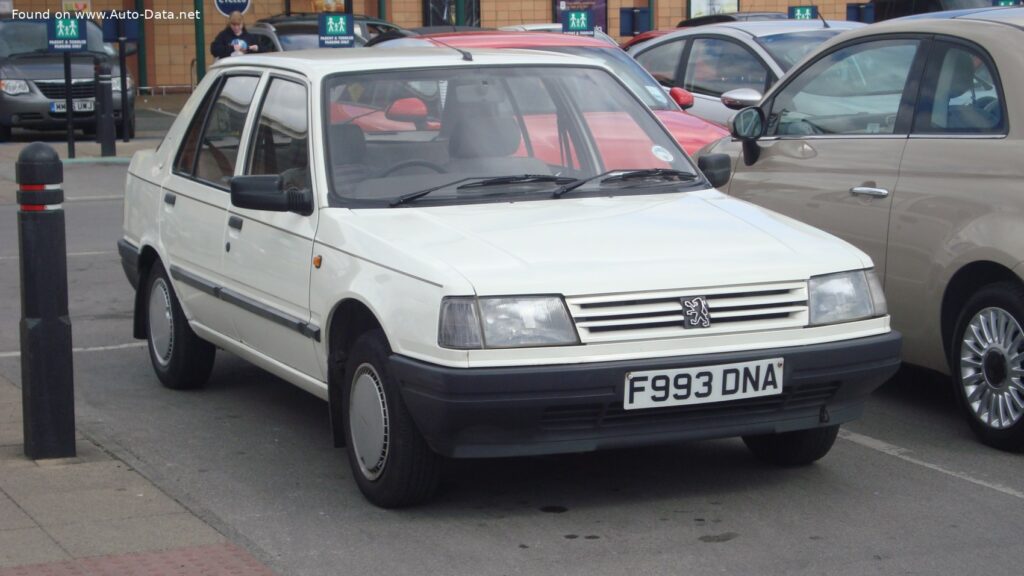
The Peugeot 309, specifically the 10C/10A generation, represents a pivotal model in the French automaker’s history, serving as a crucial offering in the competitive European C-segment during its production run from 1986 to 1989. Positioned as a direct successor to the Talbot Horizon and a complementary model to the highly successful Peugeot 205 and the larger 405, the Peugeot 309 was designed to cater to the burgeoning family hatchback market. While not officially sold in the United States, its engineering and design principles reflect the prevailing automotive trends and consumer demands of its primary European market, emphasizing practicality, efficiency, and a robust driving experience. This particular variant, equipped with a 1.6-liter engine producing 94 horsepower, exemplifies the practical and reliable motoring that characterized many European family cars of the late 1980s, balancing everyday usability with adequate performance for both urban and highway driving.
The Peugeot 309: A European Mainstay
The development of the Peugeot 309 was an interesting chapter in the marque’s history, born out of the acquisition of Chrysler Europe, which included the British Rootes Group and French Simca, by PSA Peugeot Citroën in 1978. The resultant brand, Talbot, was struggling, and the 309 was initially conceived as the “Talbot Arizona” to replace the aging Talbot Horizon. However, by the time of its launch in 1985 (with production starting for this specific variant in 1986), PSA had decided to phase out the Talbot brand, and the car was rebadged as a Peugeot. This decision solidified its position within the Peugeot lineup, despite its slightly unconventional naming convention (skipping the “308” designation, which would later be used for a different model decades later) and its roots in a different design philosophy. The 309 quickly established itself as a practical and well-regarded family hatchback, benefiting from Peugeot’s reputation for excellent chassis tuning and comfortable ride quality, attributes that were highly valued by European consumers. Its introduction marked a period of significant growth and market consolidation for Peugeot in Europe, bridging the gap between its smaller and larger offerings with a compelling mid-range option.
Engine and Performance: The 1.6-liter Heartbeat
At the core of the Peugeot 309 (10C,10A) 1.6 (94 Hp) lies a naturally aspirated 1.6-liter gasoline engine, a workhorse typical of European cars from the late 1980s. This powertrain, while not groundbreaking in terms of outright power, was engineered for reliability, fuel efficiency, and a predictable power delivery suitable for a family hatchback. Generating 94 horsepower, the engine provided respectable performance for its class and era. The absence of forced induction (turbocharging or supercharging) meant a linear and smooth power band, making the car easy to drive in a variety of conditions, from city traffic to longer highway journeys. The 94 horsepower output, combined with the relatively lightweight hatchback body, ensured that the 309 felt adequately responsive for everyday tasks. Its fuel type, petrol (gasoline), was standard for the vast majority of European vehicles at the time, and the engine was designed to run efficiently on the common fuel grades available. Peugeot’s engineering philosophy for this era often prioritized durability and ease of maintenance, making the 1.6-liter unit a dependable choice for motorists seeking a no-nonsense vehicle. While specific torque figures are not provided, an engine of this configuration would typically offer peak torque in the mid-RPM range, contributing to good drivability and reducing the need for constant gear changes in normal driving. The powertrain architecture, based entirely on an internal combustion engine, represents the conventional approach to automotive propulsion before the widespread adoption of hybrid or electric technologies, reflecting the established norms of the late 20th century automotive landscape.
Design and Features: Practicality Meets Late 80s Aesthetics
The Peugeot 309 adopted a classic hatchback body type, a design choice synonymous with practicality and versatility in the European market. Its styling, while somewhat understated compared to its more flamboyant stablemate, the 205, presented a clean and functional aesthetic that was characteristic of late 1980s automotive design. The exterior featured a relatively angular yet aerodynamically conscious profile, a blend of the sharper lines of earlier Peugeot models and the emerging softer curves that would define the next decade. The hatchback configuration offered excellent cargo flexibility, with a large rear opening and often a split-folding rear seat, allowing for the transport of bulkier items – a key selling point for families and individuals with active lifestyles. The interior of the 309, true to its segment, focused on ergonomics and durability. While lacking the advanced infotainment systems or extensive connectivity features of modern vehicles, it provided a straightforward and user-friendly cabin. Essential controls were logically placed, and the seating was designed for comfort during longer journeys. Features common to the era would have included manual winding windows on base models, perhaps optional central locking, and a basic radio/cassette player. Safety features, by today’s standards, were rudimentary, typically encompassing seatbelts and a robust body structure, rather than airbags or advanced driver-assistance systems. However, the 309 was lauded for its chassis dynamics, inheriting Peugeot’s reputation for producing cars with a commendable balance of ride comfort and engaging handling. This made the 309 not only a practical family car but also one that was enjoyable to drive, a characteristic that helped it stand out in a crowded market segment.
Technical Specifications
| Brand | Peugeot |
| Model | 309 |
| Generation | 309 (10C,10A) |
| Type (Engine) | 1.6 (94 Hp) |
| Start of production | 1986 year |
| End of production | 1989 year |
| Powertrain Architecture | Internal Combustion engine |
| Body type | Hatchback |
| Fuel Type | Petrol (Gasoline) |
| Power | 94 Hp |
| Engine aspiration | Naturally aspirated engine |
The Peugeot 309 (10C,10A) 1.6 (94 Hp) ultimately carved out its niche as a reliable and practical European hatchback. Its transitional role, from its Talbot origins to its place within the Peugeot family, speaks to a fascinating period of consolidation and strategic maneuvering within the European automotive industry. For the consumer, it delivered a compelling package of robust engineering, a comfortable ride, and versatile practicality, all powered by a dependable 1.6-liter engine that provided sufficient performance for the demands of the late 1980s. Though it never crossed the Atlantic to grace American showrooms, its legacy in Europe is one of a solid, unpretentious family car that helped cement Peugeot’s reputation for producing well-engineered and enjoyable vehicles, bridging the gap between compact city cars and larger executive sedans with considerable success.
