The third generation of Toyota’s full-size pickup truck, the Toyota Tundra III Double Cab Standard Bed 3.5 V6 i-FORCE (389 Hp) 4×4 ECT-i, made its debut in September 2021, marking a significant evolution for the venerable nameplate in the highly competitive North American market. This particular configuration, featuring the robust 3.5-liter V6 i-FORCE engine, a Double Cab, and a Standard Bed, represents a core offering designed to blend potent performance with the legendary reliability and capability expected of a Toyota truck. Moving away from the long-standing naturally aspirated V8 engines of its predecessors, the Tundra III embraced modern powertrain technology, focusing on enhanced efficiency, power, and torque. Its introduction signaled Toyota’s renewed commitment to challenging domestic rivals in a segment where innovation and capability are paramount, positioning the Tundra as a formidable contender for both work and recreational duties across the United States and Canada.
Powertrain and Performance of the Toyota Tundra III Double Cab Standard Bed
At the heart of the Toyota Tundra III Double Cab Standard Bed is the advanced 3.5-liter V6 i-FORCE engine, an engineering marvel designed to deliver both substantial power and improved fuel efficiency. This twin-turbocharged V6 unit, identified by its V35A-FTS engine code, represents a departure from the V8 powerplants that defined previous Tundra generations. With a displacement of 3445 cubic centimeters (210.23 cubic inches), the engine utilizes a sophisticated V-engine configuration with six cylinders, each featuring four valves, culminating in a DOHC (Double Overhead Camshaft) valvetrain with Dual VVT-i (Variable Valve Timing with intelligence). This combination ensures optimal airflow and combustion efficiency across the rev range.
The i-FORCE engine generates an impressive 389 horsepower at 5200 rpm, a figure that places it squarely among the segment’s leaders. More critically for a pickup truck, it produces a formidable 649 Newton meters (478.68 lb.-ft.) of torque, available from a relatively low 2400 rpm. This low-end torque is crucial for towing, hauling heavy loads, and navigating challenging off-road terrain, providing immediate and sustained pulling power. The engine’s aspiration system, featuring twin-turbochargers and an intercooler, further enhances performance by compressing the intake air, leading to a denser charge and more potent combustion. Fuel delivery is managed by a sophisticated system that combines both direct injection and multi-port manifold injection, optimizing fuel atomization for power and efficiency while maintaining a compression ratio of 10.4:1.
Power is channeled through a highly efficient 10-speed automatic transmission, designated ECT-i, which provides smooth and precise gear changes. This wide gear ratio spread allows the engine to operate within its optimal power band more frequently, contributing to both acceleration and fuel economy. The drivetrain architecture is a robust all-wheel-drive (4×4) system, where the internal combustion engine permanently drives the rear wheels, with the front wheels engaging via an electrically or mechanically operated clutch when additional traction is required. This part-time 4×4 system ensures versatility for various driving conditions, from paved roads to rugged trails.
Despite its substantial power and size, the Tundra III Double Cab Standard Bed achieves respectable fuel economy for its class. In combined driving conditions, it is rated at 12.4 liters per 100 kilometers, translating to approximately 19 US miles per gallon. Urban driving yields 13.8 l/100 km (17 US mpg), while extra-urban cruising improves to 10.2 l/100 km (23.1 US mpg). These figures are a testament to the efficiency gains from the downsized twin-turbo V6 and the advanced 10-speed transmission. The vehicle adheres to the LEV-III emission standard, reflecting its commitment to environmental responsibility. With a curb weight ranging from 2440 to 2490 kg (5379.28 to 5489.51 lbs), the Tundra boasts a weight-to-power ratio of 6.3 kg/Hp (159.4 Hp/tonne) and a weight-to-torque ratio of 3.8 kg/Nm (266 Nm/tonne), indicating its strong performance credentials relative to its mass.
Design and Key Features of the Toyota Tundra III Double Cab Standard Bed
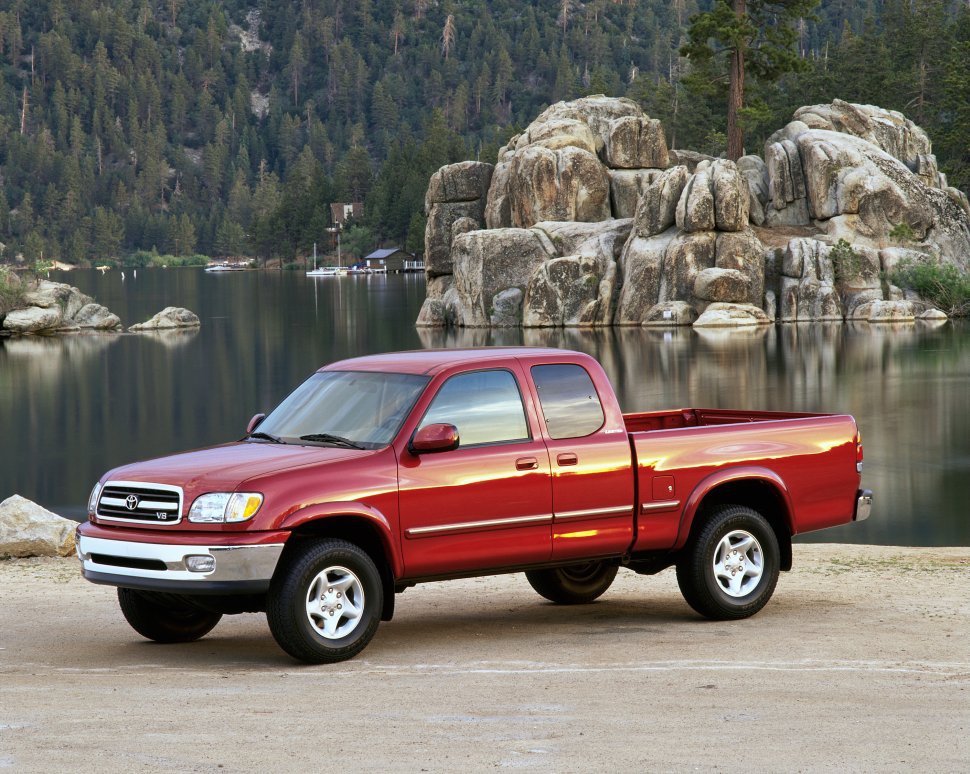
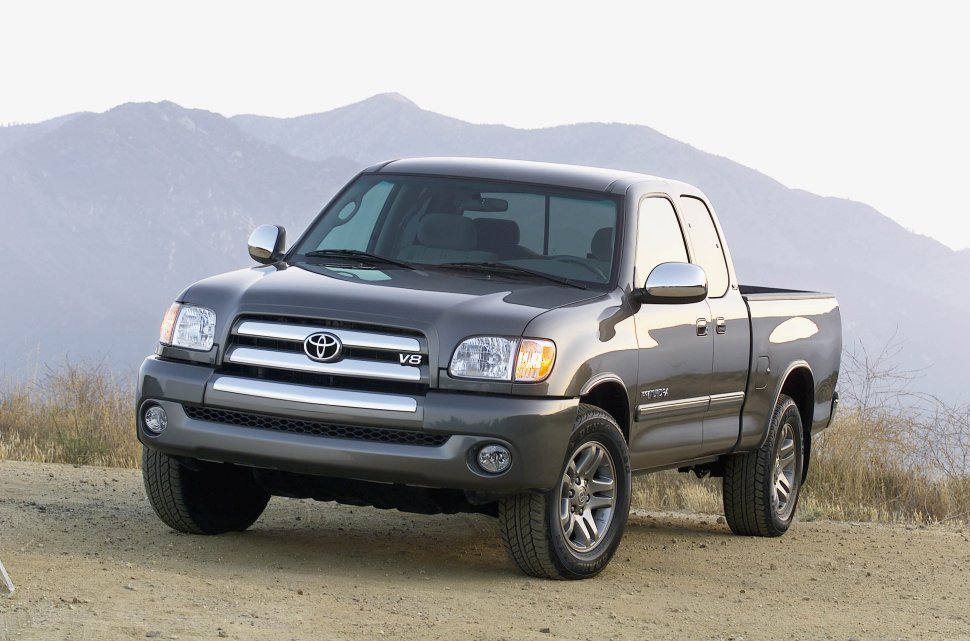
The Toyota Tundra III Double Cab Standard Bed is characterized by a bold and assertive design that projects capability and strength, fitting perfectly within the aesthetics of the modern full-size pickup segment. As a Double Cab, it features four conventional doors, providing easy access to a spacious cabin designed to comfortably accommodate five occupants. The Standard Bed offers a practical cargo solution for a wide range of tasks, from construction materials to recreational gear. The truck’s substantial dimensions, with a length of 5933 mm (233.58 inches), a width of 2037 mm (80.2 inches), and a height of 1981 mm (77.99 inches), underscore its commanding road presence. A generous wheelbase of 3701 mm (145.71 inches) contributes to both ride stability and interior volume.
Beyond its imposing exterior, the Tundra III incorporates significant engineering advancements aimed at improving ride quality, handling, and overall utility. The suspension system sees a notable upgrade, featuring an independent double wishbone setup at the front, complemented by a transverse stabilizer bar for enhanced control and responsiveness. Critically, the rear suspension adopts a coil spring rigid axle configuration, a significant departure from the leaf springs used in previous generations. This change dramatically improves ride comfort, especially when unladen, and contributes to better handling dynamics, making the Tundra feel more refined on and off the pavement. With a ground clearance of 236 mm (9.29 inches), along with an approach angle of 21 degrees and a departure angle of 24 degrees, the Tundra is well-equipped for traversing challenging terrain.
Braking performance is assured by a robust system comprising large ventilated discs both front and rear, measuring 353 mm at the front and 345 mm at the rear. These are paired with an Anti-lock Braking System (ABS) for optimal stopping power and control in varied conditions. Steering is managed by an electric rack and pinion system, providing precise control and reduced effort, especially during low-speed maneuvers or parking. The minimum turning circle of 14.8 meters (48.56 feet) is commendable for a vehicle of this size. The Tundra rides on 265/70 R18 tires mounted on 8J x 18-inch wheel rims, a combination chosen for its balance of on-road comfort, off-road capability, and load-carrying capacity.
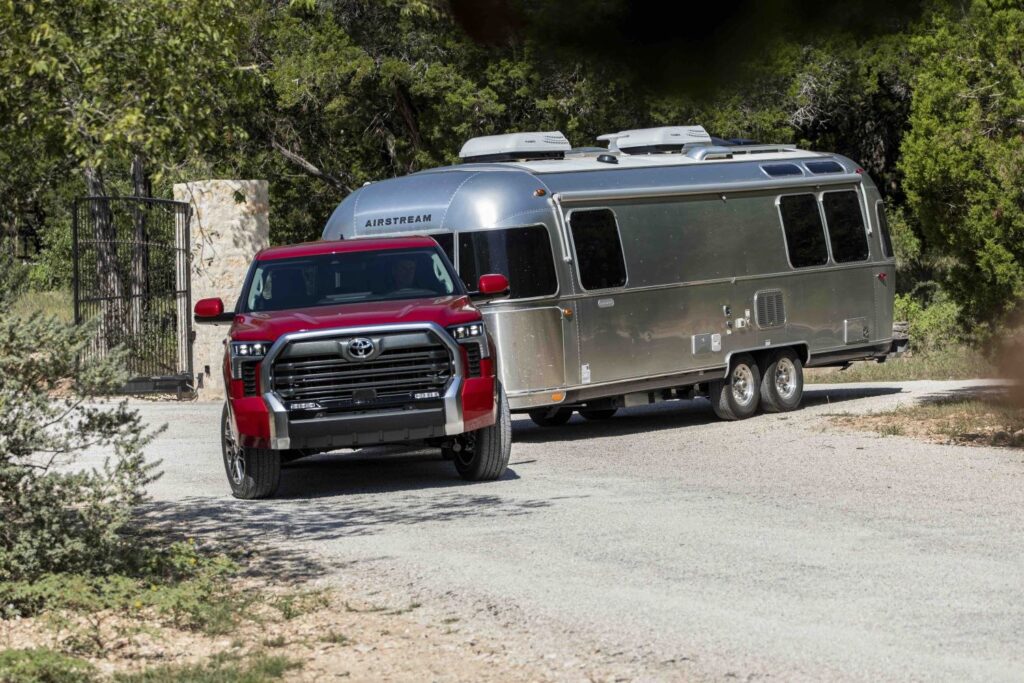
For a truck of its caliber, the Tundra’s utility features are paramount. It boasts an impressive maximum payload capacity of 855 kg (1884.95 lbs). More importantly for a full-size pickup, its towing capabilities are substantial, with a permitted trailer load of 5080 kg (11199.48 lbs) when equipped with brakes, and a permitted towbar download of 508 kg (1119.95 lbs). A fuel tank capacity of 85 liters (22.45 US gallons) ensures a reasonable cruising range. The vehicle’s drag coefficient of 0.36, while typical for a large truck, reflects efforts to improve aerodynamic efficiency. Overall, the Tundra III Double Cab Standard Bed is a meticulously engineered pickup, balancing brute strength with refined technology and driver-focused features to meet the diverse demands of its market.
Detailed Technical Specifications
| Brand | Toyota |
| Model | Tundra |
| Generation | Tundra III Double Cab Standard Bed |
| Type (Engine) | 3.5 V6 i-FORCE (389 Hp) 4×4 ECT-i |
| Start of production | September, 2021 year |
| Powertrain Architecture | Internal Combustion engine |
| Body type | Pick-up |
| Seats | 5 |
| Doors | 4 |
| Fuel consumption (economy) – urban | 13.8 l/100 km (17 US mpg) |
| Fuel consumption (economy) – extra urban | 10.2 l/100 km (23.1 US mpg) |
| Fuel consumption (economy) – combined | 12.4 l/100 km (19 US mpg) |
| Fuel Type | Petrol (Gasoline) |
| Emission standard | LEV-III |
| Weight-to-power ratio | 6.3 kg/Hp (159.4 Hp/tonne) |
| Weight-to-torque ratio | 3.8 kg/Nm (266 Nm/tonne) |
| Power | 389 Hp @ 5200 rpm. |
| Power per liter | 112.9 Hp/l |
| Torque | 649 Nm @ 2400 rpm (478.68 lb.-ft. @ 2400 rpm) |
| Engine layout | Front, Longitudinal |
| Engine Model/Code | V35A-FTS |
| Engine displacement | 3445 cm3 (210.23 cu. in.) |
| Number of cylinders | 6 |
| Engine configuration | V-engine |
| Cylinder Bore | 85.5 mm (3.37 in.) |
| Piston Stroke | 100 mm (3.94 in.) |
| Compression ratio | 10.4:1 |
| Number of valves per cylinder | 4 |
| Fuel injection system | Direct injection and Multi-port manifold injection |
| Engine aspiration | Twin-Turbo, Intercooler |
| Valvetrain | DOHC, Dual VVT-i |
| Engine oil capacity | 7.3 l (7.71 US qt) |
| Coolant capacity | 12.4 l (13.1 US qt) |
| Engine systems | Particulate filter |
| Kerb Weight | 2440-2490 kg (5379.28 – 5489.51 lbs) |
| Max. weight (GVWR) | 3295-3345 kg (7264.23 – 7374.46 lbs) |
| Max load | 855 kg (1884.95 lbs) |
| Fuel tank capacity | 85 l (22.45 US gal) |
| Permitted trailer load with brakes (12%) | 5080 kg (11199.48 lbs) |
| Permitted towbar download | 508 kg (1119.95 lbs) |
| Length | 5933 mm (233.58 in.) |
| Width | 2037 mm (80.2 in.) |
| Height | 1981 mm (77.99 in.) |
| Wheelbase | 3701 mm (145.71 in.) |
| Front track | 1737 mm (68.39 in.) |
| Rear (Back) track | 1737 mm (68.39 in.) |
| Ride height (ground clearance) | 236 mm (9.29 in.) |
| Drag coefficient (Cd) | 0.36 |
| Minimum turning circle (turning diameter) | 14.8 m (48.56 ft.) |
| Approach angle | 21° |
| Departure angle | 24° |
| Drivetrain Architecture | The Internal combustion engine (ICE) drives the rear wheels permanently, and the front wheels are driven through an electrically or mechanically operated clutch if necessary. |
| Drive wheel | All wheel drive (4×4) |
| Number of gears and type of gearbox | 10 gears, automatic transmission ECT-i |
| Front suspension | Double wishbone, Transverse stabilizer |
| Rear suspension | Rigid axle suspension, Coil spring |
| Front brakes | Ventilated discs, 353 mm |
| Rear brakes | Ventilated discs, 345 mm |
| Assisting systems | ABS (Anti-lock braking system) |
| Steering type | Steering rack and pinion |
| Power steering | Electric Steering |
| Tires size | 265/70 R18 |
| Wheel rims size | 8J x 18 |