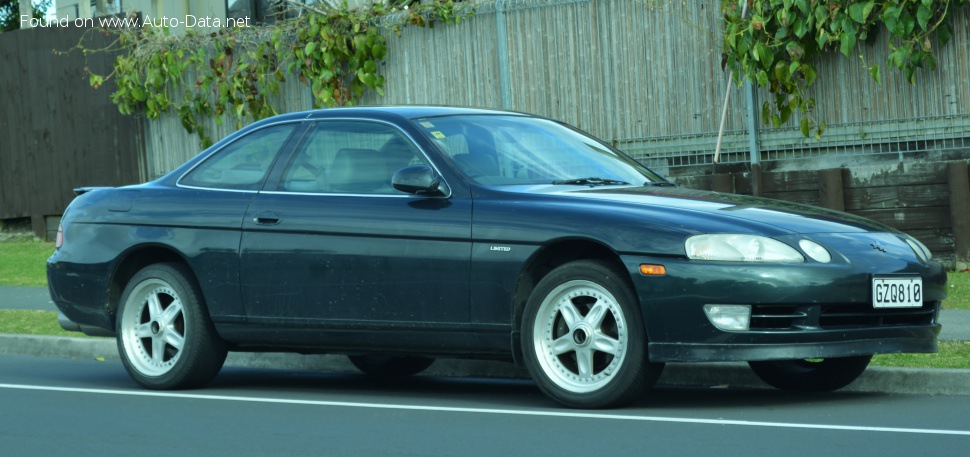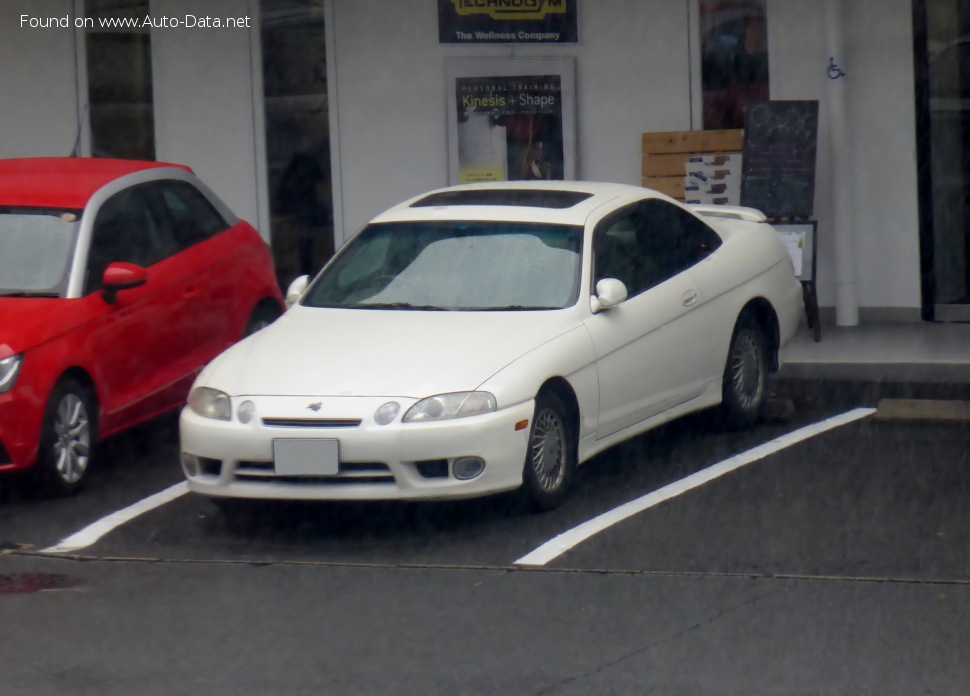
The Toyota Soarer III, specifically the facelifted 1995 model in its 2.5 Twin-turbo 24V GT (280 Hp) Automatic configuration, represents a pinnacle of Japanese luxury grand touring during the 1990s. While never officially sold in the United States, the Soarer gained a significant cult following among enthusiasts, particularly after its introduction in 1991 (with this third generation, chassis code JZZ30/UZZ30/JZZ31). The 1995 facelift brought subtle but meaningful updates, refining its already sophisticated blend of performance, comfort, and distinctive styling. Positioned as a premium personal luxury coupe, the Soarer was Toyota’s answer to European grand tourers, offering a compelling package that combined high-performance engineering with a plush, feature-rich interior. It was a testament to Japan’s automotive prowess, delivering a vehicle that could effortlessly cover long distances at speed while cocooning its occupants in comfort. Its status as a Japan Domestic Market (JDM) exclusive further cemented its allure, making it a coveted import for those seeking a unique blend of power and prestige.
Engine and Performance of the Toyota Soarer III (facelift 1995)
At the heart of the 1995 Toyota Soarer III 2.5 Twin-turbo 24V GT lies the legendary 1JZ-GTE engine, a 2.5-liter inline-six cylinder unit renowned for its robust construction and significant tuning potential. This powerplant, configured with a front, longitudinal layout, features a DOHC (Double Overhead Camshaft) valvetrain with 4 valves per cylinder, ensuring efficient gas flow and high-revving capability. The engine displacement measures 2492 cubic centimeters (152.07 cubic inches), with a cylinder bore of 3.39 inches (86 mm) and a piston stroke of 2.81 inches (71.5 mm). A compression ratio of 9:1 is indicative of its forced induction design.
The “Twin-turbo” designation highlights its sophisticated engine aspiration system, which utilizes two turbochargers working in sequence to minimize turbo lag and deliver a broad, potent powerband. Fuel is delivered via a multi-port manifold injection system, precisely controlling the air-fuel mixture for optimal combustion. This advanced engineering culminates in an impressive output of 280 horsepower at 6200 rpm, translating to a power-per-liter ratio of 112.4 horsepower per liter – a remarkable figure for its era. Torque is equally formidable, peaking at 378 Newton-meters (278.8 lb.-ft.) at a relatively low 2400 rpm, providing excellent off-the-line acceleration and strong mid-range pull. This combination of high power and accessible torque results in a weight-to-power ratio of 5.6 kg/Hp (179.5 Hp/tonne) and a weight-to-torque ratio of 4.1 kg/Nm (242.3 Nm/tonne), underscoring its performance credentials.
Power is channeled to the rear wheels via a 4-speed automatic transmission, a common choice for luxury grand tourers of the period, prioritizing smooth shifts and relaxed cruising. While a manual option was available on some Soarer variants, the automatic transmission perfectly complements the GT’s character, offering effortless power delivery. The drivetrain architecture is classic for a performance-oriented coupe: an internal combustion engine driving the rear wheels, providing a balanced feel and engaging driving dynamics. This setup allows the Soarer to achieve a maximum speed of 260 km/h (161.56 mph), a testament to its engineering and aerodynamic efficiency.
Despite its performance capabilities, the Soarer also aimed for a degree of efficiency for its class. The official fuel consumption figures stand at 14 liters per 100 km (16.8 US mpg) in urban driving, dropping to 9 liters per 100 km (26.1 US mpg) for extra-urban conditions. The combined economy is rated at 11.5 liters per 100 km (20.5 US mpg), giving it a respectable range thanks to its 78-liter (20.61 US gallons) fuel tank capacity. This blend of exhilarating performance and reasonable economy for a twin-turbo luxury coupe made the Soarer a compelling choice in its home market.
Design and Features of the Toyota Soarer III (facelift 1995)
The Toyota Soarer III (facelift 1995) embodies the elegant and somewhat understated design language prevalent in Japanese luxury vehicles of the mid-1990s. Its body type is a sleek, two-door coupe, designed to seat five occupants, although the rear seats are more suited for occasional use or smaller passengers, typical of a 2+2 grand tourer configuration. The facelift introduced subtle refinements to its exterior, maintaining its distinctive long hood, flowing lines, and short deck proportions that give it a powerful yet graceful stance. The overall dimensions contribute to its commanding road presence: a length of 4860 mm (191.34 inches), a width of 1790 mm (70.47 inches), and a height of 1350 mm (53.15 inches). The substantial wheelbase of 2690 mm (105.91 inches) not only contributes to its stable ride at high speeds but also allows for a spacious cabin relative to its coupe form factor.
The vehicle’s wide track, with both front and rear tracks measuring 1520 mm (59.84 inches), further enhances its stability and contributes to its planted appearance. The Soarer rides on 16-inch wheel rims, fitted with 225/55 R16 tires, a size that balances ride comfort with adequate grip for its performance capabilities. The suspension system is designed for both spirited driving and comfortable cruising. The front features a sophisticated double wishbone setup, known for its ability to maintain optimal tire contact with the road surface, enhancing handling and ride quality. The rear suspension utilizes a coil spring system, providing a compliant and controlled ride. This combination ensures that the Soarer can absorb road imperfections while maintaining composure during dynamic maneuvers.
Braking performance is handled by ventilated discs on both the front and rear axles, offering robust stopping power and resistance to fade, crucial for a high-performance grand tourer. An Anti-lock Braking System (ABS) is included as a standard assisting system, enhancing safety by preventing wheel lock-up under hard braking and allowing the driver to maintain steering control. Steering is managed by a precise rack and pinion system, complemented by hydraulic power steering. This setup provides a natural steering feel and reduces effort during low-speed maneuvers, making the car surprisingly easy to pilot despite its size. The Kerb Weight of the vehicle is 1560 kg (3439.21 lbs.), with a maximum weight capacity of 1835 kg (4045.48 lbs.), allowing for a maximum load of 275 kg (606.27 lbs.) for passengers and luggage. The Soarer’s design ethos was clearly to create a luxurious, high-performance coupe that could rival the best offerings from Europe, blending sophisticated engineering with an elegant aesthetic that remains appealing to this day.
Technical Specifications: Toyota Soarer III (facelift 1995) 2.5 Twin-turbo 24V GT (280 Hp) Automatic
| Brand | Toyota |
| Model | Soarer |
| Generation | Soarer III (facelift 1995) |
| Type (Engine) | 2.5 Twin-turbo 24V GT (280 Hp) Automatic |
| Start of production | 1995 year |
| End of production | 2001 year |
| Powertrain Architecture | Internal Combustion engine |
| Body type | Coupe |
| Seats | 5 |
| Doors | 2 |
| Fuel consumption (economy) – urban | 14 l/100 km (16.8 US mpg, 20.2 UK mpg, 7.1 km/l) |
| Fuel consumption (economy) – extra urban | 9 l/100 km (26.1 US mpg, 31.4 UK mpg, 11.1 km/l) |
| Fuel consumption (economy) – combined | 11.5 l/100 km (20.5 US mpg, 24.6 UK mpg, 8.7 km/l) |
| Fuel Type | Petrol (Gasoline) |
| Maximum speed | 260 km/h (161.56 mph) |
| Weight-to-power ratio | 5.6 kg/Hp, 179.5 Hp/tonne |
| Weight-to-torque ratio | 4.1 kg/Nm, 242.3 Nm/tonne |
| Power | 280 Hp @ 6200 rpm. |
| Power per litre | 112.4 Hp/l |
| Torque | 378 Nm @ 2400 rpm (278.8 lb.-ft. @ 2400 rpm) |
| Engine layout | Front, Longitudinal |
| Engine Model/Code | 1JZGTE |
| Engine displacement | 2492 cm3 (152.07 cu. in.) |
| Number of cylinders | 6 |
| Engine configuration | Inline |
| Cylinder Bore | 86 mm (3.39 in.) |
| Piston Stroke | 71.5 mm (2.81 in.) |
| Compression ratio | 9:1 |
| Number of valves per cylinder | 4 |
| Fuel injection system | Multi-port manifold injection |
| Engine aspiration | Turbocharger |
| Valvetrain | DOHC |
| Kerb Weight | 1560 kg (3439.21 lbs.) |
| Max. weight | 1835 kg (4045.48 lbs.) |
| Max load | 275 kg (606.27 lbs.) |
| Fuel tank capacity | 78 l (20.61 US gal | 17.16 UK gal) |
| Length | 4860 mm (191.34 in.) |
| Width | 1790 mm (70.47 in.) |
| Height | 1350 mm (53.15 in.) |
| Wheelbase | 2690 mm (105.91 in.) |
| Front track | 1520 mm (59.84 in.) |
| Rear (Back) track | 1520 mm (59.84 in.) |
| Drivetrain Architecture | The Internal combustion engine (ICE) drives the rear wheels of the vehicle. |
| Drive wheel | Rear wheel drive |
| Number of gears and type of gearbox | 4 gears, automatic transmission |
| Front suspension | Double wishbone |
| Rear suspension | Coil spring |
| Front brakes | Ventilated discs |
| Rear brakes | Ventilated discs |
| Assisting systems | ABS (Anti-lock braking system) |
| Steering type | Steering rack and pinion |
| Power steering | Hydraulic Steering |
| Tires size | 225/55 R16 |
| Wheel rims size | 16 |