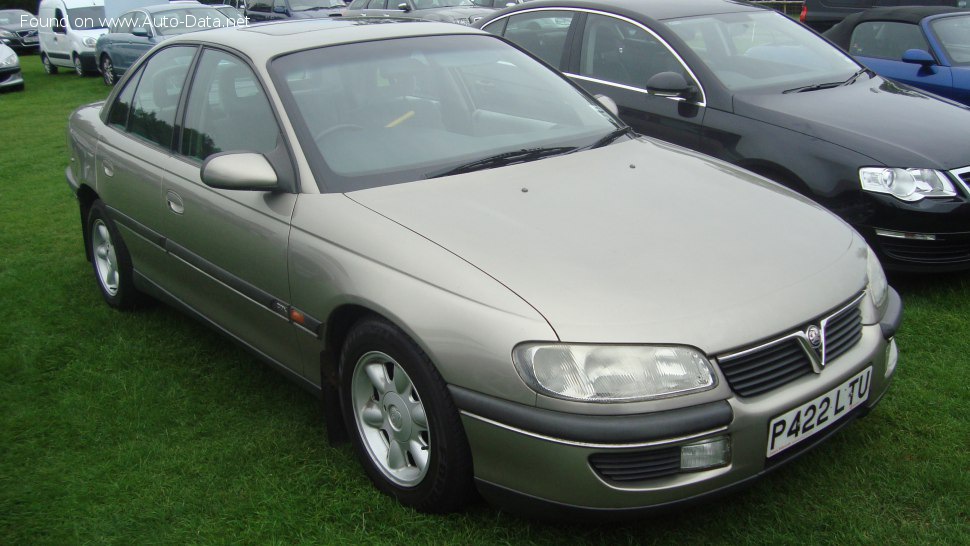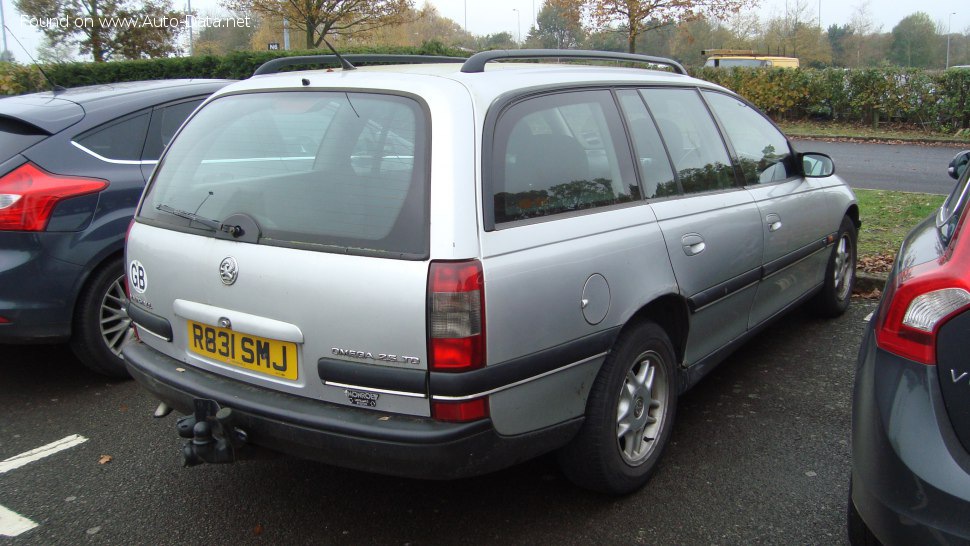
The Vauxhall Omega Estate B 2.5i V6 (170 Hp) Automatic represents a significant offering from the British marque during the mid-to-late 1990s. Produced from 1994 to 1999, this generation of the Omega was the flagship executive car for Vauxhall in the United Kingdom, succeeding the Carlton. As a rebadged version of the Opel Omega B sold across mainland Europe, it carved out a niche in the competitive large family and executive segment, particularly appealing to buyers seeking practicality, space, and a refined driving experience. The “Estate” designation, known as a station wagon in the United States, underscored its utility, combining a spacious interior with a powerful V6 engine and a smooth automatic transmission, making it a capable cruiser for long journeys and a versatile family vehicle.
Engine and Performance of the Vauxhall Omega Estate B 2.5i V6 (170 Hp) Automatic
At the heart of the Vauxhall Omega Estate B 2.5i V6 (170 Hp) Automatic lies a robust and well-regarded 2.5-liter V6 engine, designated internally as the X25XE. This naturally aspirated internal combustion engine, with its front, longitudinal layout, was engineered for smooth power delivery and refinement, characteristics highly valued in its market segment. The V-engine configuration, coupled with a Double Overhead Camshaft (DOHC) valvetrain and 24 valves, contributed to its efficiency and responsiveness. It produced a respectable 170 horsepower at 6000 rpm, translating to a power-per-liter output of 68.1 Hp/l. Torque figures stood at 227 Nm (167.43 lb.-ft.) available at a relatively low 3200 rpm, ensuring ample pulling power for overtaking and hauling, even when fully loaded.
Power was transferred to the rear wheels via a 4-speed automatic transmission, a common setup for executive cars of this era, prioritizing comfort and ease of driving over outright sportiness. This drivetrain architecture, with its rear-wheel-drive configuration, provided a balanced feel and predictable handling dynamics. The Omega Estate B 2.5i V6 was capable of reaching a maximum speed of 129.87 mph, a respectable figure for a large station wagon. Despite its size and V6 engine, the vehicle achieved a combined urban fuel consumption of approximately 19.6 US mpg, utilizing gasoline as its fuel type. The engine’s compression ratio of 10.8:1 facilitated efficient combustion, while its 2498 cubic centimeter (152.44 cu. in.) displacement offered a good balance of performance and fuel economy for its class. The weight-to-power ratio of 9.5 kg/Hp (105.6 Hp/tonne) and a weight-to-torque ratio of 7.1 kg/Nm (141 Nm/tonne) further illustrate its solid, if not blistering, performance capabilities for a family-oriented executive vehicle.
Design and Features of the Vauxhall Omega Estate B
The Vauxhall Omega Estate B was designed with practicality and comfort as primary considerations, evident in its spacious station wagon body type. Measuring 189.72 inches in length, 70.31 inches in width (77.17 inches including mirrors), and 60.83 inches in height, it commanded a significant road presence. Its generous 107.48-inch wheelbase contributed to a stable ride and a commodious interior, comfortably seating five occupants across its two rows of seats. The five-door configuration provided excellent accessibility for both passengers and cargo.
One of the Omega Estate B’s most compelling attributes was its versatile cargo capacity. With the rear seats in place, it offered a substantial 19.07 cubic feet (540 liters) of trunk space. For larger loads, folding down the rear seats expanded this volume dramatically to an impressive 63.57 cubic feet (1800 liters), making it an ideal choice for families, tradespeople, or anyone requiring significant hauling capability. The maximum payload capacity ranged from 1247.82 to 1289.7 lbs., further enhancing its utility. A fuel tank capacity of 19.81 US gallons ensured a decent cruising range between fill-ups.
In terms of chassis and safety, the Omega Estate B featured an independent McPherson strut front suspension with coil springs and an anti-roll bar, paired with an independent multi-link rear suspension. This sophisticated setup provided a comfortable ride while maintaining competent handling characteristics. Braking duties were handled by ventilated discs at the front and disc brakes at the rear, augmented by an Anti-lock Braking System (ABS) as a standard assisting system, a crucial safety feature for its era. The vehicle rode on 195/65 R15 tires mounted on 6.5J x 15-inch wheel rims, offering a good balance of grip and ride comfort. Its drag coefficient (Cd) of 0.32 was competitive for a vehicle of its size and type, contributing to improved fuel efficiency and reduced wind noise at higher speeds. The ability to tow a braked trailer of up to 3527.4-3637.63 lbs. (1600-1650 kg) and an unbraked trailer of 1653.47 lbs. (750 kg) further highlighted its robust engineering and versatility.
Technical Specifications
| Brand | Vauxhall |
| Model | Omega |
| Generation | Omega Estate B |
| Type (Engine) | 2.5i V6 (170 Hp) Automatic |
| Start of production | 1994 year |
| End of production | 1999 year |
| Powertrain Architecture | Internal Combustion engine |
| Body type | Station wagon (estate) |
| Seats | 5 |
| Doors | 5 |
| Fuel consumption (economy) – urban | 19.6 US mpg |
| Fuel Type | Petrol (Gasoline) |
| Maximum speed | 129.87 mph |
| Weight-to-power ratio | 9.5 kg/Hp, 105.6 Hp/tonne |
| Weight-to-torque ratio | 7.1 kg/Nm, 141 Nm/tonne |
| Power | 170 Hp @ 6000 rpm. |
| Power per litre | 68.1 Hp/l |
| Torque | 227 Nm @ 3200 rpm. (167.43 lb.-ft.) |
| Engine layout | Front, Longitudinal |
| Engine Model/Code | X25XE |
| Engine displacement | 2498 cm3 (152.44 cu. in.) |
| Number of cylinders | 6 |
| Engine configuration | V-engine |
| Compression ratio | 10.8:1 |
| Engine aspiration | Naturally aspirated engine |
| Valvetrain | DOHC |
| Engine oil capacity | 5.75 l (6.08 US qt) |
| Coolant | 9.7 l (10.25 US qt) |
| Kerb Weight | 1610-1659 kg (3549.44 – 3657.47 lbs.) |
| Max. weight | 2195-2225 kg (4839.15 – 4905.29 lbs.) |
| Max load | 566-585 kg (1247.82 – 1289.7 lbs.) |
| Trunk (boot) space – minimum | 540 l (19.07 cu. ft.) |
| Trunk (boot) space – maximum | 1800 l (63.57 cu. ft.) |
| Fuel tank capacity | 75 l (19.81 US gal) |
| Max. roof load | 100 kg (220.46 lbs.) |
| Permitted trailer load with brakes (12%) | 1600-1650 kg (3527.4 – 3637.63 lbs.) |
| Permitted trailer load without brakes | 750 kg (1653.47 lbs.) |
| Permitted towbar download | 75 kg (165.35 lbs.) |
| Length | 4819 mm (189.72 in.) |
| Width | 1786 mm (70.31 in.) |
| Width including mirrors | 1960 mm (77.17 in.) |
| Height | 1545 mm (60.83 in.) |
| Wheelbase | 2730 mm (107.48 in.) |
| Front track | 1514 mm (59.61 in.) |
| Rear (Back) track | 1528 mm (60.16 in.) |
| Rear overhang | 1170 mm (46.06 in.) |
| Drag coefficient (Cd) | 0.32 |
| Minimum turning circle (turning diameter) | 10.2 m (33.46 ft.) |
| Drivetrain Architecture | The Internal combustion engine (ICE) drives the rear wheels of the vehicle. |
| Drive wheel | Rear wheel drive |
| Number of gears and type of gearbox | 4 gears, automatic transmission |
| Front suspension | Independent, type McPherson with coil spring and anti-roll bar |
| Rear suspension | Independent multi-link suspension |
| Front brakes | Ventilated discs |
| Rear brakes | Disc |
| Assisting systems | ABS (Anti-lock braking system) |
| Tires size | 195/65 R15 |
| Wheel rims size | 6.5J x 15 |