
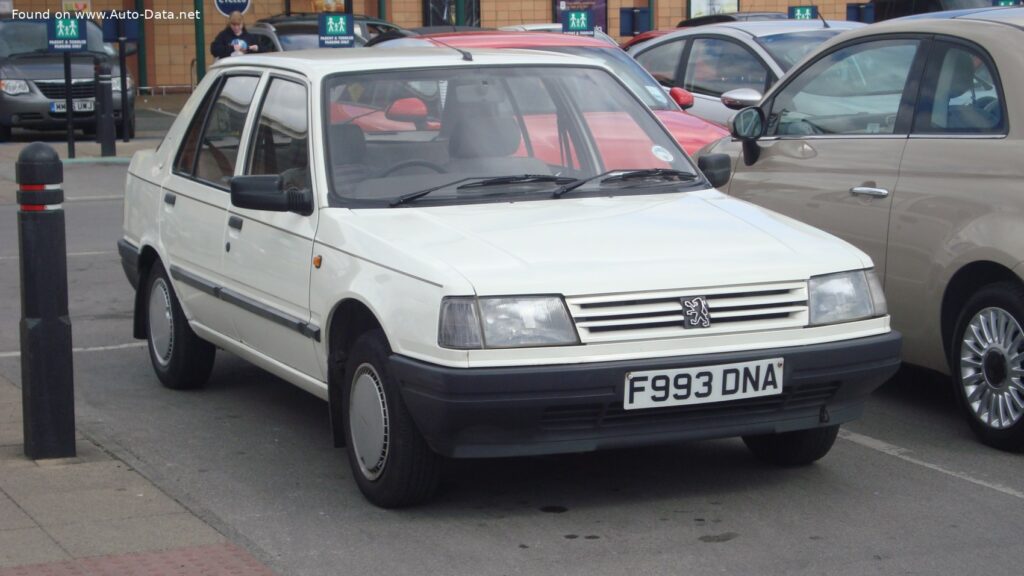
The Peugeot 309 (10C,10A) 1.9 (102 Hp) represents a pivotal chapter in the history of the French automaker, a compact family car that emerged during a transformative period for the brand. Launched in 1985, this specific generation, internally designated 10C for three-door models and 10A for five-door variants, was not merely an incremental update but a significant new model line positioned to fill a crucial segment in the highly competitive European market. While never officially sold in the United States, its design ethos and mechanical underpinnings profoundly influenced Peugeot’s global engineering philosophy. The 309 was initially conceived as a replacement for the Talbot Horizon, following Peugeot’s acquisition of Chrysler Europe (which became Talbot) in the late 1970s. However, it was ultimately rebadged as a Peugeot, cementing its place within the lion brand’s lineage, slotting between the smaller 205 and the larger 405. The 1.9-liter variant, with its robust 102 horsepower, was particularly notable, offering a blend of performance and practicality that appealed to a wide demographic seeking a versatile hatchback for daily use and longer journeys across the continent.
The Genesis and Market Position of the Peugeot 309 (10C,10A)
The Peugeot 309’s introduction marked a strategic shift for the company, leveraging components from the highly successful Peugeot 205 while presenting a more substantial and family-oriented package. Its designation, ‘309,’ broke Peugeot’s traditional numbering sequence (e.g., 305, 306), a decision attributed to its origins as a Talbot project. This lineage, however, did not detract from its identity as a true Peugeot, embodying the brand’s reputation for engaging driving dynamics and robust engineering. Produced from 1985 to 1989 for this specific generation, the 309 was squarely aimed at the C-segment, vying for market share against formidable rivals like the Volkswagen Golf, Ford Escort, and Opel Kadett. Its hatchback body type, available in both three and five-door configurations, offered the practical advantages of flexible cargo space and ease of access, features highly valued by European consumers. The 309 was praised for its comfortable ride, agile handling – a hallmark of Peugeot vehicles of that era – and a surprisingly spacious interior for its class. Its market success underscored Peugeot’s ability to integrate new platforms and design philosophies effectively, even from acquired brands, into its core product strategy.
Powertrain and Performance: The Peugeot 309 (10C,10A) 1.9 (102 Hp)
At the heart of the Peugeot 309 (10C,10A) 1.9 (102 Hp) lay a powerplant renowned for its reliability and spirited performance: the D2B XU9S engine. This 1.9-liter, naturally aspirated gasoline engine was a direct descendant of Peugeot’s highly regarded XU engine family, a series celebrated for its longevity, tuning potential, and widespread use across various Peugeot and Citroën models, including the iconic 205 GTi. Delivering a respectable 102 horsepower (Hp), this engine propelled the 309 with a level of enthusiasm that belied its family car pretensions. The naturally aspirated design, common for the era, provided a linear and predictable power delivery, making it responsive and enjoyable to drive whether navigating urban environments or cruising on European motorways. The engine’s robust construction and straightforward mechanicals contributed to its reputation for durability, a key factor for car buyers in the 1980s who valued long-term ownership and manageable maintenance costs.
Engine Architecture and Fuel Efficiency
The D2B XU9S engine was a conventional inline-four configuration, featuring an overhead camshaft design that optimized valve timing for a balance of power and efficiency. Operating on standard petrol (gasoline), its fuel delivery system, likely a carburetor or early fuel injection depending on the exact year and market, was designed for reliable operation. While specific fuel economy figures are not provided, naturally aspirated engines of this displacement and power output typically offered competitive mileage for the period, especially when driven conservatively. The engine’s aspiration method, being natural, meant a direct relationship between throttle input and power output, offering a more engaging driving experience compared to the later prevalence of turbocharged units. This simplicity also contributed to lower manufacturing costs, which translated into a more accessible price point for consumers. The engine oil capacity was specified at 4.6 liters (4.86 US quarts or 4.05 UK quarts), an important detail for regular servicing and maintaining engine health. Similarly, the cooling system held 7.5 liters (7.93 US quarts or 6.6 UK quarts) of coolant, ensuring efficient thermal management, crucial for engine longevity under various driving conditions.
Design and Features of the Peugeot 309 (10C,10A)
The design of the Peugeot 309 (10C,10A) was a product of its time, characterized by clean lines and a functional aesthetic that prioritized practicality and interior space. Its hatchback body type was a defining feature, offering a versatile blend of passenger accommodation and cargo capacity. The exterior styling, overseen by Peugeot’s in-house design team, managed to integrate elements of the contemporary Peugeot look while giving the 309 its distinct identity. While sharing some visual cues with the smaller 205, the 309 presented a more mature and substantial stance, with a longer wheelbase and greater overall length contributing to improved ride comfort and interior room. The glasshouse was expansive, providing excellent visibility, a desirable trait for both city driving and navigating winding rural roads. The design avoided excessive ornamentation, focusing instead on aerodynamic efficiency and structural integrity.
Interior and Practicality
Inside, the Peugeot 309 offered an interior that was typical for European compact cars of the mid-1980s: functional, durable, and ergonomically sound. The dashboard layout was straightforward, with clear instrumentation that prioritized legibility. Materials, while not luxurious by modern standards, were chosen for their hard-wearing qualities, designed to withstand years of family use. Seating was comfortable, particularly for the front occupants, and the rear bench provided adequate space for two adults or three children, making it a viable family vehicle. The hatchback configuration was a key selling point, allowing for easy loading and unloading of luggage, groceries, or sports equipment. With the rear seats folded down, the cargo area expanded significantly, transforming the 309 into a highly practical load-carrier. Features for the era would have included basic heating and ventilation systems, manual window winders, and perhaps a simple radio. Safety features, while rudimentary compared to today’s standards, would have included three-point seatbelts for front occupants and possibly for outboard rear passengers, along with a robust body structure designed to meet European crash standards of the period. The driving position was generally well-regarded, offering a good command of the road and contributing to the car’s engaging driving experience.
Technical Specifications: Peugeot 309 (10C,10A) 1.9 (102 Hp)
Below is a comprehensive table detailing the raw technical specifications for the Peugeot 309 (10C,10A) 1.9 (102 Hp) model, providing a factual overview of its characteristics.
| Brand | Peugeot |
| Model | 309 |
| Generation | 309 (10C,10A) |
| Type (Engine) | 1.9 (102 Hp) |
| Start of production | 1985 year |
| End of production | 1989 year |
| Powertrain Architecture | Internal Combustion engine |
| Body type | Hatchback |
| Fuel Type | Petrol (Gasoline) |
| Power | 102 Hp |
| Engine Model/Code | D2B XU9S |
| Engine aspiration | Naturally aspirated engine |
| Engine oil capacity | 4.6 l (4.86 US qt | 4.05 UK qt) |
| Coolant | 7.5 l (7.93 US qt | 6.6 UK qt) |
In summary, the Peugeot 309 (10C,10A) 1.9 (102 Hp) stands as a testament to Peugeot’s engineering prowess in the 1980s. It successfully bridged the gap between smaller city cars and larger family sedans, offering a compelling package of performance, practicality, and driving enjoyment. Its legacy endures as a classic European hatchback, appreciated by enthusiasts for its robust XU engine and engaging chassis dynamics, embodying the spirit of a bygone era of straightforward yet characterful automotive design.
