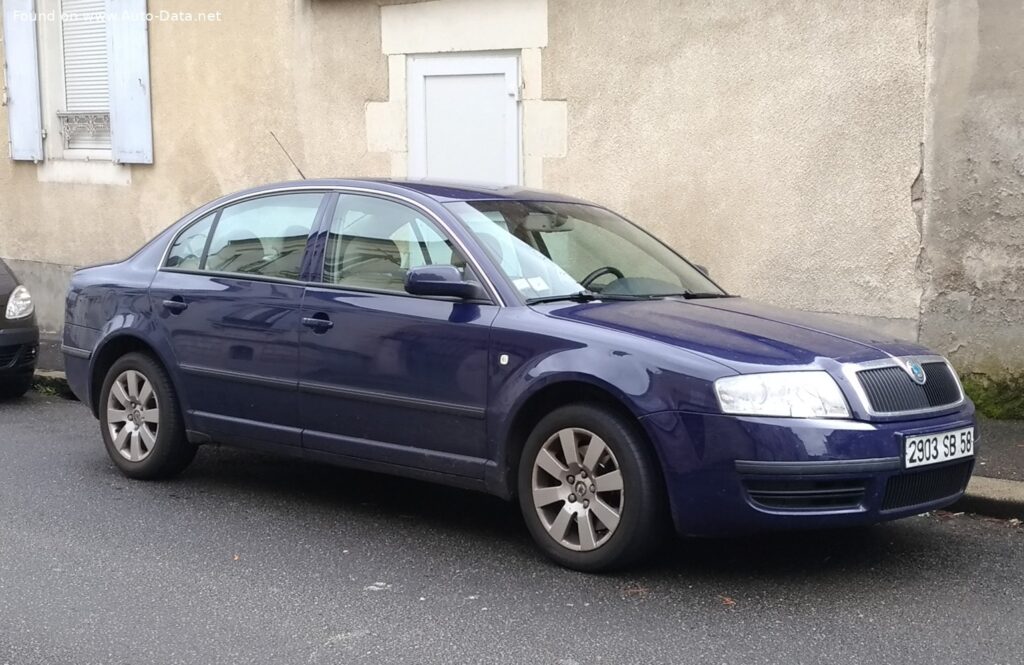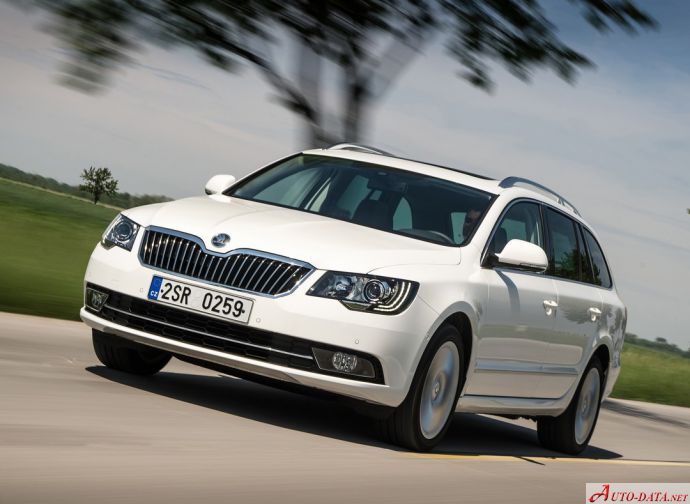
The Skoda Superb II Combi (facelift 2013) 2.0 TDI (170 Hp) DPF represents a compelling blend of practicality, efficiency, and understated sophistication within the mid-size to large family car segment. As a prominent model from Skoda, a brand with a rich history now firmly established under the Volkswagen Group umbrella, the Superb has carved out a significant niche, particularly in European and Asian markets, where it is lauded for its exceptional interior space, robust engineering, and remarkable value proposition. This second-generation Superb, specifically the Combi (station wagon) variant released with its 2013 facelift, showcased Skoda’s commitment to delivering high-quality vehicles that prioritize passenger comfort and cargo capacity without compromising on driving dynamics or fuel economy. While not officially sold in the United States, the Superb’s reputation for offering ‘more car for the money’ has resonated globally, making it a popular choice for families and executive fleets alike who seek a spacious, reliable, and economical vehicle for long-distance travel and daily utility.
Engine and Performance of the Skoda Superb II Combi
At the heart of the 2013 Skoda Superb II Combi (facelift 2013) 2.0 TDI (170 Hp) DPF lies a highly efficient and potent 2.0-liter turbocharged diesel engine, a testament to the Volkswagen Group’s mastery of diesel powertrain technology. This inline four-cylinder engine, designated with the code EA189 / CFGB, features a Common Rail Direct Injection (CRDI) system, ensuring precise fuel delivery for optimal combustion and efficiency. Bolstered by a turbocharger and intercooler, the engine produces a robust 170 horsepower, equating to a respectable 86.4 horsepower per liter, demonstrating its advanced design. More impressively, it generates a substantial 258.15 lb.-ft. of torque, available across a broad and accessible rev range from 1750 to 2500 rpm. This ample torque at low engine speeds is crucial for the Superb Combi, providing excellent pulling power, making highway cruising effortless, and ensuring confident acceleration even when the vehicle is fully loaded.
The performance figures for this diesel-powered wagon are quite strong for its class. The 2013 Skoda Superb II Combi accelerates from 0 to 60 mph in a brisk 8.3 seconds, a commendable time for a family-oriented station wagon. Its maximum speed is rated at 140.43 mph, highlighting its capability for sustained high-speed travel on European autobahns. Power is delivered to the front wheels via a smooth and precise 6-speed manual transmission, offering an engaging driving experience for those who prefer more direct control over gear changes. This powertrain architecture, featuring a front, transverse engine layout, is optimized for packaging efficiency and balanced handling.
Beyond raw power, the 2.0 TDI engine is particularly celebrated for its outstanding fuel economy and environmental consciousness. The combined fuel economy is an impressive 50 US mpg, with city driving yielding 42.8 US mpg and highway cruising achieving an exceptional 56 US mpg. These figures underscore the inherent efficiency of modern diesel engines, especially when paired with a manual transmission. Furthermore, the inclusion of a Diesel Particulate Filter (DPF) ensures that the vehicle meets the stringent Euro 5 J emission standards, with CO2 emissions rated at just 122 g/km, reflecting Skoda’s commitment to reducing environmental impact. The engine’s oil capacity is 4.54 US quarts, and the cooling system holds 8.88 US quarts, indicative of its robust and well-engineered thermal management system designed for longevity and reliability.
Design and Features of the Skoda Superb II Combi
The 2013 Skoda Superb II Combi (facelift 2013) is a prime example of functional, elegant design tailored for maximum utility. As a station wagon (or “estate” in European parlance), its primary design brief was to offer unparalleled interior space and cargo versatility, and it delivered emphatically. The facelift in 2013 brought subtle but effective updates, typically including revised front and rear bumpers, a refreshed grille, and updated lighting clusters that gave the Superb a more modern and assertive presence while retaining its characteristic understated appeal.
Measuring 190.28 inches in length, 71.54 inches in width, and 59.49 inches in height, with a generous wheelbase of 108.7 inches, the Superb Combi is a substantial vehicle. These dimensions translate directly into one of its most celebrated attributes: cavernous interior space. Passengers in both the front and rear enjoy abundant legroom and headroom, making it exceptionally comfortable for long journeys, even for five adults. The vehicle’s minimum turning circle of 38.35 feet indicates a surprisingly maneuverable character for its size, an advantage in urban environments.
The Superb Combi’s true forte lies in its cargo capacity. With the rear seats in place, it offers a monumental 22.35 cubic feet of trunk space, significantly larger than many competitors in its class. Folding down the rear seats expands this volume to an astonishing 65.86 cubic feet, transforming the Superb into a highly capable hauler for everything from luggage and sports equipment to furniture. This flexibility makes it an ideal vehicle for families, outdoor enthusiasts, or anyone requiring substantial load-carrying capability. The fuel tank capacity of 15.85 US gallons further enhances its long-distance touring credentials.
Safety and driver assistance features, while perhaps not as extensive as in today’s most advanced vehicles, were robust for its time. The Superb II Combi came standard with an Anti-lock Braking System (ABS), providing crucial stability during emergency braking. Its front-wheel drive architecture, combined with rack-and-pinion steering, offers predictable and stable handling. The vehicle’s curb weight of 3443.62 lbs, coupled with a maximum gross vehicle weight rating (GVWR) of 4684.82 lbs and a payload capacity of 1241.2 lbs, speaks to its solid construction and ability to comfortably transport passengers and cargo. The Skoda Superb II Combi (facelift 2013) therefore stands as a testament to intelligent design, prioritizing space, comfort, and practicality without sacrificing performance or efficiency.
Technical Specifications
| Brand | Skoda |
| Model | Superb |
| Generation | Superb II Combi (facelift 2013) |
| Engine Type | 2.0 TDI (170 Hp) DPF |
| Start of Production | April, 2013 |
| End of Production | May, 2015 |
| Powertrain Architecture | Internal Combustion Engine |
| Body Type | Station Wagon |
| Seats | 5 |
| Doors | 5 |
| City Fuel Economy | 42.8 US mpg |
| Highway Fuel Economy | 56 US mpg |
| Combined Fuel Economy | 50 US mpg |
| CO2 Emissions | 122 g/km |
| Fuel Type | Diesel |
| Acceleration 0-60 mph | 8.3 sec |
| Maximum Speed | 140.43 mph |
| Emission Standard | Euro 5 J |
| Weight-to-Power Ratio | 9.2 kg/Hp |
| Weight-to-Torque Ratio | 4.5 kg/Nm |
| Power | 170 Hp |
| Power per Liter | 86.4 Hp/l |
| Torque | 258.15 lb.-ft. @ 1750-2500 rpm |
| Engine Layout | Front, Transverse |
| Engine Model/Code | EA189 / CFGB |
| Engine Displacement | 2.0 liters (120.09 cu. in.) |
| Number of Cylinders | 4 |
| Engine Configuration | Inline |
| Compression Ratio | 16:1 |
| Fuel Injection System | Diesel Common Rail |
| Engine Aspiration | Turbocharger, Intercooler |
| Engine Oil Capacity | 4.54 US qt |
| Coolant Capacity | 8.88 US qt |
| Engine Systems | Particulate Filter |
| Curb Weight | 3443.62 lbs |
| Gross Vehicle Weight Rating (GVWR) | 4684.82 lbs |
| Payload Capacity | 1241.2 lbs |
| Cargo Volume (minimum) | 22.35 cu. ft. |
| Cargo Volume (maximum) | 65.86 cu. ft. |
| Fuel Tank Capacity | 15.85 US gal |
| Length | 190.28 in. |
| Width | 71.54 in. |
| Height | 59.49 in. |
| Wheelbase | 108.7 in. |
| Front Track | 60.83 in. |
| Rear Track | 59.72 in. |
| Minimum Turning Circle | 38.35 ft. |
| Drivetrain Architecture | Front-wheel drive |
| Drive Wheel | Front wheel drive |
| Gearbox Type | 6-speed manual transmission |
| Assisting Systems | ABS (Anti-lock braking system) |
| Steering Type | Rack-and-Pinion Steering |