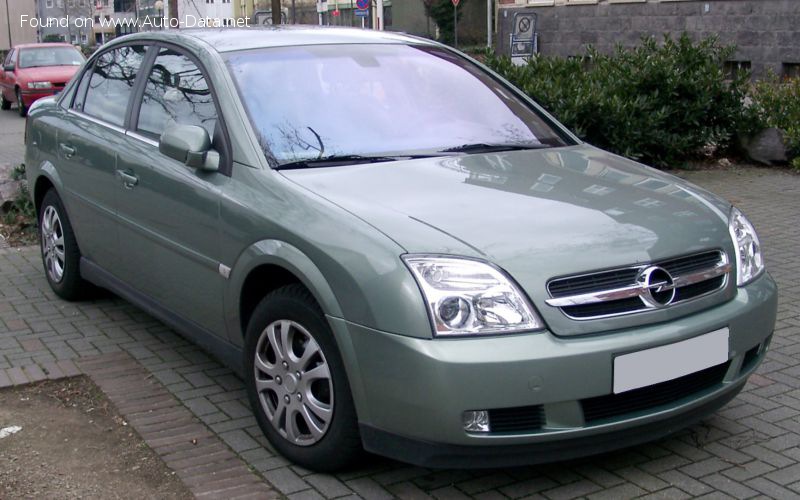
The Opel Vectra C CC 2.2 DTI ECOTEC (125 Hp) Automatic represents a significant offering from the German automaker Opel during the early 2000s, squarely positioned within Europe’s highly competitive D-segment, or mid-size family car market. Produced between April 2002 and November 2004 for this specific variant, the Vectra C generation marked a notable evolution in Opel’s design language, engineering prowess, and technological integration. While the Opel brand was not directly sold in the United States under this nameplate, its underlying General Motors architecture often found its way into other global markets, highlighting its international relevance. The “CC” designation, often associated with “Caravan Coupe” or simply denoting the hatchback variant, emphasized its blend of practical utility and a more dynamic aesthetic compared to its sedan or wagon counterparts. This particular model, with its 2.2-liter DTI ECOTEC diesel engine and automatic transmission, was engineered to provide a compelling balance of fuel efficiency, robust torque, and comfortable cruising, characteristics highly valued by European consumers during its production run.
Engine and Performance of the Opel Vectra C CC 2.2 DTI ECOTEC (125 Hp) Automatic
At the heart of the Opel Vectra C CC 2.2 DTI ECOTEC (125 Hp) Automatic lies a formidable 2.2-liter (2171 cm³ or 132.48 cu. in.) Y22DTR diesel engine, engineered for both efficiency and accessible power. This inline four-cylinder unit features an OHC (Overhead Camshaft) valvetrain with four valves per cylinder, a configuration that optimizes airflow for better combustion and performance. The engine incorporates a sophisticated Diesel Commonrail fuel injection system, a technology that was instrumental in enhancing fuel atomization and control, leading to improved economy and reduced emissions for its time. Further bolstering its performance is a turbocharger coupled with an intercooler, which significantly boosts air intake density, resulting in a more potent power delivery across the RPM range.
The 2.2 DTI ECOTEC engine generates a respectable 125 horsepower at 4000 rpm. However, the true strength of this diesel powertrain lies in its torque output: a substantial 206.52 lb.-ft. (280 Nm) delivered at a remarkably low 1500 rpm. This characteristic low-end torque is a hallmark of diesel engines, providing strong pulling power from idle and making the vehicle feel responsive and effortless in daily driving, especially in urban environments or when carrying heavy loads. The power-to-weight ratio stands at 87.4 Hp per tonne, or 11.4 kg/Hp, while the torque-to-weight ratio is an impressive 195.8 Nm per tonne, or 5.1 kg/Nm, indicating a vehicle designed for practical, real-world performance rather than outright speed.
Power is transmitted to the front wheels via a five-speed automatic transmission, offering smooth and convenient shifting that complements the engine’s relaxed torque delivery. This combination allows the Opel Vectra C CC to accelerate from 0 to 60 mph in 11.2 seconds (0-100 km/h in 11.8 seconds) and reach a maximum speed of 125.52 mph (202 km/h). While these figures may not suggest a sports car, they are entirely competitive for a family-oriented mid-size car of its era, providing ample performance for highway cruising and confident overtaking maneuvers.
Fuel Economy and Environmental Considerations
Fuel efficiency was a key selling point for diesel vehicles in Europe, and the Opel Vectra C CC 2.2 DTI ECOTEC (125 Hp) Automatic delivered commendable figures. The combined fuel consumption is rated at 7.2 liters per 100 km, translating to an impressive 32.7 US mpg. For urban driving, the consumption is 10.3 liters per 100 km (22.8 US mpg), while extra-urban driving yields an even more efficient 5.4 liters per 100 km (43.6 US mpg). These figures underscore the ECOTEC engine’s design philosophy, which prioritized economical operation without sacrificing drivability. With a fuel tank capacity of 16.11 US gallons (61 liters), the Vectra C CC offered a substantial driving range, making it a practical choice for long-distance travel across Europe.
Design and Features
The Opel Vectra C CC, specifically the 5-door hatchback variant, presented a sophisticated and contemporary design for its time. Its body type, characterized by a sloping roofline that gracefully integrates with the rear hatch, offered a sporty silhouette without compromising on interior space or practicality. Measuring 180.94 inches (4596 mm) in length, 70.79 inches (1798 mm) in width (80.16 inches or 2036 mm including mirrors), and 57.48 inches (1460 mm) in height, the Vectra C CC struck a balance between a substantial road presence and manageable dimensions for urban driving and parking.
The interior of the Vectra C CC was designed with passenger comfort and versatility in mind. It provided seating for five occupants, with a focus on ergonomic design and quality materials typical of Opel’s approach in the D-segment. A standout feature of the hatchback body style was its expansive cargo capacity. With the rear seats in place, the trunk offered a generous 17.66 cu. ft. (500 liters) of space, which could be expanded dramatically to 48.03 cu. ft. (1360 liters) by folding down the rear seats. This flexibility made the Vectra C CC an exceptionally practical vehicle for families, holiday trips, or transporting larger items.
Underpinning the Vectra C CC’s ride and handling characteristics was a well-engineered chassis. The front suspension utilized a Spring Strut system, a common and effective setup for front-wheel-drive vehicles, providing a good balance of comfort and control. The rear suspension, featuring “Several levers and rods,” indicates a more advanced multi-link design, which typically offers superior wheel control and ride quality over simpler beam axle arrangements. Braking performance was handled by ventilated discs at the front and solid discs at the rear, complemented by an Anti-lock Braking System (ABS) as a standard assisting system, providing crucial safety in emergency braking situations. The steering system employed a rack and pinion setup, known for its direct feel and responsiveness. The vehicle rode on 195/65 R15 tires mounted on 6.5J x 15 wheel rims, a specification that emphasized comfort and durability over aggressive performance, aligning with its role as a comfortable family cruiser.
Technical Specifications
| Brand | Opel |
| Model | Vectra |
| Generation | Vectra C CC |
| Type (Engine) | 2.2 DTI ECOTEC (125 Hp) Automatic |
| Start of production | April, 2002 year |
| End of production | November, 2004 year |
| Powertrain Architecture | Internal Combustion engine |
| Body type | Hatchback |
| Seats | 5 |
| Doors | 5 |
| Fuel consumption (economy) – urban | 10.3 l/100 km (22.8 US mpg) |
| Fuel consumption (economy) – extra urban | 5.4 l/100 km (43.6 US mpg) |
| Fuel consumption (economy) – combined | 7.2 l/100 km (32.7 US mpg) |
| Fuel Type | Diesel |
| Acceleration 0 – 60 mph | 11.2 sec |
| Acceleration 0 – 100 km/h | 11.8 sec |
| Maximum speed | 125.52 mph (202 km/h) |
| Weight-to-power ratio | 11.4 kg/Hp (87.4 Hp/tonne) |
| Weight-to-torque ratio | 5.1 kg/Nm (195.8 Nm/tonne) |
| Power | 125 Hp @ 4000 rpm |
| Power per liter | 57.6 Hp/l |
| Torque | 206.52 lb.-ft. (280 Nm) @ 1500 rpm |
| Engine layout | Front, Transverse |
| Engine Model/Code | Y22DTR |
| Engine displacement | 2171 cm³ (132.48 cu. in.) |
| Number of cylinders | 4 |
| Engine configuration | Inline |
| Cylinder Bore | 3.31 in. (84 mm) |
| Piston Stroke | 3.86 in. (98 mm) |
| Compression ratio | 18.5:1 |
| Number of valves per cylinder | 4 |
| Fuel injection system | Diesel Commonrail |
| Engine aspiration | Turbocharger, Intercooler |
| Valvetrain | OHC |
| Engine oil capacity | 5.81 US qt (5.5 l) |
| Coolant | 8.24 US qt (7.8 l) |
| Kerb Weight | 3152.61 lbs. (1430 kg) |
| Max. weight (Gross Vehicle Weight) | 4398.22 lbs. (1995 kg) |
| Max load | 1245.61 lbs. (565 kg) |
| Trunk (boot) space – minimum | 17.66 cu. ft. (500 l) |
| Trunk (boot) space – maximum | 48.03 cu. ft. (1360 l) |
| Fuel tank capacity | 16.11 US gal (61 l) |
| Length | 180.94 in. (4596 mm) |
| Width | 70.79 in. (1798 mm) |
| Width including mirrors | 80.16 in. (2036 mm) |
| Height | 57.48 in. (1460 mm) |
| Wheelbase | 106.3 in. (2700 mm) |
| Front track | 59.96 in. (1523 mm) |
| Rear (Back) track | 59.57 in. (1513 mm) |
| Front overhang | 35.63 in. (905 mm) |
| Rear overhang | 39.02 in. (991 mm) |
| Drivetrain Architecture | Front-wheel drive. Internal Combustion engine (ICE) drives the front wheels. |
| Drive wheel | Front wheel drive |
| Number of gears and type of gearbox | 5 gears, automatic transmission |
| Front suspension | Spring Strut |
| Rear suspension | Several levers and rods |
| Front brakes | Ventilated discs |
| Rear brakes | Disc |
| Assisting systems | ABS (Anti-lock braking system) |
| Steering type | Steering rack and pinion |
| Tires size | 195/65 R15 |
| Wheel rims size | 6.5J x 15 |