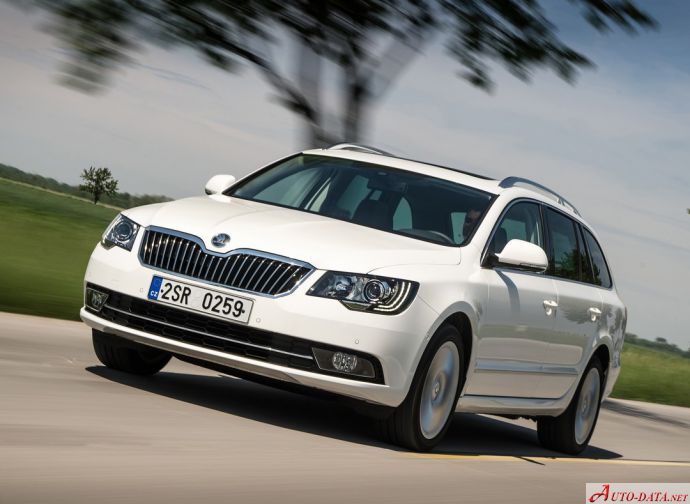
The Skoda Superb II Combi (facelift 2013) represents a pivotal offering from the Czech automaker, a brand renowned for its blend of practicality, value, and robust engineering within the Volkswagen Group. Positioned as a large family car or executive estate in the European market, this particular iteration, produced from April 2013 to May 2015, received a mid-cycle refresh that sharpened its aesthetics and refined its technological package. The Superb Combi, or station wagon as it’s known in the US, carved a niche for itself by offering class-leading interior space and cargo volume, typically found in vehicles a segment above, but at a more accessible price point. The 2.0 TDI (170 Hp) DPF DSG variant, the focus of this analysis, combined a potent yet efficient diesel powertrain with a sophisticated automatic transmission, making it a highly desirable choice for long-distance cruising and daily utility across Europe and other international markets where diesel engines hold significant appeal.
Powertrain and Performance: The Skoda Superb II Combi (facelift 2013) 2.0 TDI
At the heart of the Skoda Superb II Combi (facelift 2013) 2.0 TDI (170 Hp) DPF DSG lies a highly capable and efficient 2.0-liter (120.09 cu. in.) inline four-cylinder turbodiesel engine, identified by the EA189 / CFGB code. This powerplant generates a robust 170 horsepower, equating to a respectable 86.4 Hp per liter, and an impressive 258.15 lb.-ft. of torque, available across a broad and usable rev range from 1750 to 2500 rpm. This torque profile is crucial for the Superb Combi’s character, providing strong acceleration and effortless highway cruising, even when fully laden. The engine features a sophisticated Diesel Commonrail fuel injection system, which precisely controls fuel delivery for optimal combustion, contributing to both its power output and its commendable fuel efficiency.
Further enhancing its performance and environmental credentials, the engine is equipped with a turbocharger and intercooler. The turbocharger forces more air into the engine, significantly boosting power, while the intercooler cools this compressed air, increasing its density and further improving combustion efficiency. This combination allows the 2.0 TDI to deliver a responsive driving experience, propelling the Superb Combi from 0 to 60 mph in a swift 8.3 seconds, with a maximum speed of 137.32 mph. Despite its strong performance, the engine adheres to the Euro 5 J emission standard, thanks in part to the inclusion of a Diesel Particulate Filter (DPF), which captures and incinerates harmful soot particles, reducing the vehicle’s environmental footprint.
Power is channeled to the front wheels via a 6-speed automatic Direct Shift Gearbox (DSG). This dual-clutch transmission is a hallmark of Volkswagen Group vehicles, celebrated for its lightning-fast and incredibly smooth gear changes. The DSG system combines the efficiency of a manual gearbox with the convenience of an automatic, providing a seamless driving experience whether navigating city traffic or embarking on a spirited drive. Its intelligent programming ensures that the engine remains within its optimal power band, contributing significantly to the vehicle’s overall efficiency. The powertrain architecture is a front, transverse engine layout, driving the front wheels, a common and effective configuration for maximizing interior space and manufacturing efficiency in this segment.
The fuel economy figures for the Superb II Combi 2.0 TDI (170 Hp) DPF DSG are particularly impressive for a vehicle of its size and capability. In urban driving, it achieves 36.8 US mpg, while extra-urban (highway) driving sees this figure rise to an outstanding 50 US mpg. The combined fuel economy is rated at 43.6 US mpg, underscoring its efficiency as a long-distance cruiser. With a substantial 15.85 US gallon fuel tank capacity, the Superb offers an excellent cruising range, minimizing stops at the pump. The CO2 emissions are listed at 141 g/km, reflecting its relatively low environmental impact for a diesel vehicle of its era. The weight-to-power ratio stands at 9.3 kg/Hp (107.7 Hp/tonne), and the weight-to-torque ratio is 4.5 kg/Nm (221.7 Nm/tonne), indicating a well-balanced power-to-weight distribution that contributes to its agile feel despite its generous dimensions.
Design and Features of the Skoda Superb II Combi (facelift 2013)
The Skoda Superb II Combi (facelift 2013) embodies a design philosophy that prioritizes practicality, understated elegance, and spaciousness. As a 5-door station wagon (estate), it offers an exceptionally versatile body type, highly favored in European markets for its blend of passenger comfort and cargo utility. The facelift introduced subtle yet effective design enhancements, including updated front and rear fascias, revised lighting signatures, and potentially new wheel designs, aligning the Superb more closely with Skoda’s evolving design language at the time. These changes helped to refresh its appearance, giving it a more modern and sophisticated road presence without altering its fundamental character.
One of the Superb Combi’s most compelling attributes is its cavernous interior. Designed to comfortably accommodate five occupants, it is particularly lauded for its generous rear legroom, often rivaling that of luxury sedans. This commitment to passenger comfort makes it an ideal choice for families and business travelers alike. The interior features are tailored to enhance convenience and safety, reflecting the era’s expectations for a modern family vehicle. While specific luxury features are not detailed in the provided data, a 2013 Superb would typically include a range of amenities such as climate control, a comprehensive infotainment system, and comfortable seating materials, all designed with Skoda’s characteristic “Simply Clever” touches – practical solutions that enhance daily usability.
Safety is a paramount consideration in the Superb Combi. The vehicle comes standard with an Anti-lock Braking System (ABS), a fundamental active safety feature that prevents wheel lock-up during hard braking, allowing the driver to maintain steering control. Given its market positioning and production year, it would also be equipped with a suite of passive safety features, including multiple airbags, electronic stability control (ESC), and traction control, all designed to protect occupants in the event of a collision and prevent accidents from occurring. The robust construction and comprehensive safety systems contributed to strong safety ratings in European crash tests.
The practical appeal of the Skoda Superb II Combi is perhaps best showcased by its remarkable cargo capacity. With the rear seats in place, the trunk (boot) offers a substantial 633 liters (22.35 cu. ft.) of space, which is among the best in its class. When the rear seats are folded down, this capacity expands dramatically to an impressive 1865 liters (65.86 cu. ft.), transforming the Superb into an incredibly capable hauler for luggage, sports equipment, or even furniture. This flexibility underscores its utility as a true multi-purpose vehicle. The exterior dimensions – a length of 190.28 inches, a width of 71.54 inches, and a height of 59.49 inches – contribute to its commanding presence and stable road manners, while a wheelbase of 108.7 inches ensures a smooth ride and excellent interior volume. The minimum turning circle of 38.35 feet indicates reasonable maneuverability for a vehicle of its size.
Technical Specifications: Skoda Superb II Combi (facelift 2013) 2.0 TDI (170 Hp) DPF DSG
| Brand | Skoda |
| Model | Superb |
| Generation | Superb II Combi (facelift 2013) |
| Type (Engine) | 2.0 TDI (170 Hp) DPF DSG |
| Start of production | April, 2013 year |
| End of production | May, 2015 year |
| Powertrain Architecture | Internal Combustion engine |
| Body type | Station wagon (estate) |
| Seats | 5 |
| Doors | 5 |
| Fuel consumption (economy) – urban | 36.8 US mpg |
| Fuel consumption (economy) – extra urban | 50 US mpg |
| Fuel consumption (economy) – combined | 43.6 US mpg |
| CO2 emissions | 141 g/km |
| Fuel Type | Diesel |
| Acceleration 0 – 60 mph | 8.3 sec |
| Maximum speed | 137.32 mph |
| Emission standard | Euro 5 J |
| Weight-to-power ratio | 9.3 kg/Hp, 107.7 Hp/tonne |
| Weight-to-torque ratio | 4.5 kg/Nm, 221.7 Nm/tonne |
| Power | 170 Hp |
| Power per litre | 86.4 Hp/l |
| Torque | 258.15 lb.-ft. @ 1750-2500 rpm. |
| Engine layout | Front, Transverse |
| Engine Model/Code | EA189 / CFGB |
| Engine displacement | 120.09 cu. in. |
| Number of cylinders | 4 |
| Engine configuration | Inline |
| Compression ratio | 16:1 |
| Fuel injection system | Diesel Commonrail |
| Engine aspiration | Turbocharger, Intercooler |
| Engine oil capacity | 4.54 US qt |
| Coolant | 8.88 US qt |
| Engine systems | Particulate filter |
| Kerb Weight | 3481.1 lbs. |
| Max. weight | 4722.3 lbs. |
| Max load | 1241.2 lbs. |
| Trunk (boot) space – minimum | 22.35 cu. ft. |
| Trunk (boot) space – maximum | 65.86 cu. ft. |
| Fuel tank capacity | 15.85 US gal |
| Length | 190.28 in. |
| Width | 71.54 in. |
| Height | 59.49 in. |
| Wheelbase | 108.7 in. |
| Front track | 60.83 in. |
| Rear (Back) track | 59.72 in. |
| Minimum turning circle (turning diameter) | 38.35 ft. |
| Drivetrain Architecture | The Internal combustion engine (ICE) drives the front wheels of the vehicle. |
| Drive wheel | Front wheel drive |
| Number of gears and type of gearbox | 6 gears, automatic transmission DSG |
| Assisting systems | ABS (Anti-lock braking system) |
| Steering type | Steering rack and pinion |