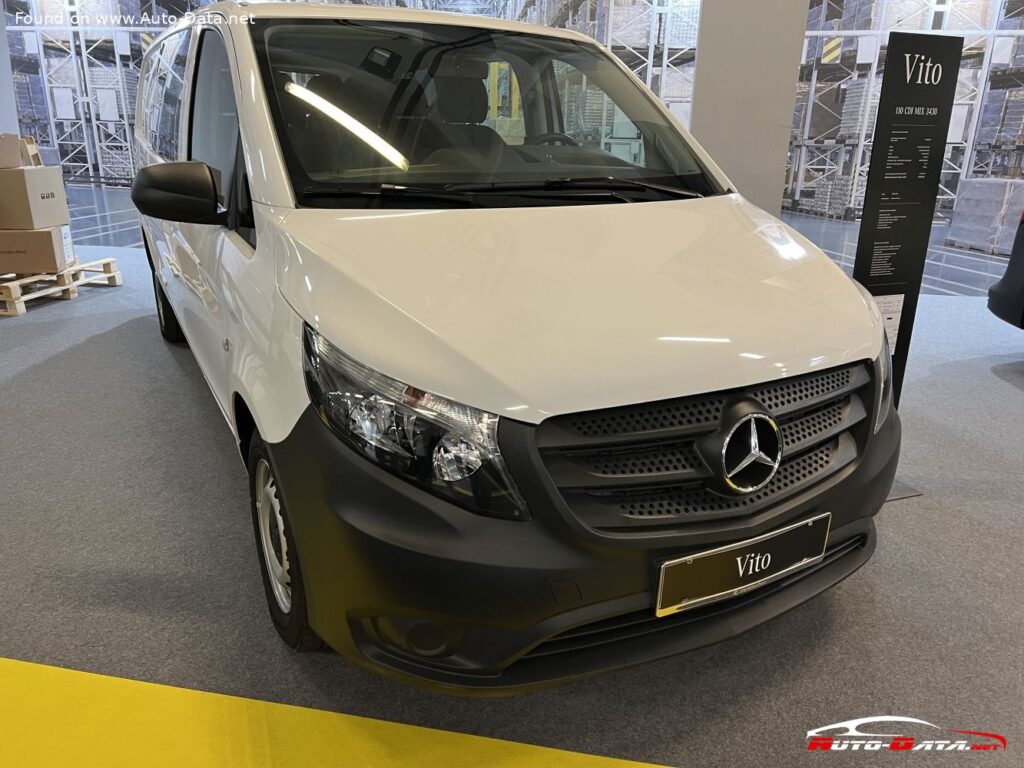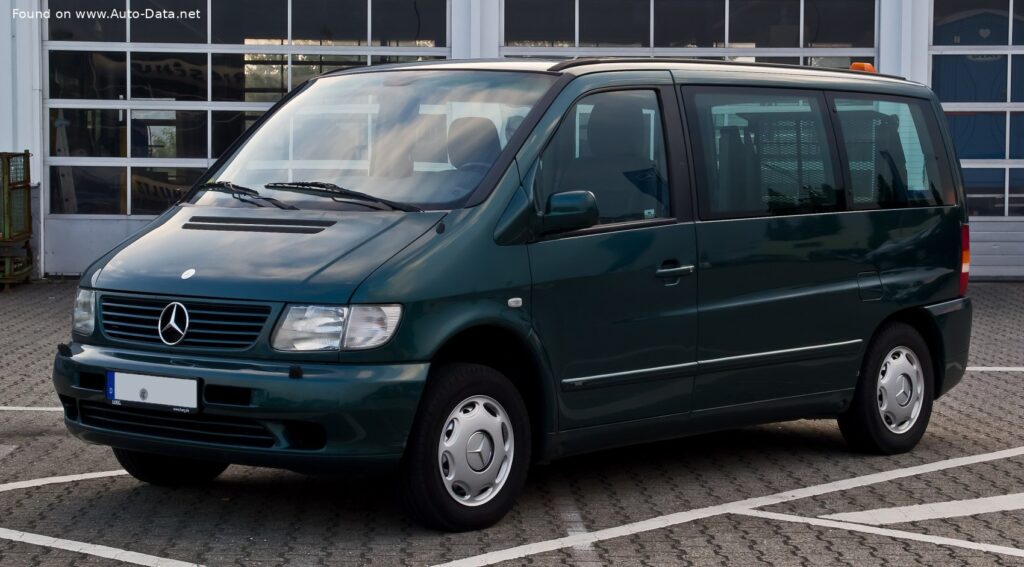
The Mercedes-Benz Vito (W638) V 230 (143 Hp) represents a significant chapter in the German automaker’s foray into the versatile and highly competitive light commercial vehicle segment. Launched in 1999 as part of the first-generation Vito lineup, the W638 series was designed primarily for the European and other international markets, serving a broad spectrum of needs from commercial cargo transport to spacious family or shuttle applications. Unlike many of Mercedes-Benz’s traditional rear-wheel-drive commercial offerings, the W638 adopted a front-wheel-drive architecture, a strategic decision aimed at optimizing interior space and load floor height. The V 230 variant, with its robust gasoline engine, positioned itself as a capable and refined option within this segment, balancing performance with the practical demands of daily operation. Its production run from 1999 to 2003 saw it evolve as a popular choice for businesses and private users seeking Mercedes-Benz quality and engineering in a compact yet capacious van format.
Engine and Performance of the Mercedes-Benz Vito (W638)
At the heart of the Mercedes-Benz Vito (W638) V 230 lies a formidable powertrain, meticulously engineered to deliver a blend of reliable performance and efficiency suitable for its diverse roles. This particular model is equipped with the M 111 E23 engine, an inline-four-cylinder gasoline unit renowned for its durability and smooth power delivery. With an engine displacement of 2295 cm3 (140.05 cu. in.), this naturally aspirated powerplant generates a commendable 143 horsepower at 5200 revolutions per minute (rpm). This output provides ample motivation for the van, whether it’s navigating urban environments or cruising on highways with a full load of passengers or cargo. The power-per-liter ratio stands at 62.3 Hp/l, indicating a well-optimized engine for its displacement.
Torque, a critical factor for a vehicle designed to carry significant loads, is equally impressive. The V 230 produces 215 Nm, which translates to 158.58 lb.-ft. of torque, peaking at a relatively accessible 3500 rpm. This broad torque band ensures strong pulling power from lower engine speeds, crucial for effortless acceleration and maintaining momentum, especially when the vehicle is close to its maximum gross weight. The engine’s configuration is a front, longitudinal layout, contributing to a balanced weight distribution and aiding in vehicle dynamics.
Power is transmitted to the front wheels via a precise 5-speed manual transmission, offering the driver direct control over the vehicle’s performance. This drivetrain architecture, where the internal combustion engine drives the front wheels, maximizes interior space by eliminating a bulky transmission tunnel that would be necessary for a rear-wheel-drive setup. Despite its utilitarian nature, the Vito V 230 demonstrates respectable acceleration figures for its class. It can sprint from 0 to 60 mph in a calculated 14.3 seconds, and from 0 to 100 km/h (0-62 mph) in 15.1 seconds. The maximum speed achievable is 174 km/h, or approximately 108.12 mph, which is more than adequate for most road conditions and legal speed limits. The vehicle’s weight-to-power ratio is 13.8 kg/Hp (72.6 Hp/tonne), and its weight-to-torque ratio is 9.2 kg/Nm (109.1 Nm/tonne), indicating a well-matched engine to its chassis.
Fuel economy for the Mercedes-Benz Vito (W638) V 230 is rated at 11.5 l/100 km in combined driving conditions, which translates to approximately 20.5 US miles per gallon (mpg). While not class-leading by modern standards, this figure was competitive for a gasoline-powered van of its size and capacity at the time of its production. The vehicle runs on petrol (gasoline) and features a substantial 78-liter (20.61 US gallons) fuel tank capacity, providing a decent cruising range between fill-ups. The engine boasts a compression ratio of 10.4:1 and utilizes 4 valves per cylinder, optimizing combustion efficiency. With an engine oil capacity of 7.5 liters (7.93 US quarts) and a coolant capacity of 8.7 liters (9.19 US quarts), the V 230 was designed for robust and sustained operation, characteristic of Mercedes-Benz engineering.
Design and Features of the Mercedes-Benz Vito (W638)
The design philosophy behind the Mercedes-Benz Vito (W638) was centered on maximizing utility, comfort, and safety within a relatively compact footprint. As a versatile van, the V 230 variant typically featured a 5-door configuration and was capable of seating up to 7 occupants, making it suitable for both passenger transport and family use. Its silhouette is distinctly European, characterized by a functional yet aesthetically pleasing form that blends seamlessly into various urban and commercial landscapes. The front-wheel-drive architecture not only enhanced interior volume but also contributed to a lower loading sill, simplifying the loading and unloading of cargo or the entry and exit of passengers.
Dimensionally, the Vito (W638) V 230 measures 4660 mm (183.46 inches) in length, 1880 mm (74.02 inches) in width, and 1844 mm (72.6 inches) in height. These dimensions strike a practical balance, allowing for decent maneuverability in congested city environments while still offering substantial interior space. The generous 3000 mm (118.11 inches) wheelbase contributes to a stable ride and aids in distributing the vehicle’s weight effectively. The front track is 1620 mm (63.78 inches), and the rear track is 1630 mm (64.17 inches), further enhancing stability. Despite its size, the Vito boasts an impressive minimum turning circle (turning diameter) of just 9.9 meters (32.48 feet), making it surprisingly agile for its class and facilitating navigation in tight parking lots or narrow streets.
In terms of weight, the kerb weight of the Vito (W638) V 230 is 1971 kg (4345.31 lbs.). Its maximum permissible weight is 2700 kg (5952.48 lbs.), allowing for a substantial maximum load capacity of 729 kg (1607.17 lbs.). This significant payload capability underscores its suitability for commercial applications, from delivery services to tradespeople requiring transport for tools and materials. The vehicle’s structure and chassis were engineered to handle these loads reliably, ensuring both safety and longevity.
Safety and handling features were also a priority for Mercedes-Benz. The Vito (W638) V 230 is equipped with disc brakes on both the front and rear axles, providing strong and consistent stopping power, essential for a vehicle of its size and potential load. The steering system utilizes a rack and pinion setup, complemented by hydraulic power steering. This combination offers precise control and reduces driver effort, particularly during low-speed maneuvers and parking. The vehicle rides on tires sized 195/70 R15, which provide a good balance of grip, comfort, and durability suitable for a utility vehicle. While the interior features of vans from this era were typically more focused on functionality than luxury, the Mercedes-Benz badge ensured a certain level of build quality, material robustness, and ergonomic design, providing a comfortable and practical environment for both driver and passengers over long journeys.
Technical Specifications
| Brand | Mercedes-Benz |
| Model | Vito |
| Generation | Vito (W638) |
| Type (Engine) | V 230 (143 Hp) |
| Start of production | 1999 year |
| End of production | 2003 year |
| Powertrain Architecture | Internal Combustion engine |
| Body type | Van |
| Seats | 7 |
| Doors | 5 |
| Fuel consumption (economy) – combined | 11.5 l/100 km (20.5 US mpg) |
| Fuel Type | Petrol (Gasoline) |
| Acceleration 0 – 100 km/h | 15.1 sec |
| Acceleration 0 – 62 mph | 15.1 sec |
| Acceleration 0 – 60 mph (Calculated) | 14.3 sec |
| Maximum speed | 174 km/h (108.12 mph) |
| Weight-to-power ratio | 13.8 kg/Hp (72.6 Hp/tonne) |
| Weight-to-torque ratio | 9.2 kg/Nm (109.1 Nm/tonne) |
| Power | 143 Hp @ 5200 rpm |
| Power per litre | 62.3 Hp/l |
| Torque | 215 Nm @ 3500 rpm (158.58 lb.-ft. @ 3500 rpm) |
| Engine layout | Front, Longitudinal |
| Engine Model/Code | M 111 E23 |
| Engine displacement | 2295 cm3 (140.05 cu. in.) |
| Number of cylinders | 4 |
| Engine configuration | Inline |
| Compression ratio | 10.4:1 |
| Number of valves per cylinder | 4 |
| Engine aspiration | Naturally aspirated engine |
| Engine oil capacity | 7.5 l (7.93 US qt) |
| Coolant | 8.7 l (9.19 US qt) |
| Kerb Weight | 1971 kg (4345.31 lbs.) |
| Max. weight | 2700 kg (5952.48 lbs.) |
| Max load | 729 kg (1607.17 lbs.) |
| Fuel tank capacity | 78 l (20.61 US gal) |
| Length | 4660 mm (183.46 in.) |
| Width | 1880 mm (74.02 in.) |
| Height | 1844 mm (72.6 in.) |
| Wheelbase | 3000 mm (118.11 in.) |
| Front track | 1620 mm (63.78 in.) |
| Rear (Back) track | 1630 mm (64.17 in.) |
| Minimum turning circle (turning diameter) | 9.9 m (32.48 ft.) |
| Drivetrain Architecture | Front wheel drive, Internal Combustion engine |
| Drive wheel | Front wheel drive |
| Number of gears and type of gearbox | 5 gears, manual transmission |
| Front brakes | Disc |
| Rear brakes | Disc |
| Steering type | Steering rack and pinion |
| Power steering | Hydraulic Steering |
| Tires size | 195/70 R15 |