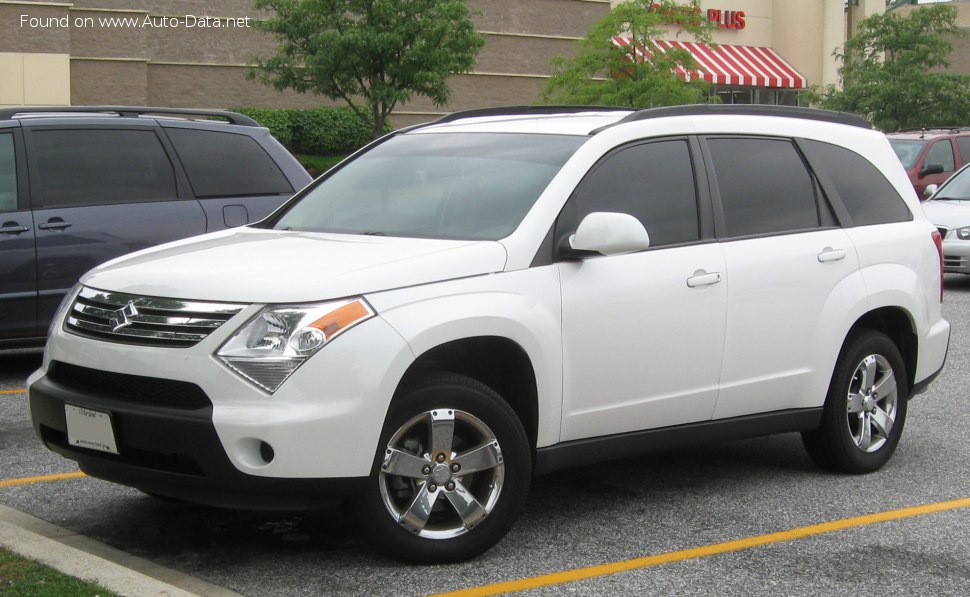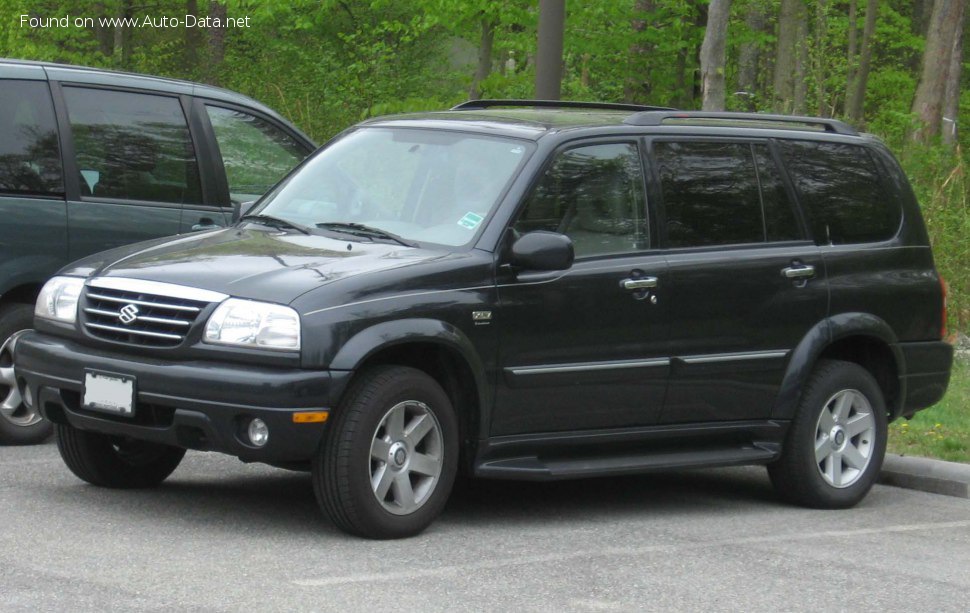
The Suzuki XL7 I 2.7 (185 Hp) Automatic represents a significant, albeit often overlooked, chapter in the evolution of the sport utility vehicle, particularly for the Suzuki brand. Launched in 1998 and produced through 2006, this first-generation XL7 emerged as Suzuki’s ambitious foray into the growing mid-size, three-row SUV segment. Derived from the popular Grand Vitara platform, the XL7 (originally marketed as the Grand Vitara XL-7 in some regions) distinguished itself by offering extended dimensions and seating for up to seven passengers, a crucial advantage over its five-seat sibling. This strategic expansion aimed to cater to families and buyers seeking greater versatility and passenger capacity without fully committing to larger, more truck-like SUVs or minivans. Positioned as a value-oriented option, the Suzuki XL7 I 2.7 (185 Hp) Automatic provided a blend of rugged, body-on-frame construction with a more refined V6 engine and an automatic transmission, making it a competitive contender in a segment increasingly populated by diverse offerings.
The Suzuki XL7 I: A Seven-Seater Pioneer in its Segment
During its production run from 1998 to 2006, the Suzuki XL7 I carved out a niche as a practical and capable seven-seater SUV. At a time when many competitors were transitioning to unibody architectures, the XL7 retained its robust body-on-frame construction, sharing its fundamental underpinnings with the smaller Grand Vitara. This design choice imbued the XL7 with a distinct advantage in terms of off-road durability and towing capability, appealing to buyers who valued traditional SUV ruggedness. Its extended wheelbase and overall length, stretching to 187.4 inches, were specifically engineered to accommodate a third row of seating, transforming it into a genuine family hauler. This expansion was critical for Suzuki, allowing them to compete with larger SUVs from domestic and Japanese rivals that dominated the burgeoning seven-seater market. The XL7 was not merely an elongated Grand Vitara; it was a carefully considered evolution designed to meet specific market demands for increased passenger capacity and cargo versatility, all while maintaining Suzuki’s reputation for reliable and capable four-wheel-drive vehicles.
Engine and Performance of the Suzuki XL7 I 2.7 (185 Hp) Automatic
Powertrain Dynamics
At the heart of the Suzuki XL7 I 2.7 (185 Hp) Automatic was a longitudinally mounted 2.7-liter (2736 cm3 or 166.96 cu. in.) V6 engine, specifically the H27 code. This naturally aspirated powerplant was engineered for a balance of power delivery and smooth operation, characteristic of a multi-port manifold injection system. Featuring a Double Overhead Camshaft (DOHC) valvetrain with four valves per cylinder, the engine produced a respectable 185 horsepower at 6000 rpm. Torque output stood at 250 Nm, or 184.39 lb.-ft., peaking at a relatively accessible 3300 rpm. This torque characteristic ensured ample pulling power for daily driving and light towing tasks, a key consideration for a seven-passenger vehicle. The engine’s compression ratio of 9.5:1 was optimized for regular unleaded gasoline. Power was efficiently managed by a 5-speed automatic transmission, providing smooth shifts and a user-friendly driving experience. The vehicle’s powertrain architecture, centered around an internal combustion engine, delivered power to all four wheels via an All-Wheel Drive (4×4) system, underscoring its capability in varied driving conditions, from urban streets to unpaved roads.
Driving Experience and Efficiency
The performance metrics of the Suzuki XL7 I 2.7 (185 Hp) Automatic reflected its role as a practical family SUV rather than a performance machine. It was capable of accelerating from 0 to 60 mph in approximately 9.5 seconds, a competitive figure for a mid-size SUV of its era, particularly one with seven-passenger capacity and a curb weight of 3825.02 lbs. The maximum speed was rated at 113.71 mph (183 km/h), more than sufficient for highway cruising. Fuel economy, while not a primary selling point for SUVs of this generation, was reasonable for its class and powertrain configuration. The combined fuel consumption was rated at 20.5 US mpg (11.5 l/100 km), with urban figures around 15.4 US mpg (15.3 l/100 km) and extra-urban figures reaching 25.3 US mpg (9.3 l/100 km). These figures, alongside a 16.91 US gallon fuel tank, provided a decent cruising range. The weight-to-power ratio of 9.4 kg/Hp (106.6 Hp/tonne) and a weight-to-torque ratio of 6.9 kg/Nm (144.1 Nm/tonne) further illustrate the XL7’s balanced approach to utility and everyday drivability, catering to the needs of families seeking a reliable and capable vehicle for diverse adventures.
Design, Features, and Practicality of the Suzuki XL7 I
Exterior and Interior Design
The Suzuki XL7 I 2.7 (185 Hp) Automatic embodied the rugged yet refined aesthetic popular in SUVs of the late 1990s and early 2000s. Its SUV body type, characterized by a substantial stance and five doors, projected an image of capability and family-friendly utility. With a length of 187.4 inches, a width of 70.08 inches, and a height of 68.5 inches, the XL7 offered a commanding presence on the road. The extended 110.24-inch wheelbase was crucial for accommodating the additional row of seating, ensuring adequate legroom for all passengers. The front and rear tracks, both measuring 59.06 inches, contributed to the vehicle’s stable handling. The exterior design featured clean lines, prominent wheel arches housing 235/60 R16 tires, and a ground clearance suitable for light off-road excursions, consistent with Suzuki’s heritage of producing capable 4×4 vehicles. Inside, the XL7 focused on practicality and durability, with materials and finishes designed to withstand the rigors of family use. The layout was straightforward and ergonomic, prioritizing ease of use and accessibility for all controls.
Interior Versatility and Safety
The true strength of the Suzuki XL7 I lay in its interior versatility, particularly its seven-seat configuration. This feature made it a compelling choice for larger families or those who frequently transported extra passengers. When the third row was in use, the XL7 still offered a respectable minimum trunk space of 31.78 cu. ft. (900 liters). For situations requiring maximum cargo capacity, the rear seats could be folded down, expanding the cargo volume to a generous 59.58 cu. ft. (1687 liters), which was highly competitive for its class. This flexibility allowed owners to easily switch between passenger-carrying and cargo-hauling duties, enhancing the vehicle’s overall utility. In terms of safety, the XL7 was equipped with essential systems for its time, including an Anti-lock Braking System (ABS) on its disc front brakes and drum rear brakes. The independent McPherson type front suspension and spring-loaded rack rear suspension provided a comfortable ride on paved roads while maintaining composure over varied terrain. The vehicle’s robust construction and comprehensive feature set underlined its commitment to passenger safety and comfort, making it a reliable choice for families throughout its production lifespan.
Technical Specifications of the Suzuki XL7 I 2.7 (185 Hp) Automatic
| Brand | Suzuki |
| Model | XL7 |
| Generation | XL7 I |
| Type (Engine) | 2.7 (185 Hp) Automatic |
| Start of production | 1998 year |
| End of production | 2006 year |
| Powertrain Architecture | Internal Combustion engine |
| Body type | SUV |
| Seats | 7 |
| Doors | 5 |
| Fuel consumption (economy) – urban | 15.4 US mpg (15.3 l/100 km) |
| Fuel consumption (economy) – extra urban | 25.3 US mpg (9.3 l/100 km) |
| Fuel consumption (economy) – combined | 20.5 US mpg (11.5 l/100 km) |
| Fuel Type | Petrol (Gasoline) |
| Acceleration 0 – 60 mph | 9.5 sec |
| Maximum speed | 113.71 mph (183 km/h) |
| Weight-to-power ratio | 9.4 kg/Hp (106.6 Hp/tonne) |
| Weight-to-torque ratio | 6.9 kg/Nm (144.1 Nm/tonne) |
| Power | 185 Hp @ 6000 rpm |
| Power per litre | 67.6 Hp/l |
| Torque | 184.39 lb.-ft. @ 3300 rpm (250 Nm) |
| Engine layout | Front, Longitudinal |
| Engine Model/Code | H27 |
| Engine displacement | 166.96 cu. in. (2736 cm3) |
| Number of cylinders | 6 |
| Engine configuration | V-engine |
| Cylinder Bore | 3.46 in. (88 mm) |
| Piston Stroke | 2.95 in. (75 mm) |
| Compression ratio | 9.5:1 |
| Number of valves per cylinder | 4 |
| Fuel injection system | Multi-port manifold injection |
| Engine aspiration | Naturally aspirated engine |
| Valvetrain | DOHC |
| Engine oil capacity | 5.81 US qt (5.5 l) |
| Coolant | 8.45 US qt (8 l) |
| Kerb Weight | 3825.02 lbs. (1735 kg) |
| Max. weight | 5070.63 lbs. (2300 kg) |
| Max load | 1245.61 lbs. (565 kg) |
| Trunk (boot) space – minimum | 31.78 cu. ft. (900 l) |
| Trunk (boot) space – maximum | 59.58 cu. ft. (1687 l) |
| Fuel tank capacity | 16.91 US gal (64 l) |
| Length | 187.4 in. (4760 mm) |
| Width | 70.08 in. (1780 mm) |
| Height | 68.5 in. (1740 mm) |
| Wheelbase | 110.24 in. (2800 mm) |
| Front track | 59.06 in. (1500 mm) |
| Rear (Back) track | 59.06 in. (1500 mm) |
| Drive wheel | All wheel drive (4×4) |
| Number of gears and type of gearbox | 5 gears, automatic transmission |
| Front suspension | Independent type McPherson |
| Rear suspension | Spring-loaded rack |
| Front brakes | Disc |
| Rear brakes | Drum |
| Assisting systems | ABS (Anti-lock braking system) |
| Tires size | 235/60 R16 |