The Skoda Superb II Combi (facelift 2013) 2.0 TSI (200 Hp) DSG represents a significant offering within the European D-segment, combining executive comfort with exceptional practicality in a station wagon format. Produced by the Czech automaker Skoda, a subsidiary of the Volkswagen Group, this particular iteration, active from April 2013 to May 2015, showcases the brand’s commitment to delivering spacious, well-engineered, and value-oriented vehicles. While not a common sight on American roads, the Superb has carved out a strong niche in its primary markets, particularly across Europe and parts of Asia, as a sophisticated and capacious alternative to more premium brands, often at a more accessible price point. The facelifted second generation Superb Combi maintained its distinctive design while incorporating subtle refinements to keep it competitive, emphasizing its role as a versatile family hauler or a comfortable business cruiser. This specific model, powered by a robust 2.0-liter turbocharged gasoline engine and equipped with a smooth DSG automatic transmission, embodies a blend of performance, efficiency, and everyday usability that defines its appeal.
Engine and Performance: The Heart of the Skoda Superb II Combi (facelift 2013)
At the core of the Skoda Superb II Combi (facelift 2013) 2.0 TSI (200 Hp) DSG lies a highly capable and widely respected powertrain from the Volkswagen Group. The 2.0 TSI engine, identified by the EA888 / CCZA code, is a 1984 cm3 (121.07 cu. in.) inline four-cylinder unit, meticulously engineered for a balance of power and efficiency. This turbocharged and intercooled gasoline engine utilizes direct injection, a modern fuel delivery system that optimizes combustion and fuel economy. It produces a substantial 200 horsepower, equating to an impressive 100.8 Hp per liter, a testament to its advanced design. Torque delivery is equally compelling, peaking at 206.52 lb.-ft. (280 Nm) across a broad rev range from 1700 to 5000 rpm. This wide torque band ensures robust acceleration and flexible driving characteristics, whether navigating urban environments or cruising on the highway.
Power is efficiently transmitted to the front wheels via a sophisticated 6-speed DSG (Direct Shift Gearbox) automatic transmission. This dual-clutch unit is renowned for its rapid and seamless gear changes, contributing significantly to both the vehicle’s performance and its fuel efficiency. The combination of the potent 2.0 TSI engine and the quick-shifting DSG allows the Superb Combi to accelerate from 0 to 60 mph in a brisk 7.4 seconds, with 0-62 mph (0-100 km/h) taking 7.8 seconds. The vehicle’s top speed is an impressive 147.89 mph (238 km/h), firmly placing it in the realm of capable touring vehicles. Despite its performance capabilities, the Superb Combi maintains reasonable fuel consumption figures for its class. The combined fuel economy is rated at 29.4 US mpg (8 l/100 km), with urban consumption at 22 US mpg (10.7 l/100 km) and extra-urban figures reaching 36.8 US mpg (6.4 l/100 km). With CO2 emissions of 180 g/km, it meets the Euro 5 J emission standard, reflecting its compliance with contemporary environmental regulations at the time of its production. The vehicle’s weight-to-power ratio stands at 7.8 kg/Hp (128 Hp/tonne), underscoring the effective power delivery relative to its curb weight of 3443.62 lbs (1562 kg).
Design and Features: Practicality Meets Refinement
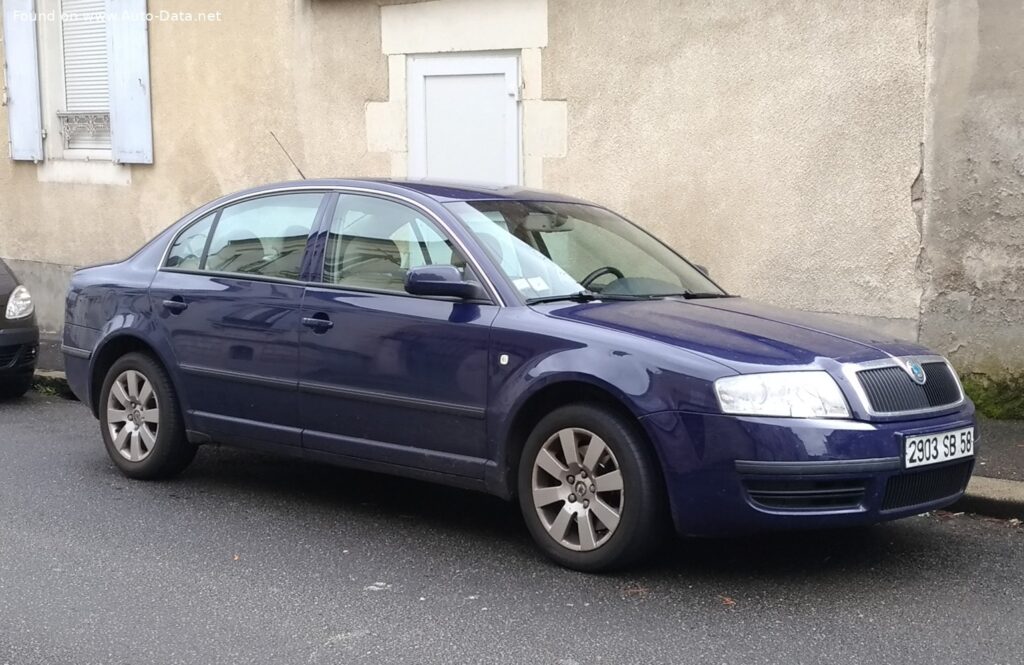
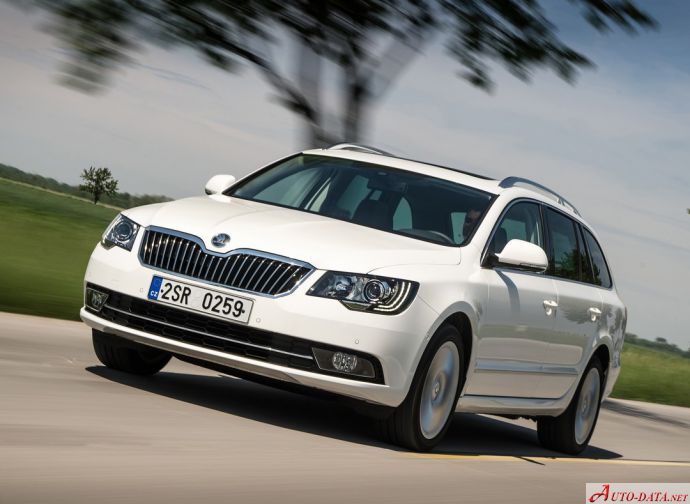
The Skoda Superb II Combi (facelift 2013) is defined by its station wagon (estate) body type, a configuration that prioritizes interior space and cargo versatility. With five doors and seating for five occupants, it is designed to cater to the needs of families and professionals requiring significant carrying capacity. The facelift introduced subtle but impactful styling revisions, including a refreshed grille, updated headlights, and revised bumper designs, lending the car a more contemporary and assertive appearance while retaining its characteristic elegant lines. The overall dimensions, with a length of 190.28 inches (4833 mm), a width of 71.54 inches (1817 mm), and a height of 59.49 inches (1511 mm), contribute to its commanding road presence and, more importantly, translate into an exceptionally spacious cabin.
A standout feature of the Superb Combi is its cavernous trunk space. With the rear seats in place, it offers a generous 22.35 cubic feet (633 liters) of cargo volume. Folding the rear seats down expands this capacity to an expansive 65.86 cubic feet (1865 liters), making it one of the most practical vehicles in its segment. This impressive cargo capacity, combined with a maximum load of 1241.2 lbs (563 kg), highlights its utility. The 108.7-inch (2761 mm) wheelbase is a key factor in providing exceptional rear legroom, a hallmark of the Superb line, offering comfort levels often associated with larger, more expensive sedans and wagons. The vehicle’s front-wheel-drive architecture, coupled with a steering rack and pinion system, ensures predictable handling and a comfortable ride. For safety, the Superb Combi came standard with an Anti-lock Braking System (ABS), a fundamental active safety feature that helps maintain steering control during emergency braking maneuvers. The design philosophy behind the Superb Combi emphasized intelligent solutions and user-friendly features, from thoughtful storage compartments to ergonomic controls, reinforcing its reputation as a highly functional and comfortable vehicle for long journeys and daily errands alike.
Technical Specifications
| Brand | Skoda |
| Model | Superb |
| Generation | Superb II Combi (facelift 2013) |
| Type (Engine) | 2.0 TSI (200 Hp) DSG |
| Start of production | April, 2013 year |
| End of production | May, 2015 year |
| Powertrain Architecture | Internal Combustion engine |
| Body type | Station wagon (estate) |
| Seats | 5 |
| Doors | 5 |
| Fuel consumption (economy) – urban | 10.7 l/100 km (22 US mpg) |
| Fuel consumption (economy) – extra urban | 6.4 l/100 km (36.8 US mpg) |
| Fuel consumption (economy) – combined | 8 l/100 km (29.4 US mpg) |
| CO2 emissions | 180 g/km |
| Fuel Type | Petrol (Gasoline) |
| Acceleration 0 – 60 mph | 7.4 sec |
| Acceleration 0 – 62 mph (0 – 100 km/h) | 7.8 sec |
| Maximum speed | 147.89 mph (238 km/h) |
| Emission standard | Euro 5 J |
| Weight-to-power ratio | 7.8 kg/Hp (128 Hp/tonne) |
| Weight-to-torque ratio | 5.6 kg/Nm (179.3 Nm/tonne) |
| Power | 200 Hp |
| Power per litre | 100.8 Hp/l |
| Torque | 206.52 lb.-ft. (280 Nm) @ 1700-5000 rpm |
| Engine layout | Front, Transverse |
| Engine Model/Code | EA888 / CCZA |
| Engine displacement | 121.07 cu. in. (1984 cm3) |
| Number of cylinders | 4 |
| Engine configuration | Inline |
| Compression ratio | 9.8:1 |
| Fuel injection system | Direct injection |
| Engine aspiration | Turbocharger, Intercooler |
| Engine oil capacity | 4.86 US qt (4.6 l) |
| Coolant | 9.09 US qt (8.6 l) |
| Kerb Weight | 3443.62 lbs (1562 kg) |
| Max. weight | 4684.82 lbs (2125 kg) |
| Max load | 1241.2 lbs (563 kg) |
| Trunk (boot) space – minimum | 22.35 cu. ft. (633 l) |
| Trunk (boot) space – maximum | 65.86 cu. ft. (1865 l) |
| Fuel tank capacity | 15.85 US gal (60 l) |
| Length | 190.28 in. (4833 mm) |
| Width | 71.54 in. (1817 mm) |
| Height | 59.49 in. (1511 mm) |
| Wheelbase | 108.7 in. (2761 mm) |
| Front track | 60.83 in. (1545 mm) |
| Rear (Back) track | 59.72 in. (1517 mm) |
| Minimum turning circle (turning diameter) | 38.35 ft. (11.69 m) |
| Drivetrain Architecture | Internal combustion engine drives the front wheels |
| Drive wheel | Front wheel drive |
| Number of gears and type of gearbox | 6 gears, automatic transmission DSG |
| Assisting systems | ABS (Anti-lock braking system) |
| Steering type | Steering rack and pinion |