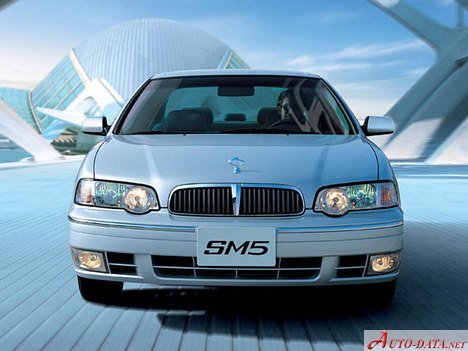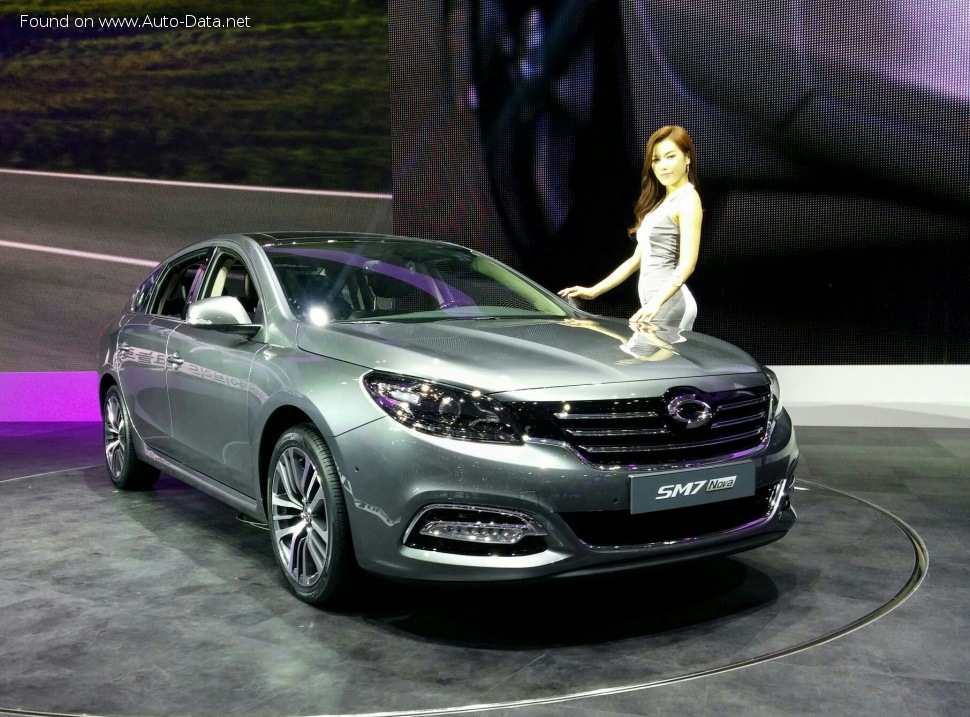
The 2014 facelift of the Renault Samsung SM7 II (L47) 3.5i V6 (258 Hp) Automatic represents a significant refresh for the flagship executive sedan in the South Korean market. Developed by Renault Samsung Motors, a joint venture between the French automaker Renault and the South Korean conglomerate Samsung, the SM7 series has consistently aimed to offer a blend of European sophistication and robust engineering tailored for the discerning Asian consumer. The second generation, designated L47, built upon the legacy of its predecessor, evolving into a more refined and technologically advanced vehicle. This particular iteration, with its potent 3.5-liter V6 engine and smooth automatic transmission, was positioned as a premium offering, emphasizing comfort, performance, and a stately presence within the competitive executive sedan segment. While not directly sold in the North American market, the SM7’s underlying platform and powertrain components often share lineage with models familiar to US audiences, such as those from Nissan, given the Renault-Nissan-Mitsubishi Alliance. This facelift brought updated styling cues, enhanced features, and continued to solidify the SM7’s reputation as a luxurious and capable four-door, five-seat sedan designed for long-distance cruising and urban elegance in its primary operating regions.
Engine & Performance: The Renault Samsung SM7 II (L47) (facelift 2014) Powertrain
At the heart of the 2014 Renault Samsung SM7 II (L47) facelift, particularly the 3.5i V6 variant, lies a powerhouse designed for both spirited driving and refined cruising. The vehicle is propelled by a naturally aspirated 3.5-liter V6 engine, identified by the robust and widely acclaimed VQ35DE engine code. This engine, a staple in many Nissan and Infiniti vehicles, is renowned for its smooth operation, reliability, and strong power delivery across the rev range. In this application, it produces a formidable 258 horsepower at 6000 rpm, translating to a power per liter output of 73.8 Hp/l, showcasing its efficient design. Torque peaks at 330 Nm (243.4 lb.-ft.) at a accessible 4400 rpm, providing ample thrust for acceleration and effortless overtaking maneuvers, a critical attribute for an executive sedan.
The engine’s layout is front, transverse, contributing to the front-wheel-drive architecture of the vehicle. With six cylinders arranged in a V-configuration and four valves per cylinder, the multi-port manifold injection system ensures precise fuel delivery, optimizing both performance and efficiency for gasoline fuel type. This powertrain is mated to a 6-speed automatic transmission, meticulously calibrated to provide seamless gear changes, enhancing both driver comfort and fuel economy. The combination of the potent V6 and the responsive automatic gearbox results in a weight-to-power ratio of 6.4 kg/Hp, or 157.3 Hp/tonne, and a weight-to-torque ratio of 5 kg/Nm, or 201.2 Nm/tonne. These figures indicate a well-balanced performance envelope for a vehicle of its class and weight.
Fuel efficiency for the 3.5i V6 Automatic model is respectable for a large displacement V6 sedan. The combined fuel consumption is rated at 8.5 liters per 100 kilometers, which translates to approximately 27.7 US miles per gallon. For urban driving, the consumption stands at 11 l/100 km (21.4 US mpg), while extra-urban cruising yields a more economical 7.2 l/100 km (32.7 US mpg). CO2 emissions are reported at 202 g/km, reflecting its internal combustion engine architecture. The engine oil capacity is 4.8 liters (5.07 US quarts), underscoring the substantial nature of this powertrain. Overall, the engine and performance characteristics of the SM7 II facelift were finely tuned to deliver a premium driving experience, blending power, refinement, and a degree of efficiency fitting for a modern executive sedan.
Design & Features: The Executive Presence of the Renault Samsung SM7 II (L47)
The Renault Samsung SM7 II (L47) (facelift 2014) embodies the design principles of an executive sedan, characterized by its substantial dimensions and refined aesthetics. As a four-door, five-seat sedan, its body type prioritizes passenger comfort and a commanding road presence. The facelift introduced subtle yet impactful changes to its exterior, enhancing its contemporary appeal while retaining its sophisticated character. Measuring an impressive 4995 mm (196.65 inches) in length, 1870 mm (73.62 inches) in width, and 1480 mm (58.27 inches) in height, the SM7 commands attention. Its generous wheelbase of 2810 mm (110.63 inches) is a clear indicator of the spacious interior, particularly for rear-seat passengers, a crucial aspect for executive-class vehicles.
The design language of the SM7 II facelift is one of understated elegance, with clean lines and a purposeful stance. Both the front and rear tracks measure 1565 mm (61.61 inches), contributing to the vehicle’s stable and planted feel. The kerb weight for this V6 variant is 1640 kg (3615.58 lbs.), a testament to its solid build quality and the extensive feature set typically found in its segment. While specific interior amenity details are not provided, an executive sedan of this caliber would invariably offer premium materials, advanced infotainment options for its era, and a focus on acoustic comfort to ensure a serene cabin environment.
In terms of chassis and safety, the SM7 II is engineered for a balanced ride and confident handling. It features an independent McPherson type front suspension and an independent multi-link rear suspension, a configuration chosen to provide a comfortable ride while maintaining good body control. Braking is handled by ventilated discs at the front and disc brakes at the rear, ensuring strong stopping power. An Anti-lock Braking System (ABS) is standard, providing critical assistance during emergency braking situations. The steering system is a rack and pinion type, complemented by electric power steering, which offers ease of maneuverability at low speeds and a more responsive feel at higher velocities. The vehicle rides on a choice of 225/50 R17 or 225/45 R18 tires, mounted on 17-inch or 18-inch wheel rims, respectively, providing both aesthetic appeal and optimal grip. These design and feature elements collectively underscore the SM7 II (L47) facelift’s positioning as a thoughtfully crafted executive sedan, delivering a premium experience commensurate with its market aspirations.
Technical Specifications
| Brand | Renault Samsung |
| Model | SM7 |
| Generation | SM7 II (L47) (facelift 2014) |
| Type (Engine) | 3.5i V6 (258 Hp) Automatic |
| Start of production | 2014 year |
| Powertrain Architecture | Internal Combustion engine |
| Body type | Sedan |
| Seats | 5 |
| Doors | 4 |
| Fuel consumption (economy) – urban | 11 l/100 km (21.4 US mpg) |
| Fuel consumption (economy) – extra urban | 7.2 l/100 km (32.7 US mpg) |
| Fuel consumption (economy) – combined | 8.5 l/100 km (27.7 US mpg) |
| CO2 emissions | 202 g/km |
| Fuel Type | Petrol (Gasoline) |
| Weight-to-power ratio | 6.4 kg/Hp (157.3 Hp/tonne) |
| Weight-to-torque ratio | 5 kg/Nm (201.2 Nm/tonne) |
| Power | 258 Hp @ 6000 rpm |
| Power per litre | 73.8 Hp/l |
| Torque | 330 Nm @ 4400 rpm (243.4 lb.-ft. @ 4400 rpm) |
| Engine layout | Front, Transverse |
| Engine Model/Code | VQ35DE |
| Engine displacement | 3498 cm3 (3.5 liters / 213.46 cu. in.) |
| Number of cylinders | 6 |
| Engine configuration | V-engine |
| Number of valves per cylinder | 4 |
| Fuel injection system | Multi-port manifold injection |
| Engine aspiration | Naturally aspirated engine |
| Engine oil capacity | 4.8 l (5.07 US qt) |
| Kerb Weight | 1640 kg (3615.58 lbs.) |
| Length | 4995 mm (196.65 in.) |
| Width | 1870 mm (73.62 in.) |
| Height | 1480 mm (58.27 in.) |
| Wheelbase | 2810 mm (110.63 in.) |
| Front track | 1565 mm (61.61 in.) |
| Rear (Back) track | 1565 mm (61.61 in.) |
| Drivetrain Architecture | The Internal combustion engine (ICE) drives the front wheels of the vehicle. |
| Drive wheel | Front wheel drive |
| Number of gears and type of gearbox | 6 gears, automatic transmission |
| Front suspension | Independent type McPherson |
| Rear suspension | Independent multi-link suspension |
| Front brakes | Ventilated discs |
| Rear brakes | Disc |
| Assisting systems | ABS (Anti-lock braking system) |
| Steering type | Steering rack and pinion |
| Power steering | Electric Steering |
| Tires size | 225/50 R17; 225/45 R18 |
| Wheel rims size | 17; 18 |