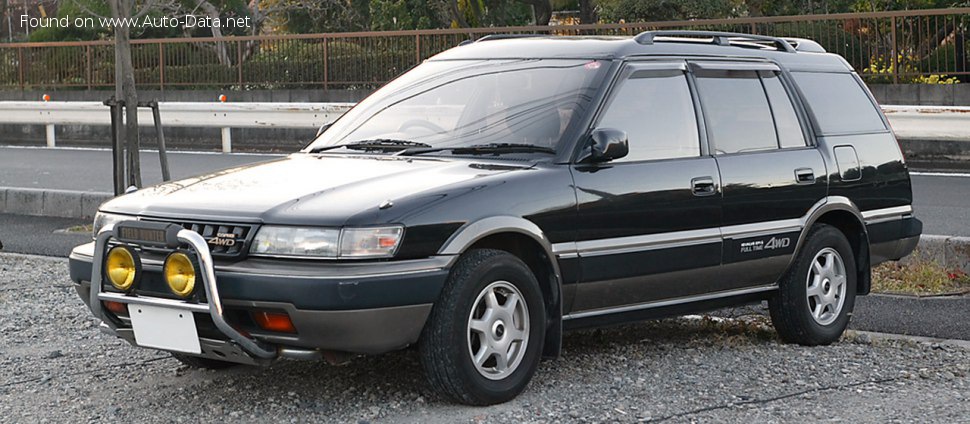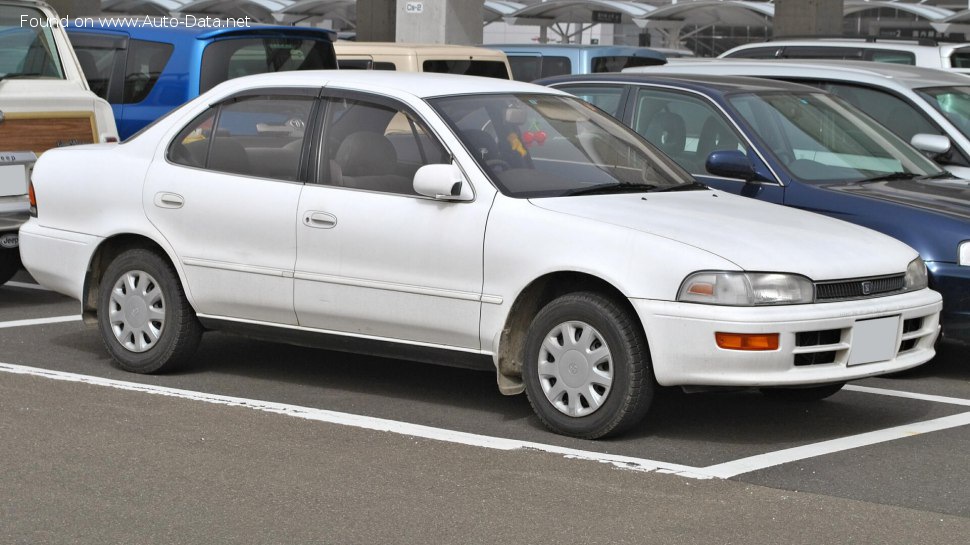
The Toyota Sprinter, a nameplate synonymous with reliability and practical performance in its primary markets, represented a significant chapter in Toyota’s global strategy for compact vehicles. The specific variant, the Toyota Sprinter 1.6 i (115 Hp), produced between 1991 and 1995, belonged to a generation that underscored the brand’s commitment to engineering excellence and fuel efficiency during the early 1990s. While not a common sight on American roads, where its sibling, the Corolla, was the dominant offering, the Sprinter carved out its niche in markets like Japan and parts of Asia and Europe, often sharing platforms and powertrains with the Corolla but featuring distinct styling and trim levels. This particular model, a four-door sedan, was designed to appeal to a broad demographic seeking an economical yet capable daily driver, blending Toyota’s renowned durability with a spirited 1.6-liter engine, making it a benchmark for compact sedans of its era.
The Toyota Sprinter 1.6 i (115 Hp): Engineering and Design Philosophy
The engineering philosophy behind the Toyota Sprinter 1.6 i (115 Hp) was deeply rooted in Toyota’s reputation for building dependable and efficient automobiles. For this generation, Toyota focused on refining existing technologies while subtly integrating advancements that improved driving dynamics and occupant comfort. The vehicle’s architecture was characterized by a front-engine, transverse layout, driving the front wheels, a configuration that maximizes interior space and offers predictable handling characteristics, particularly beneficial for urban driving and compact dimensions. This approach allowed the Sprinter to offer a spacious cabin for five occupants despite its relatively modest exterior footprint. The production window from 1991 to 1995 placed this Sprinter squarely in an era when Japanese manufacturers were globally recognized for their meticulous build quality and long-term reliability, attributes that continue to define the legacy of models like the Sprinter.
Engine and Performance
At the heart of the Toyota Sprinter 1.6 i (115 Hp) was its naturally aspirated 1.6-liter (1587 cm3 or 96.84 cu. in.) inline-four engine. This powertrain was a testament to Toyota’s mastery of compact engine design, featuring a Double Overhead Camshaft (DOHC) valvetrain with four valves per cylinder, a configuration that was becoming standard for performance and efficiency in the early 90s. The DOHC setup allowed for superior breathing characteristics, contributing to the engine’s impressive output for its size. It produced a robust 115 horsepower at a relatively high 6600 rpm, translating to a specific power output of 72.5 horsepower per liter, an admirable figure for a non-turbocharged engine of its time. Torque figures stood at 135 Nm (99.57 lb-ft) delivered at 4800 rpm, providing ample thrust for daily driving and highway cruising. The engine’s bore of 81 mm (3.19 in) and stroke of 77 mm (3.03 in) indicated a slightly oversquare design, favoring higher revs and power, while a compression ratio of 9.5:1 balanced performance with fuel economy.
Fuel delivery was managed by a multi-port manifold injection system, a precise method that ensures optimal fuel-air mixture distribution to each cylinder, leading to improved combustion efficiency, lower emissions, and smoother operation compared to older single-point injection systems. The engine’s front, transverse layout, coupled with front-wheel drive, was chosen for its packaging efficiency and inherent stability. This drivetrain architecture, where the internal combustion engine drives the front wheels, provided excellent traction in various conditions and contributed to the Sprinter’s reputation as an easy-to-drive and predictable vehicle. The 50-liter (13.21 US gallons) fuel tank offered a decent cruising range, enhancing the car’s practicality for both city commutes and longer journeys.
Design and Features
The Toyota Sprinter 1.6 i (115 Hp) adopted a classic four-door sedan body style, a timeless design choice that emphasized practicality and understated elegance. Its exterior dimensions were compact yet well-proportioned for its segment: a length of 4290 mm (168.9 in), a width of 1820 mm (71.65 in), and a height of 1375 mm (54.13 in). These dimensions, combined with a wheelbase of 2465 mm (97.05 in), ensured a comfortable ride and stable handling. The design language of the early 90s Toyota vehicles, including the Sprinter, was characterized by smooth lines, minimal ornamentation, and a focus on aerodynamic efficiency to aid fuel economy and reduce wind noise. The relatively wide track widths, 1470 mm (57.87 in) at the front and 1460 mm (57.48 in) at the rear, contributed to the car’s planted stance and improved cornering stability. A minimum turning circle of 9.8 meters (32.15 ft) made the Sprinter highly maneuverable in tight urban environments, a crucial aspect for its target markets.
Inside, the Sprinter offered a functional and ergonomic cabin, designed with user-friendliness in mind. The five-seat configuration provided comfortable seating for occupants, with durable materials chosen for longevity and ease of maintenance. While specific luxury features would vary by trim level, the core focus remained on providing a reliable, comfortable, and straightforward driving experience. Safety features, typical for the era, would have included basic seatbelts and potentially optional anti-lock brakes (ABS) in higher trims, though the primary safety emphasis was on the robust structural integrity inherent in Toyota’s build quality. The Sprinter’s design ethos was a reflection of the era’s automotive trends: a move towards more rounded, less angular forms, but always prioritizing the foundational attributes of reliability, efficiency, and everyday usability that cemented Toyota’s global standing. Its legacy as a workhorse and a dependable family car in its respective markets continues to be recognized by enthusiasts and collectors today.
Technical Specifications: Toyota Sprinter 1.6 i (115 Hp) (1991-1995)
| Brand | Toyota |
| Model | Sprinter |
| Generation | Sprinter (E100) |
| Type (Engine) | 1.6 i (115 Hp) |
| Start of production | 1991 year |
| End of production | 1995 year |
| Powertrain Architecture | Internal Combustion engine |
| Body type | Sedan |
| Seats | 5 |
| Doors | 4 |
| Fuel Type | Petrol (Gasoline) |
| Power | 115 Hp @ 6600 rpm |
| Power per liter | 72.5 Hp/l |
| Torque | 135 Nm @ 4800 rpm (99.57 lb.-ft. @ 4800 rpm) |
| Engine layout | Front, Transverse |
| Engine displacement | 1587 cm3 (1.6 liters / 96.84 cu. in.) |
| Number of cylinders | 4 |
| Engine configuration | Inline |
| Cylinder Bore | 81 mm (3.19 in.) |
| Piston Stroke | 77 mm (3.03 in.) |
| Compression ratio | 9.5:1 |
| Number of valves per cylinder | 4 |
| Fuel injection system | Multi-port manifold injection |
| Engine aspiration | Naturally aspirated engine |
| Valvetrain | DOHC |
| Fuel tank capacity | 50 l (13.21 US gal / 11 UK gal) |
| Length | 4290 mm (168.9 in.) |
| Width | 1820 mm (71.65 in.) |
| Height | 1375 mm (54.13 in.) |
| Wheelbase | 2465 mm (97.05 in.) |
| Front track | 1470 mm (57.87 in.) |
| Rear (Back) track | 1460 mm (57.48 in.) |
| Minimum turning circle (turning diameter) | 9.8 m (32.15 ft.) |
| Drivetrain Architecture | The Internal combustion engine (ICE) drives the front wheels of the vehicle. |
| Drive wheel | Front wheel drive |