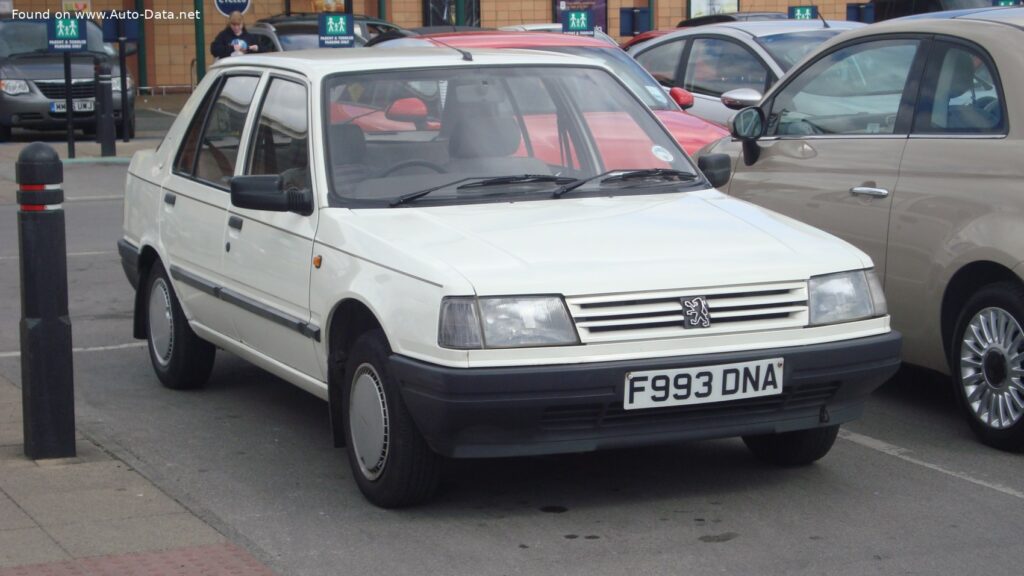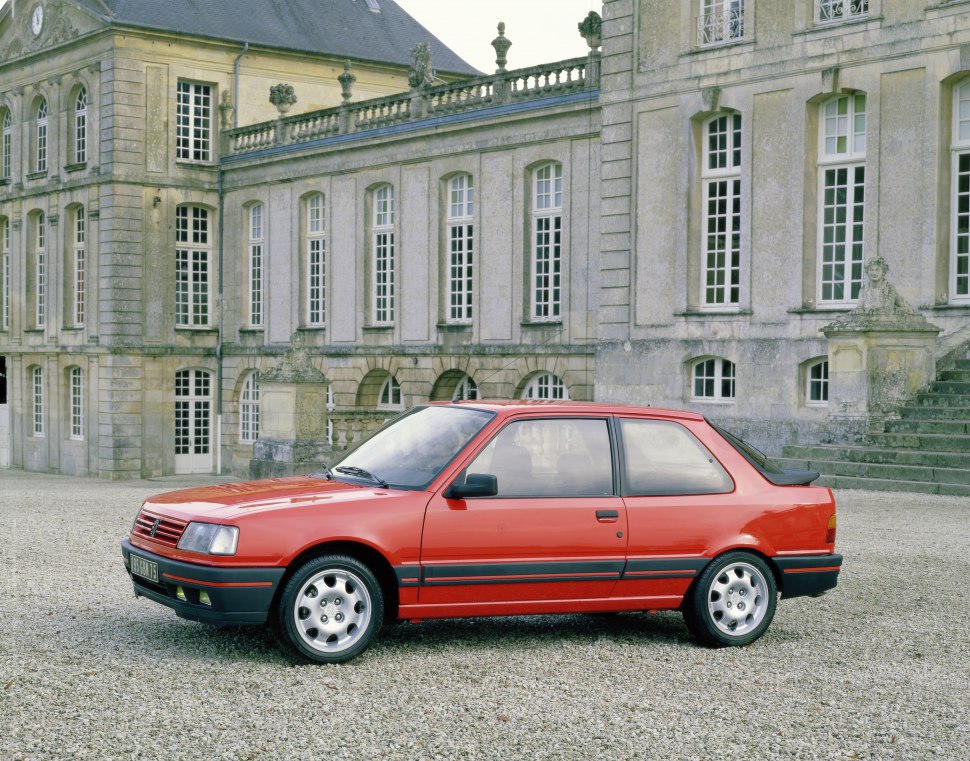
The Peugeot 309, a pivotal model in the French automaker’s history, represented a significant step for the brand in the compact family car segment during the late 1980s. Specifically, the Peugeot 309 (10C,10A) 3-door 1.3 (64 Hp) variant, produced between 1985 and 1989, carved out a niche in the competitive European market as a practical, economical, and agile three-door hatchback. Conceived initially as a Talbot model, following Peugeot’s acquisition of Chrysler Europe (which included the Simca and Talbot brands), the 309 eventually emerged under the Peugeot banner, bridging the gap between the smaller 205 and the larger 405. While never officially sold in the United States, its design and engineering principles reflect the European automotive landscape of the era, emphasizing efficiency, compact dimensions, and functional design, traits that resonate with global automotive trends. This particular iteration, with its modest 1.3-liter engine, was designed to offer an accessible entry point into the range, combining everyday usability with characteristic French ride comfort and handling dynamics.
The Evolution and Market Position of the Peugeot 309 (10C,10A) 3-door 1.3 (64 Hp)
The Peugeot 309 (10C,10A) 3-door 1.3 (64 Hp) was a product of a transitional period for Peugeot, emerging from the remnants of the Talbot brand. Its development began as the “C28” project, intended to be a successor to the Talbot Horizon. However, by the time of its launch in 1985, Peugeot had decided to phase out the Talbot marque, rebranding the C28 as the Peugeot 309. This move was strategic, allowing Peugeot to expand its model lineup without the prohibitive costs of an entirely new platform, as the 309 shared many components with the highly successful Peugeot 205. The “10C,10A” designation signifies the first generation of the 309, with the 3-door hatchback body style being a popular choice for younger buyers or those seeking a sportier aesthetic compared to its 5-door sibling. Its market position was firmly within the C-segment in Europe, competing against established rivals like the Volkswagen Golf, Ford Escort, and Renault 11. The 1.3-liter engine variant was positioned as an economical choice, offering sufficient performance for urban driving and occasional longer journeys without incurring high running costs, a crucial factor in the European market.
Despite its humble origins and relatively short production run for this specific variant (1985-1989), the Peugeot 309 (10C,10A) 3-door 1.3 (64 Hp) played a vital role in solidifying Peugeot’s reputation for building robust and engaging compact cars. Its design, while sharing some visual cues with the 205, presented a more angular and mature aesthetic, hinting at the brand’s future design language. The car’s lightweight construction, with a kerb weight of just 1834.25 lbs (832 kg), contributed significantly to its agility and fuel efficiency, making it a compelling option for drivers prioritizing practicality and economy. The 309’s ability to leverage existing platforms and components allowed Peugeot to offer a well-engineered vehicle at a competitive price point, further enhancing its appeal to a broad demographic across Europe.
Powertrain and Dynamic Performance
At the heart of the Peugeot 309 (10C,10A) 3-door 1.3 (64 Hp) lay a naturally aspirated 1.3-liter (1294 cm3 or 78.96 cu. in.) inline-four petrol engine, designated with the model code G1B. This powerplant, a testament to conventional automotive engineering of the mid-1980s, delivered a respectable 64 horsepower at 5600 revolutions per