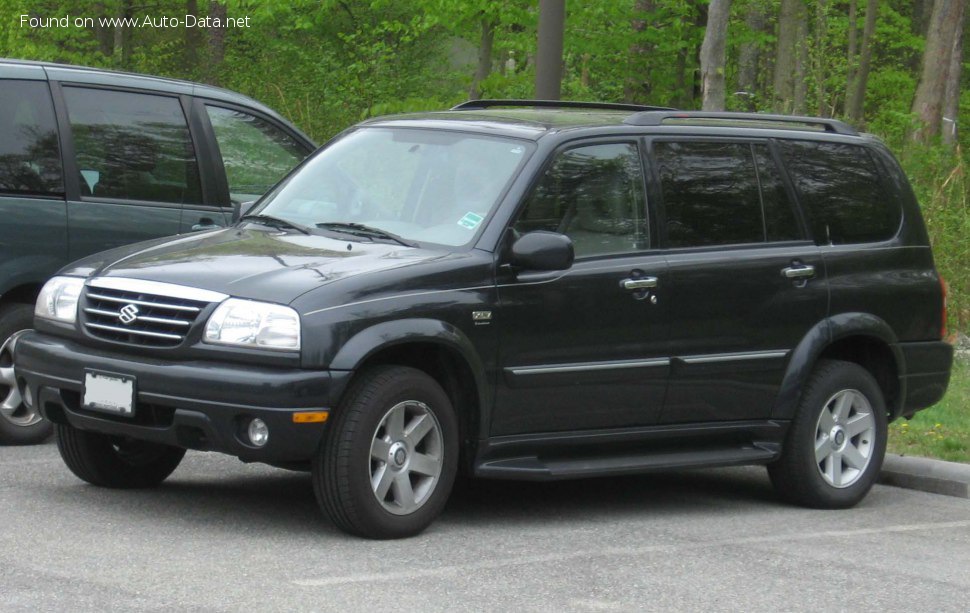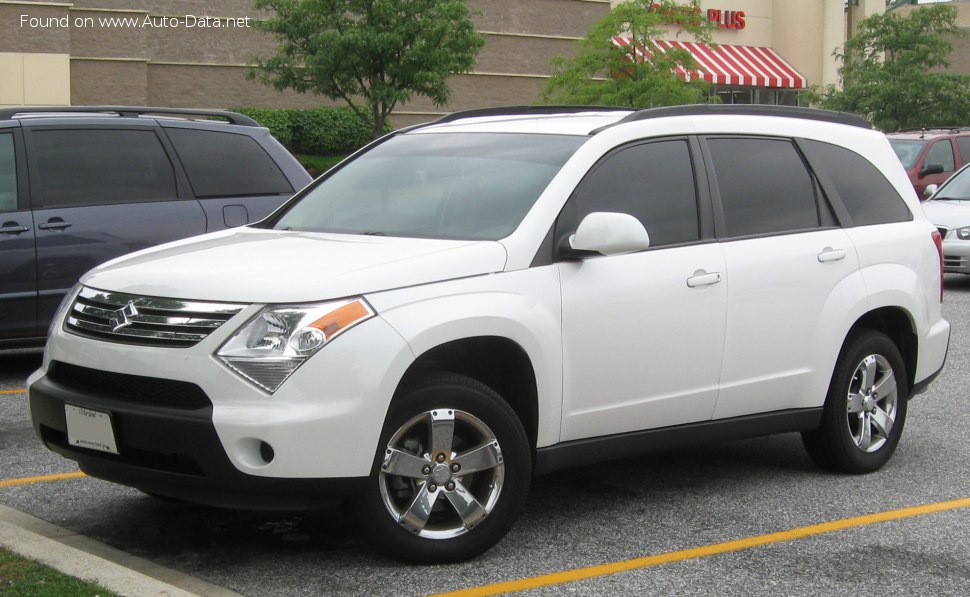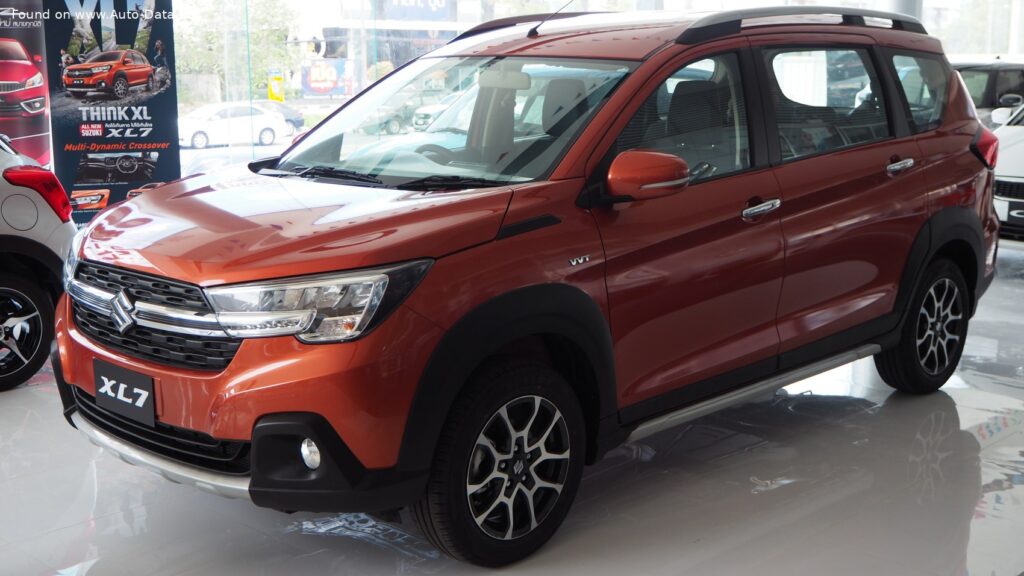
The Suzuki XL7 III 1.5i (105 Hp) represents the third generation of Suzuki’s versatile compact crossover, specifically tailored for emerging markets where practicality, affordability, and multi-passenger capability are paramount. Launched in February 2020, this iteration of the XL7 builds upon Suzuki’s reputation for producing robust, efficient, and family-friendly vehicles. Positioned as a 7-seater SUV, it addresses the strong demand in regions like Southeast Asia and India for vehicles that can comfortably accommodate larger families while navigating diverse road conditions. Unlike its predecessors, which had a more rugged, off-road oriented stance, the XL7 III embraces a modern crossover aesthetic, blending SUV styling cues with the driving dynamics and fuel efficiency typically associated with a passenger car. This strategic shift solidifies its role as a practical, urban-friendly family hauler, offering a compelling blend of space, features, and the inherent reliability that Suzuki is known for.
Engineering and Performance of the Suzuki XL7 III 1.5i (105 Hp)
At the heart of the Suzuki XL7 III 1.5i (105 Hp) is Suzuki’s venerable K15B internal combustion engine, a 1.5-liter (1462 cm3 or 89.22 cu. in.) inline-four gasoline unit. This naturally aspirated powerplant is engineered for efficiency and dependable performance rather than outright speed, perfectly suiting its primary market’s requirements. It delivers a respectable 105 horsepower at 6000 rpm and a peak torque of 138 Nm (101.78 lb.-ft.) at 4400 rpm. This power output, combined with the engine’s design, provides sufficient thrust for city driving and highway cruising, especially when considering the vehicle’s intended use as a family transporter.
The K15B engine features a front, transverse layout, a common and efficient configuration for front-wheel-drive vehicles, optimizing cabin space and reducing complexity. It incorporates a multi-port manifold injection system for precise fuel delivery and a Variable Valve Timing (VVT) system, which intelligently adjusts valve lift and duration to enhance both power output and fuel economy across the rev range. With a compression ratio of 10.5:1, the engine is optimized for regular gasoline. The cylinder bore measures 74 mm (2.91 in.) with a piston stroke of 85 mm (3.35 in.), indicating a slightly undersquare design that generally favors torque production at lower RPMs, beneficial for urban driving and carrying loads. Each cylinder features four valves, contributing to efficient breathing and combustion.
Power is transmitted to the front wheels via a 5-speed manual transmission, offering direct driver engagement and proven reliability. This drivetrain architecture, combined with the engine’s characteristics, emphasizes cost-effectiveness and ease of maintenance, crucial factors for consumers in the XL7’s target markets. Furthermore, the inclusion of a Start & Stop System underscores Suzuki’s commitment to modern efficiency standards, automatically shutting off the engine when the vehicle is stationary in traffic and restarting it seamlessly when the driver is ready to move. This feature significantly reduces fuel consumption and emissions in stop-and-go urban environments, contributing to a lower cost of ownership and a reduced environmental footprint.
Design, Features, and Practicality of the Suzuki XL7 III
The Suzuki XL7 III embodies a contemporary crossover design, shedding some of the ruggedness of its predecessors for a more refined yet still adventurous aesthetic. Its SUV, Crossover body type, with five doors and seating for seven, makes it an exceptionally practical choice for families. The exterior styling features bold lines, a distinctive front grille, and integrated roof rails, projecting an image of capability and modernity. The vehicle’s dimensions are well-proportioned for its segment, measuring 4450 mm (175.2 in.) in length, 1775 mm (69.88 in.) in width, and 1710 mm (67.32 in.) in height. A generous wheelbase of 2740 mm (107.87 in.) is critical in providing ample interior space, especially for the second and third rows, a key selling point for a 7-seater vehicle.
Practicality extends to its ground clearance of 200 mm (7.87 in.), which is advantageous for navigating varied road conditions, from unpaved rural roads to urban speed bumps, common in its primary markets. The turning circle of 10.4 meters (34.12 ft.) indicates good maneuverability for a vehicle of its size, making it relatively easy to handle in congested city traffic and tight parking spaces. The interior is designed with versatility in mind; the trunk space ranges from a minimum of 153 liters (5.4 cu. ft.) with all seats in use, expanding significantly to 803 liters (28.36 cu. ft.) when the rear seats are folded down, offering substantial cargo capacity for luggage or larger items.
Underneath, the XL7 III features an independent McPherson strut front suspension, providing a comfortable and stable ride, while the rear utilizes a torsion beam setup, a cost-effective and space-efficient solution that works well for front-wheel-drive platforms. Braking performance is managed by ventilated discs at the front for improved heat dissipation and traditional drum brakes at the rear, a proven combination for vehicles in this class. An Anti-lock Braking System (ABS) is a standard safety feature, enhancing control during emergency braking situations. The steering system is a modern electric power steering rack and pinion unit, offering light steering effort at low speeds for ease of parking and a more weighted feel at higher speeds for stability. The vehicle rides on 195/60 R16 tires mounted on 16-inch wheel rims, a sensible choice that balances ride comfort, grip, and affordability for tire replacements.
The XL7 III’s design philosophy clearly prioritizes passenger comfort, cargo flexibility, and robust construction tailored to its target demographic. Its array of features, while not overly luxurious, are thoughtfully implemented to enhance the ownership experience, making it a reliable and practical partner for families and businesses alike in its competitive market segment.
Technical Specifications: Suzuki XL7 III 1.5i (105 Hp)
| Brand | Suzuki |
| Model | XL7 |
| Generation | XL7 III |
| Type (Engine) | 1.5i (105 Hp) |
| Start of Production | February, 2020 |
| Powertrain Architecture | Internal Combustion Engine |
| Body Type | SUV, Crossover |
| Seats | 7 |
| Doors | 5 |
| Fuel Type | Petrol (Gasoline) |
| Power | 105 Hp @ 6000 rpm |
| Power per Liter | 71.8 Hp/l |
| Torque | 138 Nm @ 4400 rpm (101.78 lb.-ft. @ 4400 rpm) |
| Engine Layout | Front, Transverse |
| Engine Model/Code | K15B |
| Engine Displacement | 1462 cm3 (1.5 l / 89.22 cu. in.) |
| Number of Cylinders | 4 |
| Engine Configuration | Inline |
| Cylinder Bore | 74 mm (2.91 in.) |
| Piston Stroke | 85 mm (3.35 in.) |
| Compression Ratio | 10.5:1 |
| Number of Valves per Cylinder | 4 |
| Fuel Injection System | Multi-port manifold injection |
| Valvetrain | VVT |
| Engine Oil Capacity | 3.1 l (3.28 US qt / 2.73 UK qt) |
| Coolant Capacity | 4 l (4.23 US qt / 3.52 UK qt) |
| Engine Systems | Start & Stop System |
| Trunk (Boot) Space – Minimum | 153 l (5.4 cu. ft.) |
| Trunk (Boot) Space – Maximum | 803 l (28.36 cu. ft.) |
| Fuel Tank Capacity | 45 l (11.89 US gal / 9.9 UK gal) |
| Length | 4450 mm (175.2 in.) |
| Width | 1775 mm (69.88 in.) |
| Height | 1710 mm (67.32 in.) |
| Wheelbase | 2740 mm (107.87 in.) |
| Front Track | 1515 mm (59.65 in.) |
| Rear (Back) Track | 1530 mm (60.24 in.) |
| Ride Height (Ground Clearance) | 200 mm (7.87 in.) |
| Minimum Turning Circle (Diameter) | 10.4 m (34.12 ft.) |
| Drivetrain Architecture | The Internal Combustion Engine (ICE) drives the front wheels of the vehicle. |
| Drive Wheel | Front-wheel drive |
| Number of Gears and Type of Gearbox | 5 gears, manual transmission |
| Front Suspension | Independent type McPherson |
| Rear Suspension | Torsion |
| Front Brakes | Ventilated discs |
| Rear Brakes | Drum |
| Assisting Systems | ABS (Anti-lock braking system) |
| Steering Type | Steering rack and pinion |
| Power Steering | Electric Steering |
| Tires Size | 195/60 R16 |
| Wheel Rims Size | 16 |