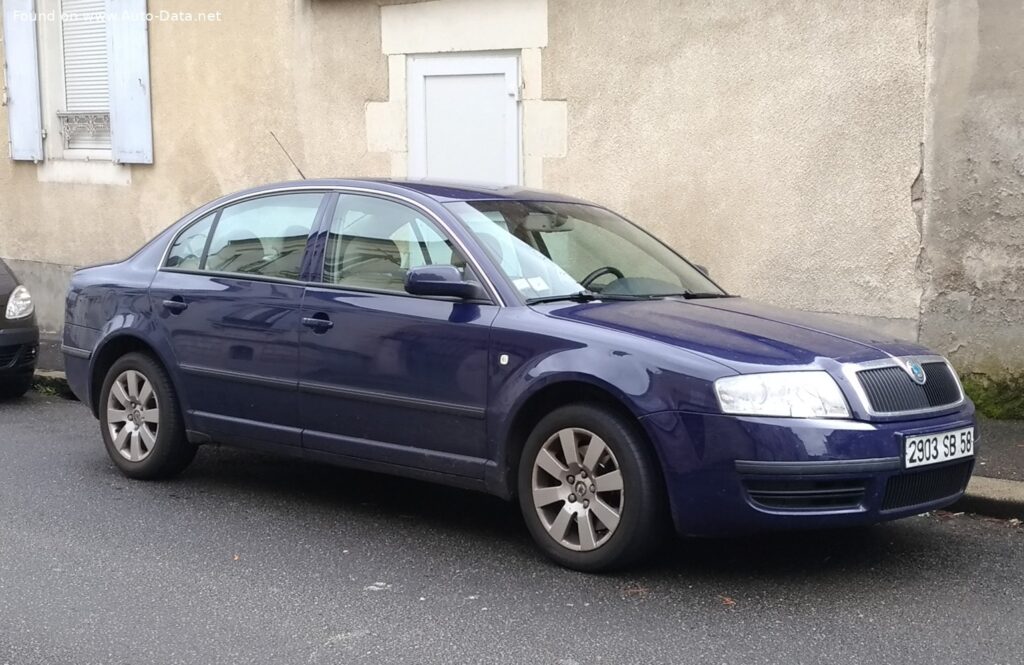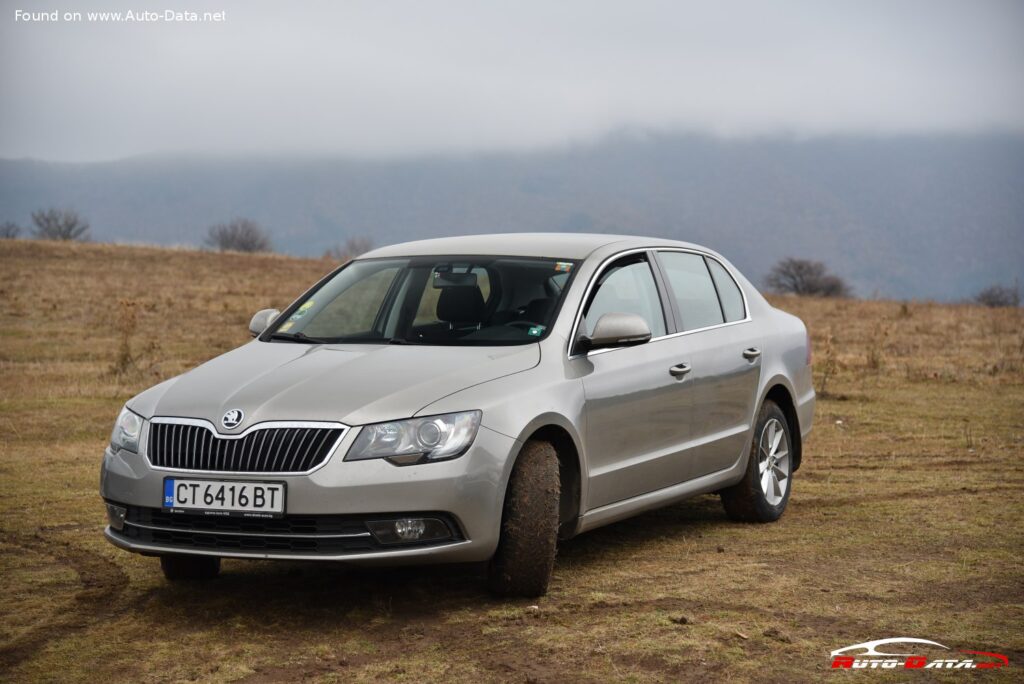
The Skoda Superb II, specifically the facelifted model introduced in April 2013, represented a significant offering in the European mid-size to executive car segment. Known for its exceptional interior space, practical design, and robust engineering derived from its Volkswagen Group parentage, the {Skoda Superb II (facelift 2013) 1.6 TDI (105 Hp) DPF} carved out a niche for itself as a value-oriented alternative to more premium competitors. This particular variant, powered by the efficient 1.6-liter TDI diesel engine, was designed to appeal to buyers prioritizing fuel economy, comfort, and long-distance cruising capability without compromising on practicality. While not officially sold in the United States, the Superb’s reputation in its primary European and Asian markets highlighted Skoda’s commitment to delivering well-engineered vehicles that punched above their weight in terms of perceived quality and utility.
Powertrain and Performance: The {Skoda Superb II (facelift 2013)}’s Efficient Diesel Heart
At the core of this particular Skoda Superb II model lies the 1.6 TDI (Turbocharged Direct Injection) engine, an EA189 / CAYC code unit that embodied Volkswagen Group’s commitment to efficient diesel technology. With an engine displacement of 1,598 cubic centimeters (97.52 cubic inches), this inline four-cylinder powerplant delivered a respectable 105 horsepower (HP). The power output per liter stood at 65.7 HP/l, indicative of a well-optimized, if not overtly sporty, engine design focused on longevity and economy. The engine’s aspiration system, featuring both a turbocharger and an intercooler, was crucial for extracting maximum performance and efficiency from its relatively small displacement, particularly at lower RPMs. The common rail fuel injection system further enhanced combustion efficiency and refined power delivery, reducing noise and vibration typical of older diesel designs.
However, it was the torque output that truly defined the driving character of the 1.6 TDI. Generating a robust 250 Newton-meters (184.39 lb.-ft.) of torque across a broad and accessible rev range of 1500 to 2500 RPM, the Superb offered ample pulling power for everyday driving, highway cruising, and even light load hauling. This generous torque made the car feel more responsive than its horsepower figure might suggest, contributing to a relaxed driving experience. Mated to a precise 6-speed manual transmission, the front-wheel-drive architecture ensured efficient power transfer to the road. While not a performance car, the Superb 1.6 TDI achieved a 0-60 mph acceleration time of 11.5 seconds, with a top speed of 120.55 mph (194 km/h), making it perfectly adequate for navigating European motorways and urban environments.
Fuel economy was a major selling point for this diesel variant. The official figures were impressive: 5.2 liters per 100 km (45.2 US mpg) in urban driving, dropping to an outstanding 4.0 liters per 100 km (58.8 US mpg) on the extra-urban cycle. The combined fuel consumption stood at 4.5 liters per 100 km, translating to an excellent 52.3 US mpg (62.8 UK mpg or 22.2 km/l). These figures, combined with a 60-liter (15.85 US gallon) fuel tank, granted the Superb a substantial cruising range, a key advantage for long-distance commuters and fleet operators. Furthermore, the inclusion of a Diesel Particulate Filter (DPF) and compliance with the Euro 5 J emission standard highlighted Skoda’s commitment to environmental responsibility, with CO2 emissions rated at 117 g/km.
Design and Features: Practicality Meets Refinement
The Skoda Superb II (facelift 2013) was renowned for its clever design, particularly its innovative “TwinDoor” liftback body type. This unique feature allowed the trunk lid to open in two ways: either as a conventional sedan trunk, or as a full hatchback, incorporating the rear window. This dual-opening mechanism offered unparalleled versatility, blending the elegant lines of a sedan with the practical loading capabilities of a hatchback. With 5 doors and seating for 5 occupants, the Superb was designed with family and executive transport in mind.
Measuring 190.28 inches (4833 mm) in length, 71.54 inches (1817 mm) in width, and 57.56 inches (1462 mm) in height, the Superb commanded a substantial road presence. Its generous 108.7-inch (2761 mm) wheelbase was instrumental in providing exceptional rear legroom, a hallmark of the Superb model line that often surpassed vehicles in higher segments. The facelift in 2013 brought subtle but effective aesthetic enhancements, typically including revised front and rear bumpers, updated grille designs, and new lighting clusters, giving the car a fresher, more contemporary look.
Interior space was truly cavernous. The trunk (boot) offered a minimum of 21.01 cubic feet (595 liters) of cargo capacity with the rear seats up, expanding to an enormous 60.03 cubic feet (1700 liters) when the rear seats were folded down. This made the Superb one of the most practical vehicles in its class, capable of swallowing significant amounts of luggage or sporting equipment. The kerb weight of 3333.39 lbs (1512 kg) and a maximum permissible weight of 4574.59 lbs (2075 kg) underscored its robust construction and ability to carry substantial loads. For safety, the Superb was equipped with an Anti-lock Braking System (ABS) as standard, enhancing control during emergency braking. The steering system utilized a rack and pinion setup, providing predictable and direct handling suitable for both city driving and highway cruising. The minimum turning circle of 38.35 feet (11.69 meters) was also commendable for a vehicle of its size, aiding maneuverability in tighter spaces.
Technical Specifications
| Brand | Skoda |
| Model | Superb |
| Generation | Superb II (facelift 2013) |
| Type (Engine) | 1.6 TDI (105 Hp) DPF |
| Start of production | April, 2013 year |
| End of production | 2015 year |
| Powertrain Architecture | Internal Combustion engine |
| Body type | Liftback |
| Seats | 5 |
| Doors | 5 |
| Fuel consumption (economy) – urban | 5.2 l/100 km (45.2 US mpg) |
| Fuel consumption (economy) – extra urban | 4 l/100 km (58.8 US mpg) |
| Fuel consumption (economy) – combined | 4.5 l/100 km (52.3 US mpg) |
| CO2 emissions | 117 g/km |
| Fuel Type | Diesel |
| Acceleration 0 – 60 mph | 11.5 sec |
| Maximum speed | 120.55 mph (194 km/h) |
| Emission standard | Euro 5 J |
| Weight-to-power ratio | 14.4 kg/Hp |
| Weight-to-torque ratio | 6 kg/Nm |
| Power | 105 Hp |
| Power per litre | 65.7 Hp/l |
| Torque | 250 Nm (184.39 lb.-ft.) @ 1500-2500 rpm |
| Engine layout | Front, Transverse |
| Engine Model/Code | EA189 / CAYC |
| Engine displacement | 1598 cm3 (97.52 cu. in.) |
| Number of cylinders | 4 |
| Engine configuration | Inline |
| Compression ratio | 16.5:1 |
| Fuel injection system | Diesel Commonrail |
| Engine aspiration | Turbocharger, Intercooler |
| Engine oil capacity | 4.3 l (4.54 US qt) |
| Coolant | 8.4 l (8.88 US qt) |
| Engine systems | Particulate filter |
| Kerb Weight | 1512 kg (3333.39 lbs) |
| Max. weight | 2075 kg (4574.59 lbs) |
| Max load | 563 kg (1241.2 lbs) |
| Trunk (boot) space – minimum | 595 l (21.01 cu. ft.) |
| Trunk (boot) space – maximum | 1700 l (60.03 cu. ft.) |
| Fuel tank capacity | 60 l (15.85 US gal) |
| Length | 4833 mm (190.28 in.) |
| Width | 1817 mm (71.54 in.) |
| Height | 1462 mm (57.56 in.) |
| Wheelbase | 2761 mm (108.7 in.) |
| Front track | 1545 mm (60.83 in.) |
| Rear (Back) track | 1518 mm (59.76 in.) |
| Minimum turning circle (turning diameter) | 11.69 m (38.35 ft.) |
| Drivetrain Architecture | Front-wheel drive (ICE drives front wheels) |
| Drive wheel | Front wheel drive |
| Number of gears and type of gearbox | 6 gears, manual transmission |
| Assisting systems | ABS (Anti-lock braking system) |
| Steering type | Steering rack and pinion |