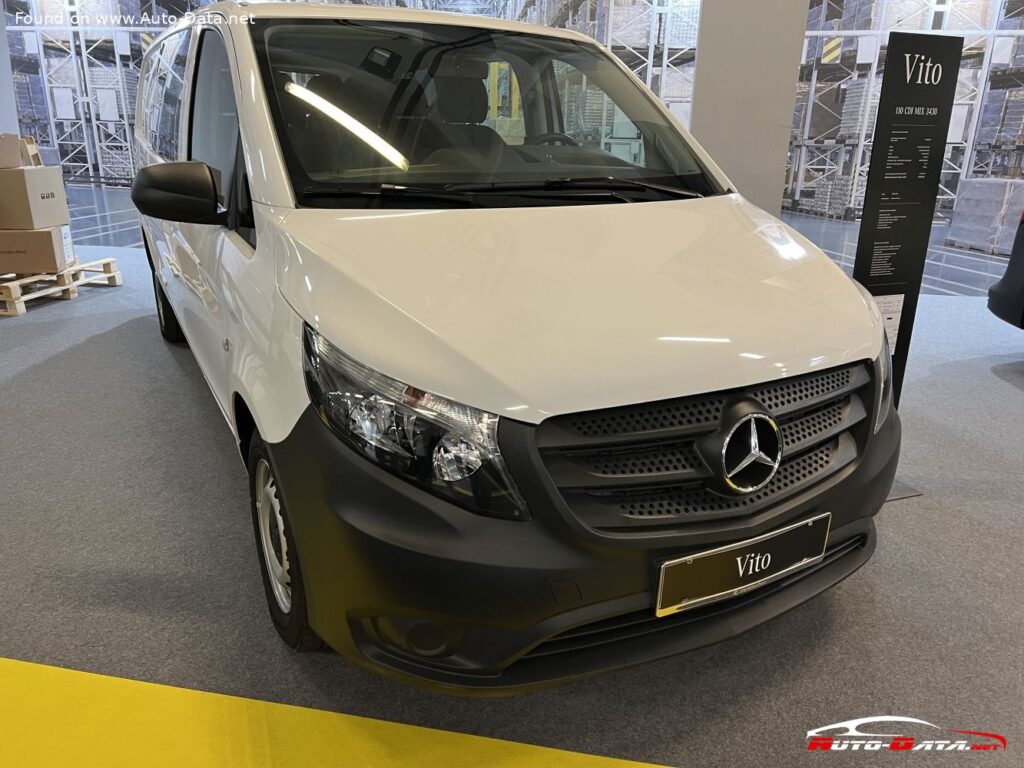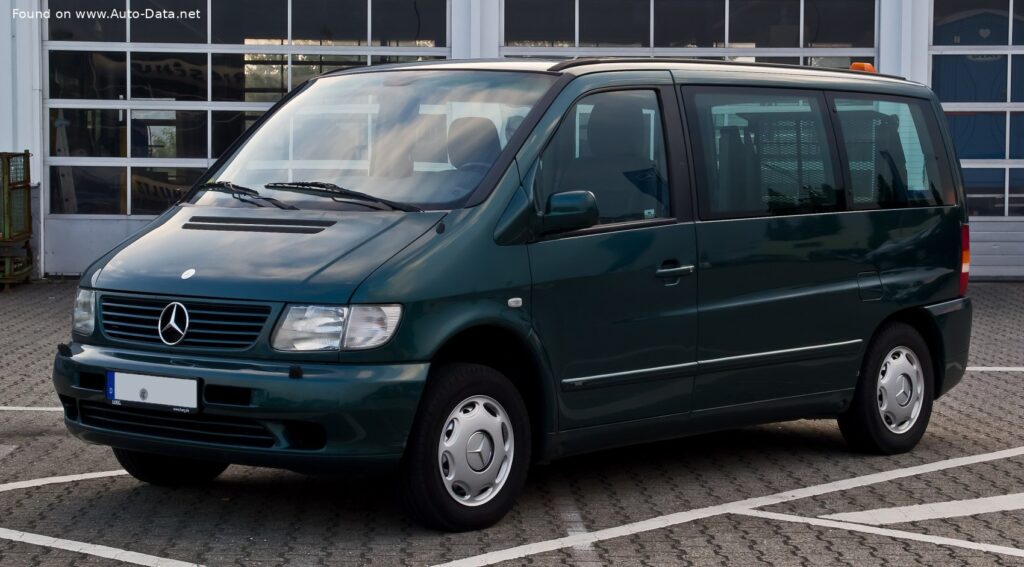
The Mercedes-Benz Vito (W638) V 280 represents a significant chapter in the German automaker’s foray into the European light commercial vehicle and multi-purpose vehicle (MPV) segment. Launched in 1999 as part of the first-generation Vito lineup, the W638 series was a groundbreaking design for Mercedes-Benz, moving away from traditional rear-wheel-drive van architectures to a more space-efficient front-wheel-drive platform. The V 280 variant, specifically, stood out for its relatively powerful V6 engine, a rare offering in its class, positioning it as a premium option for both commercial users seeking robust performance and private customers desiring a spacious, comfortable, and capable people mover. While not widely available in the North American market, the Vito (W638) carved out a strong niche in Europe and other international markets, celebrated for its versatility, build quality, and the prestige associated with the Mercedes-Benz badge. Its production run from 1999 to 2003 solidified its place as a practical yet refined workhorse and family vehicle, embodying a blend of utility and engineering excellence.
Engineering and Performance of the Mercedes-Benz Vito (W638) V 280
At the heart of the Mercedes-Benz Vito (W638) V 280 lies a transversely mounted 2.8-liter (2792 cm3) V6 engine, designated with the internal code M 104.900. This naturally aspirated powerplant delivers a robust 174 horsepower at 6000 rpm, providing ample thrust for a vehicle of its size and intended purpose. Torque output is equally impressive for its era, peaking at 174.8 lb.-ft. (237 Nm) at a relatively low 2800 rpm, ensuring strong low-end pulling power crucial for hauling passengers or cargo. The engine features a DOHC (Dual Overhead Camshaft) valvetrain with two valves per cylinder and utilizes a multi-port manifold injection system for precise fuel delivery, contributing to its smooth operation and responsiveness. With a compression ratio of 10.1:1, the engine was designed for efficient combustion using gasoline fuel.
The powertrain architecture of the V 280 is notable for its front-engine, front-wheel-drive configuration, a departure from Mercedes-Benz’s more common rear-wheel-drive layouts for larger vehicles. This choice allowed for a flatter load floor and increased interior space, optimizing the van’s practicality. Power is managed through a 4-speed automatic transmission, which, while not as sophisticated as modern multi-gear units, provided seamless shifts and contributed to a relaxed driving experience. Performance figures reflect the V 280’s capability: it accelerates from 0 to 60 mph in a respectable 12.1 seconds and can reach a maximum speed of 116.2 mph (187 km/h). Despite its performance, the combined fuel economy stands at approximately 17 US mpg (13.8 l/100 km), which was competitive for a V6-powered van of its generation, considering its curb weight of 4477.59 lbs (2031 kg) and a maximum permissible weight of 5952.48 lbs (2700 kg). The vehicle’s weight-to-power ratio of 11.7 kg/Hp underscores its balanced engineering, offering adequate power for its substantial mass.
Design and Features of the Mercedes-Benz Vito (W638)
The design of the Mercedes-Benz Vito (W638) is characterized by its functional yet modern aesthetic, typical of European vans and MPVs of the late 1990s and early 2000s. As a van body type, the V 280 offered significant versatility, configured with five doors and seating for seven occupants. Its exterior dimensions – a length of 183.46 inches (4660 mm), a width of 74.02 inches (1880 mm), and a height of 72.6 inches (1844 mm) – provided a spacious interior without making the vehicle overly cumbersome for urban environments. A generous wheelbase of 118.11 inches (3000 mm) contributed to a stable ride and maximized interior volume, particularly for passenger comfort in the rear rows.
Inside, the Vito (W638) was designed with practicality and user-friendliness in mind. The flexible seating arrangements allowed for various configurations, catering to both passenger transport and cargo hauling needs. The maximum load capacity of 1474.89 lbs (669 kg) further highlighted its utility. For its era, the Vito came equipped with essential features for comfort and safety. The steering system utilized a hydraulic rack and pinion setup, providing predictable and assisted steering, which was particularly beneficial for maneuvering a vehicle of this size. The minimum turning circle of 32.48 feet (9.9 m) was commendable, enhancing agility in tight city streets or parking lots. Stopping power was ensured by disc brakes on both the front and rear axles, a standard but crucial safety feature. The vehicle rode on 215/60 R16 tires, providing a good balance of grip and ride comfort. The fuel tank capacity of 20.61 US gallons (78 liters) offered a decent cruising range, making it suitable for longer journeys. While lacking the advanced driver-assistance systems found in contemporary vehicles, the W638 Vito represented a solid, well-engineered package that prioritized space, reliability, and the foundational safety features expected from a Mercedes-Benz product.
Technical Specifications: Mercedes-Benz Vito (W638) V 280 (174 Hp)
| Brand | Mercedes-Benz |
| Model | Vito |
| Generation | Vito (W638) |
| Type (Engine) | V 280 (174 Hp) |
| Start of production | 1999 year |
| End of production | 2003 year |
| Powertrain Architecture | Internal Combustion engine |
| Body type | Van |
| Seats | 7 |
| Doors | 5 |
| Fuel consumption (economy) – combined | 17 US mpg (13.8 l/100 km) |
| Fuel Type | Petrol (Gasoline) |
| Acceleration 0 – 60 mph | 12.1 sec |
| Maximum speed | 116.2 mph (187 km/h) |
| Weight-to-power ratio | 11.7 kg/Hp |
| Weight-to-torque ratio | 8.6 kg/Nm |
| Power | 174 Hp @ 6000 rpm |
| Power per liter | 62.3 Hp/l |
| Torque | 174.8 lb.-ft. @ 2800 rpm (237 Nm) |
| Engine layout | Front, Transverse |
| Engine Model/Code | M 104.900 |
| Engine displacement | 2.8 l (170.38 cu. in.) |
| Number of cylinders | 6 |
| Engine configuration | V-engine |
| Cylinder Bore | 3.19 in. (81 mm) |
| Piston Stroke | 3.56 in. (90.3 mm) |
| Compression ratio | 10.1:1 |
| Number of valves per cylinder | 2 |
| Fuel injection system | Multi-port manifold injection |
| Engine aspiration | Naturally aspirated engine |
| Valvetrain | DOHC |
| Engine oil capacity | 6.76 US qt (6.4 l) |
| Coolant | 13.21 US qt (12.5 l) |
| Kerb Weight | 4477.59 lbs (2031 kg) |
| Max. weight | 5952.48 lbs (2700 kg) |
| Max load | 1474.89 lbs (669 kg) |
| Fuel tank capacity | 20.61 US gal (78 l) |
| Length | 183.46 in. (4660 mm) |
| Width | 74.02 in. (1880 mm) |
| Height | 72.6 in. (1844 mm) |
| Wheelbase | 118.11 in. (3000 mm) |
| Front track | 63.78 in. (1620 mm) |
| Rear (Back) track | 64.17 in. (1630 mm) |
| Minimum turning circle (turning diameter) | 32.48 ft (9.9 m) |
| Drivetrain Architecture | Front wheel drive, Internal Combustion engine |
| Drive wheel | Front wheel drive |
| Number of gears and type of gearbox | 4 gears, automatic transmission |
| Front brakes | Disc |
| Rear brakes | Disc |
| Steering type | Steering rack and pinion |
| Power steering | Hydraulic Steering |
| Tires size | 215/60 R16 |