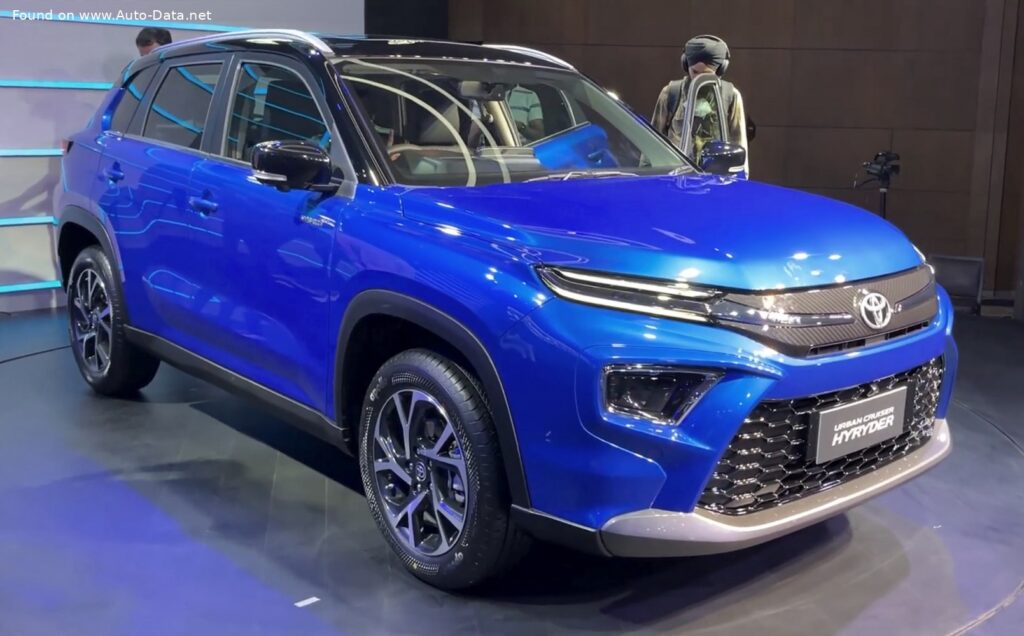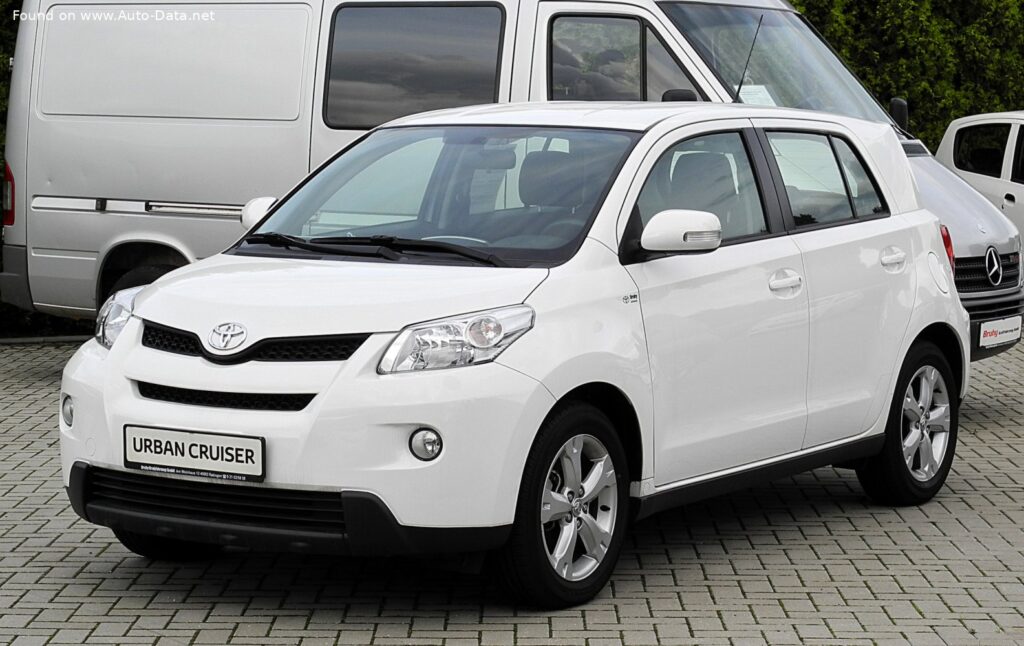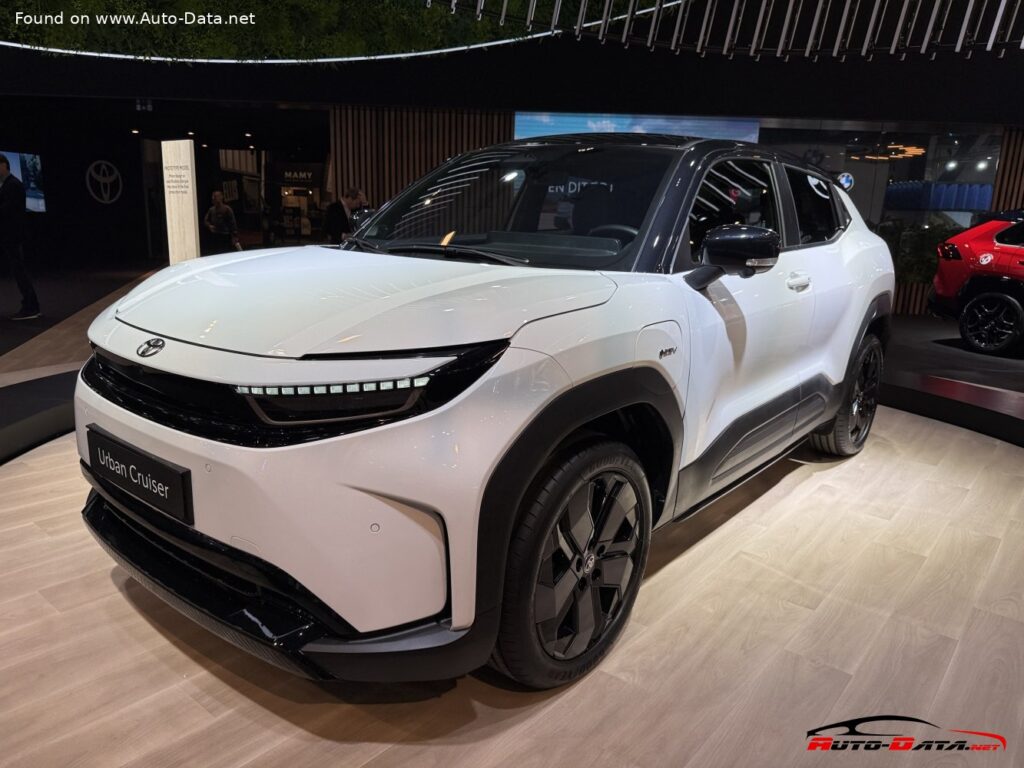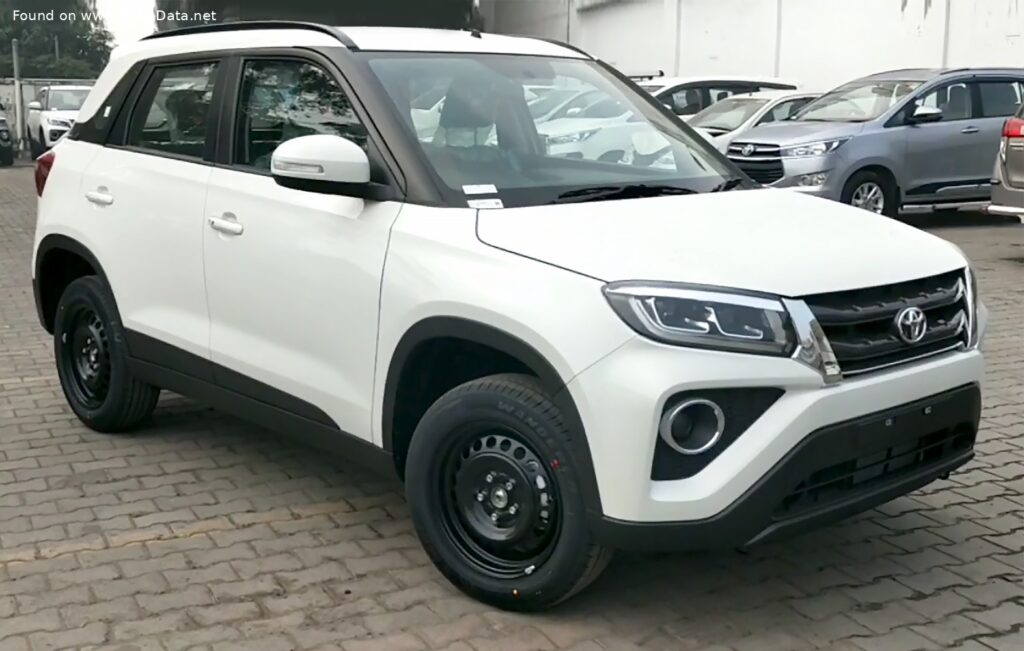
The Toyota Urban Cruiser II 1.5i (105 Hp) represents a compelling entry in the rapidly expanding compact SUV segment, primarily targeting markets outside North America, such as India and other Asian and African regions, where its blend of practicality, efficiency, and Toyota’s renowned reliability makes it a strong contender. Launched in August 2020, this second-generation Urban Cruiser is built on a robust powertrain architecture featuring an internal combustion engine, designed to cater to the demands of urban commuting and occasional longer journeys. As a five-door, five-seater SUV, it positions itself as a versatile family vehicle that balances compact dimensions with a surprisingly spacious interior, embodying the modern urban utility vehicle ethos. The vehicle’s design and engineering reflect a focus on fuel economy and reduced emissions, aligning with contemporary environmental standards while delivering a dependable driving experience. The {original_title} is a testament to Toyota’s strategy of offering tailored solutions for diverse global markets, prioritizing durability and low running costs.
Engineering and Performance of the Toyota Urban Cruiser II 1.5i (105 Hp)
At the heart of the Toyota Urban Cruiser II 1.5i (105 Hp) lies the proficient K15B engine, a 1.5-liter (1462 cm3 or 89.22 cu. in.) inline-four gasoline unit. This engine is engineered for efficiency and smooth power delivery, producing a respectable 105 horsepower at 6000 rpm. This power output, combined with 101.78 lb.-ft. (138 Nm) of torque peaking at 4400 rpm, provides ample motivation for city driving and comfortable highway cruising within its segment. The engine’s layout is front, transverse, which is typical for front-wheel-drive vehicles, optimizing space utilization in the engine bay and contributing to the vehicle’s compact footprint. Power per liter stands at 71.8 Hp/l, indicating a well-optimized naturally aspirated engine.
Fuel delivery is managed by a multi-port manifold injection system, a proven technology that ensures precise fuel atomization and efficient combustion. The vehicle is designed to meet the stringent BS VI emission standard, reflecting its commitment to environmental responsibility in its primary markets. To further enhance efficiency and reduce emissions, the Urban Cruiser II incorporates a Start & Stop System, which automatically shuts off the engine when the vehicle is stationary and restarts it seamlessly when the driver intends to move. Additionally, a particulate filter is integrated into the exhaust system, helping to capture harmful particulate matter before it is released into the atmosphere. The engine oil capacity is 3.1 liters (3.28 US qt), while the coolant system holds 5 liters (5.28 US qt), contributing to the engine’s thermal management and longevity.
The powertrain architecture features an internal combustion engine driving the front wheels, paired with a five-speed manual transmission. This combination offers drivers a direct and engaging connection to the vehicle, while also being a cost-effective and reliable solution. The front-wheel-drive configuration is ideal for urban environments, providing good traction in various conditions and contributing to the vehicle’s fuel efficiency. Speaking of which, the combined fuel consumption is an impressive 5.9 liters per 100 km (39.9 US mpg or 47.9 UK mpg), underscoring its economical nature. This excellent fuel economy is a significant selling point, especially in markets where fuel costs are a critical factor for consumers. The weight-to-power ratio of 10.6 kg/Hp (94.2 Hp/tonne) and a weight-to-torque ratio of 8.1 kg/Nm (123.8 Nm/tonne) further highlight the vehicle’s balanced performance characteristics for its class, ensuring agile handling and responsive acceleration for daily use.
Design and Features of the Toyota Urban Cruiser II
The Toyota Urban Cruiser II presents itself as a contemporary compact SUV, characterized by its purposeful design and practical features tailored for urban life. With a length of 157.28 inches (3995 mm), a width of 70.47 inches (1790 mm), and a height of 64.57 inches (1640 mm), it strikes an optimal balance between exterior compactness and interior spaciousness. The wheelbase, measuring 98.43 inches (2500 mm), contributes to a stable ride and generous cabin room for all five occupants. Its minimum turning circle of 34.12 feet (10.4 m) makes it exceptionally maneuverable in tight city streets and parking lots, a crucial attribute for its target demographic.
The body type is a classic SUV, featuring five doors that provide easy access to both front and rear seats. The seating configuration comfortably accommodates five passengers, making it a suitable choice for small families or individuals requiring versatile cargo and passenger capacity. The trunk (boot) space offers a minimum of 11.58 cu. ft. (328 liters), which is adequate for daily errands, groceries, or weekend luggage. The rear seats can typically be folded down to expand this cargo volume, although the maximum capacity is not specified in the provided data. The fuel tank capacity of 12.68 US gallons (48 liters) ensures a good driving range, complementing its excellent fuel economy and reducing the frequency of refueling stops.
In terms of chassis and suspension, the Urban Cruiser II employs an independent McPherson type front suspension, known for its ability to provide a comfortable ride and predictable handling. The rear suspension utilizes a torsion beam setup, a robust and space-efficient design that is well-suited for compact vehicles, contributing to a stable rear end and maximizing cargo volume. Braking performance is handled by ventilated disc brakes at the front, offering effective heat dissipation and consistent stopping power, while drum brakes are fitted at the rear, which are reliable and cost-effective for this vehicle class. An Anti-lock Braking System (ABS) is a standard assisting system, enhancing safety by preventing wheel lock-up during hard braking, thereby allowing the driver to maintain steering control. The steering system is a rack and pinion type, providing direct and responsive feedback to the driver. The vehicle rides on 16-inch wheel rims, shod with tires sized 205/60 R16 or 215/60 R16, offering a good balance of grip, ride comfort, and durability for various road conditions.
Technical Specifications: Toyota Urban Cruiser II 1.5i (105 Hp)
| Brand | Toyota |
| Model | Urban Cruiser |
| Generation | Urban Cruiser II |
| Type (Engine) | 1.5i (105 Hp) |
| Start of Production | August, 2020 year |
| Powertrain Architecture | Internal Combustion engine |
| Body type | SUV |
| Seats | 5 |
| Doors | 5 |
| Fuel consumption (economy) – combined | 5.9 l/100 km (39.9 US mpg, 47.9 UK mpg, 16.9 km/l) |
| Fuel Type | Petrol (Gasoline) |
| Emission standard | BS VI |
| Weight-to-power ratio | 10.6 kg/Hp (94.2 Hp/tonne) |
| Weight-to-torque ratio | 8.1 kg/Nm (123.8 Nm/tonne) |
| Power | 105 Hp @ 6000 rpm. |
| Power per liter | 71.8 Hp/l |
| Torque | 138 Nm @ 4400 rpm (101.78 lb.-ft. @ 4400 rpm) |
| Engine layout | Front, Transverse |
| Engine Model/Code | K15B |
| Engine displacement | 1462 cm3 (89.22 cu. in.) |
| Number of cylinders | 4 |
| Engine configuration | Inline |
| Fuel injection system | Multi-port manifold injection |
| Engine oil capacity | 3.1 l (3.28 US qt | 2.73 UK qt) |
| Coolant | 5 l (5.28 US qt | 4.4 UK qt) |
| Engine systems | Start & Stop System, Particulate filter |
| Kerb Weight | 1115-1130 kg (2458.15 – 2491.22 lbs.) |
| Max. weight | 1600 kg (3527.4 lbs.) |
| Max load | 470-485 kg (1036.17 – 1069.24 lbs.) |
| Trunk (boot) space – minimum | 328 l (11.58 cu. ft.) |
| Fuel tank capacity | 48 l (12.68 US gal | 10.56 UK gal) |
| Length | 3995 mm (157.28 in.) |
| Width | 1790 mm (70.47 in.) |
| Height | 1640 mm (64.57 in.) |
| Wheelbase | 2500 mm (98.43 in.) |
| Minimum turning circle (turning diameter) | 10.4 m (34.12 ft.) |
| Drivetrain Architecture | The Internal combustion engine (ICE) drives the front wheels of the vehicle. |
| Drive wheel | Front wheel drive |
| Number of gears and type of gearbox | 5 gears, manual transmission |
| Front suspension | Independent type McPherson |
| Rear suspension | Torsion |
| Front brakes | Ventilated discs |
| Rear brakes | Drum |
| Assisting systems | ABS (Anti-lock braking system) |
| Steering type | Steering rack and pinion |
| Tires size | 205/60 R16; 215/60 R16 |
| Wheel rims size | 16 |