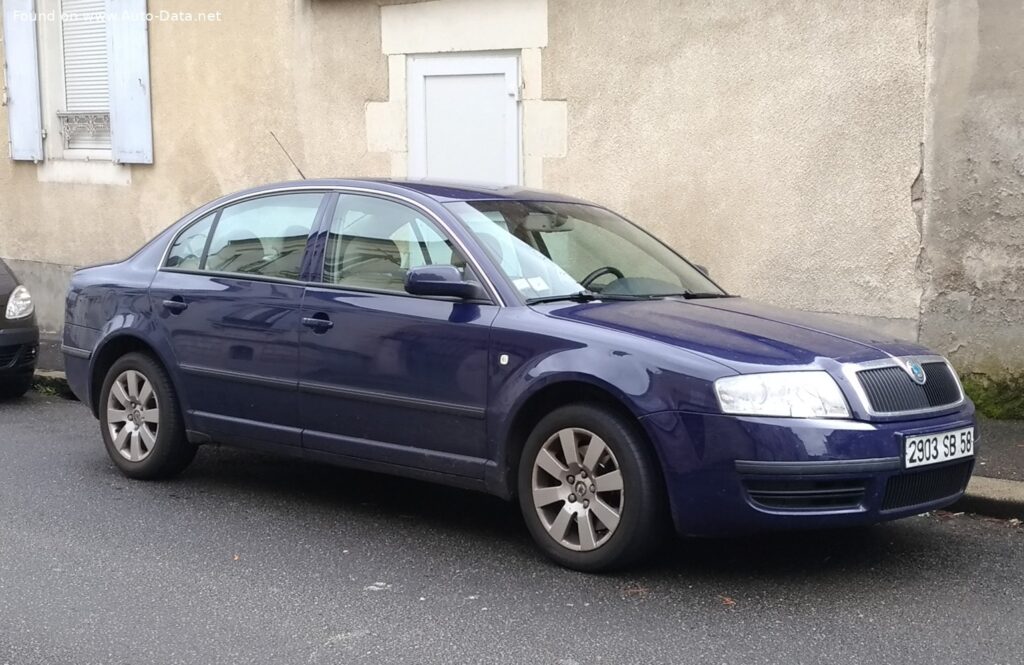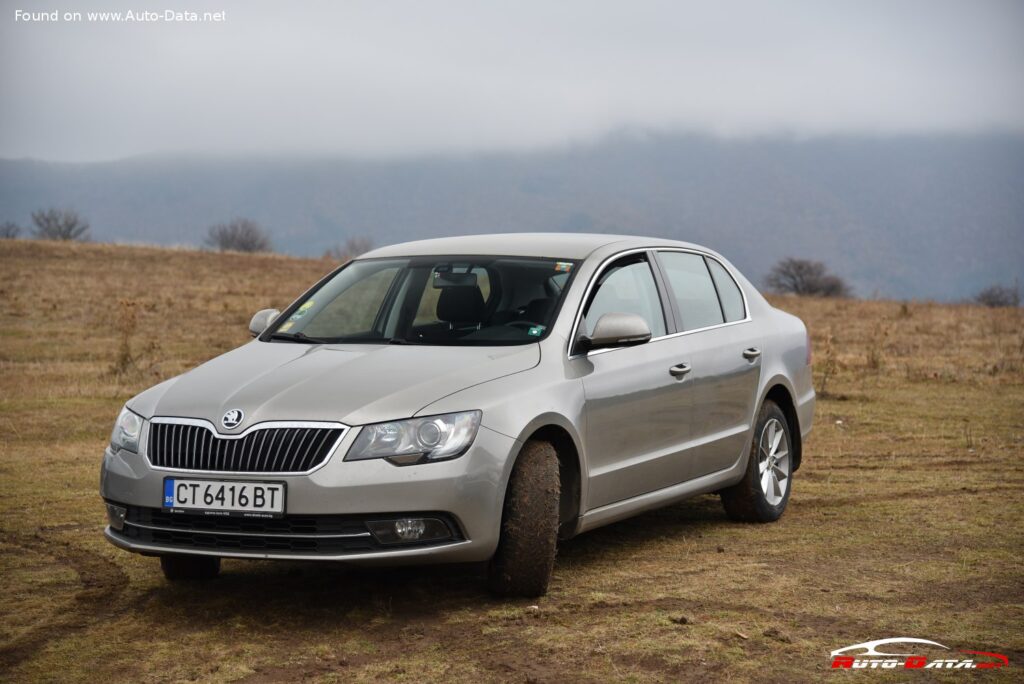
The Skoda Superb II (facelift 2013) represents a significant offering from the Czech automaker Skoda Auto, a brand renowned for its pragmatic engineering and value within the Volkswagen Group. Positioned in the highly competitive D-segment, or mid-size executive car market, the Superb is Skoda’s flagship model, primarily targeting European, Asian, and other international markets where the brand has a strong presence. While not officially sold in the United States, the Superb has carved out a reputation for exceptional interior space, robust build quality, and a compelling blend of comfort and practicality, making it a popular choice for families and business professionals abroad. This particular iteration, featuring the 1.8 TSI (160 Hp) engine, was part of a mid-cycle refresh for the second generation, which ran from April 2013 until May 2015, enhancing its aesthetic appeal and technological offerings to maintain its competitive edge.
Engineering and Performance: The Skoda Superb II (facelift 2013) 1.8 TSI
At the heart of the Skoda Superb II (facelift 2013) 1.8 TSI lies a potent and efficient powertrain, a hallmark of Volkswagen Group engineering. This model is equipped with a 1.8-liter (1798 cm3 or 109.72 cu. in.) inline four-cylinder engine, designated by the EA888 / CDAA engine code. This front, transverse-mounted unit benefits from a sophisticated direct injection fuel system, coupled with a turbocharger and intercooler, ensuring both spirited performance and optimized fuel economy. The engine delivers a robust 160 horsepower (Hp) at an impressive 89 Hp per liter, paired with a substantial 184.39 lb.-ft. (250 Nm) of torque available across a broad rev range, from 1500 to 4500 rpm. This wide torque band is crucial for flexible driving, providing strong acceleration from low speeds and effortless highway cruising.
Performance figures for the Superb II 1.8 TSI are commendable for its class. The vehicle accelerates from 0 to 60 mph in a swift 7.8 seconds, demonstrating its capability to merge confidently into traffic or execute overtakes. Its maximum speed is rated at 137.94 mph (222 km/h), affirming its suitability for prolonged high-speed travel on European autobahns. Power is efficiently transferred to the front wheels via a precise 6-speed manual transmission, offering an engaging driving experience for those who prefer more direct control over gear changes. The drivetrain architecture is straightforward: an internal combustion engine driving the front wheels, a configuration known for its efficiency and predictable handling characteristics.
Fuel efficiency is another strong suit, reflecting the advancements in TSI engine technology. The combined fuel consumption is rated at 34.6 US mpg (6.8 l/100 km), breaking down to 25 US mpg (9.4 l/100 km) in urban settings and an impressive 45.2 US mpg (5.2 l/100 km) on the extra-urban cycle. This balance of power and parsimony makes the Superb an economical choice for daily commuting and longer journeys alike. Furthermore, with CO2 emissions of 158 g/km, the vehicle meets the Euro 5 J emission standard, underscoring Skoda’s commitment to environmental responsibility during its production run. The engine oil capacity is 4.6 liters (4.86 US quarts), and the coolant capacity is 8.6 liters (9.09 US quarts), indicating standard maintenance requirements for its class.
Design and Features of the Skoda Superb II (facelift 2013)
The design philosophy of the Skoda Superb II (facelift 2013) centers around understated elegance, functionality, and cavernous interior space. Its body type is a five-door liftback, a clever design choice that combines the sophisticated profile of a traditional sedan with the immense practicality and cargo versatility of a hatchback. This unique configuration is one of the Superb’s defining characteristics, offering a large, easily accessible trunk opening that sets it apart from many competitors in its segment. The facelift introduced subtle but impactful revisions to the exterior, including a refreshed grille, redesigned headlights and taillights, and updated bumper styling, all contributing to a more modern and refined appearance that aligns with Skoda’s evolving design language.
Dimensionally, the Superb is a substantial vehicle, measuring 190.28 inches (4833 mm) in length, 71.54 inches (1817 mm) in width, and 57.56 inches (1462 mm) in height. Its generous wheelbase of 108.7 inches (2761 mm) is a key factor in providing exceptional passenger comfort, particularly for rear-seat occupants who benefit from limousine-like legroom – a significant selling point for the model. The front track is 60.83 inches (1545 mm) and the rear track is 59.76 inches (1518 mm), contributing to a stable and composed ride. Despite its size, the minimum turning circle of 38.35 feet (11.69 m) indicates reasonable maneuverability for a vehicle of its class.
Inside, the Superb II (facelift 2013) offers a well-appointed and ergonomically sound cabin designed for five occupants. High-quality materials and a logical layout characterize the interior, reflecting the Volkswagen Group’s focus on build quality. The true highlight, however, is the cargo capacity. With the rear seats in place, the trunk offers a generous 21.01 cu. ft. (595 liters) of space, which expands to a massive 60.03 cu. ft. (1700 liters) when the rear seats are folded down. This outstanding flexibility makes the Superb an incredibly practical vehicle for carrying luggage, sports equipment, or large shopping hauls. For safety and driving assistance, the Superb comes equipped with essential features such as ABS (Anti-lock braking system), and its steering system utilizes a precise rack and pinion setup, ensuring responsive handling. The vehicle’s kerb weight is 3298.12 lbs. (1496 kg), with a maximum permissible weight of 4539.32 lbs. (2059 kg), allowing for a substantial maximum load of 1241.2 lbs. (563 kg).
Technical Specifications: Skoda Superb II (facelift 2013) 1.8 TSI (160 Hp)
| Brand | Skoda |
| Model | Superb |
| Generation | Superb II (facelift 2013) |
| Type (Engine) | 1.8 TSI (160 Hp) |
| Start of production | April, 2013 year |
| End of production | May, 2015 year |
| Powertrain Architecture | Internal Combustion engine |
| Body type | Liftback |
| Seats | 5 |
| Doors | 5 |
| Fuel consumption (economy) – urban | 9.4 l/100 km (25 US mpg) |
| Fuel consumption (economy) – extra urban | 5.2 l/100 km (45.2 US mpg) |
| Fuel consumption (economy) – combined | 6.8 l/100 km (34.6 US mpg) |
| CO2 emissions | 158 g/km |
| Fuel Type | Petrol (Gasoline) |
| Acceleration 0 – 60 mph | 7.8 sec |
| Acceleration 0 – 100 km/h | 8.2 sec |
| Maximum speed | 137.94 mph (222 km/h) |
| Emission standard | Euro 5 J |
| Weight-to-power ratio | 9.4 kg/Hp (107 Hp/tonne) |
| Weight-to-torque ratio | 6 kg/Nm (167.1 Nm/tonne) |
| Power | 160 Hp |
| Power per liter | 89 Hp/l |
| Torque | 184.39 lb.-ft. (250 Nm) @ 1500-4500 rpm |
| Engine layout | Front, Transverse |
| Engine Model/Code | EA888 / CDAA |
| Engine displacement | 1.8 l (1798 cm3, 109.72 cu. in.) |
| Number of cylinders | 4 |
| Engine configuration | Inline |
| Compression ratio | 9.8:1 |
| Fuel injection system | Direct injection |
| Engine aspiration | Turbocharger, Intercooler |
| Engine oil capacity | 4.6 l (4.86 US qt) |
| Coolant | 8.6 l (9.09 US qt) |
| Kerb Weight | 3298.12 lbs. (1496 kg) |
| Max. weight | 4539.32 lbs. (2059 kg) |
| Max load | 1241.2 lbs. (563 kg) |
| Trunk (boot) space – minimum | 21.01 cu. ft. (595 l) |
| Trunk (boot) space – maximum | 60.03 cu. ft. (1700 l) |
| Fuel tank capacity | 15.85 US gal (60 l) |
| Length | 190.28 in. (4833 mm) |
| Width | 71.54 in. (1817 mm) |
| Height | 57.56 in. (1462 mm) |
| Wheelbase | 108.7 in. (2761 mm) |
| Front track | 60.83 in. (1545 mm) |
| Rear (Back) track | 59.76 in. (1518 mm) |
| Minimum turning circle (turning diameter) | 38.35 ft. (11.69 m) |
| Drivetrain Architecture | The Internal combustion engine (ICE) drives the front wheels of the vehicle. |
| Drive wheel | Front wheel drive |
| Number of gears and type of gearbox | 6 gears, manual transmission |
| Assisting systems | ABS (Anti-lock braking system) |
| Steering type | Steering rack and pinion |