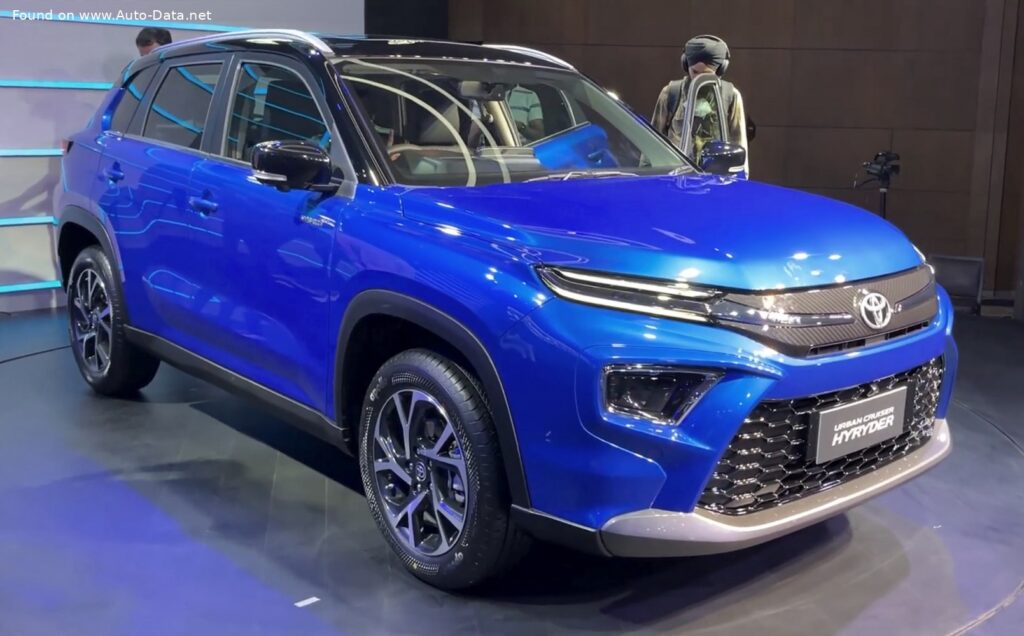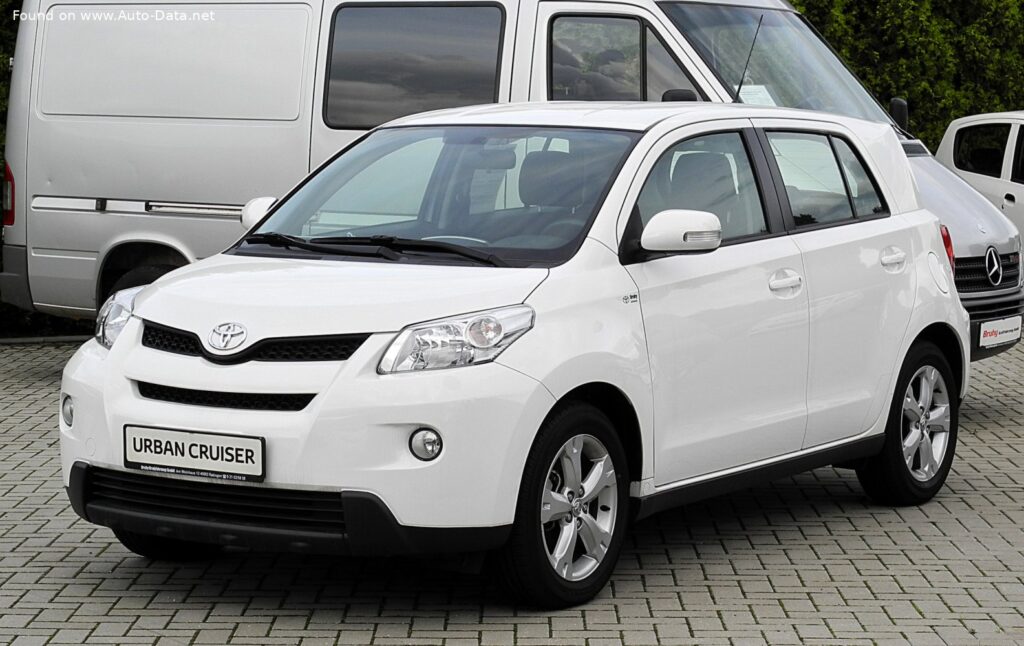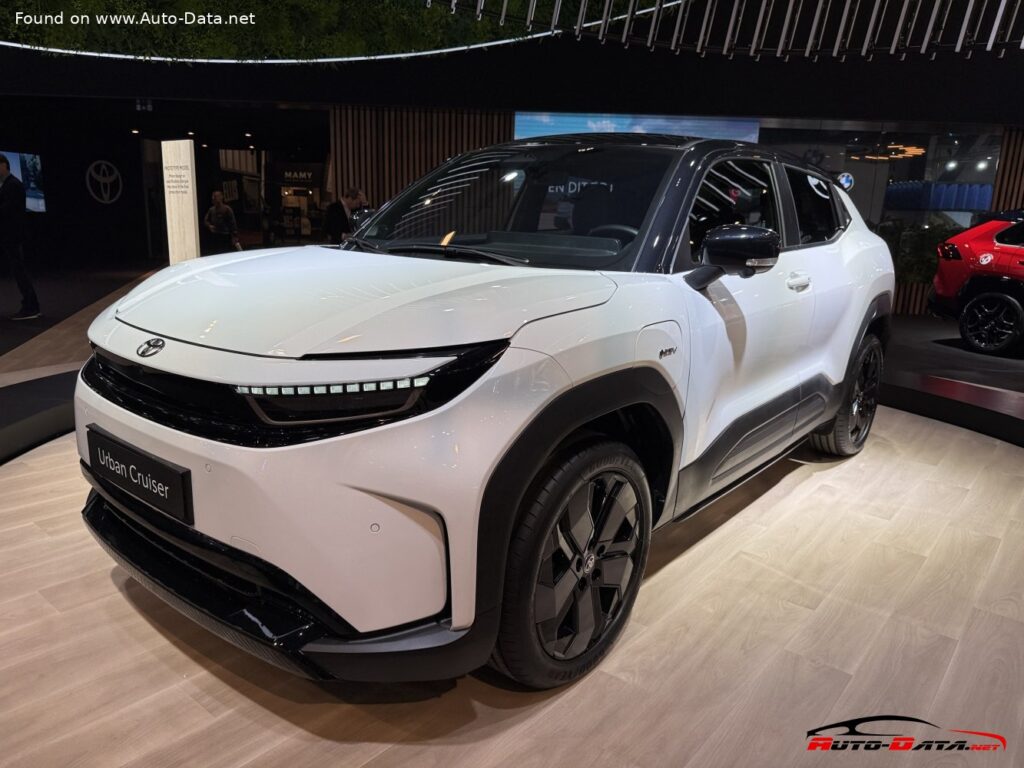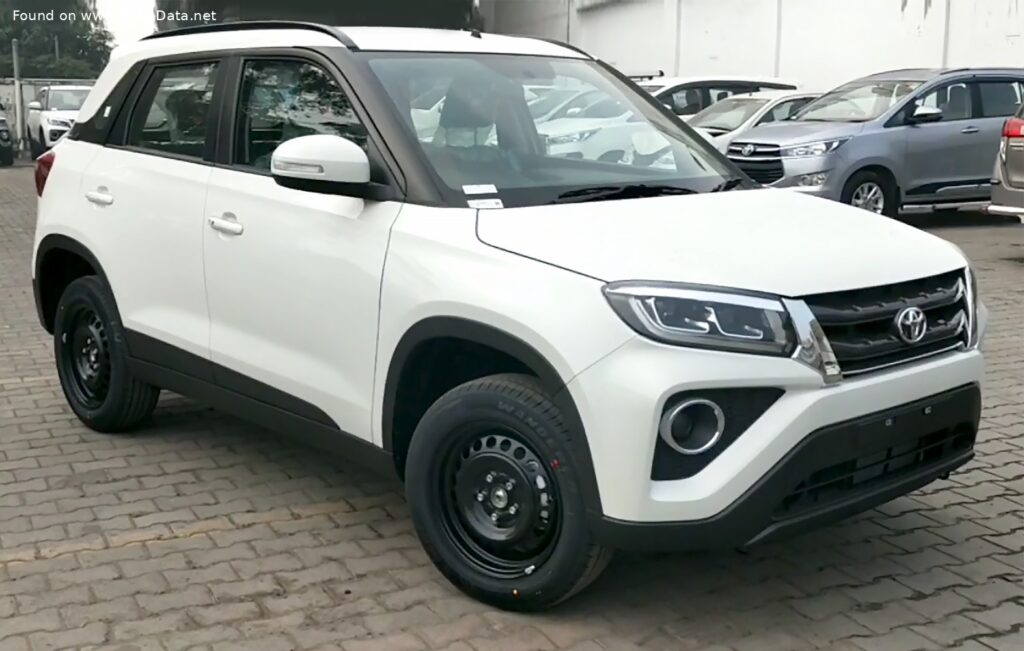
The Toyota Urban Cruiser II 1.5i (105 Hp) Mild Hybrid Automatic represents a significant offering in the highly competitive subcompact SUV segment, primarily tailored for markets outside of North America, particularly India and other Asian regions where the demand for versatile, efficient, and urban-friendly vehicles is exceptionally high. Launched in August 2020, this second-generation Urban Cruiser builds upon its predecessor’s foundation, integrating advanced mild-hybrid technology to enhance fuel economy and reduce emissions, aligning with contemporary environmental standards and consumer expectations. Positioned as a practical and reliable family vehicle, the Toyota Urban Cruiser II 1.5i (105 Hp) Mild Hybrid Automatic embodies Toyota’s commitment to delivering quality and efficiency in a compact, yet capable, SUV package.
Powertrain and Performance of the Toyota Urban Cruiser II 1.5i (105 Hp) Mild Hybrid Automatic
At the heart of the Toyota Urban Cruiser II 1.5i (105 Hp) Mild Hybrid Automatic lies a sophisticated MHEV (Mild Hybrid Electric Vehicle) powertrain architecture, often referred to as a power-assist hybrid or battery-assisted hybrid vehicle (BAHV). This system pairs a robust 1.5-liter (1462 cm3 or 89.22 cu. in.) K15B inline-four gasoline engine with a mild-hybrid setup, designed to optimize efficiency without the complexity of a full hybrid system. The engine is configured in a front, transverse layout, driving the front wheels through a 4-speed automatic transmission.
The gasoline engine alone produces a respectable 105 horsepower at 6000 rpm, translating to a power output of 71.8 Hp per liter, indicative of its efficient design. Torque figures stand at 138 Nm (101.78 lb.-ft.) at 4400 rpm, providing ample pulling power for urban commuting and highway cruising. The mild-hybrid system enhances this performance by offering torque assist during acceleration, reducing the load on the internal combustion engine, and enabling smoother operation of the Start & Stop system. This integration contributes to a commendable combined fuel economy of 44.4 US mpg (5.3 l/100 km), making it an economical choice for daily drivers. Furthermore, the vehicle adheres to the stringent BS VI emission standard, underscoring its environmental consciousness and suitability for markets with evolving regulatory frameworks.
The MHEV system’s primary function is to improve fuel efficiency by capturing energy during deceleration through regenerative braking and using it to assist the engine during acceleration. This not only reduces fuel consumption but also lowers exhaust emissions. The Start & Stop system further contributes to efficiency in stop-and-go traffic, seamlessly shutting off the engine when the vehicle is stationary and restarting it quickly and quietly when the driver releases the brake pedal. With a weight-to-power ratio of 10.8 kg/Hp (92.5 Hp/tonne) and a weight-to-torque ratio of 8.2 kg/Nm (121.6 Nm/tonne), the Urban Cruiser II offers a balanced performance profile, ensuring responsive acceleration and adequate power for its segment, while maintaining its focus on fuel economy and reduced environmental impact.
Design and Features
The Toyota Urban Cruiser II presents itself as a contemporary SUV, characterized by a practical 5-door, 5-seat body type that caters to the needs of small families and urban adventurers. Its exterior design is robust yet refined, featuring a confident stance and a compact footprint that makes it agile in congested city environments. With a length of 157.28 inches (3995 mm), a width of 70.47 inches (1790 mm), and a height of 64.57 inches (1640 mm), the Urban Cruiser II strikes an excellent balance between interior space and exterior maneuverability. The wheelbase of 98.43 inches (2500 mm) contributes to a stable ride and a surprisingly spacious cabin for its class, while a minimum turning circle of 34.12 feet (10.4 m) ensures effortless navigation through tight urban streets and parking lots.
Inside, the Urban Cruiser II focuses on practicality and comfort. The 5-seat configuration provides ample room for passengers, and the trunk offers a minimum capacity of 11.58 cu. ft. (328 liters), which is generous for a vehicle of this size, capable of accommodating daily groceries or weekend luggage. The fuel tank capacity of 12.68 US gallons (48 liters) complements its excellent fuel economy, allowing for extended travel between fill-ups. Standard features include a multi-port manifold injection fuel system for efficient fuel delivery and a particulate filter to manage emissions, further solidifying its compliance with modern environmental standards.
In terms of safety and driving dynamics, the Urban Cruiser II is equipped with essential assisting systems such as ABS (Anti-lock Braking System), which enhances braking control in emergency situations. The front suspension utilizes an independent McPherson type setup, known for its balance of comfort and handling, while the rear features a torsion beam, a common and durable choice for compact SUVs. Braking performance is handled by ventilated discs at the front and reliable drum brakes at the rear. The steering system employs a rack and pinion setup, offering direct and responsive feedback to the driver. The vehicle rides on 16-inch wheel rims, shod with tires sized 205/60 R16 or 215/60 R16, providing a good balance of grip and ride comfort suitable for varying road conditions found in its target markets. The overall design ethos of the Urban Cruiser II is centered around delivering a reliable, efficient, and practical SUV experience, making it a compelling choice for consumers seeking a versatile daily driver.
Technical Specifications
| Brand | Toyota |
| Model | Urban Cruiser |
| Generation | Urban Cruiser II |
| Type (Engine) | 1.5i (105 Hp) Mild Hybrid Automatic |
| Start of production | August, 2020 year |
| Powertrain Architecture | MHEV (Mild Hybrid Electric Vehicle, power-assist hybrid, battery-assisted hybrid vehicles, BAHV) |
| Body type | SUV |
| Seats | 5 |
| Doors | 5 |
| Fuel consumption (economy) – combined | 5.3 l/100 km (44.4 US mpg / 53.3 UK mpg / 18.9 km/l) |
| Fuel Type | Petrol (Gasoline) |
| Emission standard | BS VI |
| Weight-to-power ratio | 10.8 kg/Hp, 92.5 Hp/tonne |
| Weight-to-torque ratio | 8.2 kg/Nm, 121.6 Nm/tonne |
| Power | 105 Hp @ 6000 rpm. |
| Power per litre | 71.8 Hp/l |
| Torque | 138 Nm @ 4400 rpm. (101.78 lb.-ft. @ 4400 rpm.) |
| Engine layout | Front, Transverse |
| Engine Model/Code | K15B |
| Engine displacement | 1462 cm3 (89.22 cu. in.) |
| Number of cylinders | 4 |
| Engine configuration | Inline |
| Fuel injection system | Multi-port manifold injection |
| Engine oil capacity | 3.1 l (3.28 US qt | 2.73 UK qt) |
| Coolant | 5 l (5.28 US qt | 4.4 UK qt) |
| Engine systems | Start & Stop System, Particulate filter |
| Kerb Weight | 1135-1150 kg (2502.25 – 2535.32 lbs.) |
| Max. weight | 1600 kg (3527.4 lbs.) |
| Max load | 450-465 kg (992.08 – 1025.15 lbs.) |
| Trunk (boot) space – minimum | 328 l (11.58 cu. ft.) |
| Fuel tank capacity | 48 l (12.68 US gal | 10.56 UK gal) |
| Length | 3995 mm (157.28 in.) |
| Width | 1790 mm (70.47 in.) |
| Height | 1640 mm (64.57 in.) |
| Wheelbase | 2500 mm (98.43 in.) |
| Minimum turning circle (turning diameter) | 10.4 m (34.12 ft.) |
| Drivetrain Architecture | The Internal combustion engine (ICE) and electric motor drive the front wheels of the car with the ability to work only in mixed mode. |
| Drive wheel | Front wheel drive |
| Number of gears and type of gearbox | 4 gears, automatic transmission |
| Front suspension | Independent type McPherson |
| Rear suspension | Torsion |
| Front brakes | Ventilated discs |
| Rear brakes | Drum |
| Assisting systems | ABS (Anti-lock braking system) |
| Steering type | Steering rack and pinion |
| Tires size | 205/60 R16; 215/60 R16 |
| Wheel rims size | 16 |