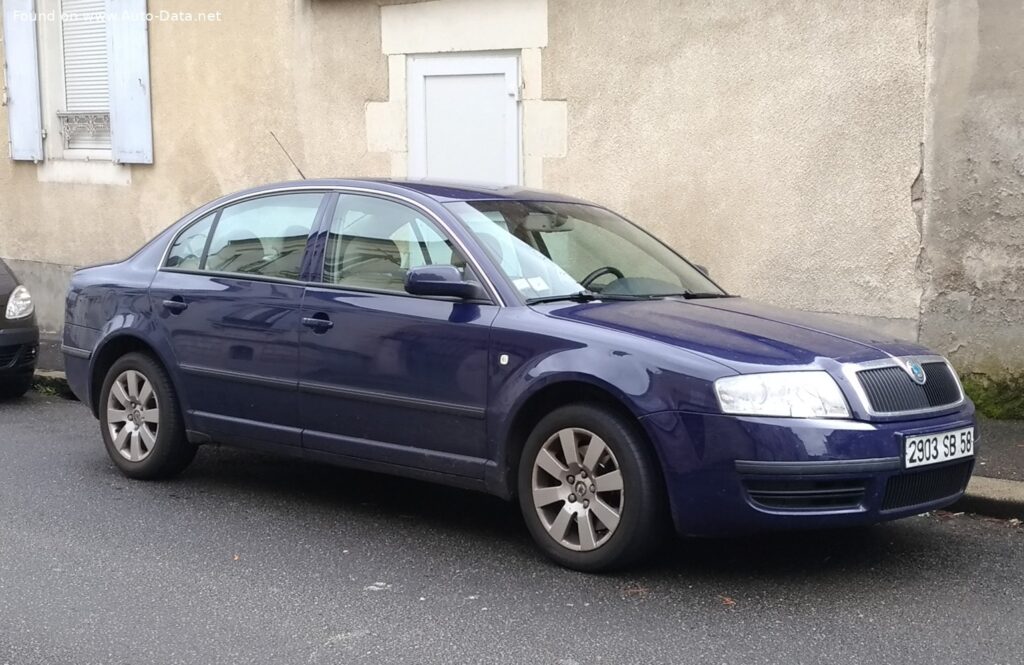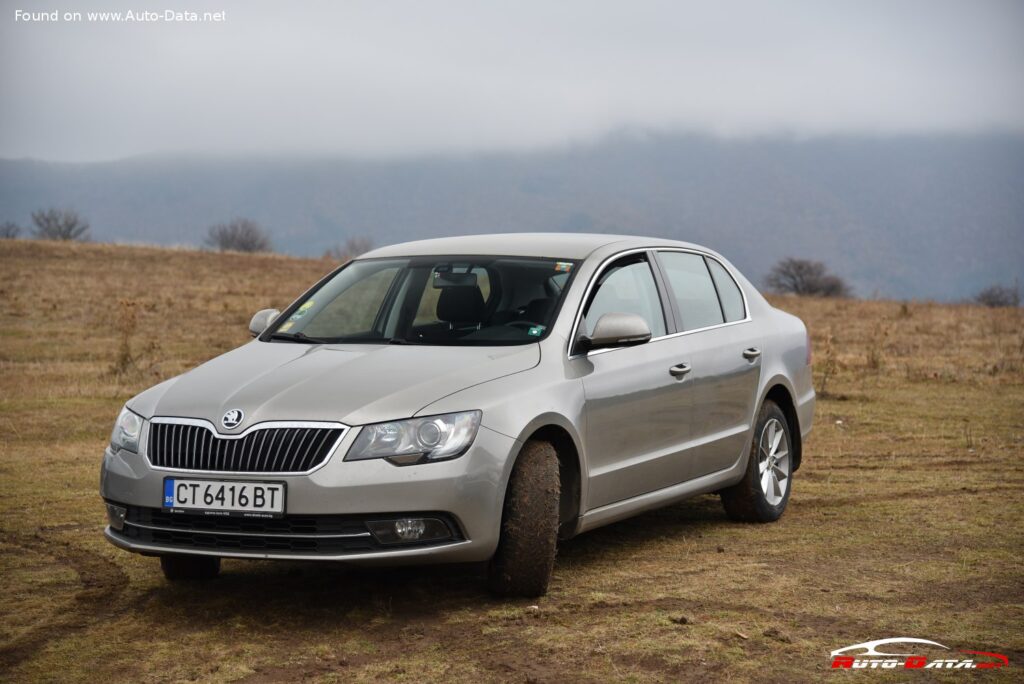
The Skoda Superb II, specifically the facelifted model introduced in April 2013, represented a significant offering in the D-segment, or mid-size executive car category, primarily within European and Asian markets. While not officially sold in the United States, the {original_focus_keyword} carved out a niche for itself as a remarkably spacious, practical, and value-oriented vehicle, embodying Skoda’s commitment to intelligent design and engineering within the Volkswagen Group. This particular variant, powered by a 1.8-liter TSI engine paired with a sophisticated DSG automatic transmission, delivered a compelling blend of performance, efficiency, and comfort, appealing to both family buyers and corporate fleets seeking an alternative to more expensive premium brands without compromising on quality or features. Its production run for this specific configuration extended until May 2015, marking a refined chapter for the second-generation Superb.
Engine & Performance: The Heart of the Skoda Superb II (facelift 2013)
At the core of the Skoda Superb II (facelift 2013) lies a robust and efficient 1.8-liter TSI (Turbocharged Stratified Injection) gasoline engine, identified by the EA888 / CDAA engine code. This inline four-cylinder unit, transversely mounted at the front, is a testament to modern powertrain engineering, utilizing direct injection and a turbocharger with an intercooler to produce impressive figures for its displacement. It generates a healthy 160 horsepower (HP), achieving a power output of approximately 89 HP per liter. More critically for daily driving, the engine delivers a substantial 250 Newton-meters (184.39 lb.-ft.) of torque across a broad and accessible rev range, from 1500 to 4500 revolutions per minute (rpm). This wide torque band ensures responsive acceleration and flexible overtaking capability, making the Superb feel effortless in various driving conditions, from city commutes to highway cruising.
Power is efficiently channeled to the front wheels through a 7-speed Direct-Shift Gearbox (DSG) automatic transmission. This advanced dual-clutch system is renowned for its rapid, smooth, and seamless gear changes, contributing significantly to both the vehicle’s performance and its fuel economy. The combination of the potent 1.8 TSI engine and the quick-shifting DSG allows the Superb to accelerate from 0 to 60 mph in a swift 8 seconds, while its top speed reaches an impressive 137.94 mph. These figures underscore the vehicle’s capability to offer a dynamic driving experience despite its emphasis on comfort and practicality.
Fuel efficiency for the 1.8 TSI DSG variant is commendable, reflecting Skoda’s focus on economical operation. The combined fuel consumption is rated at 7 liters per 100 kilometers, which translates to an estimated 33.6 US miles per gallon (mpg). In urban settings, it achieves 25.3 US mpg, while extra-urban driving pushes this to an impressive 42 US mpg. These figures are particularly competitive for a vehicle of its size and performance. Furthermore, the Superb II facelift adheres to the Euro 5 J emission standard, with CO2 emissions pegged at 162 grams per kilometer, showcasing its commitment to environmental responsibility for its production era. The engine’s compression ratio of 9.8:1 optimizes combustion efficiency, while an engine oil capacity of 4.6 liters (4.86 US quarts) and a coolant capacity of 8.6 liters (9.09 US quarts) ensure robust thermal management and lubrication.
Design & Features: Practicality Meets Refinement
The Skoda Superb II (facelift 2013) maintained its reputation for offering class-leading space and a distinctive design, particularly characterized by its innovative liftback body style. This design ingeniously combined the elegant silhouette of a sedan with the immense practicality of a hatchback. The rear tailgate, a signature feature, could be opened in two ways: either as a conventional sedan trunk lid or as a full liftback, providing unparalleled access to a cavernous cargo area. With the rear seats in place, the trunk offered a generous 595 liters (21.01 cubic feet) of space, expanding to an astonishing 1700 liters (60.03 cubic feet) with the rear seats folded down. This adaptability cemented the Superb’s status as an exceptionally practical family and executive vehicle.
Visually, the 2013 facelift brought subtle yet impactful enhancements to the Superb’s exterior. These updates included a redesigned front grille, new headlights, and updated taillights, all contributing to a more modern and cohesive aesthetic. The vehicle’s dimensions—190.28 inches in length, 71.54 inches in width, and 57.56 inches in height—along with a substantial 108.7-inch wheelbase, underscore its commanding road presence and the interior volume it afforded. The wide front track of 60.83 inches and rear track of 59.76 inches, combined with a minimum turning circle of 38.35 feet, provided a stable stance and reasonable maneuverability for a vehicle of its size.
Inside, the Superb continued to impress with its expansive cabin, particularly the rear legroom, which often rivaled that of much larger, more expensive luxury sedans. The interior design focused on ergonomics, high-quality materials, and a logical layout of controls. While specific trim levels and features are not detailed in the provided data, typical amenities for a car in this segment during its production period would include air conditioning, power windows, and a comprehensive infotainment system. Safety was also a priority, with the inclusion of an Anti-lock Braking System (ABS) as standard, complemented by a robust chassis and multiple airbags to protect its five occupants. The steering system utilized a rack and pinion setup, providing precise and predictable handling characteristics.
The Superb’s 60-liter (15.85 US gallons) fuel tank capacity, combined with its efficient powertrain, offered an impressive cruising range, further enhancing its appeal for long-distance travel. With a kerb weight of 3324.57 lbs. and a maximum gross weight of 4565.77 lbs., the Superb was built to be robust and capable of carrying a significant load, with a maximum payload capacity of 1241.2 lbs. The combination of its thoughtful design, generous interior space, and robust engineering allowed the Skoda Superb II (facelift 2013) 1.8 TSI (160 Hp) DSG to stand out as a highly competent and comfortable choice in its competitive market segment.
Technical Specifications
| Brand | Skoda |
| Model | Superb |
| Generation | Superb II (facelift 2013) |
| Type (Engine) | 1.8 TSI (160 Hp) DSG |
| Start of production | April, 2013 year |
| End of production | May, 2015 year |
| Powertrain Architecture | Internal Combustion engine |
| Body type | Liftback |
| Seats | 5 |
| Doors | 5 |
| Fuel consumption (economy) – urban | 9.3 l/100 km (25.3 US mpg) |
| Fuel consumption (economy) – extra urban | 5.6 l/100 km (42 US mpg) |
| Fuel consumption (economy) – combined | 7 l/100 km (33.6 US mpg) |
| CO2 emissions | 162 g/km |
| Fuel Type | Petrol (Gasoline) |
| Acceleration 0 – 60 mph | 8 sec |
| Maximum speed | 222 km/h (137.94 mph) |
| Emission standard | Euro 5 J |
| Weight-to-power ratio | 9.4 kg/Hp (106.1 Hp/tonne) |
| Weight-to-torque ratio | 6 kg/Nm (165.8 Nm/tonne) |
| Power | 160 Hp |
| Power per liter | 89 Hp/l |
| Torque | 250 Nm (184.39 lb.-ft.) @ 1500-4500 rpm |
| Engine layout | Front, Transverse |
| Engine Model/Code | EA888 / CDAA |
| Engine displacement | 1798 cm3 (109.72 cu. in.) |
| Number of cylinders | 4 |
| Engine configuration | Inline |
| Compression ratio | 9.8:1 |
| Fuel injection system | Direct injection |
| Engine aspiration | Turbocharger, Intercooler |
| Engine oil capacity | 4.6 l (4.86 US qt) |
| Coolant | 8.6 l (9.09 US qt) |
| Kerb Weight | 1508 kg (3324.57 lbs.) |
| Max. weight | 2071 kg (4565.77 lbs.) |
| Max load | 563 kg (1241.2 lbs.) |
| Trunk (boot) space – minimum | 595 l (21.01 cu. ft.) |
| Trunk (boot) space – maximum | 1700 l (60.03 cu. ft.) |
| Fuel tank capacity | 60 l (15.85 US gal) |
| Length | 4833 mm (190.28 in.) |
| Width | 1817 mm (71.54 in.) |
| Height | 1462 mm (57.56 in.) |
| Wheelbase | 2761 mm (108.7 in.) |
| Front track | 1545 mm (60.83 in.) |
| Rear (Back) track | 1518 mm (59.76 in.) |
| Minimum turning circle (turning diameter) | 11.69 m (38.35 ft.) |
| Drivetrain Architecture | The Internal combustion engine (ICE) drives the front wheels of the vehicle. |
| Drive wheel | Front wheel drive |
| Number of gears and type of gearbox | 7 gears, automatic transmission |
| Assisting systems | ABS (Anti-lock braking system) |
| Steering type | Steering rack and pinion |