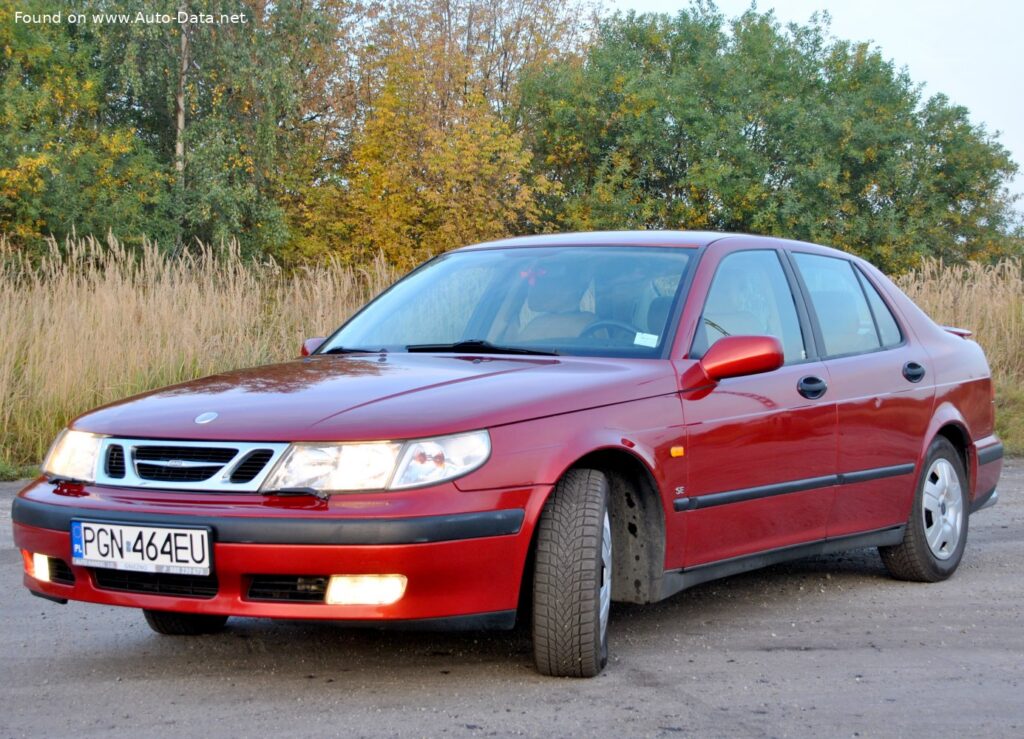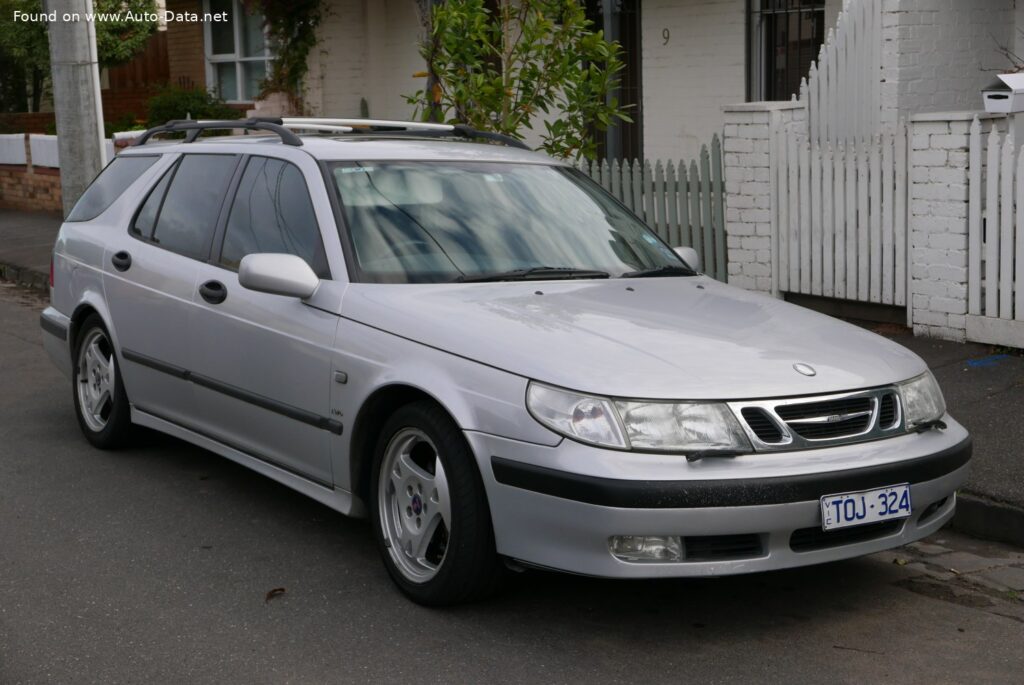
The Saab 9-5 Sport Combi 2.0 T (150 Hp), produced between 1997 and 2001, represented a pivotal offering from the idiosyncratic Swedish automaker in the competitive European executive segment. As the station wagon (estate) variant of the first-generation 9-5, it embodied Saab’s enduring philosophy of combining distinctive design, advanced turbocharging technology, and a strong emphasis on safety and practicality. While not as widely available in the United States as its sedan counterpart, the Sport Combi played a crucial role in its primary European markets, appealing to discerning buyers who sought a premium vehicle with a unique character and exceptional utility, setting it apart from more conventional German and Japanese rivals. This particular iteration, powered by the 2.0-liter turbocharged engine, struck a balance between performance and efficiency, cementing its reputation as a sophisticated and capable family hauler.
Engine and Performance of the Saab 9-5 Sport Combi
At the heart of the 1997-2001 Saab 9-5 Sport Combi 2.0 T (150 Hp) lay Saab’s renowned B205E engine, a transversely mounted, inline four-cylinder unit with a displacement of 1985 cubic centimeters (121.13 cu. in.). This powerplant was a testament to Saab’s long-standing expertise in turbocharging, delivering a robust 150 horsepower at 5500 rpm. More impressively, it generated a substantial 240 Nm (177.01 lb.-ft.) of torque at a remarkably low 1800 rpm. This low-end torque characteristic was a hallmark of Saab’s turbocharged engines, providing excellent off-the-line acceleration and flexible in-gear performance, making the car feel responsive and eager in everyday driving conditions.
The DOHC (Double Overhead Camshaft) valvetrain with four valves per cylinder ensured efficient breathing, while the multi-port manifold injection system precisely managed fuel delivery. The turbocharger, a key component, allowed the relatively small 2.0-liter engine to perform with the vigor of a larger, naturally aspirated unit, while maintaining a respectable compression ratio of 9.3:1. This combination translated into a 0-60 mph acceleration time of a brisk 9.7 seconds, with a maximum speed of 130.49 mph (210 km/h). For a station wagon of its size and era, these figures underscored a commitment to dynamic capability.
Fuel economy for the 9-5 Sport Combi 2.0 T was competitive for the late 1990s. The combined cycle consumption was rated at 9 liters per 100 kilometers, which translates to an approximate 26.1 US mpg. Urban driving saw consumption around 12.6 l/100 km (18.7 US mpg), while extra-urban cruising improved significantly to 7 l/100 km (33.6 US mpg). These figures highlight the engine’s ability to offer a good balance between spirited performance and reasonable running costs, particularly on longer journeys where the turbocharger could operate efficiently. The engine’s oil capacity was 4 liters (4.23 US qt), and the cooling system held 7.4 liters (7.82 US qt) of coolant, indicating a well-engineered thermal management system.
Design and Features of the Saab 9-5 Sport Combi
The Saab 9-5 Sport Combi, or estate as it was known in many markets, stood out with its distinctive, aerodynamic design that blended functionality with a sleek profile. Unlike many boxier wagons of its time, the 9-5 Sport Combi featured a flowing roofline and a raked rear window, contributing to its “Sport Combi” designation. The five-door body offered excellent access to both the passenger cabin and the expansive cargo area, accommodating five occupants comfortably. Saab’s design philosophy prioritized practicality without sacrificing aesthetic appeal, resulting in a vehicle that was both elegant and highly functional.
Inside, Saab maintained its reputation for ergonomic excellence and a driver-focused cockpit. While the provided data doesn’t detail specific interior features, a car of this segment and era from Saab would typically include comprehensive climate control, power accessories, and high-quality upholstery materials. Saab’s commitment to safety was evident even in the late 1990s, and the 9-5 Sport Combi was equipped with an Anti-lock Braking System (ABS) as standard, a crucial active safety feature that enhanced control during emergency braking maneuvers. The vehicle’s overall structure was designed with crash safety in mind, building on Saab’s long-standing heritage of pioneering safety innovations.
The cargo capacity was a significant selling point for the Sport Combi. With the rear seats in place, it offered a substantial 415 liters (14.66 cu. ft.) of trunk space. When the rear seats were folded down, this expanded dramatically to an impressive 1490 liters (52.62 cu. ft.), making it exceptionally versatile for hauling luggage, sports equipment, or larger items. This generous and flexible cargo area, combined with the comfortable seating for five, underscored its appeal as a premium family or executive vehicle capable of handling diverse demands.
Drivetrain, Chassis, and Safety
The Saab 9-5 Sport Combi 2.0 T (150 Hp) utilized a front-wheel-drive architecture, a common and efficient layout for a car of its class, which provided predictable handling and good traction in varied conditions. Power was transmitted to the front wheels via a precise 5-speed manual transmission, offering the driver engaging control over the engine’s output and contributing to the car’s sporty feel. This combination of a turbocharged engine, manual gearbox, and front-wheel drive was a classic Saab setup, celebrated for its balanced performance and engaging driving experience.
The chassis employed a spring strut suspension system both at the front and rear. This independent suspension setup was designed to deliver a comfortable ride while maintaining competent handling characteristics, a balance crucial for a premium executive wagon. The steering system featured a rack and pinion design with hydraulic power steering, providing direct feedback to the driver and making low-speed maneuvers effortless. Braking performance was handled by ventilated discs at the front and solid discs at the rear, a robust setup for a vehicle of this weight and performance. The inclusion of ABS (Anti-lock Braking System) further enhanced braking safety and control, preventing wheel lock-up during hard braking and allowing the driver to maintain steering ability.
The vehicle’s dimensions contributed to its stable road presence and spacious interior. With an overall length of 4808 mm (189.29 in.), a width of 1792 mm (70.55 in.), and a height of 1492 mm (58.74 in.), the 9-5 Sport Combi commanded a significant footprint. The generous wheelbase of 2703 mm (106.42 in.) was a key factor in its stable ride quality and ample interior room. Both the front and rear track measured 1522 mm (59.92 in.), ensuring a wide stance for improved stability. The standard tire sizes offered were 205/65 R 15 or 215/55 R 16, typically mounted on 6.5J x 15-inch wheel rims, providing a good blend of grip and ride comfort. The kerb weight of 1510 kg (3328.98 lbs.) and a maximum permissible weight of 2130 kg (4695.85 lbs.) underscored its robust construction and significant load-carrying capabilities.
Technical Specifications
| Brand | Saab |
| Model | 9-5 |
| Generation | 9-5 Sport Combi |
| Type (Engine) | 2.0 T (150 Hp) |
| Production Start | 1997 |
| Production End | 2001 |
| Powertrain Architecture | Internal Combustion engine |
| Body type | Station wagon (estate) |
| Seats | 5 |
| Doors | 5 |
| Fuel consumption (economy) – urban | 12.6 l/100 km (18.7 US mpg) |
| Fuel consumption (economy) – extra urban | 7 l/100 km (33.6 US mpg) |
| Fuel consumption (economy) – combined | 9 l/100 km (26.1 US mpg) |
| Fuel Type | Petrol (Gasoline) |
| Acceleration 0 – 60 mph | 9.7 sec |
| Acceleration 0 – 62 mph (0-100 km/h) | 10.2 sec |
| Maximum speed | 210 km/h (130.49 mph) |
| Weight-to-power ratio | 10.1 kg/Hp (99.3 Hp/tonne) |
| Weight-to-torque ratio | 6.3 kg/Nm (158.9 Nm/tonne) |
| Power | 150 Hp @ 5500 rpm |
| Power per liter | 75.6 Hp/l |
| Torque | 240 Nm @ 1800 rpm (177.01 lb.-ft. @ 1800 rpm) |
| Engine layout | Front, Transverse |
| Engine Model/Code | B205E |
| Engine displacement | 1985 cm3 (121.13 cu. in.) |
| Number of cylinders | 4 |
| Engine configuration | Inline |
| Cylinder Bore | 90 mm (3.54 in.) |
| Piston Stroke | 78 mm (3.07 in.) |
| Compression ratio | 9.3:1 |
| Number of valves per cylinder | 4 |
| Fuel injection system | Multi-port manifold injection |
| Engine aspiration | Turbocharger |
| Valvetrain | DOHC |
| Engine oil capacity | 4 l (4.23 US qt) |
| Coolant | 7.4 l (7.82 US qt) |
| Kerb Weight | 1510 kg (3328.98 lbs.) |
| Max. weight | 2130 kg (4695.85 lbs.) |
| Max load | 620 kg (1366.87 lbs.) |
| Trunk (boot) space – minimum | 415 l (14.66 cu. ft.) |
| Trunk (boot) space – maximum | 1490 l (52.62 cu. ft.) |
| Fuel tank capacity | 70 l (18.49 US gal) |
| Length | 4808 mm (189.29 in.) |
| Width | 1792 mm (70.55 in.) |
| Height | 1492 mm (58.74 in.) |
| Wheelbase | 2703 mm (106.42 in.) |
| Front track | 1522 mm (59.92 in.) |
| Rear (Back) track | 1522 mm (59.92 in.) |
| Drivetrain Architecture | Front wheel drive (ICE drives front wheels) |
| Drive wheel | Front wheel drive |
| Number of gears and type of gearbox | 5 gears, manual transmission |
| Front suspension | Spring Strut |
| Rear suspension | Spring Strut |
| Front brakes | Ventilated discs |
| Rear brakes | Disc |
| Assisting systems | ABS (Anti-lock braking system) |
| Steering type | Steering rack and pinion |
| Power steering | Hydraulic Steering |
| Tires size | 205/65 R 15; 215/55 R 16 |
| Wheel rims size | 6.5J x 15 |