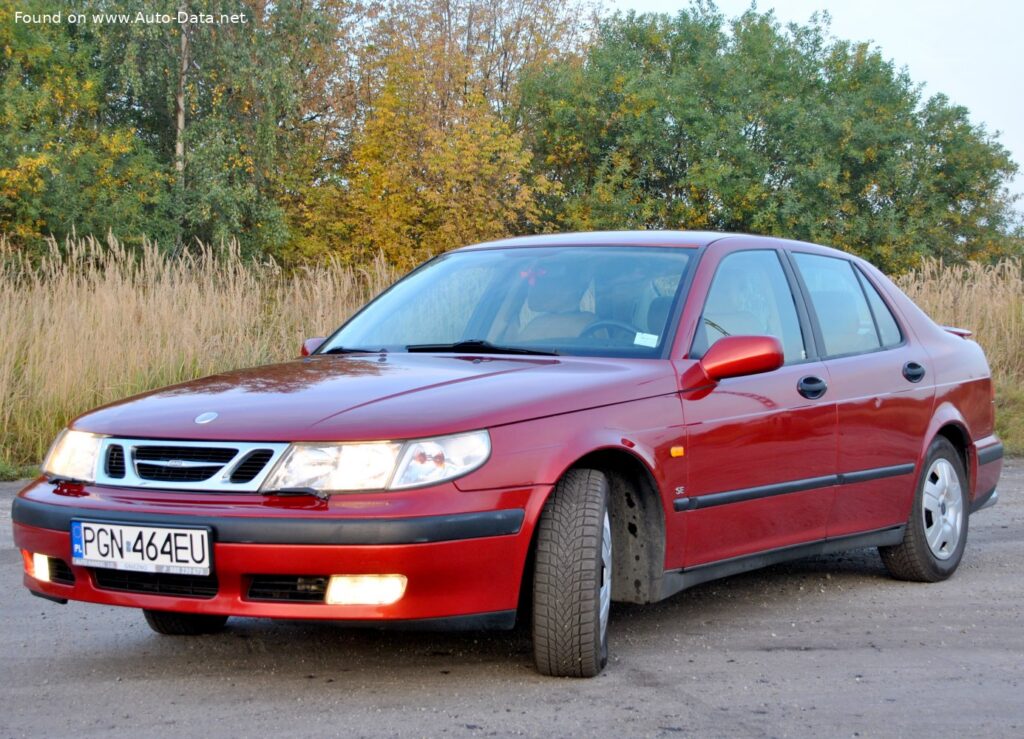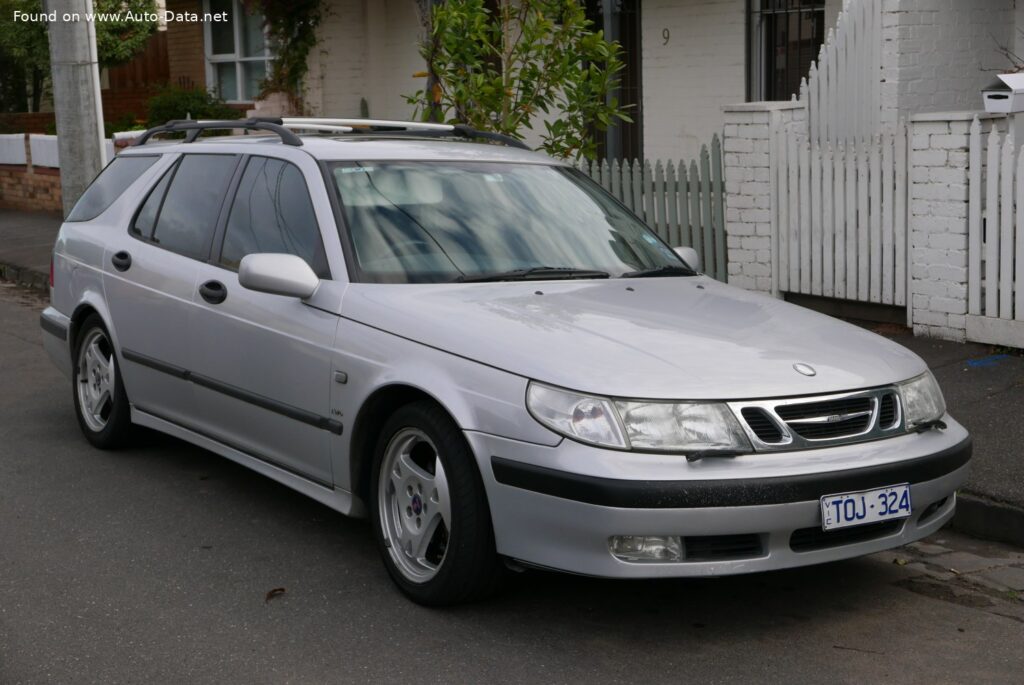
The Saab 9-5 Sport Combi 2.0 T (150 Hp) Automatic, produced from 1997 to 2001, represents a pivotal era for the distinctive Swedish automaker. Positioned in the competitive European executive segment, the 9-5 Sport Combi was Saab’s answer to discerning buyers seeking a blend of sophisticated design, robust turbocharged performance, and unparalleled practicality in a station wagon format. While not as common on American roads as its German or Japanese rivals, the 9-5 Sport Combi carved out a loyal niche, appealing to those who valued its unique Scandinavian character, advanced safety features, and a driving experience defined by its characteristic low-pressure turbo engine. This generation of the 9-5 Sport Combi embodies Saab’s engineering philosophy, combining innovative powertrain solutions with a strong emphasis on user-centric design and occupant protection, making it a compelling classic for enthusiasts today.
The Saab 9-5 Sport Combi: A Legacy of Scandinavian Innovation
The first-generation Saab 9-5 Sport Combi, introduced in 1997, built upon the brand’s long-standing reputation for producing safe, practical, and distinctive vehicles. As a station wagon (known as an estate in Europe), the Sport Combi variant of the 9-5 sedan offered enhanced utility without compromising on the sleek, aerodynamic lines that characterized Saab’s design language. During its production run from 1997 to 2001, this model was a significant player in its primary European markets, offering a unique alternative to the more conventional offerings from BMW, Mercedes-Benz, and Audi. The 9-5 Sport Combi was engineered with a focus on real-world usability, featuring an intuitive cabin layout, advanced climate control systems, and innovative storage solutions that underscored its practical appeal. Its presence in the market demonstrated Saab’s commitment to providing vehicles that were not only technologically advanced but also deeply rooted in the functional design principles for which Scandinavia is renowned. The vehicle’s enduring appeal lies in its distinctive blend of form and function, a testament to its thoughtful engineering and timeless aesthetic.
Engine and Performance Characteristics
At the heart of the Saab 9-5 Sport Combi 2.0 T (150 Hp) Automatic lies a meticulously engineered 2.0-liter turbocharged inline-four engine, designated as the B205E. This powertrain architecture, featuring an internal combustion engine driving the front wheels, exemplifies Saab’s long history with turbocharging technology, which it pioneered in mass-production vehicles. The 1985 cm³ (121.13 cu. in.) engine is configured with four cylinders in an inline arrangement, boasting a DOHC (Dual Overhead Camshaft) valvetrain with four valves per cylinder, ensuring efficient gas flow and responsiveness. With a compression ratio of 9.3:1, the engine is optimized for its multi-port manifold injection system, working in conjunction with the turbocharger to deliver a balanced output.
This specific iteration generates a respectable 150 horsepower at 5500 rpm, translating to a power per liter of 75.6 Hp/l, which was competitive for its era. More notably, the engine produces 240 Nm (177.01 lb.-ft.) of torque at a remarkably low 1800 rpm. This broad and accessible torque band is a hallmark of Saab’s low-pressure turbo philosophy, providing strong, effortless acceleration from low engine speeds, ideal for both city driving and highway cruising. Power is delivered through a smooth 4-speed automatic transmission, which, while not as sophisticated as modern multi-gear units, was well-matched to the engine’s torque characteristics, providing a comfortable and refined driving experience.
In terms of performance, the 9-5 Sport Combi 2.0 T (150 Hp) Automatic accelerates from 0 to 60 mph in a calculated 11.9 seconds, with a maximum speed of 127.38 mph (205 km/h). These figures reflect its positioning as a capable family hauler rather than an outright performance machine, prioritizing smooth power delivery and comfortable cruising. Fuel efficiency figures, crucial for any family vehicle, stand at an estimated 26.1 US mpg combined, with 18.7 US mpg in urban settings and an impressive 33.6 US mpg on the highway. Classified under the Euro 4 emission standard, the vehicle also demonstrated a commitment to environmental responsibility for its time. The engine oil capacity is 4 liters (4.23 US qt), while the coolant system holds 7.4 liters (7.82 US qt).
Design Philosophy and Practicality
The design of the Saab 9-5 Sport Combi is a masterclass in functional aesthetics, embodying the brand’s unique approach to vehicle architecture. As a station wagon with five doors and seating for five occupants, its primary purpose was to offer exceptional utility without sacrificing style. The vehicle’s dimensions—a length of 189.29 inches (4808 mm), a width of 70.55 inches (1792 mm), and a height of 58.74 inches (1492 mm)—contributed to its commanding yet elegant road presence. The generous 106.42-inch (2703 mm) wheelbase provided a stable ride and maximized interior space, a critical aspect for a family-oriented vehicle.
Saab’s commitment to practicality is most evident in the Sport Combi’s versatile cargo area. With the rear seats in place, it offered a substantial trunk volume of 14.66 cubic feet (415 liters). For larger loads, folding down the rear seats expanded this capacity significantly to an impressive 52.62 cubic feet (1490 liters), demonstrating its capability as a true workhorse. The design also featured a low loading sill and a wide aperture, making it easy to load and unload bulky items. Beyond its utility, the 9-5 Sport Combi showcased Saab’s distinctive visual identity, characterized by its sleek profile, wraparound windshield, and signature “hockey stick” C-pillar, which contributed to both its aerodynamic efficiency and unique aesthetic appeal. The interior, though designed in the late 1990s, was ahead of its time in terms of ergonomics and safety, with intuitive controls and robust materials.
Chassis, Drivetrain, and Safety
The driving dynamics of the Saab 9-5 Sport Combi 2.0 T (150 Hp) Automatic were engineered to provide a comfortable yet composed ride, characteristic of European executive cars. The vehicle employs a front-wheel-drive (FWD) drivetrain architecture, where the internal combustion engine directly powers the front wheels. This configuration, combined with the transverse engine layout, contributes to efficient packaging and predictable handling characteristics, especially in adverse weather conditions.
The suspension system features a spring strut design at both the front and rear axles, a robust and proven setup that balances ride comfort with adequate body control. This independent suspension ensures that road imperfections are absorbed effectively, providing a smooth journey for occupants. Braking performance is handled by ventilated discs at the front, offering superior heat dissipation and consistent stopping power, complemented by disc brakes at the rear. An essential assisting system for its time, ABS (Anti-lock Braking System), was standard, enhancing driver control during emergency braking maneuvers and representing Saab’s pioneering approach to automotive safety.
Steering is managed by a hydraulic rack and pinion system, delivering a tactile and communicative feel to the driver, a quality often appreciated by enthusiasts. This hydraulic power steering system provides precise control and a natural steering effort, distinguishing it from the often more artificial feel of modern electric power steering systems. The vehicle was typically fitted with tire sizes ranging from 205/65 R 15 to 215/55 R 16, mounted on 6.5J x 15 wheel rims, offering a good balance of grip and ride comfort. With a kerb weight of 3328.98 lbs (1510 kg) and a maximum permissible weight of 4695.85 lbs (2130 kg), the 9-5 Sport Combi was a substantial and robust vehicle, designed to offer stability and security on the road. The 18.49 US gallon (70 liter) fuel tank provided an ample range for long-distance travel, further cementing its role as a capable and practical touring machine.
Technical Specifications of the Saab 9-5 Sport Combi 2.0 T (150 Hp) Automatic
| Brand | Saab |
| Model | 9-5 |
| Generation | 9-5 Sport Combi |
| Type (Engine) | 2.0 T (150 Hp) Automatic |
| Start of Production | 1997 year |
| End of Production | 2001 year |
| Powertrain Architecture | Internal Combustion engine |
| Body Type | Station wagon (estate) |
| Seats | 5 |
| Doors | 5 |
| Fuel Consumption (Economy) – Urban | 18.7 US mpg (12.6 l/100 km) |
| Fuel Consumption (Economy) – Extra Urban | 33.6 US mpg (7 l/100 km) |
| Fuel Consumption (Economy) – Combined | 26.1 US mpg (9 l/100 km) |
| Fuel Type | Petrol (Gasoline) |
| Acceleration 0 – 60 mph | 11.9 sec |
| Maximum Speed | 127.38 mph (205 km/h) |
| Emission Standard | Euro 4 |
| Weight-to-Power Ratio | 10.1 kg/Hp, 99.3 Hp/tonne |
| Weight-to-Torque Ratio | 6.3 kg/Nm, 158.9 Nm/tonne |
| Power | 150 Hp @ 5500 rpm. |
| Power per Liter | 75.6 Hp/l |
| Torque | 177.01 lb.-ft. @ 1800 rpm. (240 Nm) |
| Engine Layout | Front, Transverse |
| Engine Model/Code | B205E |
| Engine Displacement | 121.13 cu. in. (1985 cm³) |
| Number of Cylinders | 4 |
| Engine Configuration | Inline |
| Cylinder Bore | 3.54 in. (90 mm) |
| Piston Stroke | 3.07 in. (78 mm) |
| Compression Ratio | 9.3:1 |
| Number of Valves per Cylinder | 4 |
| Fuel Injection System | Multi-port manifold injection |
| Engine Aspiration | Turbocharger |
| Valvetrain | DOHC |
| Engine Oil Capacity | 4.23 US qt (4 l) |
| Coolant | 7.82 US qt (7.4 l) |
| Kerb Weight | 3328.98 lbs (1510 kg) |
| Max. Weight | 4695.85 lbs (2130 kg) |
| Max Load | 1366.87 lbs (620 kg) |
| Trunk (Boot) Space – Minimum | 14.66 cu. ft. (415 l) |
| Trunk (Boot) Space – Maximum | 52.62 cu. ft. (1490 l) |
| Fuel Tank Capacity | 18.49 US gal (70 l) |
| Length | 189.29 in. (4808 mm) |
| Width | 70.55 in. (1792 mm) |
| Height | 58.74 in. (1492 mm) |
| Wheelbase | 106.42 in. (2703 mm) |
| Front Track | 59.92 in. (1522 mm) |
| Rear (Back) Track | 59.92 in. (1522 mm) |
| Drivetrain Architecture | Front wheel drive (ICE drives front wheels) |
| Drive Wheel | Front wheel drive |
| Number of Gears and Type of Gearbox | 4 gears, automatic transmission |
| Front Suspension | Spring Strut |
| Rear Suspension | Spring Strut |
| Front Brakes | Ventilated discs |
| Rear Brakes | Disc |
| Assisting Systems | ABS (Anti-lock braking system) |
| Steering Type | Steering rack and pinion |
| Power Steering | Hydraulic Steering |
| Tires Size | 205/65 R 15; 215/55 R 16 |
| Wheel Rims Size | 6.5J x 15 |