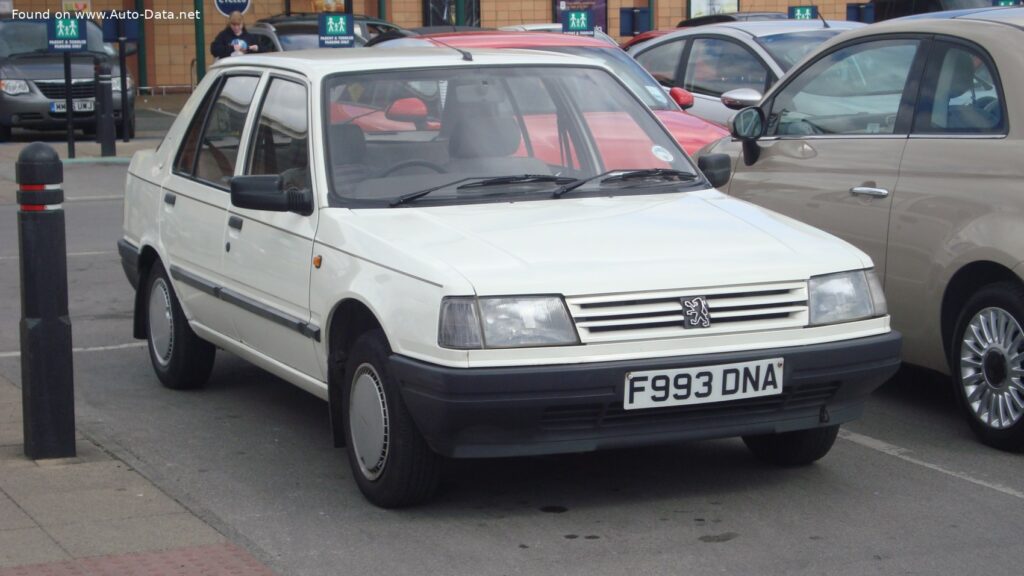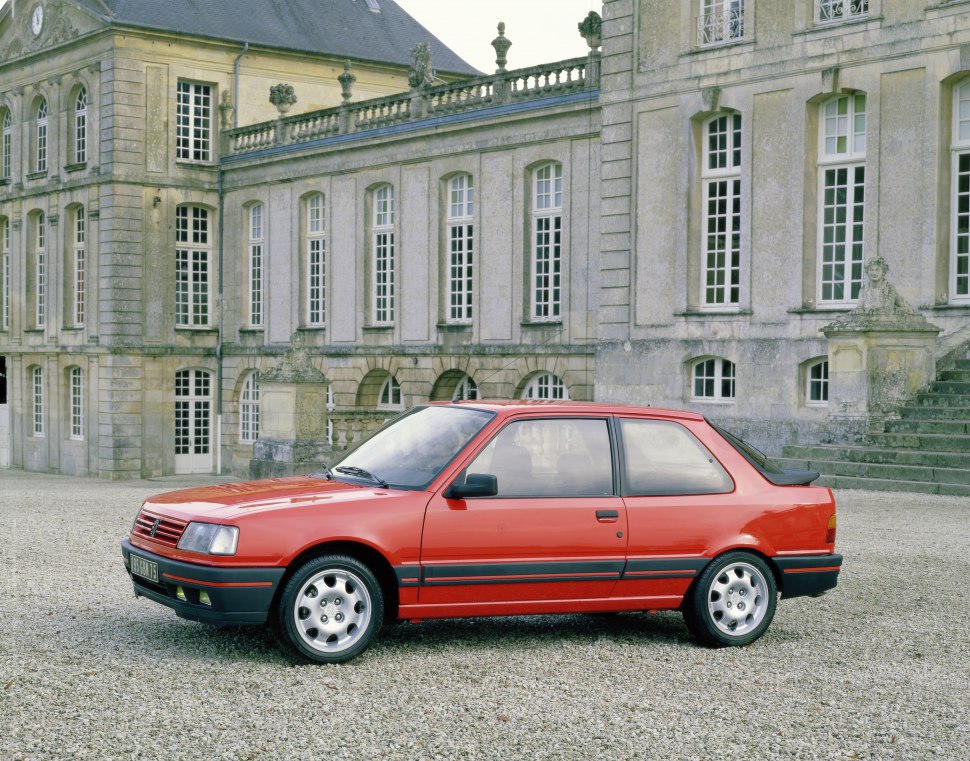
The Peugeot 309 (10C,10A) 3-door 1.9 GTI (130 Hp) represents a significant chapter in the history of European performance hatchbacks, particularly during its production run from 1986 to 1989. While never officially sold in the United States, this vehicle carved out a formidable reputation in its primary markets across Europe and other regions, embodying the essence of the burgeoning “hot hatch” segment. Positioned as a direct successor to the highly acclaimed Peugeot 205 GTI, the 309 GTI was designed to offer a slightly larger, more practical, yet equally exhilarating driving experience. It belonged to the compact car segment, characterized by its three-door hatchback body style, which offered a blend of sporty aesthetics and everyday utility. This generation, specifically the 10C (3-door) and 10A (5-door) variants, was developed by Peugeot to bridge the gap between their smaller 205 and larger 405 models, aiming to capture a wider audience while retaining the brand’s reputation for engaging chassis dynamics. The 1.9 GTI variant, with its potent engine and lightweight construction, quickly became a cult classic, celebrated for its raw, unfiltered driving feel and impressive performance figures for its time.
The Peugeot 309 (10C,10A) 3-door 1.9 GTI (130 Hp): Engineering and Performance
At the heart of the Peugeot 309 (10C,10A) 3-door 1.9 GTI (130 Hp) was a naturally aspirated 1.9-liter (1905 cm³) inline-four engine, designated with the internal code XU9JA. This powertrain was a direct evolution of the legendary engine found in its smaller sibling, the 205 GTI, known for its robust construction and eager performance. Generating a robust 130 horsepower at 6000 revolutions per minute, the engine delivered a specific output of 68.2 horsepower per liter, an impressive figure for a non-turbocharged engine of the era. Torque output stood at 118.75 pound-feet (161 Nm) at 4750 rpm, providing a strong mid-range pull that contributed significantly to the car’s dynamic character. The engine employed a multi-port manifold injection system and an OHC (Overhead Camshaft) valvetrain with two valves per cylinder, a common and effective setup for the period that balanced performance with reliability.
The performance metrics of the 309 GTI were genuinely thrilling for the late 1980s. It could sprint from 0 to 60 miles per hour in a mere 7.6 seconds, a figure that allowed it to compete favorably with many sports cars of its time. The vehicle’s top speed was rated at 128 mph (206 km/h), demonstrating its capability on open roads. A crucial factor in these impressive figures was the car’s exceptionally low curb weight of just 2004 pounds (909 kg). This lightweight construction resulted in an outstanding weight-to-power ratio of 7 kg/Hp (approximately 143 Hp per ton) and a weight-to-torque ratio of 5.6 kg/Nm (177.1 Nm per ton), ensuring that every ounce of the engine’s output translated directly into forward momentum. Power was delivered to the front wheels via a precise 5-speed manual transmission, offering the driver direct engagement and control over the power band. The drivetrain architecture, with its transverse-mounted front engine driving the front wheels, was typical for hot hatches, optimizing packaging and handling characteristics.
Fuel efficiency, while not the primary concern for a performance variant, was respectable for the period. The 309 GTI achieved an urban fuel economy of approximately 23.5 US mpg (10 l/100 km) and an extra-urban figure of about 38.6 US mpg (6.1 l/100 km), reflecting its ability to be a practical daily driver alongside its sporting aspirations. The 14.53 US gallon (55-liter) fuel tank provided a decent range for both spirited driving and longer journeys. The engine’s compression ratio of 9.6:1 was optimized for gasoline fuel, and its naturally aspirated nature meant predictable power delivery without the lag associated with early turbocharging technologies. The cooling system held 8 liters of coolant, and the engine oil capacity was 4 liters, indicative of a well-engineered and durable powertrain designed for enthusiast driving.
Design and Features of the Peugeot 309 GTI
The Peugeot 309 GTI, specifically the 3-door hatchback variant, presented a design that was both functional and aesthetically pleasing, typical of European cars of its era. With a length of 159.49 inches (4051 mm), a width of 64.09 inches (1628 mm), and a height of 54.33 inches (1380 mm), it struck a balance between a compact footprint and a spacious interior for its class. The wheelbase measured 97.2 inches (2469 mm), contributing to its agile handling characteristics. Its design was characterized by clean lines and a relatively low drag coefficient (Cd) of 0.33, which aided in both top speed and fuel efficiency. The 309 GTI carried a distinct identity, sharing some styling cues with its 205 sibling but featuring a more angular and slightly more mature appearance, particularly in its front and rear fascias.
As a 3-door hatchback, the 309 GTI offered seating for five occupants, making it a versatile choice for individuals or small families who desired performance without sacrificing practicality. The interior, while typical of the late 1980s with its functional layout and durable materials, was enhanced in the GTI version with sport seats and specific trim details that underscored its performance pedigree. The practicality was further evident in its trunk space, offering a minimum of 14.02 cubic feet (397 liters) with the rear seats in place, which could expand to a generous 45.17 cubic feet (1279 liters) when the rear seats were folded down, making it surprisingly capable for hauling cargo.
The driving dynamics of the 309 GTI were heavily influenced by its well-tuned suspension and steering. The front suspension featured an independent McPherson strut setup with coil springs and an anti-roll bar, providing precise control and effective body roll management during spirited driving. The rear utilized a torsion bar system, a compact and effective design that contributed to the car’s nimble handling and light rear end. Steering was handled by a rack-and-pinion system, offering direct feedback to the driver, a hallmark of Peugeot’s performance models. Braking performance was managed by disc brakes at the front, offering strong stopping power, while the rear utilized drum brakes, a common configuration for lighter vehicles of that period, which proved adequate given the car’s weight and power. The car rode on 185/55 R15 tires, mounted on 15-inch wheel rims, providing a good balance of grip and ride comfort for a performance-oriented vehicle.
While modern safety features like airbags or advanced driver-assistance systems were nonexistent in this era, the 309 GTI focused on active safety through its excellent handling and braking, allowing drivers to avoid potential hazards. Its enduring appeal lies not just in its performance figures but also in its ability to deliver an engaging, unadulterated driving experience that is increasingly rare in contemporary vehicles. The Peugeot 309 GTI remains a cherished classic among enthusiasts, a testament to Peugeot’s engineering prowess in creating accessible, high-performance vehicles during the golden age of the hot hatchback.
Technical Specifications
| Brand | Peugeot |
| Model | 309 |
| Generation | 309 (10C,10A) 3-door |
| Type (Engine) | 1.9 GTI (130 Hp) |
| Start of production | 1986 year |
| End of production | 1989 year |
| Powertrain Architecture | Internal Combustion engine |
| Body type | Hatchback |
| Seats | 5 |
| Doors | 3 |
| Fuel consumption (economy) – urban | 10 l/100 km (23.5 US mpg) |
| Fuel consumption (economy) – extra urban | 6.1 l/100 km (38.6 US mpg) |
| Fuel Type | Petrol (Gasoline) |
| Acceleration 0 – 60 mph | 7.6 sec |
| Maximum speed | 206 km/h (128 mph) |
| Weight-to-power ratio | 7 kg/Hp (143 Hp/tonne) |
| Weight-to-torque ratio | 5.6 kg/Nm (177.1 Nm/tonne) |
| Power | 130 Hp @ 6000 rpm |
| Power per liter | 68.2 Hp/l |
| Torque | 161 Nm @ 4750 rpm (118.75 lb.-ft. @ 4750 rpm) |
| Engine layout | Front, Transverse |
| Engine Model/Code | XU9JA |
| Engine displacement | 1905 cm³ (116.25 cu. in.) |
| Number of cylinders | 4 |
| Engine configuration | Inline |
| Cylinder Bore | 83 mm (3.27 in.) |
| Piston Stroke | 88 mm (3.46 in.) |
| Compression ratio | 9.6:1 |
| Number of valves per cylinder | 2 |
| Fuel injection system | Multi-port manifold injection |
| Engine aspiration | Naturally aspirated engine |
| Valvetrain | OHC |
| Engine oil capacity | 4 l (4.23 US qt) |
| Coolant | 8 l (8.45 US qt) |
| Kerb Weight | 909 kg (2004 lbs) |
| Max. weight | 1350 kg (2976.24 lbs) |
| Max load | 441 kg (972.24 lbs) |
| Trunk (boot) space – minimum | 397 l (14.02 cu. ft.) |
| Trunk (boot) space – maximum | 1279 l (45.17 cu. ft.) |
| Fuel tank capacity | 55 l (14.53 US gal) |
| Permitted trailer load with brakes (12%) | 800 kg (1763.7 lbs) |
| Length | 4051 mm (159.49 in.) |
| Width | 1628 mm (64.09 in.) |
| Height | 1380 mm (54.33 in.) |
| Wheelbase | 2469 mm (97.2 in.) |
| Front track | 1408 mm (55.43 in.) |
| Rear (Back) track | 1376 mm (54.17 in.) |
| Front overhang | 753 mm (29.65 in.) |
| Rear overhang | 829 mm (32.64 in.) |
| Drag coefficient (Cd) | 0.33 |
| Drivetrain Architecture | The Internal combustion engine (ICE) drives the front wheels of the vehicle. |
| Drive wheel | Front wheel drive |
| Number of gears and type of gearbox | 5 gears, manual transmission |
| Front suspension | Independent, type McPherson with coil spring and anti-roll bar |
| Rear suspension | Torsion |
| Front brakes | Disc |
| Rear brakes | Drum |
| Steering type | Steering rack and pinion |
| Tires size | 185/55 R15 |
| Wheel rims size | 15 |